Spatial reasoning Normal Geometry Worksheets for Ages 5-7
3 filtered results
-
From - To
Boost your child's spatial reasoning skills with our engaging Geometry Worksheets for ages 5-7. These worksheets are designed to make learning fun and effective, helping young minds grasp essential geometry concepts like shapes, positions, and visualizing objects in space. With activities tailored to their developmental stage, children can improve their problem-solving abilities while building a strong foundation in mathematics. Ideal for both classroom and home use, our worksheets foster analytical thinking and prepare kids for more advanced math challenges. Explore our collection today, and watch your child excel in spatial reasoning and geometric skills!
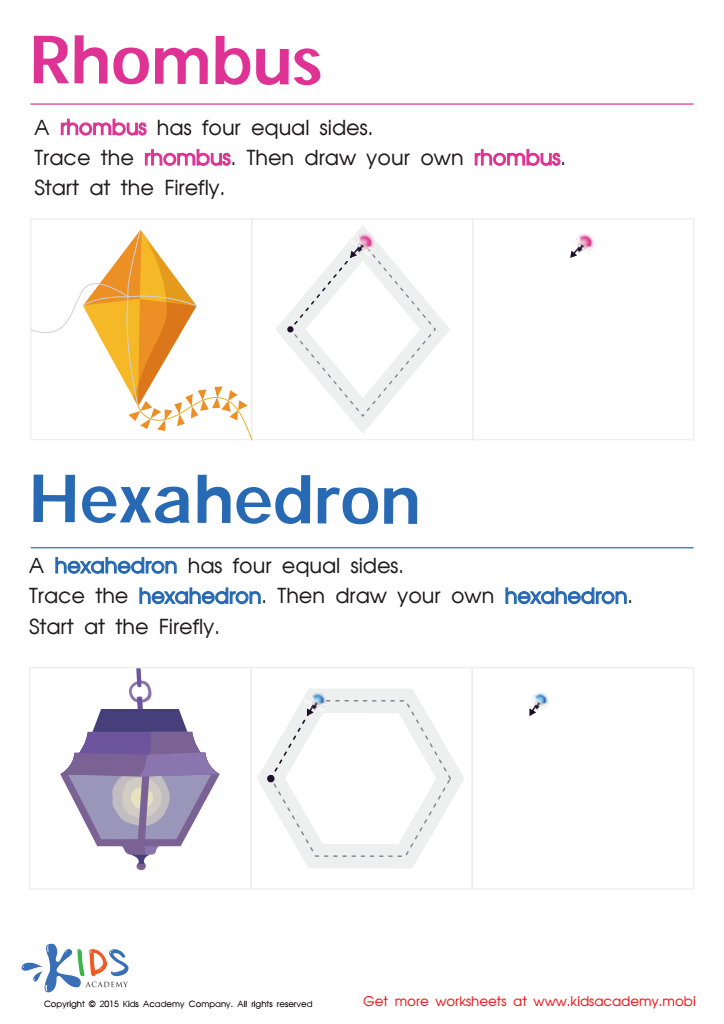
Draw a Rhombus And a Hexahedron Printable
 Assign to My Students











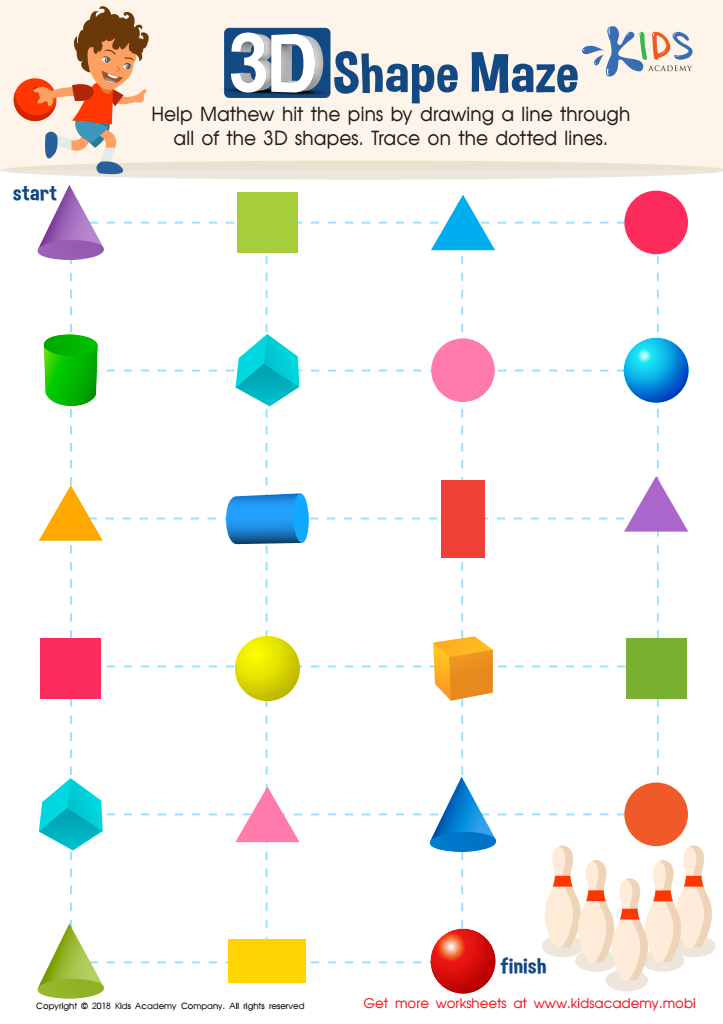
Shapes Maze Geometry Worksheet
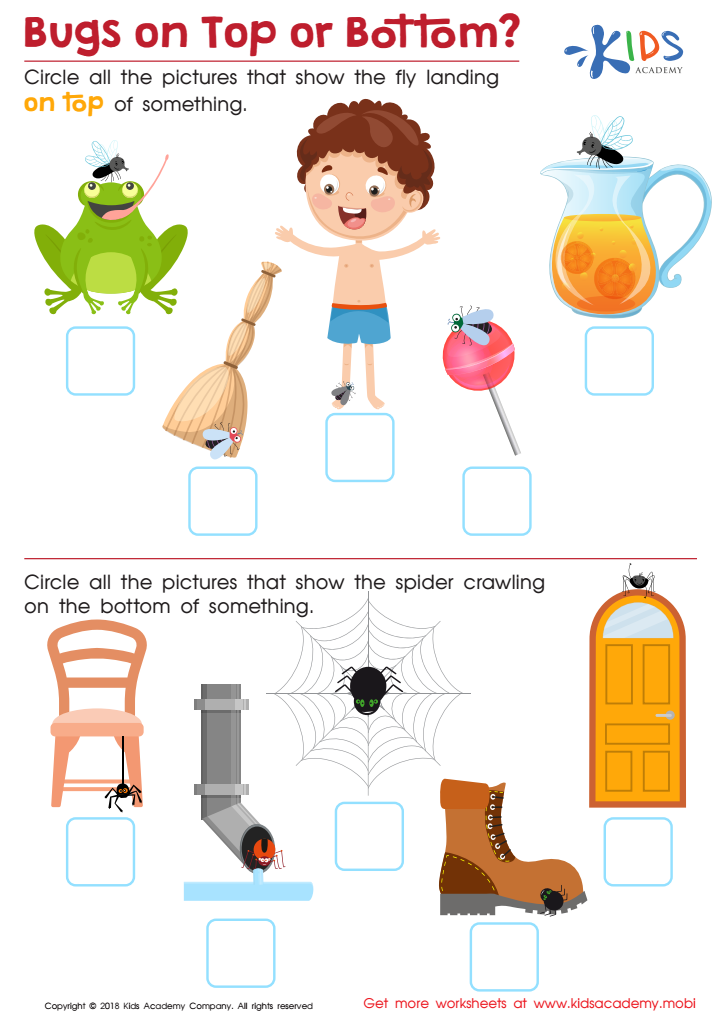
Bugs on Top or Bottom? Worksheet








Spatial reasoning and basic geometry are foundational skills that play a vital role in a child's cognitive development, particularly for ages 5-7. Parents and teachers should care about these skills because they underpin important aspects of learning and everyday functioning.
First, spatial reasoning helps children understand and interpret the world around them. It enables them to visualize objects, scenarios, and directions, which is crucial for problem-solving and navigation. For instance, children use spatial skills to piece together puzzles, understand maps, and even organize their physical environment.
Second, these abilities are closely tied to future success in STEM (Science, Technology, Engineering, and Mathematics) fields. Early experiences with shapes, patterns, and spatial relationships set a foundation for more advanced mathematical concepts and scientific reasoning. For example, recognizing a triangle or square lays the groundwork for understanding more complicated shapes and geometric principles in later years.
Moreover, engaging in activities that develop spatial skills can boost a child’s confidence and creativity. Through hands-on experiences like building blocks or drawing, children explore and express their ideas more vividly.
In summary, fostering spatial reasoning and basic geometry in early childhood not only builds essential life skills but also paves the way for academic and personal growth. Parents and teachers play a vital role in providing experiences and encouragement that promote these critical early learning experiences.








