Understanding fractions Normal Geometry Worksheets for Ages 5-7
4 filtered results
-
From - To
Unlock the magic of fractions for young learners with our "Understanding Fractions Normal Geometry Worksheets for Ages 5-7." Tailored for little minds, these engaging and interactive worksheets introduce foundational fraction concepts through fun geometry exercises. Your child will effortlessly grasp halves, thirds, and quarters while solving colorful, visually appealing problems. Perfect for kindergarteners and early graders, each activity is designed to develop a deep understanding and appreciation for fractions through play-based learning. Prepare your child for future math success with our expertly crafted, age-appropriate fraction geometry worksheets and watch their confidence soar! Visit us to download now.
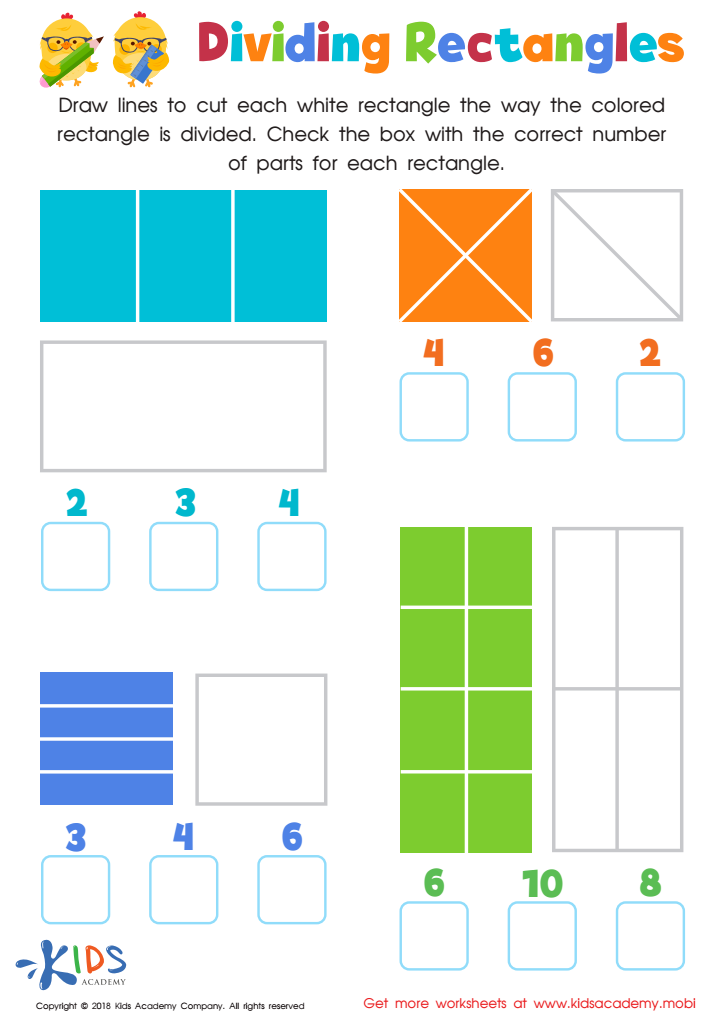
Dividing Rectangles Worksheet
 Assign to My Students











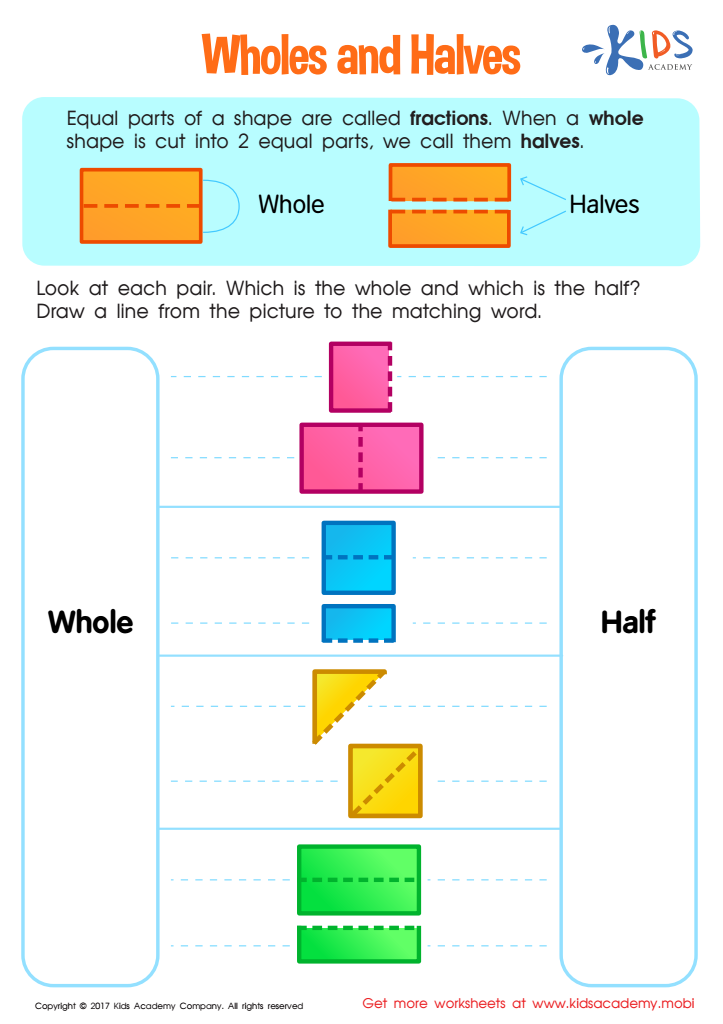
Wholes and Halves Worksheet
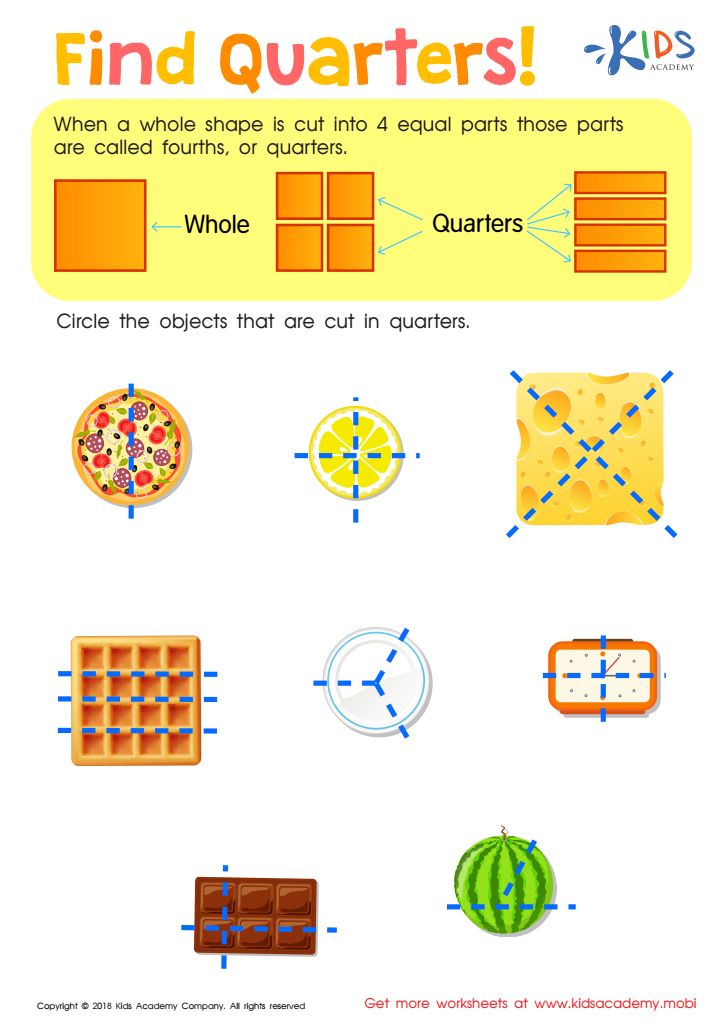
Find Quarters Worksheet
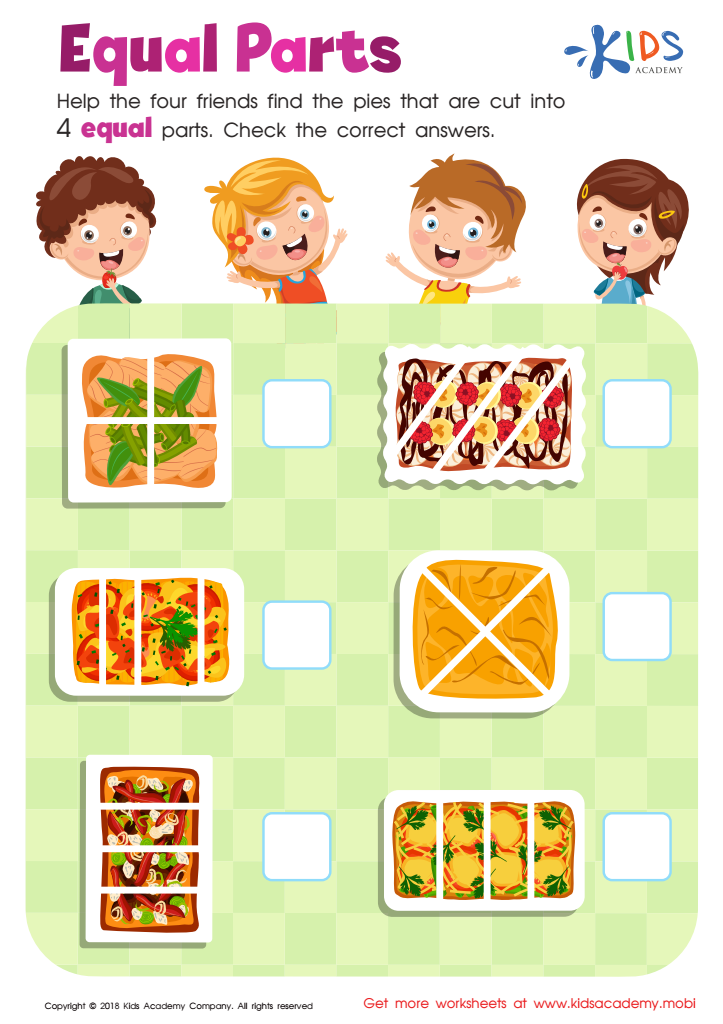
Equal Parts: Food Worksheet








Understanding fractions and basic geometry at an early age is crucial for several reasons. Firstly, foundational math skills like fractions and geometry are core components of early numeracy and directly impact a child's confidence and proficiency in the subject.
Fractions introduce children to the concept of parts of a whole, which is an essential building block for more complex mathematical concepts like ratios, percentages, and even algebra. A solid understanding of fractions helps children grasp sharing, division, and the idea of equal parts, all of which are encountered daily, from slicing a pizza to splitting candies among friends.
Similarly, basic geometry lays the groundwork for spatial reasoning skills. Kids learn to identify shapes, understand spatial relationships, and recognize patterns. These skills are not just applicable in math but also in everyday problem-solving, from packing their school bag efficiently to following directions on a map.
Moreover, instilling a love and understanding of math early on can foster a positive attitude toward learning and decrease math anxiety. Early success in grasping these concepts nurtures a growth mindset, where children feel more confident tackling more challenging subjects as they progress in their education.
Thus, parents and teachers play a pivotal role in making these foundational concepts fun and relatable, setting the stage for future scholastic success and practical life skills.








