Problem Solving Normal Numbers Worksheets for Ages 5-7
5 filtered results
-
From - To
Discover our engaging Problem Solving Normal Numbers Worksheets, specially designed for kids aged 5-7. These worksheets help young learners develop essential math skills, including number recognition, counting, and basic arithmetic, through fun problem-solving activities. Each worksheet is thoughtfully crafted to nurture critical thinking and logical reasoning in your child, making math enjoyable and accessible. Our resources provide the optimal balance of challenge and support, ensuring kids build confidence while mastering fundamental concepts. Ideal for both classroom and at-home learning, these worksheets are perfect for fostering a solid math foundation in little learners. Unlock your child’s potential with our problem-solving worksheets today!
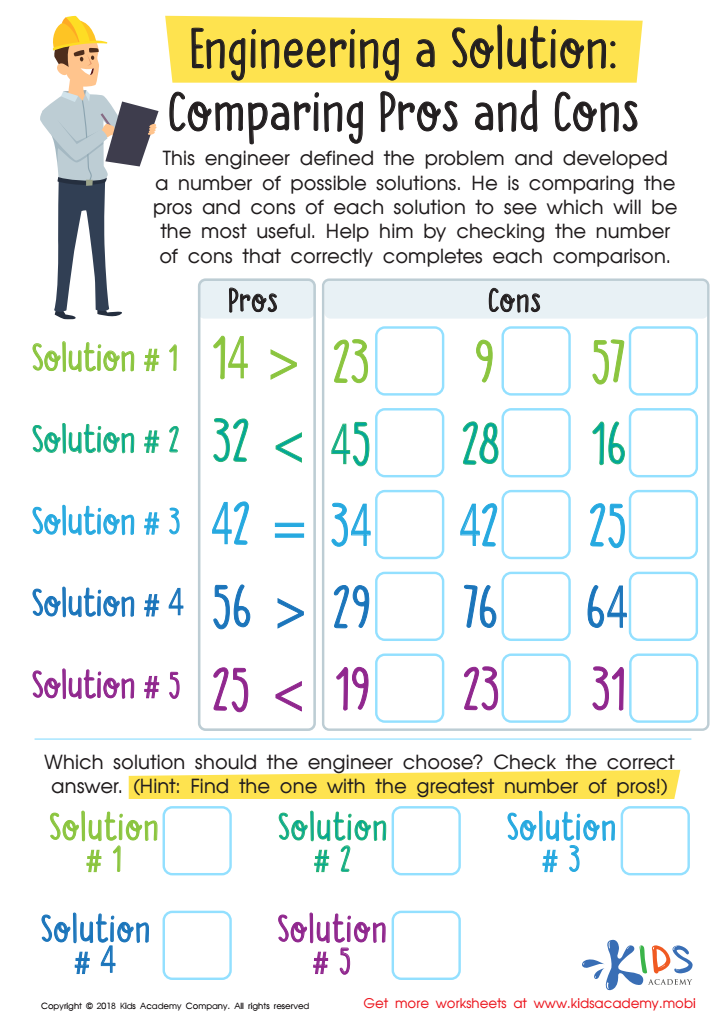
Engineering a Solution: Comparing Pros and Cons Worksheet
 Assign to My Students
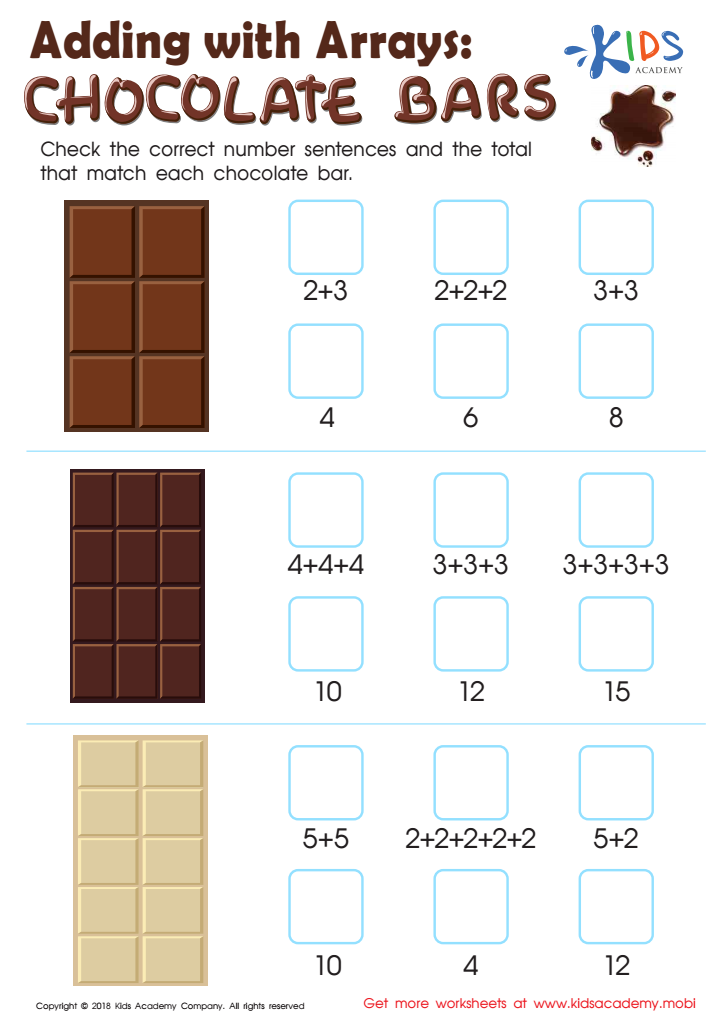
Adding with Arrays: Chocolate Bars Worksheet
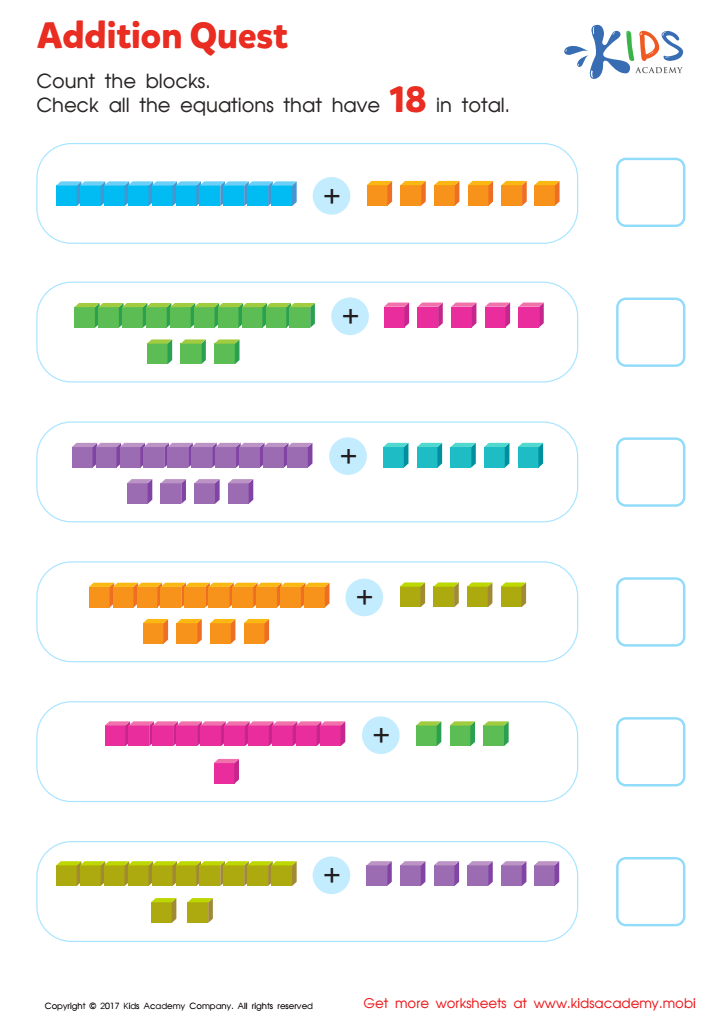
Addition Quest Worksheet: Part 2
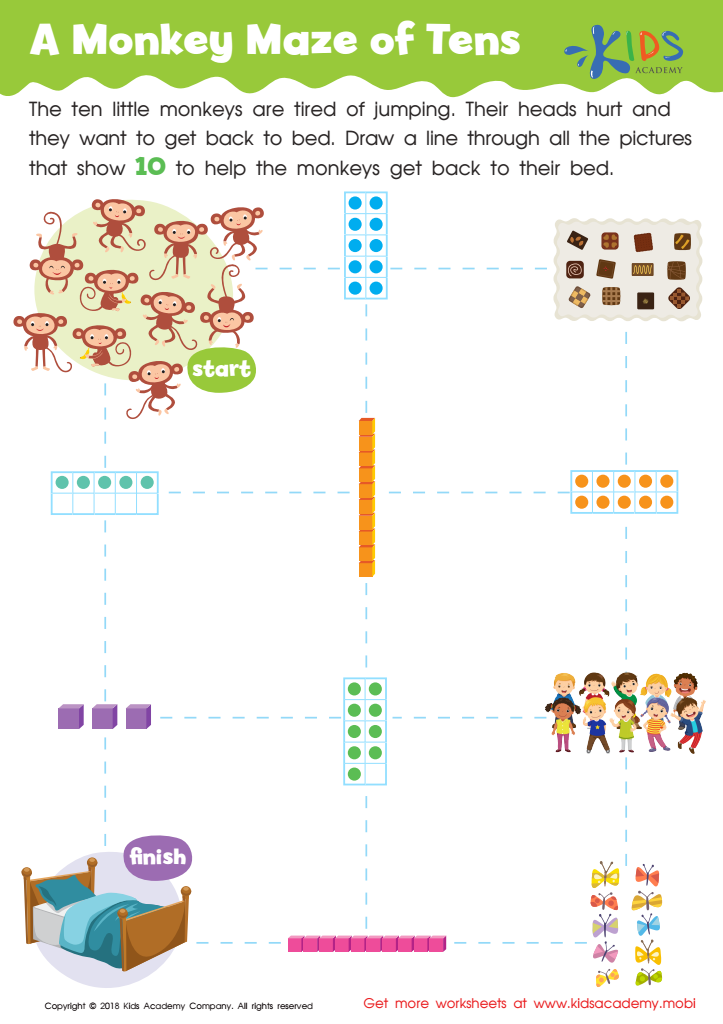
A Monkey Maze of Tens Worksheet
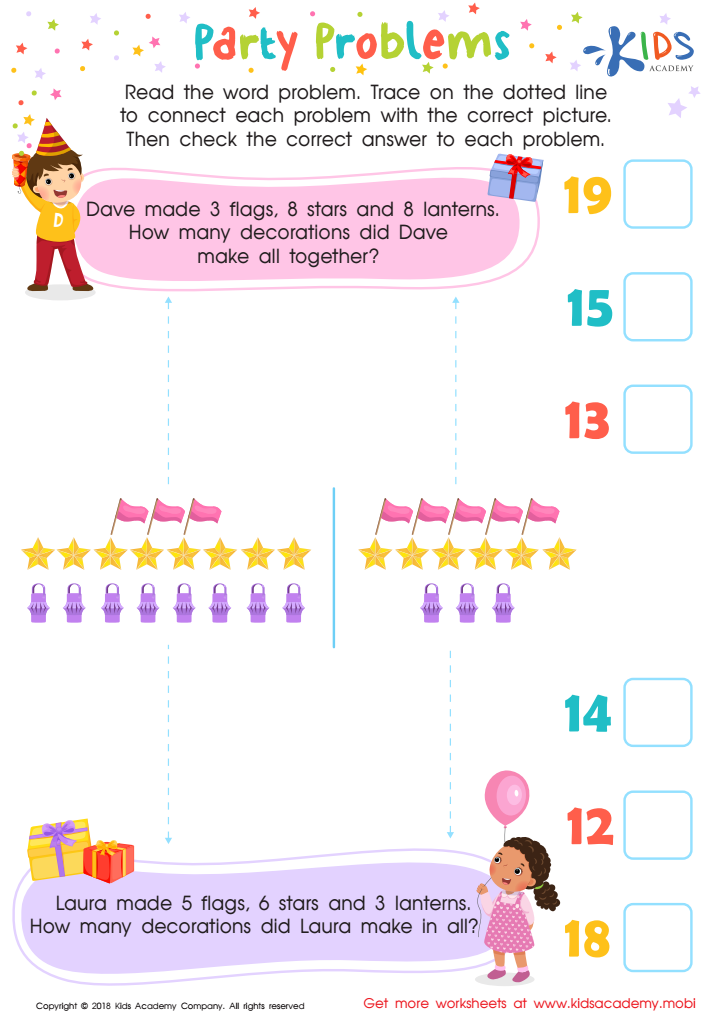
Party Problems Worksheet








Parents and teachers should care about problem-solving with normal numbers for children aged 5-7 because it develops foundational skills crucial for their academic future and everyday life. At this age, children are in a critical developmental stage where they rapidly absorb new information and form cognitive patterns. Introducing problem-solving with numbers helps them understand mathematical concepts such as addition, subtraction, sequencing, and basic logic.
Early exposure to these concepts can foster a positive attitude toward math, reducing anxiety in later years. It also enhances critical thinking and reasoning skills, which are applicable beyond math. Young learners who engage in problem-solving activities often show better performance in other academic areas, including reading and science, because they become adept at identifying patterns and solutions.
Moreover, problem-solving with numbers nurtures perseverance and resilience. When faced with numerical challenges, kids learn to experiment, make mistakes, and subsequently derive correct answers. This process builds their confidence and lay down an essential foundation for more complex problem-solving skills in higher grades.
From a practical standpoint, mastering basic problem-solving skills empowers children in everyday situations, such as sharing toys, understanding time, and making simple purchases. This helps parents and teachers support the child's holistic development, preparing them to tackle various real-world challenges confidently and competently.








