
Comparing lengths Normal Math Worksheets for Ages 5-7
4 filtered results
Difficulty Level
Grade
Age
-
From - To
Subject
Activity
Standards
Explore our engaging "Comparing Lengths Normal Math Worksheets" designed for children ages 5-7! These worksheets are perfect for young learners, providing a fun and interactive way to understand the concept of length through comparisons. Kids will develop essential math skills as they analyze and differentiate between various objects. Each worksheet features colorful illustrations and relatable scenarios that capture children's interest, making learning enjoyable. Our comprehensive resources promote critical thinking while helping students build a solid foundation in measurement. Download these printable worksheets today and assist your child in mastering comparing lengths essential for their early math education journey!
Favorites
With answer key
Interactive
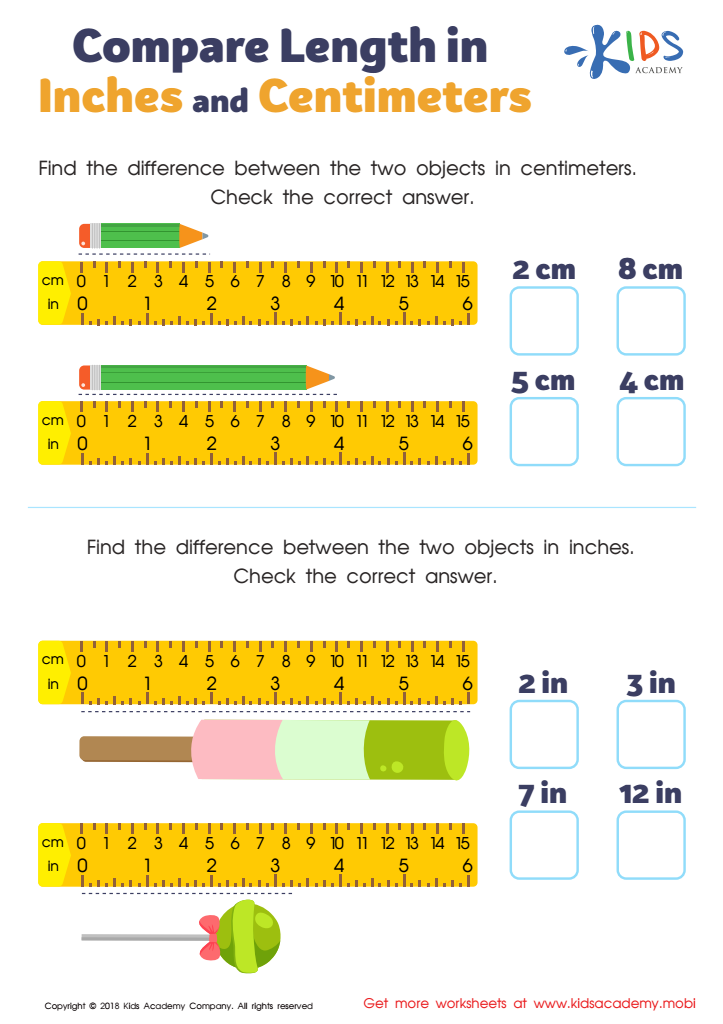
Compare Length in Inches and Centimeters Worksheet
This worksheet has your child measuring objects in both centimeters and inches. The first task requires measuring both objects in centimeters, then finding their difference. The second task is the same but in inches.
 Assign to My Students
Compare Length in Inches and Centimeters Worksheet
Worksheet
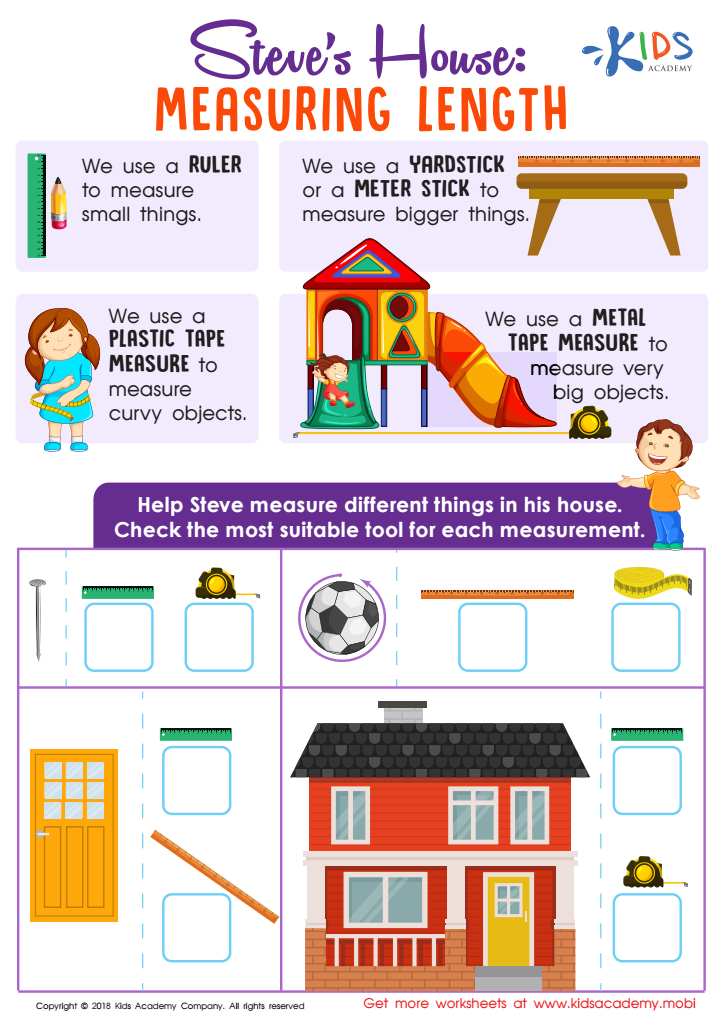
Steve's House: Measuring Length Worksheet
Introduce your kids to the various measuring tools and their uses. Explain how a ruler, plastic tape, yard stick, and metal tape measure are used to measure different objects. Guide them as they help Steve measure things in his home with the correct tool.
Steve's House: Measuring Length Worksheet
Worksheet
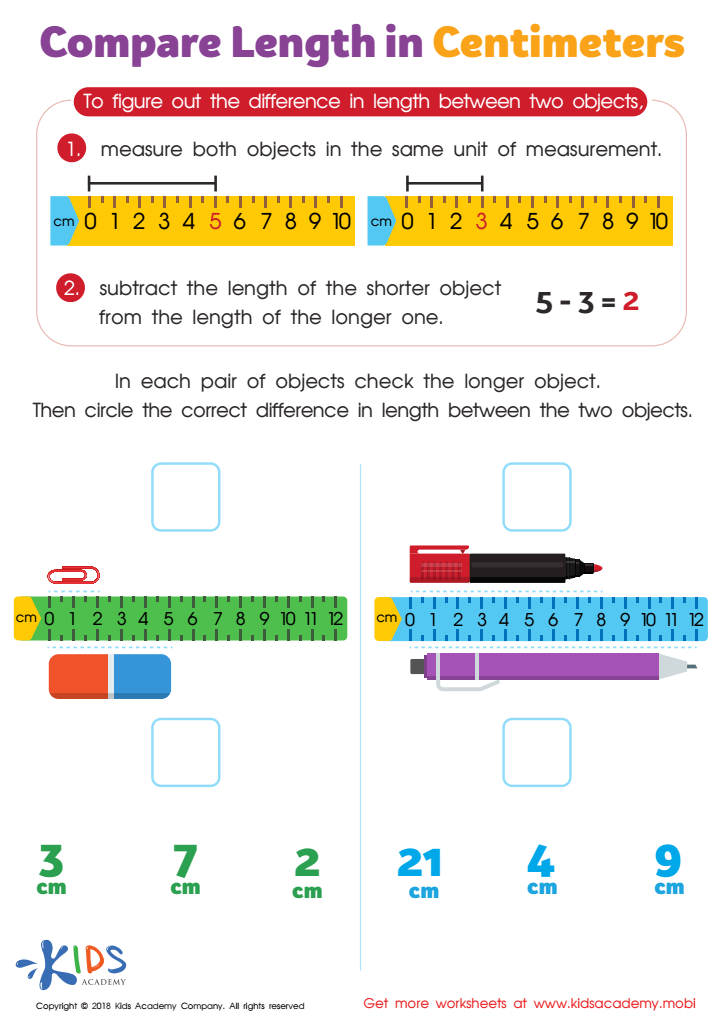
Compare Length in Centimeters Worksheet
To do this worksheet, your child needs to be able to measure accurately, add and subtract. They must measure both items and subtract the shorter from the longer to work out the difference in length.
Compare Length in Centimeters Worksheet
Worksheet
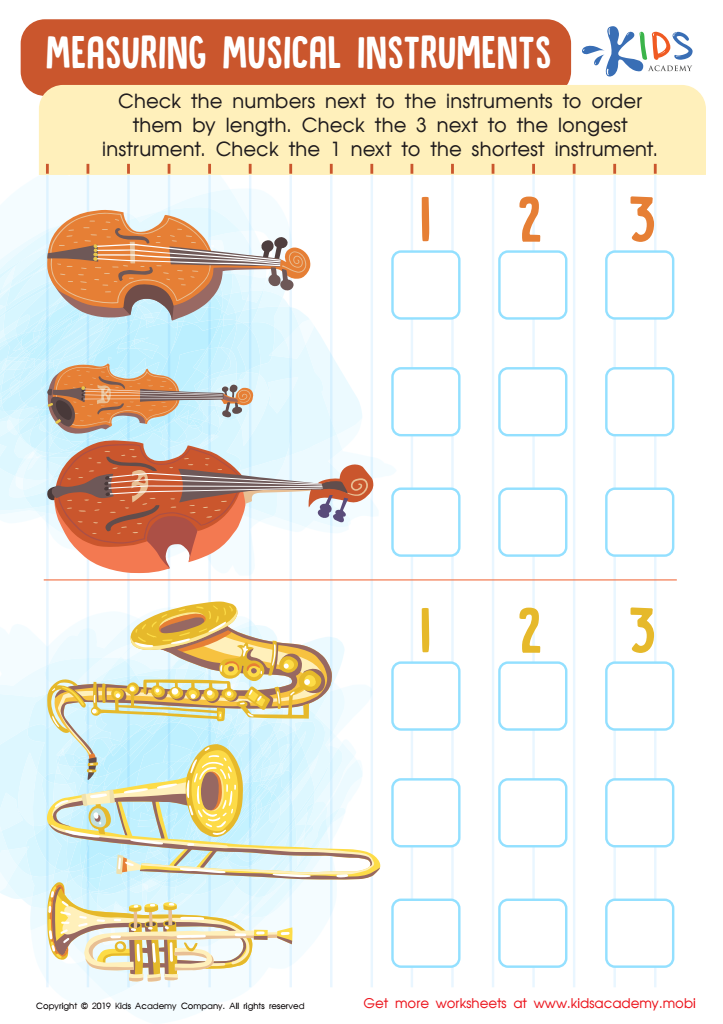
Measuring Musical Instruments Worksheet
Learning measurements can be tricky, but this worksheet makes it easy. Ask your child to identify the instruments in the pictures. Then, order them by length using the numbers. 3 is the longest, 1 is the shortest. Simple exercises like this will help them understand the different metric systems.
Measuring Musical Instruments Worksheet
Worksheet
Join Kids Academy for Free
Who is primarily going to use this learning content?







%20(1).jpg)
Comparing lengths is an essential foundational skill in early mathematics for children aged 5-7, and both parents and teachers should prioritize this area of learning. Understanding the concept of length helps young learners develop critical thinking, measurement abilities, and problem-solving skills, which are essential throughout their educational journey and everyday life.
When children engage in activities that involve comparing lengths—such as measuring objects, using rulers, or even using their own bodies—they begin to grasp concepts of size, distance, and the idea of “longer than” and “shorter than." These early experiences support their cognitive development and lay the groundwork for more complex mathematical concepts in the future, such as addition and subtraction, geometry, and data analysis.
Additionally, comparing lengths encourages hands-on learning and experiential play, fostering engagement and curiosity. It also promotes language development as children articulate their observations and reason out their conclusions. In essence, emphasizing length comparison not only supports academic success, but it also nurtures a child's overall development, instilling a sense of exploration and instilling a love for mathematics that can last a lifetime. Therefore, parents and teachers should actively incorporate these activities into their teaching and playtime routines.








