Multiplication practice Normal Math Worksheets for Ages 5-7
4 filtered results
-
From - To
Unlock the world of numbers with our "Multiplication Practice Normal Math Worksheets" tailored for kids aged 5-7. These engaging worksheets focus on building essential multiplication skills through fun and interactive exercises. Designed by educational experts, each worksheet reinforces student understanding in an exciting, child-friendly format. Ideal for young learners, our printable worksheets incorporate colorful visuals and practical problems to make learning multiplication easy and enjoyable. Perfect for classroom use or at-home practice, watch as your child’s confidence and love for math grow with each completed worksheet. Start your educational journey with us today!
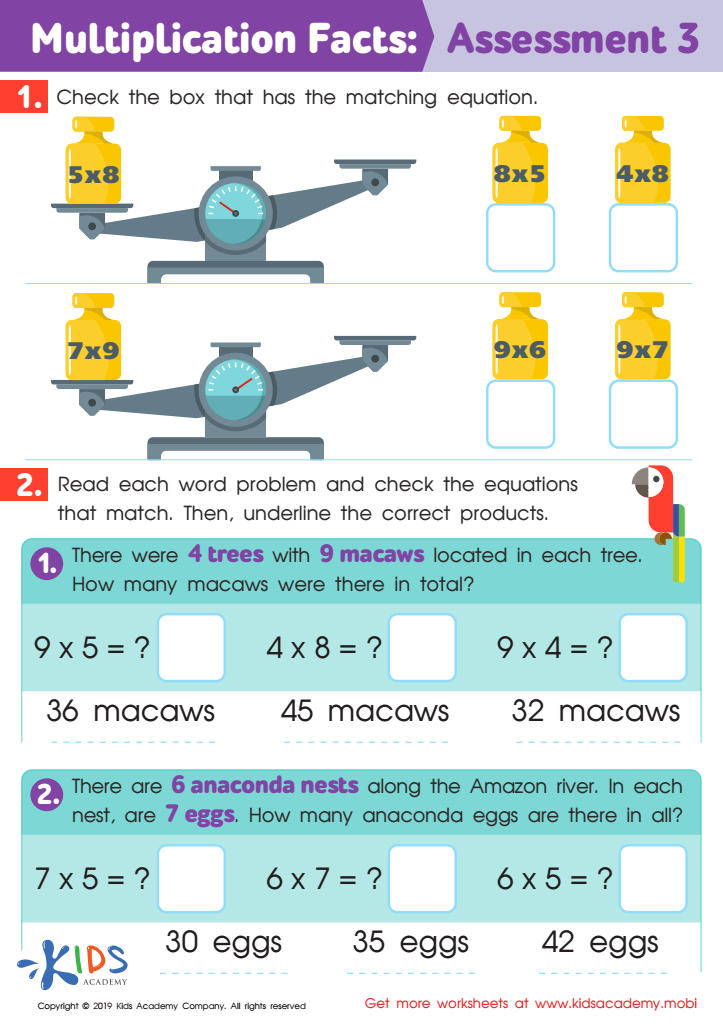
Multiplication Facts: Assessment 3 Worksheet
 Assign to My Students
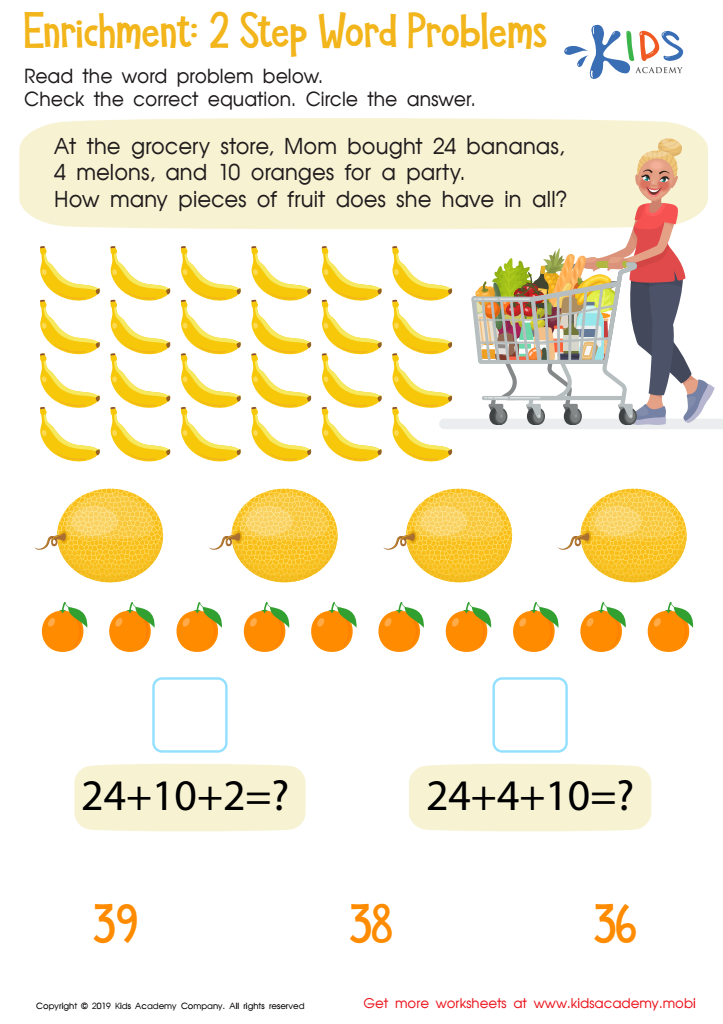
Enrichment -2 Step Word Problems Worksheet
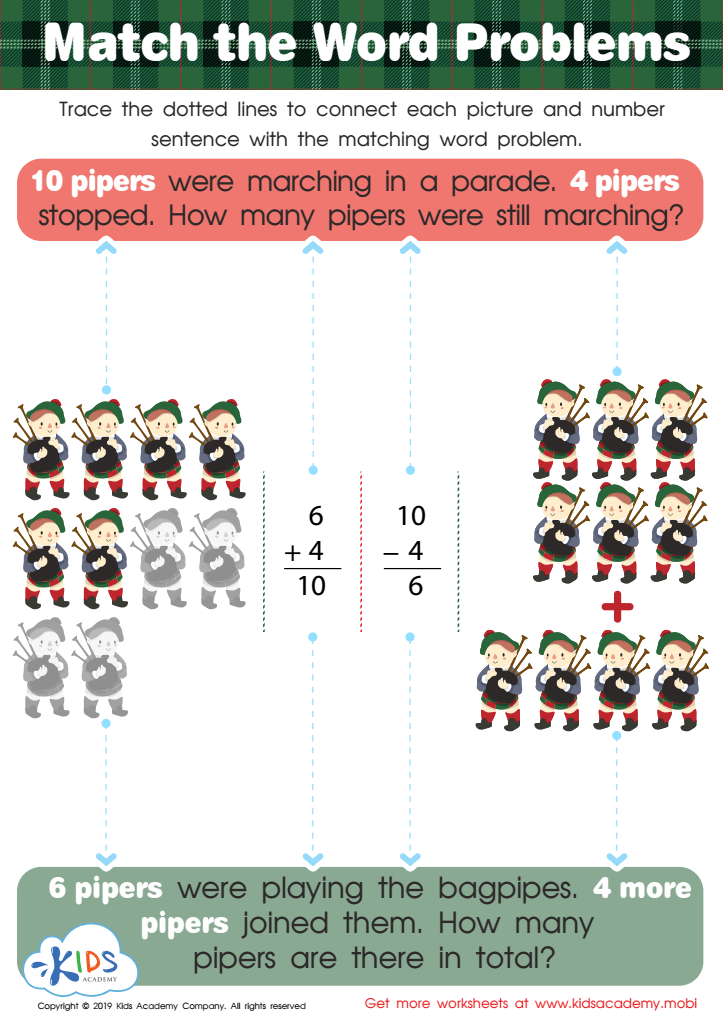
Match the Word Problems Worksheet
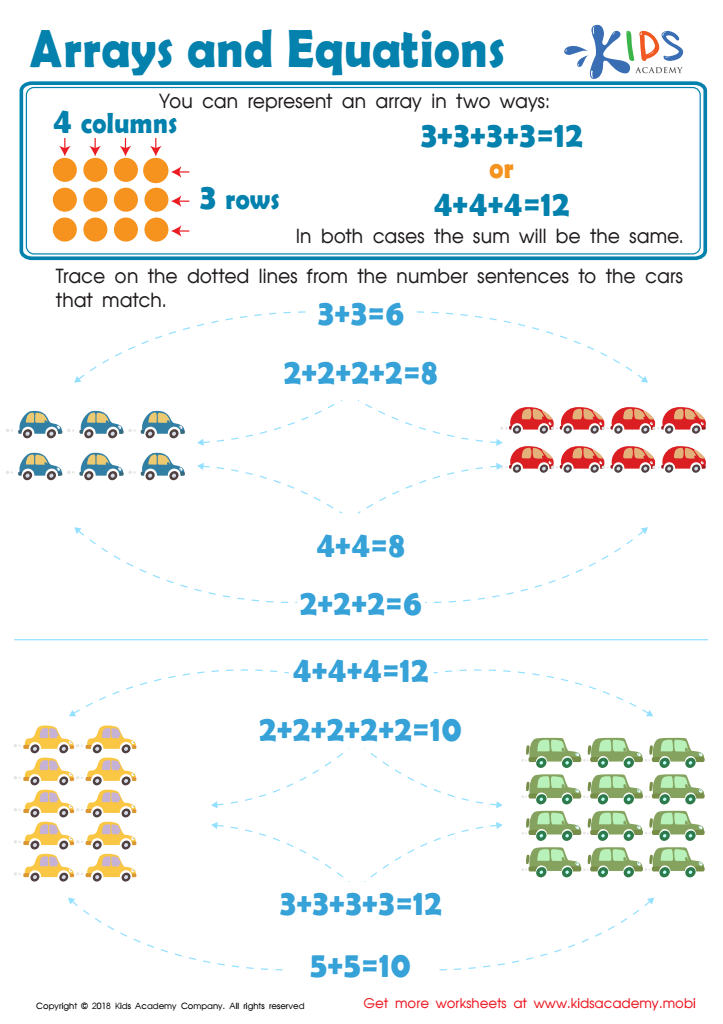
Arrays and Equations Worksheet






Multiplication practice for young children is foundational to their mathematical development and future academic success. For ages 5-7, regular engagement with multiplication helps build essential numeracy skills. Early exposure allows children to grasp basic concepts through repetition and familiarizes them with number patterns, creating a basis for more complex problem-solving as they advance in math.
Developing multiplication skills early also enhances cognitive abilities such as memory, logical thinking, and the ability to identify relationships between numbers. Children's understanding of multiplication helps them handle real-world situations involving grouping and sharing, which are everyday applications of math. This practical knowledge fosters their confidence in handling math-related tasks.
In addition, studying multiplication affects overall academic performance. Mastery in multiplication correlates with improved performance in nearly all areas of math, from addition and subtraction to division and beyond. This spurs a cumulative advantage, potentially increasing a child’s enthusiasm and reducing math anxiety.
Parents and teachers should ensure children practice multiplication early because it solidifies a critical building block of math education, enabling children to thrive as they progress through school and encounter more rigorous mathematical challenges. Early multiplication fluency is not just a skill; it's an essential cornerstone for educational achievement and practical life skills.








