Understanding patterns Normal Math Worksheets for Ages 5-7
5 filtered results
-
From - To
Welcome to our "Understanding Patterns" Normal Math Worksheets designed specifically for children ages 5-7! These engaging worksheets help young learners recognize, create, and extend patterns — a fundamental math skill that enhances critical thinking and cognitive development. Featuring colorful visuals and age-appropriate activities, our resources make learning fun and interactive. With a variety of exercises, including shape, color, and number patterns, children will build confidence in their math abilities while enjoying the creative process. Our printable worksheets are perfect for both classroom settings and at-home learning, ensuring that your child excels in understanding patterns and succeeding in their mathematical journey!
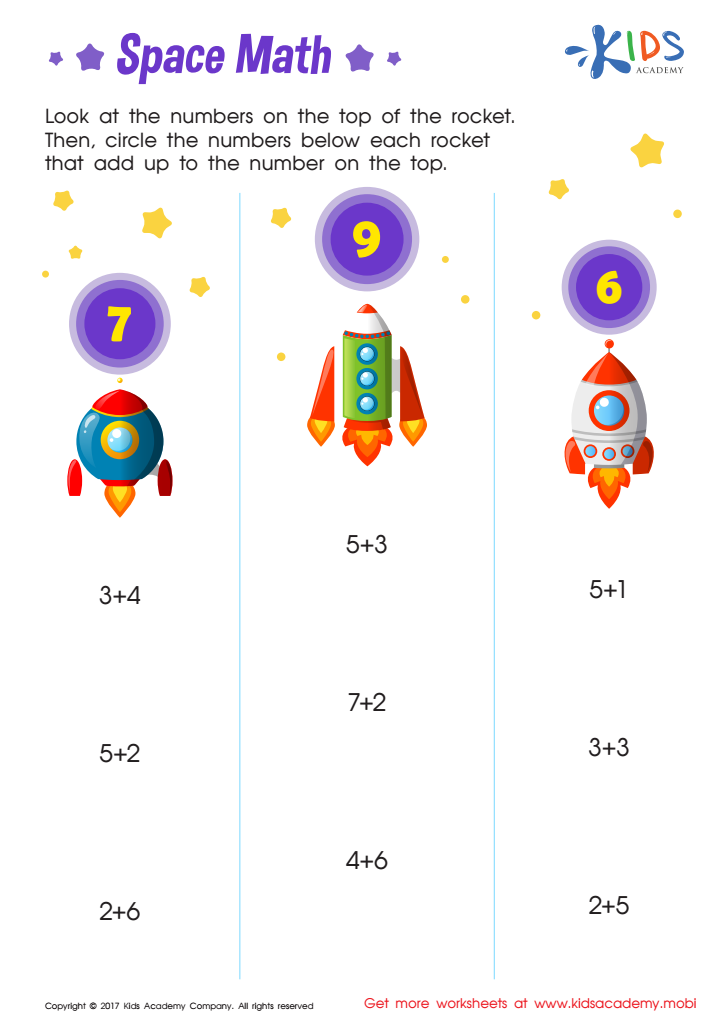
Addition: Space Math Worksheet
 Assign to My Students
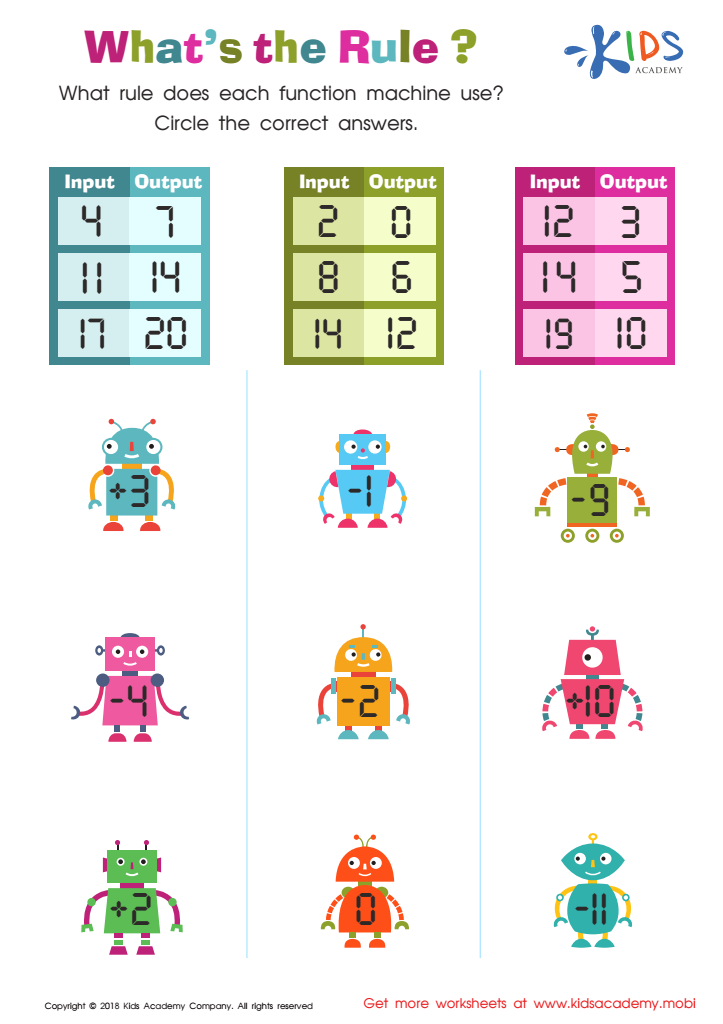
What's the Rule Worksheet
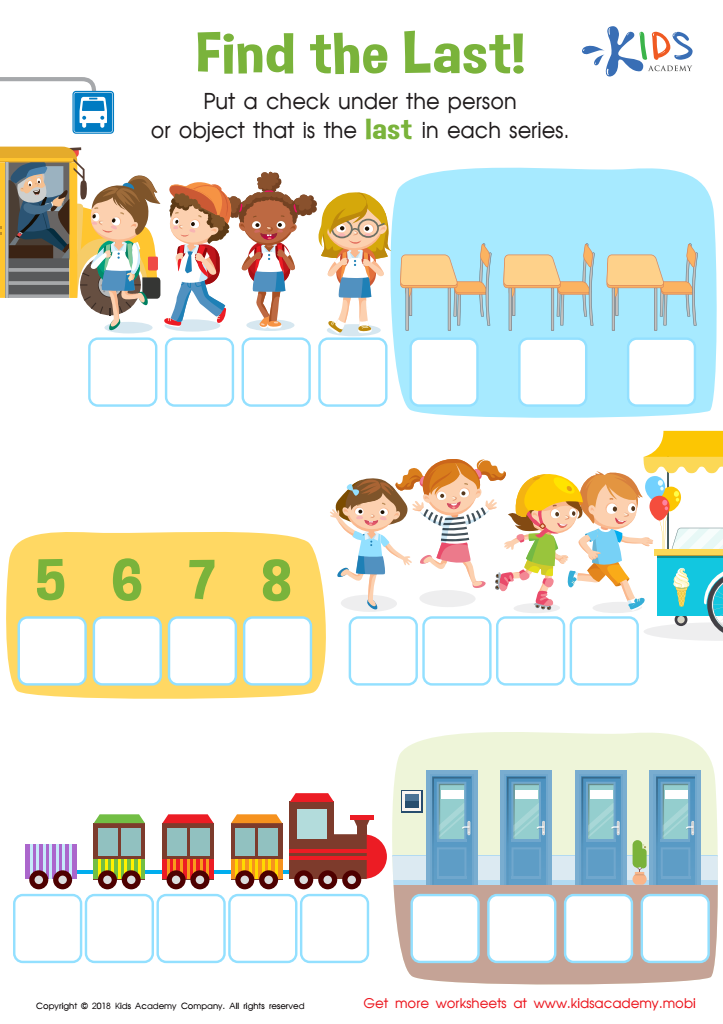
Find the Last! Worksheet
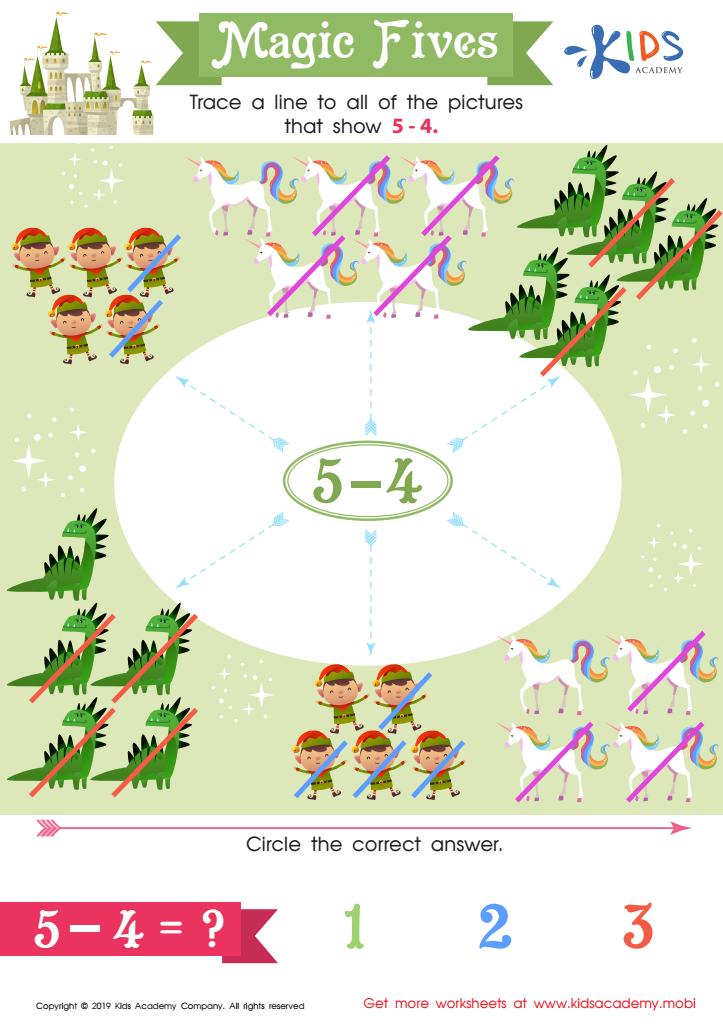
Magic Fives Worksheet
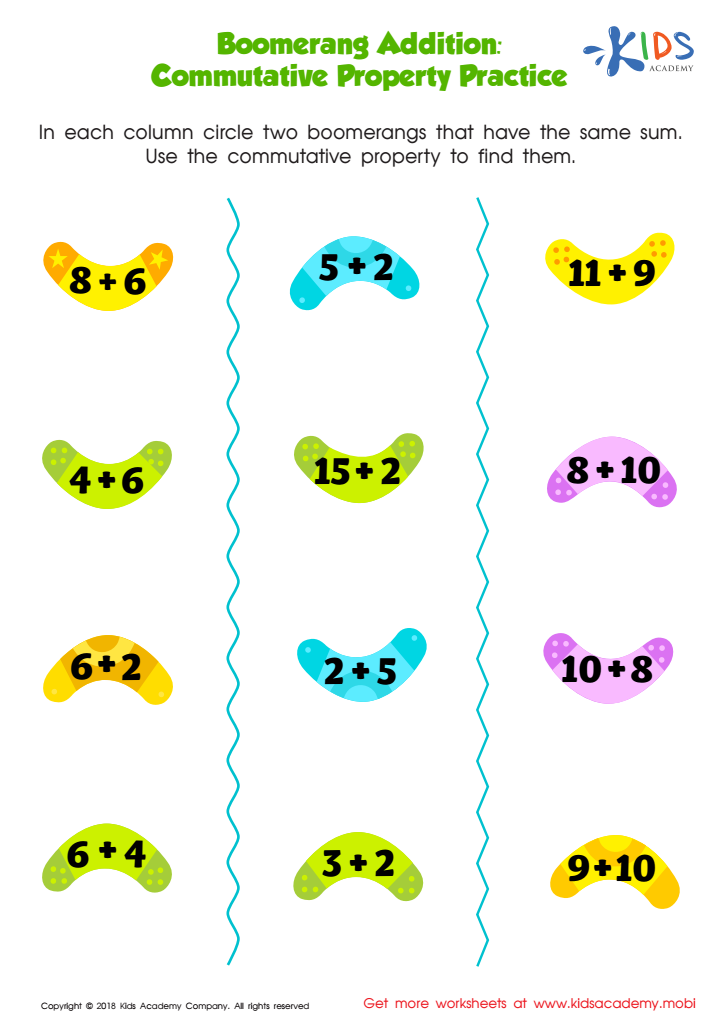
Boomerang Addition Worksheet








Understanding patterns is a fundamental aspect of early mathematics, and it plays a crucial role in developing critical thinking and problem-solving skills for children aged 5-7. Parents and teachers should care about this concept because recognizing and working with patterns lays the groundwork for more complex mathematical concepts, such as algebra and geometry, which children will encounter in later grades.
When children engage with patterns, they develop the ability to see relationships and similarities between different objects or numbers. This skill not only enhances their mathematical reasoning but also fosters cognitive development. For example, recognizing sequences or repeating patterns encourages logical thinking, which can be applied in various subjects beyond mathematics.
Additionally, understanding patterns helps children make sense of the world around them, aiding in language development and cognitive processing. For parents and teachers, incorporating pattern recognition into activities can make learning fun and interactive, capturing children's interest and expanding their horizons.
By nurturing children's understanding of patterns at an early age, parents and teachers empower them to tackle more challenging mathematics with confidence, ultimately contributing to their overall academic success and lifelong learning. Therefore, investing time in helping young children explore patterns is essential for their future educational journeys.








