
Understanding shapes Normal Math Worksheets for Ages 5-7
3 filtered results
Difficulty Level
Grade
Age
-
From - To
Subject
Activity
Standards
Welcome to "Understanding Shapes: Normal Math Worksheets for Ages 5-7"! This engaging collection of worksheets is designed to help young learners grasp the fundamentals of shapes through fun and interactive activities. Children will explore various shapes such as circles, squares, triangles, and more, enhancing their recognition and comprehension skills. Each worksheet encourages creativity while building essential math skills, perfect for reinforcing classroom learning or practicing at home. Our carefully crafted resources make learning about shapes enjoyable and effective, setting a strong foundation for future math success. Dive into the exciting world of geometry with our thoughtfully designed worksheets today!
Favorites
With answer key
Interactive
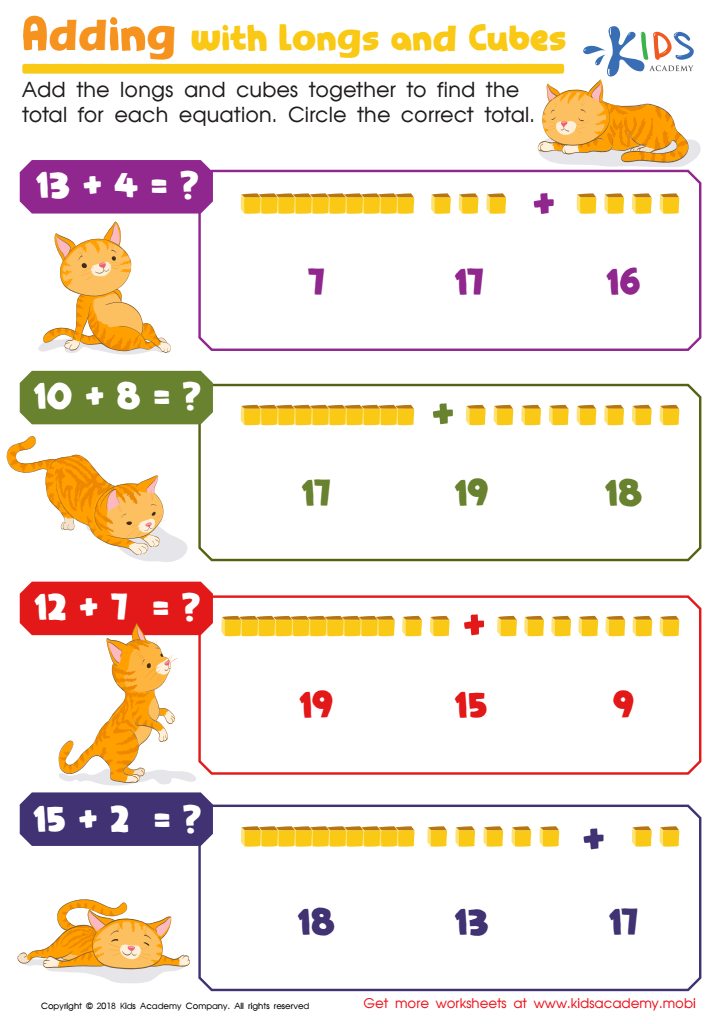
Adding With Longs and Cubes Worksheet
Math might not be your child's favorite, but they must master it to advance. If they're having difficulties or don't like it, use this worksheet to make it easier. Have them add longs and cubes together to find the total for each question, then circle the correct answer. This exercise can help make math experiences better.
 Assign to My Students
Adding With Longs and Cubes Worksheet
Worksheet
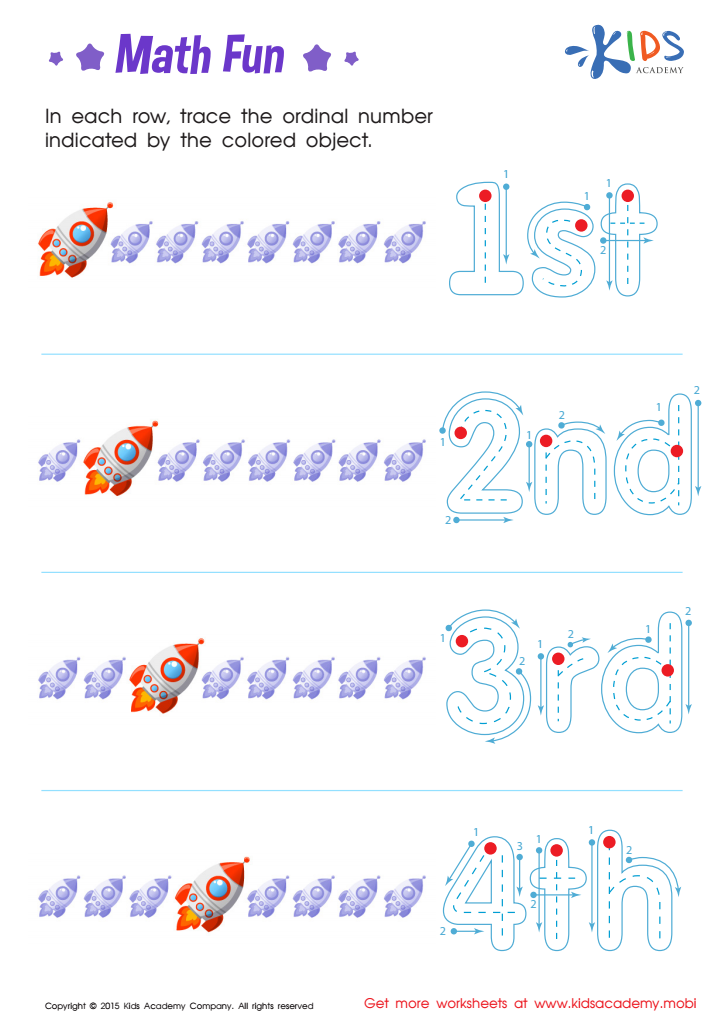
Ordinal Numbers: Math Fun Worksheet
Have fun learning ordinal numbers with our spaceship worksheet! Kids learn best while having fun and with repetition. Featuring vibrant spaceships, your child will understand placement, recognize and write ordinal numbers, and make connections. Understanding ordinal numbers leads to more advanced math concepts. Get your math whiz ready for preschool with our addition/subtraction worksheets! Have fun learning ordinal numbers and master them in no time!
Ordinal Numbers: Math Fun Worksheet
Worksheet
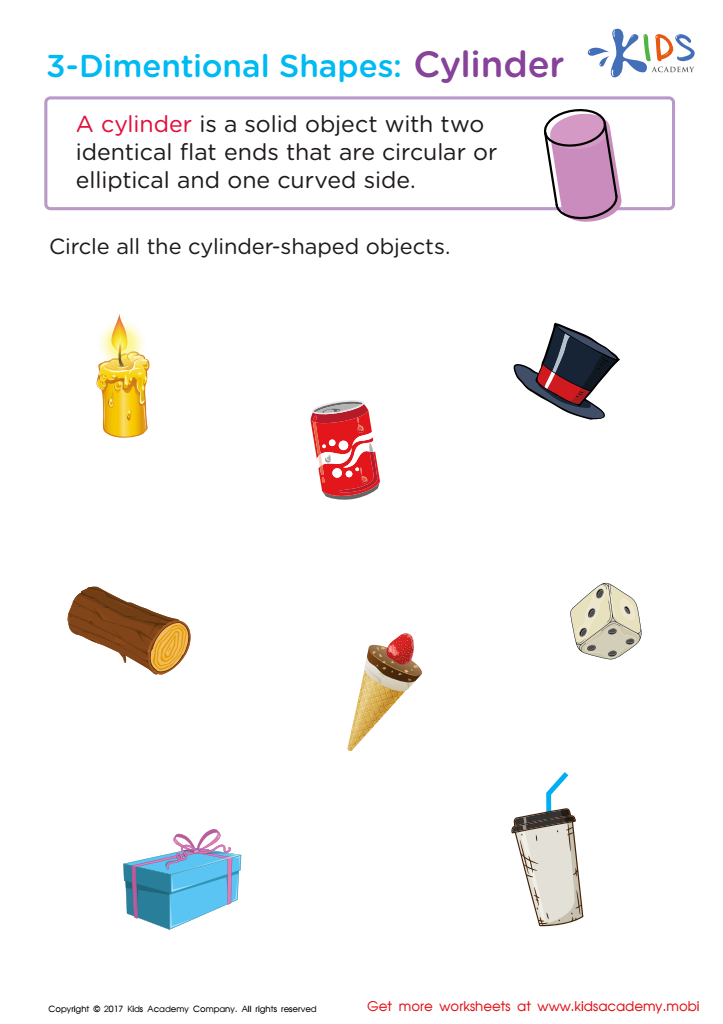
Three–Dimensional Shapes: Cylinder Worksheet
Introduce your toddler to geometry and 3D cylinders with this printable and watch their knowledge grow. It will help them recognize, define, and identify cylinders, as well as differentiate between 3D objects.
Three–Dimensional Shapes: Cylinder Worksheet
Worksheet
Join Kids Academy for Free
Who is primarily going to use this learning content?







Understanding shapes is a foundational aspect of early mathematics education for children aged 5-7. Parents and teachers should care about this topic because it lays the groundwork for critical thinking and problem-solving skills. Recognizing and manipulating shapes helps young learners develop spatial awareness, which is essential for everyday tasks, from navigating their environment to understanding more complex mathematical concepts later in school.
By engaging with shapes, children enhance their visual and tactile learning experiences. Activities involving sorting, comparing, and constructing shapes promote fine motor skills and cognitive development. Furthermore, early shape recognition connects to core concepts in geometry and later algebra, making it easier for learners to grasp more advanced math as they progress.
Additionally, understanding shapes encourages creativity and imagination, as students explore and create their own designs and structures. It fosters collaborative learning when children work together to identify, discuss, and build shapes. Lastly, recognizing the relevance of shapes in real-life contexts supports the development of practical math skills, helping children become confident and capable learners. In short, fostering an early understanding of shapes is crucial for academic success and overall cognitive development, making it a vital focus for parents and educators.








