
Enhancing observation skills Normal Measurement Worksheets for Ages 5-7
3 filtered results
Difficulty Level
Grade
Age
-
From - To
Subject
Activity
Standards
Boost your child's observation skills with our engaging Normal Measurement Worksheets designed for ages 5-7. These worksheets focus on key concepts such as comparing lengths, weights, and capacities, fostering essential math skills while encouraging close attention to detail. Through fun exercises, young learners will enhance their ability to observe and interpret measurements accurately. Each worksheet is crafted to make learning enjoyable, supporting early math education with clear instructions and colorful visuals. Ideal for parents and teachers alike, these resources promote interactive learning, allowing children to explore measurements in a playful yet educational manner. Unlock your child’s potential with our captivating worksheets!
Favorites
With answer key
Interactive
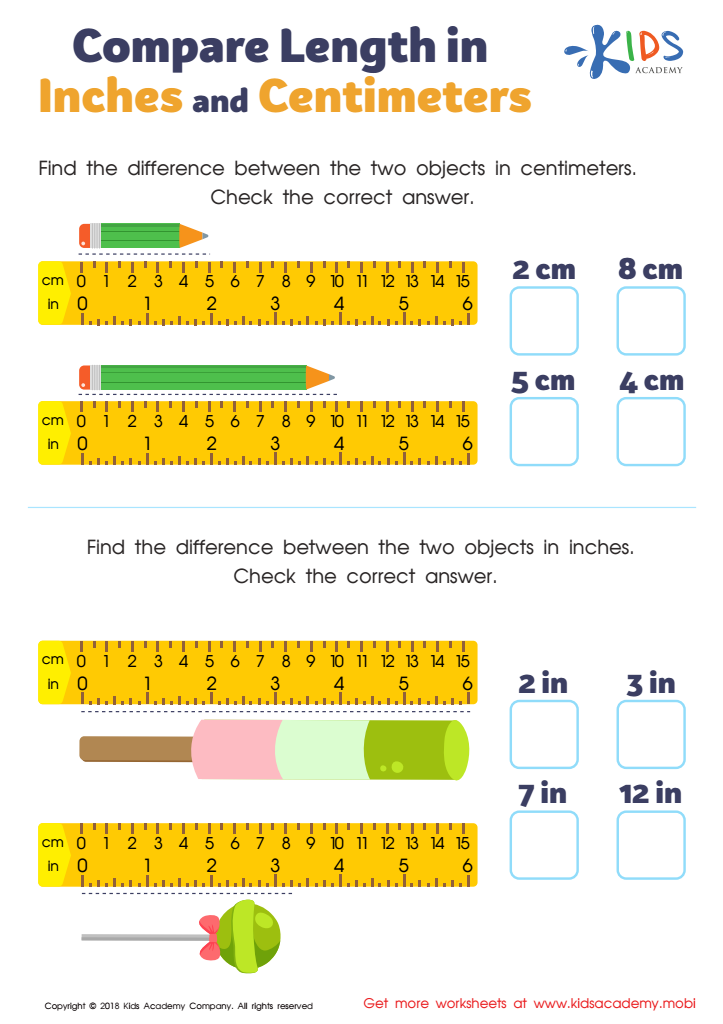
Compare Length in Inches and Centimeters Worksheet
This worksheet has your child measuring objects in both centimeters and inches. The first task requires measuring both objects in centimeters, then finding their difference. The second task is the same but in inches.
 Assign to My Students
Compare Length in Inches and Centimeters Worksheet
Worksheet
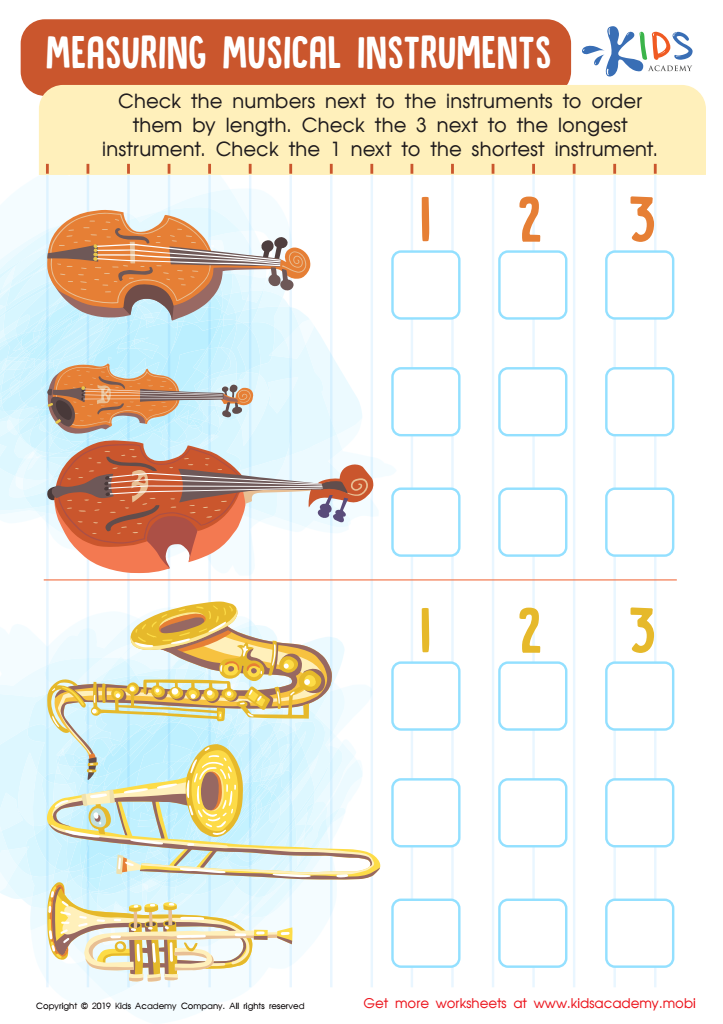
Measuring Musical Instruments Worksheet
Learning measurements can be tricky, but this worksheet makes it easy. Ask your child to identify the instruments in the pictures. Then, order them by length using the numbers. 3 is the longest, 1 is the shortest. Simple exercises like this will help them understand the different metric systems.
Measuring Musical Instruments Worksheet
Worksheet
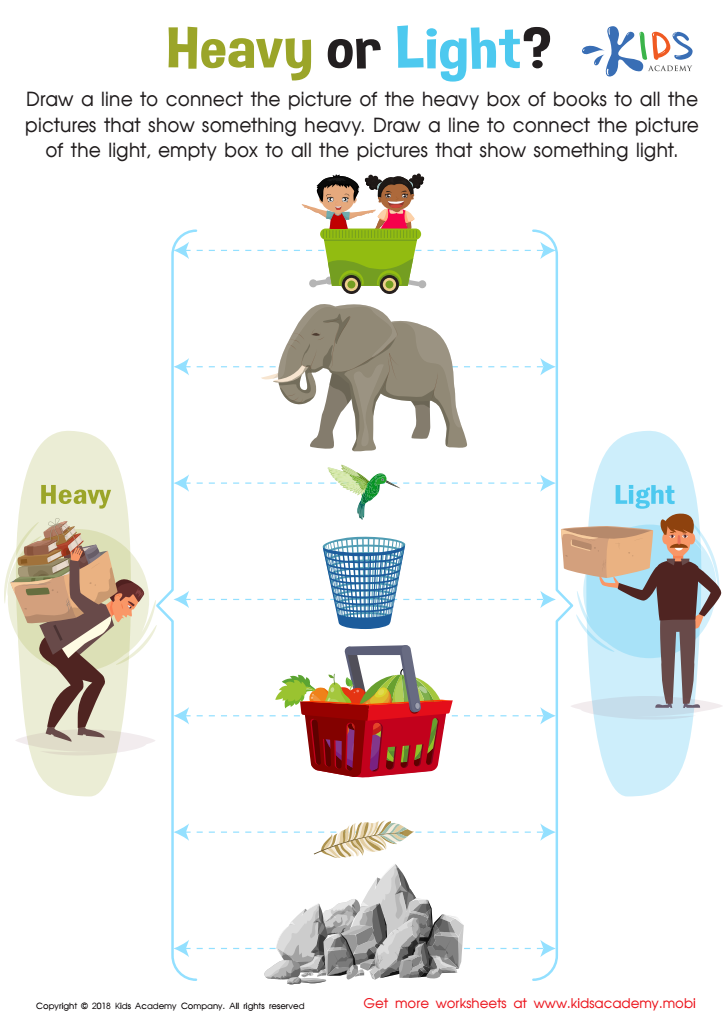
Heavy or Light? Worksheet
Kids can struggle to understand weight comparison, as size and mass matter. This free PDF helps develop fine-motor and hand-eye skills as kids trace lines to match pictures. The familiar pictures create concrete representations, ideal for learning more complex concepts.
Heavy or Light? Worksheet
Worksheet
Join Kids Academy for Free
Who is primarily going to use this learning content?








Enhancing observation skills through normal measurement is crucial for children aged 5-7, and both parents and teachers play pivotal roles in this development. At this stage, children are naturally curious and increasingly apt at making observations about their environment. Focused efforts on enhancing these skills provide various benefits:
-
Foundational Skills: Observation is a key element in developing critical thinking and analytical skills. When children learn to notice details, they improve their ability to categorize information and make connections, laying a solid groundwork for future learning in subjects like science and math.
-
Confidence Boost: As children accurately observe and articulate their thoughts, their confidence in expressing ideas grows. This bolsters self-esteem and encourages a lifelong love for learning.
-
Social and Emotional Growth: Observational skills also play a role in understanding social dynamics. Children begin to recognize non-verbal cues, fostering empathy and improving interpersonal relationships.
-
Literacy Development: Heightened observation aids reading comprehension; children learn to infer meaning and engage more deeply with texts.
By prioritizing the enhancement of observation skills in early education, caregivers can significantly contribute to children’s overall cognitive, emotional, and social development, arming them with essential tools for future success.








