Practical math application Normal Measurement Worksheets for Ages 5-7
3 filtered results
-
From - To
Introduce young learners to the fundamentals of math with our Practical Math Application Normal Measurement Worksheets, designed for ages 5-7. These engaging worksheets help children grasp essential measurement concepts through real-world applications. Featuring fun, age-appropriate activities, kids will learn to measure length, volume, and weight using everyday objects. Perfect for both classroom and home use, these printable worksheets enhance critical thinking and problem-solving skills. Empower your child with practical math knowledge and watch their confidence soar as they master vital measurement skills in a supportive and enjoyable learning environment.
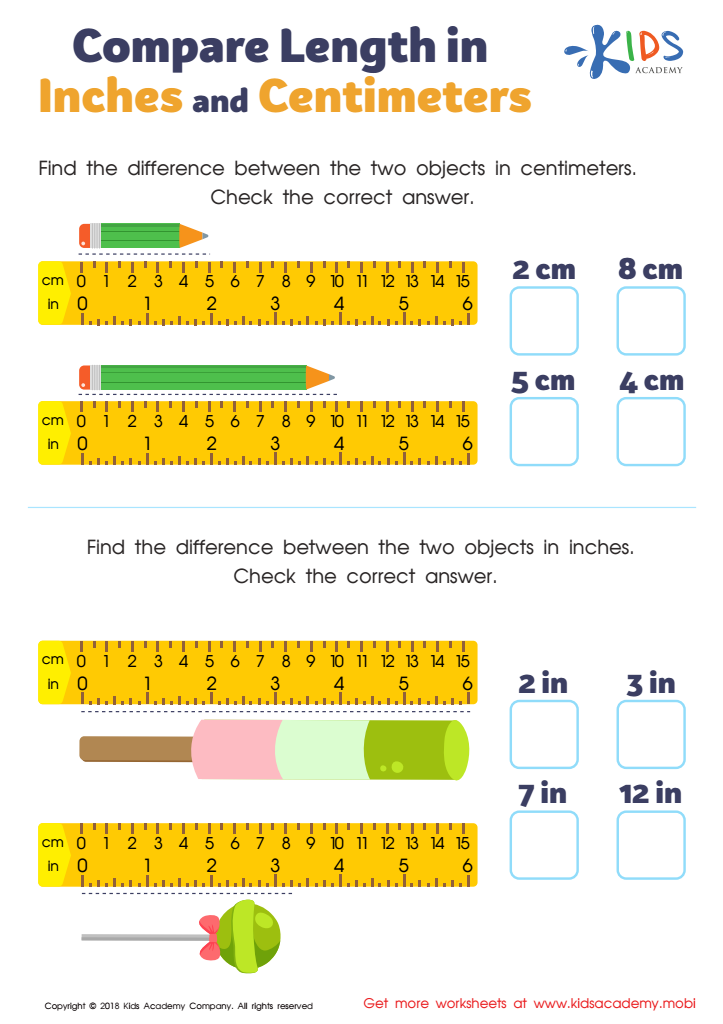
Compare Length in Inches and Centimeters Worksheet
 Assign to My Students
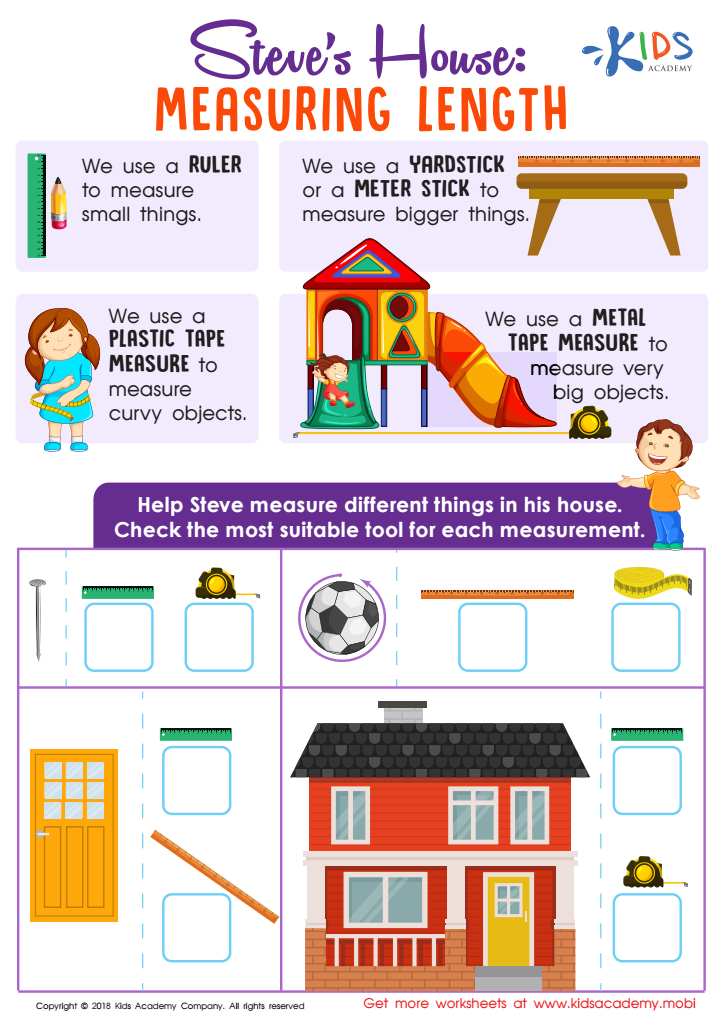
Steve's House: Measuring Length Worksheet
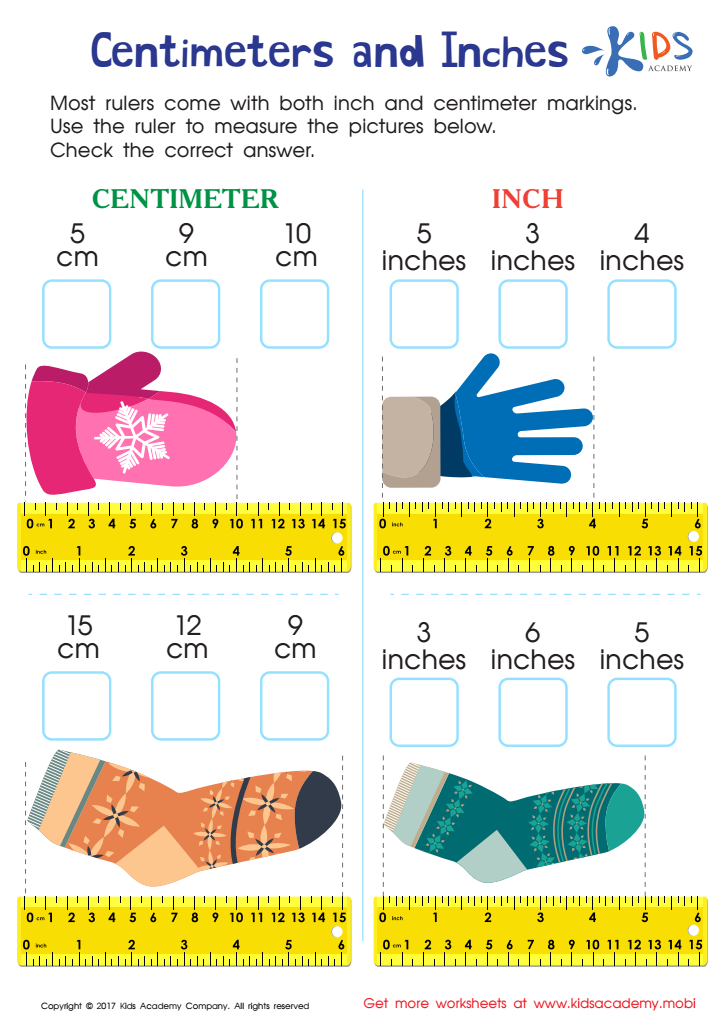
Centimeters and Inches Worksheet








Parents and teachers should care about practical math applications and normal measurement skills for ages 5-7 because these foundational skills support everyday life and future academic success. At this developmental stage, children are naturally curious and absorb new concepts quickly. Learning measurement through hands-on activities helps them understand abstract math concepts, connecting classroom learning to real-world situations. For example, measuring objects with a ruler, comparing the lengths of items, or understanding weights while baking not only makes math fun but also cultivates critical thinking, problem-solving, and analytical skills.
Nurturing practical math skills early on boosts children’s confidence and encourages a positive attitude towards learning. By integrating measurement into daily activities, such as cooking, playing with blocks, or even during outdoor exploration, children see the relevance and application of math in their lives. This holistic approach helps to prevent math anxiety, making math approachable and enjoyable.
Furthermore, competence in basic measurement paves the way for understanding more complex mathematical concepts in later grades, such as geometry and algebra. It also enhances their ability to follow instructions, work systematically, and manage tasks efficiently—essential life skills. Ultimately, early math skills foster independence, curiosity, and a lifelong love of learning, laying a strong foundation for educational achievement and practical decision-making in everyday life.








