Logical thinking Normal Reading Worksheets for Ages 5-7
4 filtered results
-
From - To
Enhance your child's cognitive skills with our "Logical Thinking Normal Reading Worksheets" designed for ages 5-7. These worksheets focus on developing essential logical reasoning techniques while improving reading comprehension. Each engaging activity grows critical thinking, pattern recognition, and problem-solving skills through fun, interactive exercises. Our carefully crafted worksheets encourage young learners to think deeply and explore connections within texts, fostering a love for reading. Perfect for home or classroom use, these resources meet educational standards and support early learning effectively. Start your child’s journey to becoming a thoughtful reader today – download our worksheets and watch their logical thinking thrive!
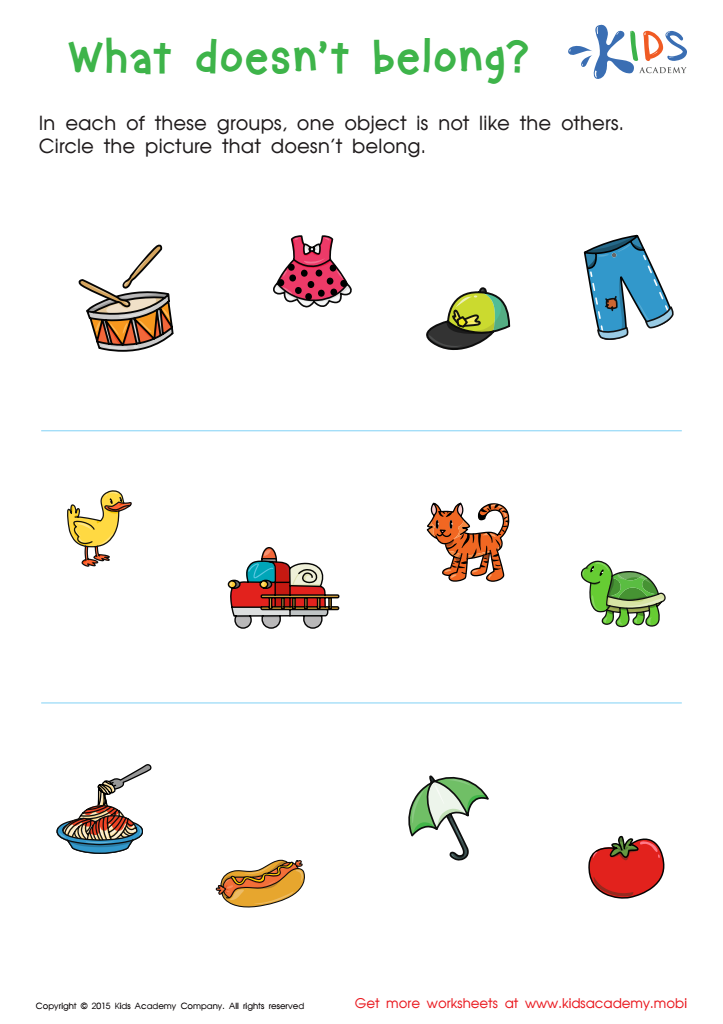
First Words: What Doesn't Belong Worksheet
 Assign to My Students
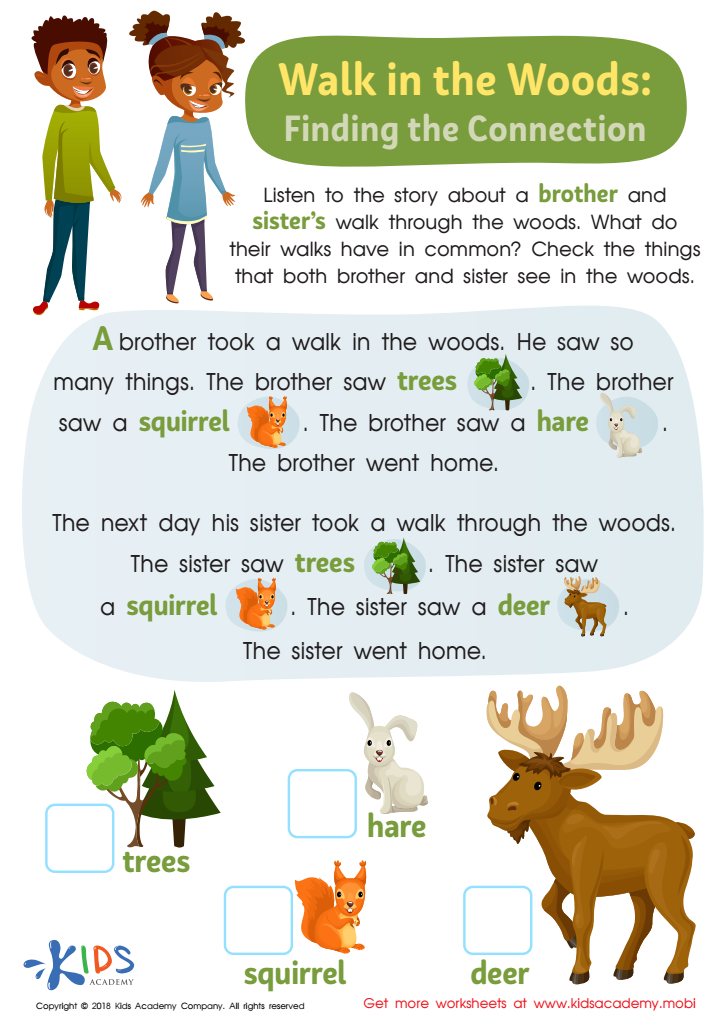
Walk In the Woods: Finding Connections Worksheet
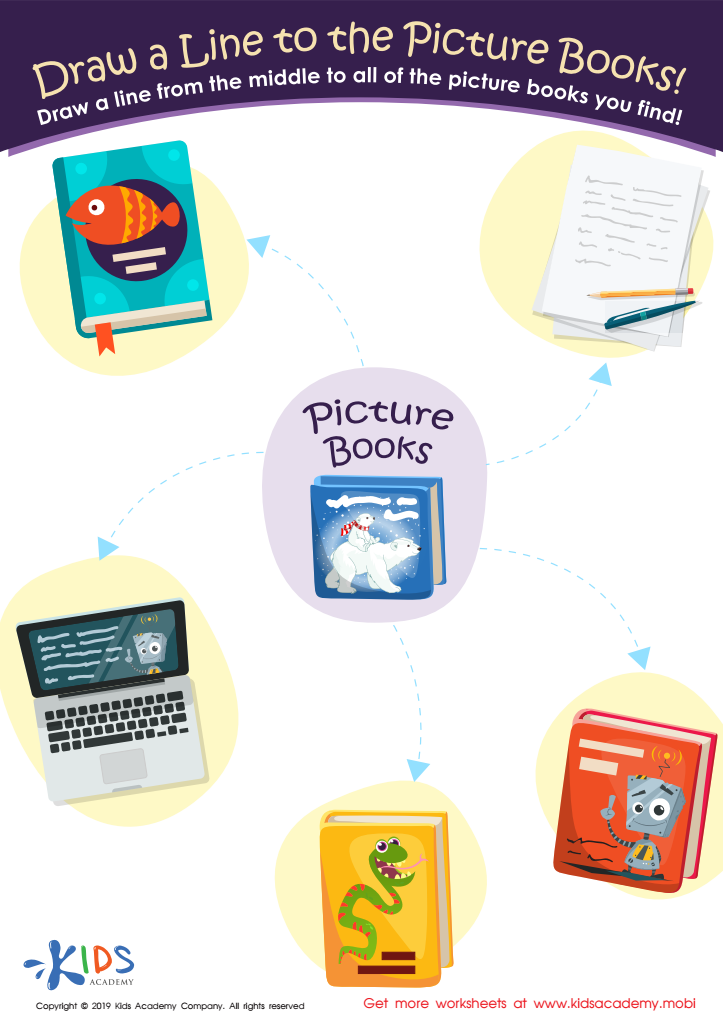
Draw a Line to the Picture Books Worksheet
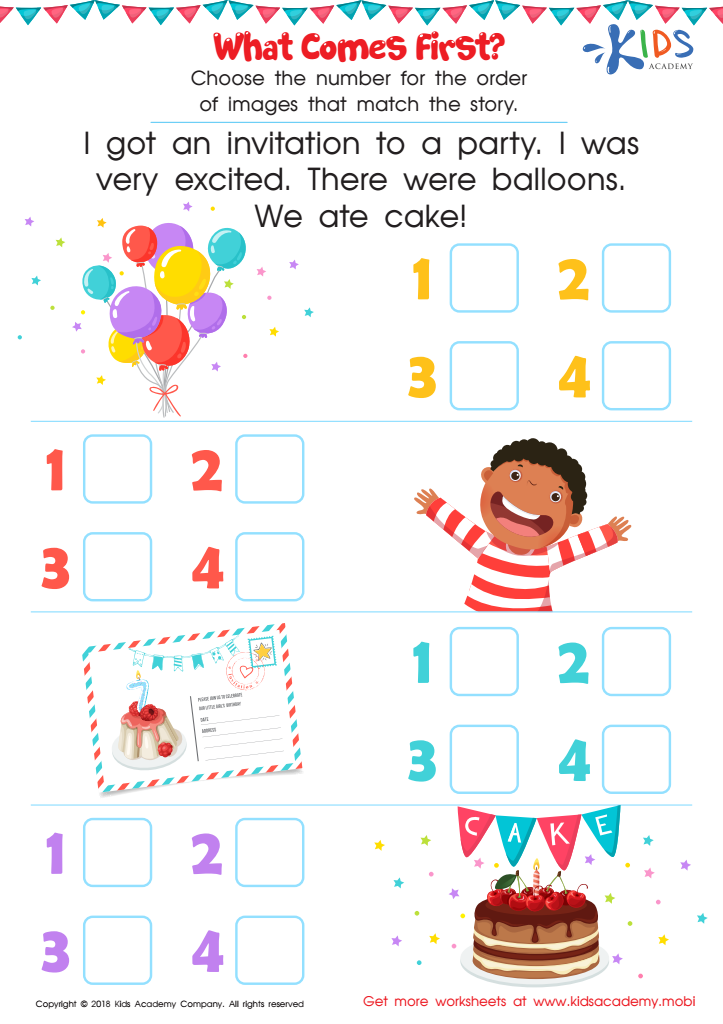
What Comes First Worksheet








Logical thinking and reading skills are vital for children aged 5 to 7, as they form the foundation for lifelong learning. At this stage, children's brains undergo significant development, making it a prime time to cultivate critical thinking and reasoning abilities. When parents and teachers prioritize logical thinking alongside reading, they help children connect ideas, analyze information, and solve problems effectively.
Logical thinking encourages children to approach situations analytically. It promotes curiosity, where kids learn to ask questions and seek solutions, laying the groundwork for scientific inquiry and mathematics in later years. When children engage in reading, especially stories that challenge them to think critically, they learn to infer meanings, identify patterns, and make predictions.
Moreover, enhancing reading skills during this age strengthens vocabulary and comprehension, further boosting logical thought. Storytelling can ignite discussions that encourage children to express their thoughts and reasoning, honing their communication skills.
In essence, fostering logical thinking during the early reading years enriches children’s cognitive development, preparing them for academic success and instilling a love for learning. Investing time in these areas helps children navigate a complex world, fostering independent, thoughtful learners who are equipped to tackle future challenges.








