
Science knowledge Normal Science Worksheets for Ages 5-7
3 filtered results
Difficulty Level
Grade
Age
-
From - To
Subject
Activity
Standards
Explore our engaging "Normal Science Worksheets for Ages 5-7," designed to ignite curiosity and foster scientific understanding in young learners. These worksheets cover essential science knowledge, introducing foundational concepts in an interactive and fun way. Ideal for early grade education, each activity reinforces skills in observation, classification, and critical thinking. With colorful illustrations and age-appropriate content, students will enjoy hands-on learning experiences as they explore nature, the environment, and basic scientific principles. Perfect for home or classroom use, these resources encourage independent learning and support young minds in developing a lifelong love for science. Start your science journey today!
Favorites
With answer key
Interactive
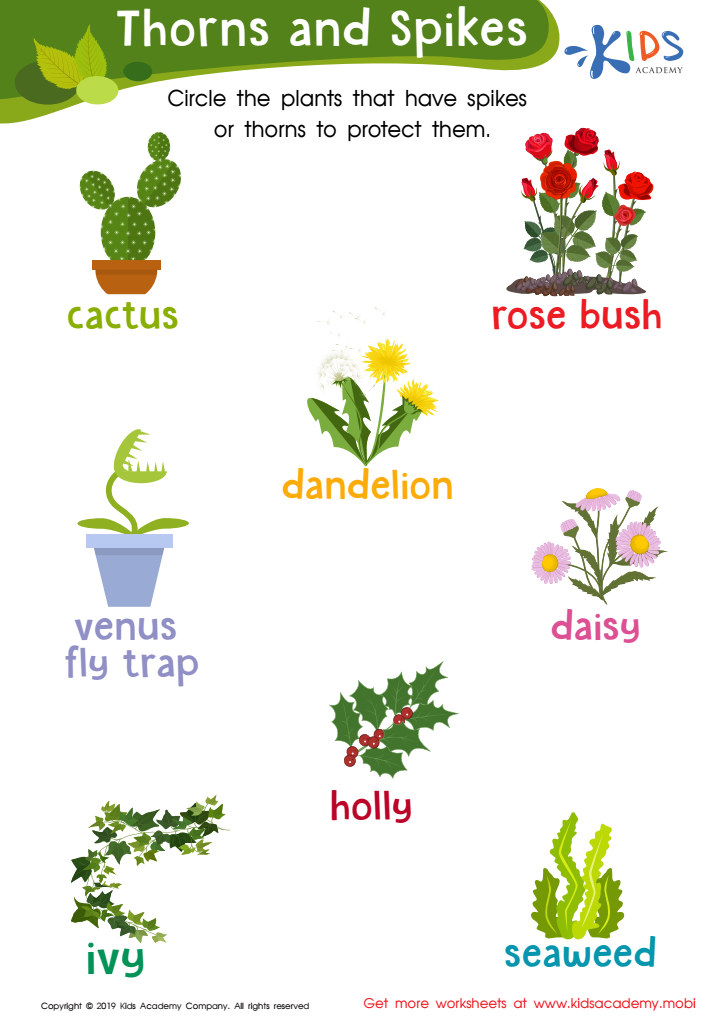
Thorns and Spikes Worksheet
Can your students name and identify the plants and flowers in this worksheet? Ask them to read out the names and circle the ones with spikes or thorns. Help them appreciate nature's beauty and understand how plants protect themselves.
 Assign to My Students
Thorns and Spikes Worksheet
Worksheet
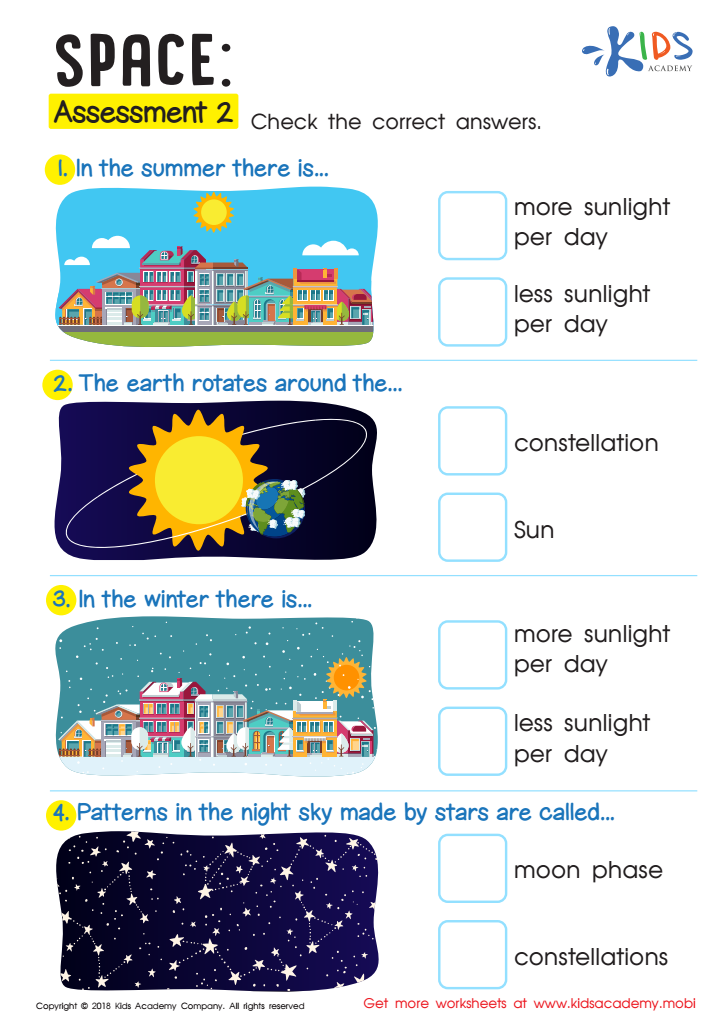
Space: Assessment 2 Worksheet
Test your kids' knowledge of the weather, constellations and Earth with this worksheet. Show them the 4 images and ask what's happening; then read the questions and options and help them pick the right answers. This printout is a helpful and fun way to learn!
Space: Assessment 2 Worksheet
Worksheet
Join Kids Academy for Free
Who is primarily going to use this learning content?








Parents and teachers should care about science knowledge, particularly Normal Science, for children aged 5-7 for several key reasons. At this developmental stage, children are natural explorers, exhibiting curiosity about the world around them. Introducing fundamental scientific concepts helps to nurture that curiosity, laying the groundwork for a lifelong interest in science and learning. Normal Science, which includes basic principles of observation, inquiry, and understanding the natural world, fosters critical thinking and problem-solving skills essential for intellectual development.
Engaging children in simple scientific activities can enhance their observation skills and encourage them to ask questions, promoting a mindset of inquiry. Moreover, early exposure to science promotes literacy in essential vocabulary and concepts, enabling children to better understand their surroundings.
Additionally, integrating science into early education can support social and emotional development. Through collaborative projects and experiments, children learn the value of teamwork and communication. Science also teaches resilience—experimenting often involves trial and error, providing valuable lessons in coping with failure and celebrating success.
Overall, fostering a foundational knowledge of science in young children promotes curiosity, critical thinking, and collaboration, setting the stage for academic and personal growth as they progress in their education.







