Science vocabulary expansion Normal Science Worksheets for Ages 5-7
4 filtered results
-
From - To
Enhance your child's scientific vocabulary with our engaging "Science Vocabulary Expansion Normal Science Worksheets" for ages 5-7! Designed to ignite curiosity and foster a love for learning, these worksheets introduce essential scientific terms in a fun and accessible way. Through interactive activities, colorful illustrations, and age-appropriate language, children will explore fundamental concepts and build a robust vocabulary in science. Perfect for classroom use or at-home learning, these worksheets encourage creativity, critical thinking, and comprehension skills. Help your young learners develop a solid foundation in science and inspire their future adventures in discovery with our thoughtfully designed resources.
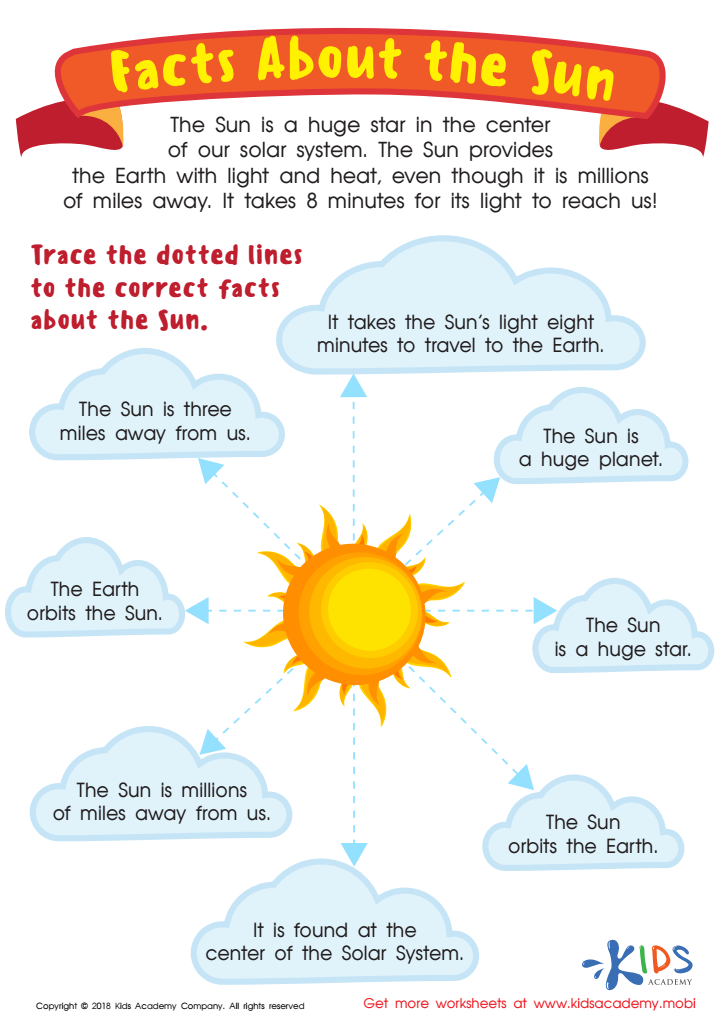
Facts About the Sun Worksheet
 Assign to My Students
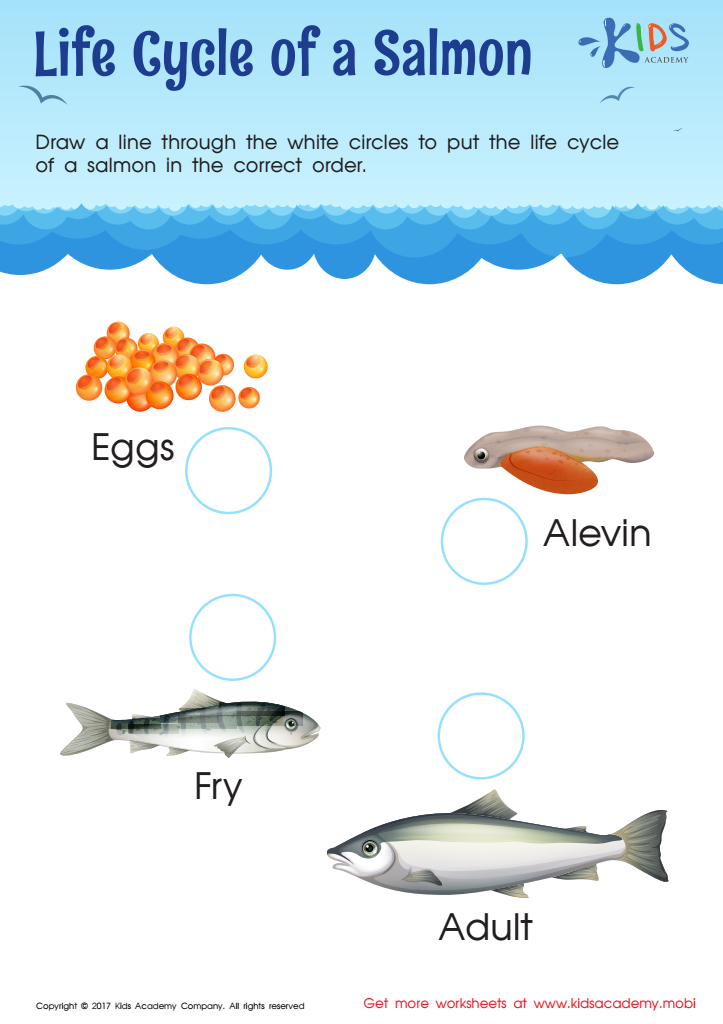
Cycle Of Salmon Worksheet
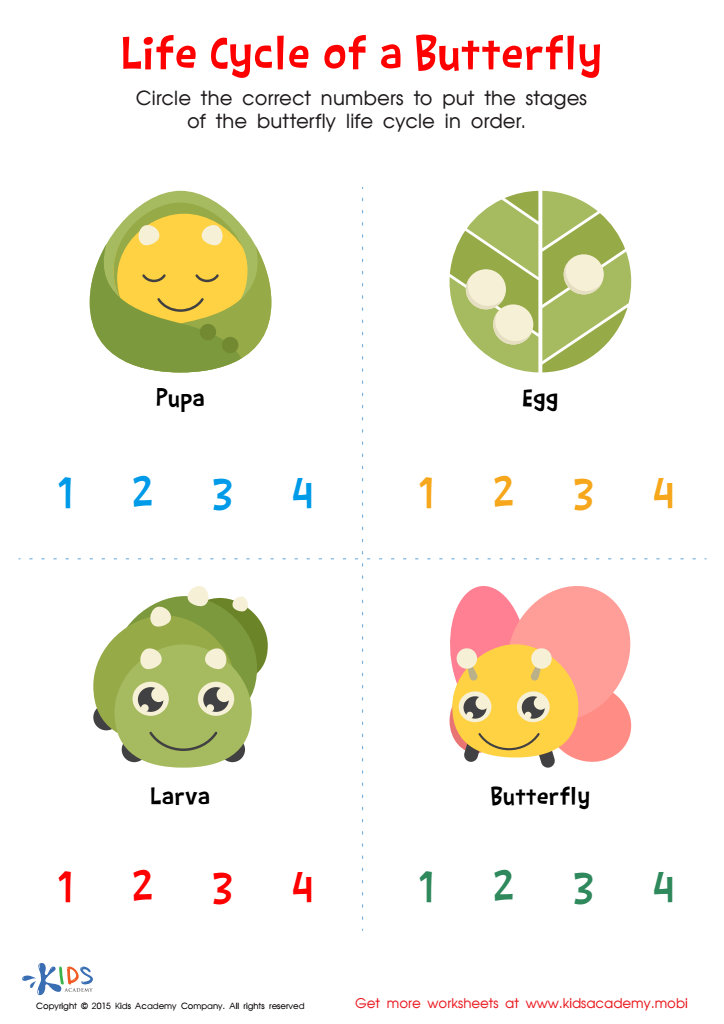
Life Cycle of Butterfly Printable
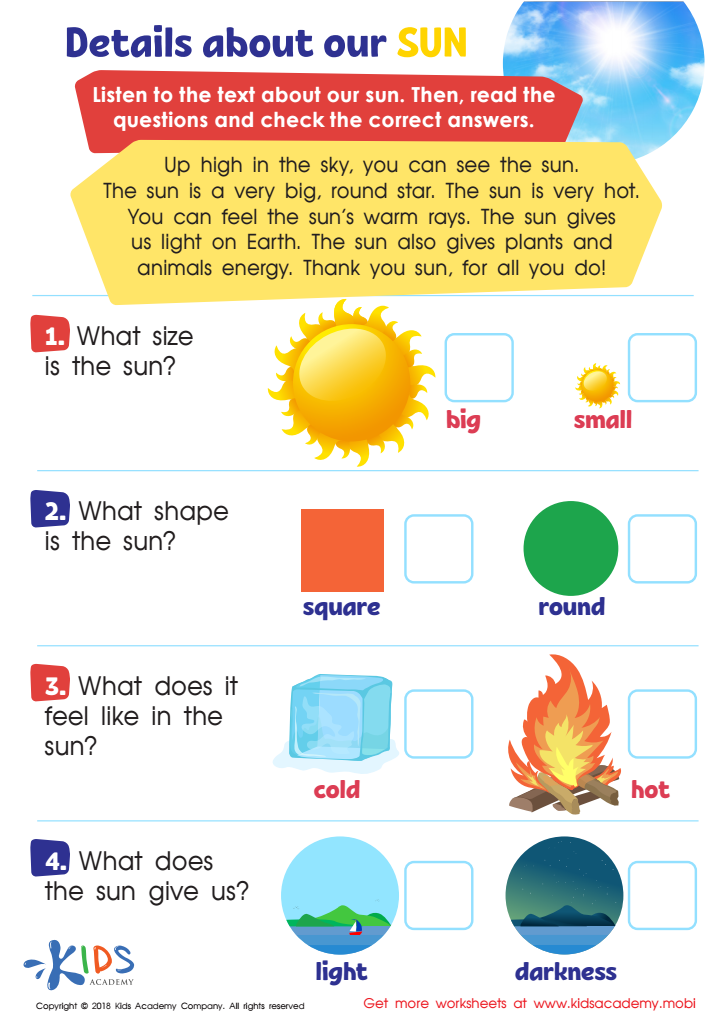
Details About Our Sun Worksheet





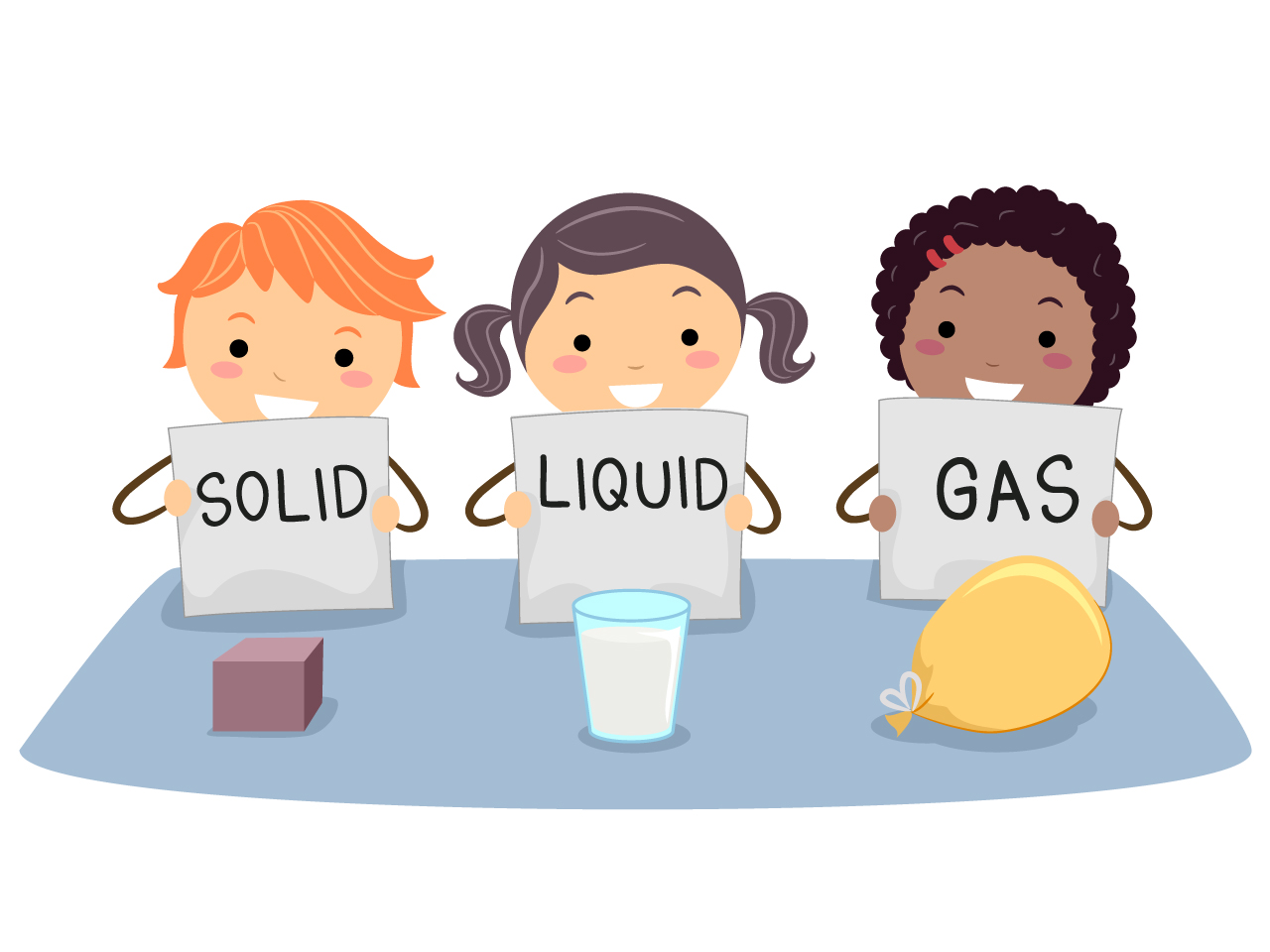


Science vocabulary expansion is crucial for children aged 5-7 as it lays the foundation for their understanding of the natural world and fosters critical thinking skills. During these formative years, children are naturally curious, and introducing them to scientific concepts and vocabulary enhances their exploration and understanding of their surroundings.
When parents and teachers prioritize science vocabulary, they support language development, leading to better reading comprehension and communication skills. As children learn specific terms like “habitat,” “energy,” or “precipitation,” they become better equipped to describe their observations, engage in conversations about scientific topics, and formulate questions—essential skills for lifelong learners.
Moreover, science vocabulary prepares children for future academic success. A strong vocabulary not only enhances their ability to understand complex subjects as they advance in their education but also helps them connect ideas across different disciplines. Additionally, fostering a strong interest in science at an early age cultivates curiosity, creativity, and critical problem-solving skills, ultimately empowering students to tackle real-world challenges.
In summary, expanding science vocabulary for young learners is vital for skill development, academic engagement, and nurturing their innate curiosity, making it a critical focus for both parents and teachers.







