
Critical Thinking Normal Plants and Animals Worksheets for Ages 5-7
5 filtered results
Difficulty Level
Grade
Age
-
From - To
Subject
Activity
Standards
Ignite young minds with our "Critical Thinking Normal Plants and Animals Worksheets for Ages 5-7". Designed to blend fun with foundational science, these carefully crafted worksheets help young learners explore the fascinating world of plants and animals. By encouraging observation, analysis, and reasoning, our exercises help children develop essential critical thinking skills. The visually engaging activities make learning enjoyable and approachable, laying a robust academic foundation. Download today to enrich your child's educational journey through interactive exploration of the natural world, fostering a lifelong love for science and critical inquiry! Suitable for classrooms or at-home educational fun.
Favorites
With answer key
Interactive
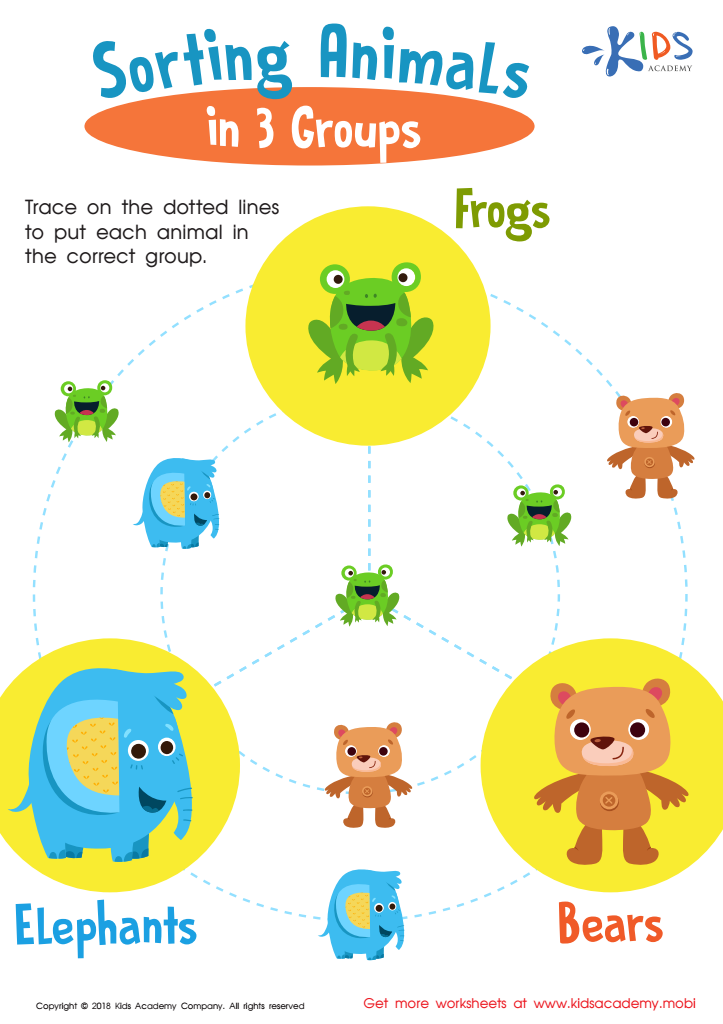
Sorting Animals in 3 Groups Worksheet
Let your kids practice and build skills for future Venn Diagrams with this PDF worksheet. They'll trace lines to match and group animals, and learn the differences and similarities of animals by categorizing with pictures and words. Plus, it's a great way to develop fine motor skills.
 Assign to My Students
Sorting Animals in 3 Groups Worksheet
Worksheet











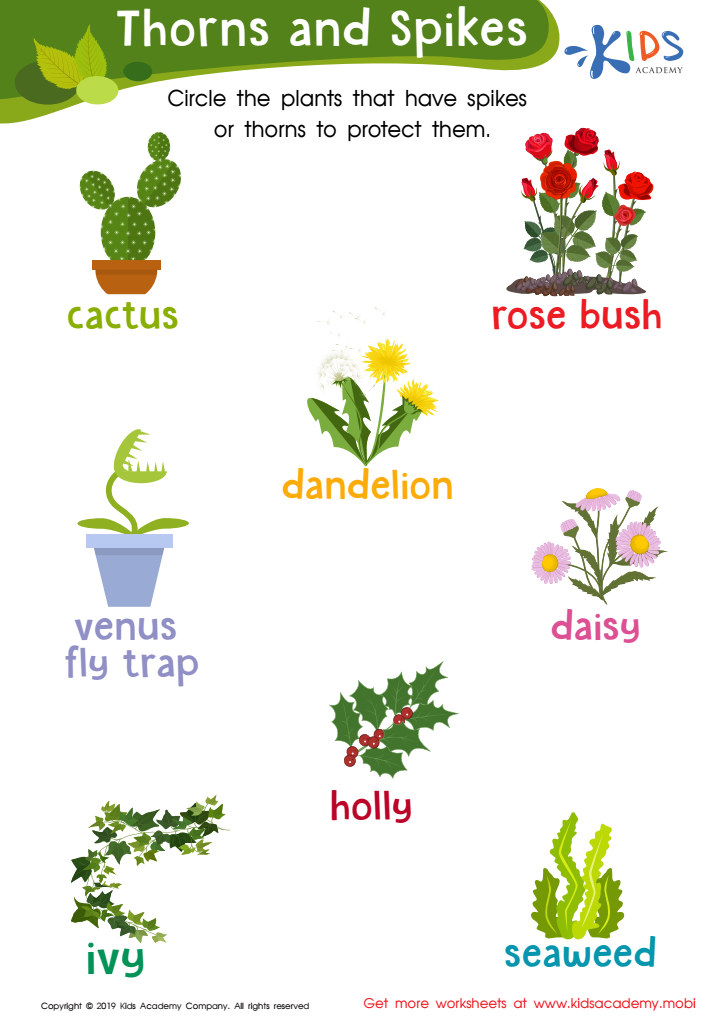
Thorns and Spikes Worksheet
Can your students name and identify the plants and flowers in this worksheet? Ask them to read out the names and circle the ones with spikes or thorns. Help them appreciate nature's beauty and understand how plants protect themselves.
Thorns and Spikes Worksheet
Worksheet
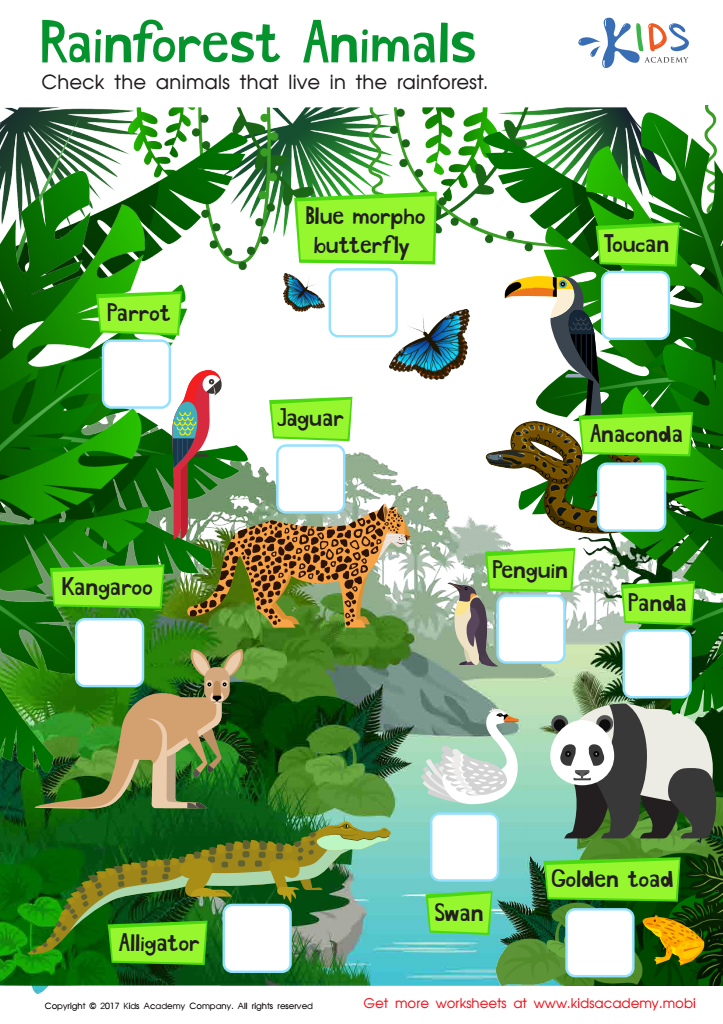
Rainforest Animals Worksheet
Kids love the bright, vivid pics of rainforest animals in this worksheet. It fuels their interest in life science and brings joy to their learning. It encourages them to study these animals in detail.
Rainforest Animals Worksheet
Worksheet
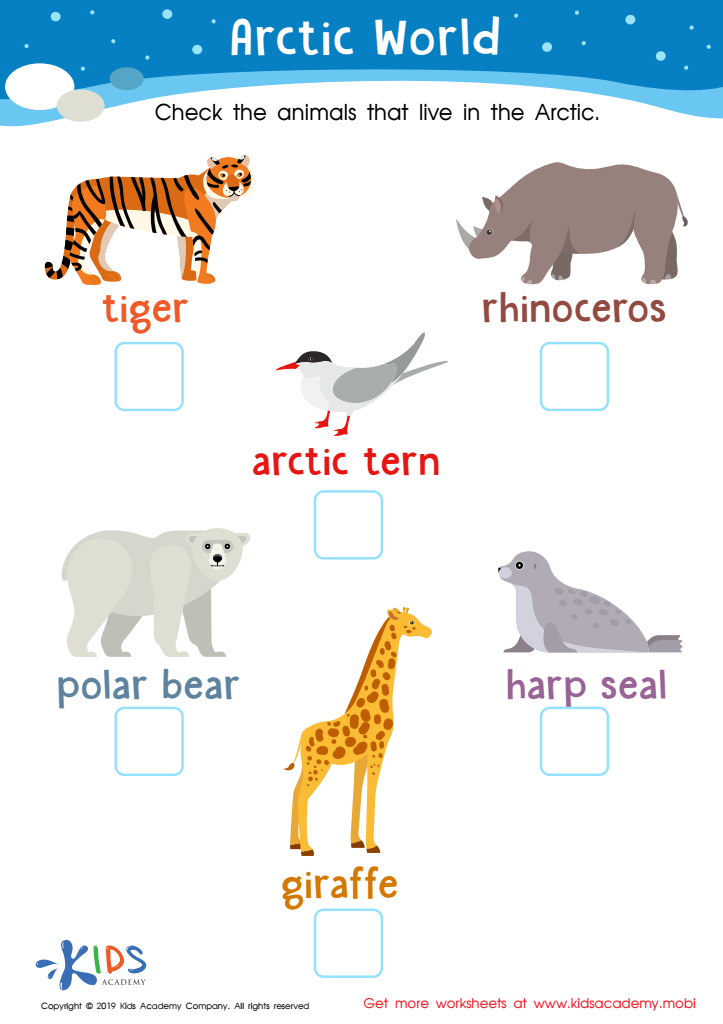
Arctic World Worksheet
Ask your students if they know where the Arctic is located and what lives there. If not, use a world atlas to show them. The Arctic is very cold and snow-covered; native animals have adapted to survive the harsh conditions. Look at the animals in the worksheet and help your students decide which ones live in the Arctic.
Arctic World Worksheet
Worksheet
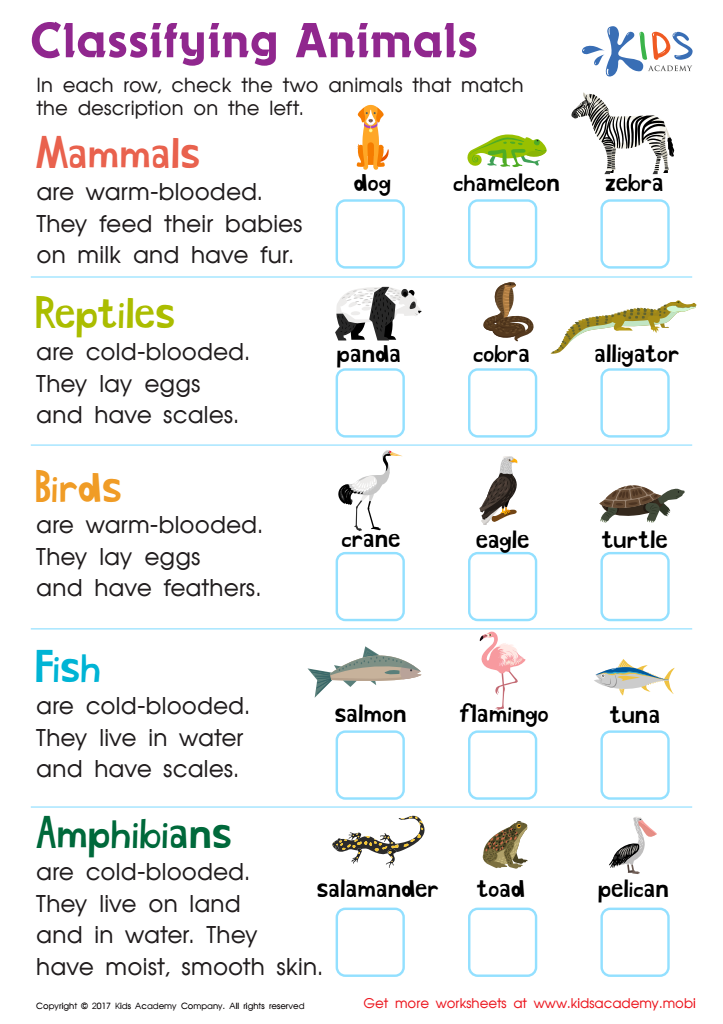
Classifying Animals Worksheet
Print the 2nd grade animal classification worksheet and help kids study the differences between mammals, reptiles, birds, fish and amphibians. Let them pick two examples from the options given.
Classifying Animals Worksheet
Worksheet
Join Kids Academy for Free
Who is primarily going to use this learning content?







Introducing critical thinking skills related to plants and animals for children aged 5-7 offers immense benefits for their cognitive and emotional development. At this age, children's minds are incredibly receptive to learning and exploring their environment. Cultivating critical thinking about nature helps them grasp foundational concepts of biology, ecology, and environmental stewardship.
When children learn to observe, analyze, and ask questions about the natural world, they develop problem-solving skills and curiosity. For example, understanding how plants grow and how animals adapt to their habitats invites them to think logically and make connections. This lays the groundwork for scientific thinking and a love for learning that can last a lifetime.
Moreover, familiarizing young minds with the interdependence of natural systems fosters empathy and respect for living organisms. It sparks a sense of responsibility and care for their surroundings, contributing to character development and environmental awareness. Teachers and parents who focus on these topics imbue children with a sense of wonder and appreciation for nature, encouraging them to become thoughtful, informed individuals who value the natural world.
Therefore, introducing critical thinking about plants and animals at an early age supports broad learning goals and personal growth, creating well-rounded, inquisitive minds.







