Color Identification Normal Social Studies Worksheets for Ages 5-7
3 filtered results
-
From - To
Discover our engaging "Color Identification Normal Social Studies Worksheets" designed specifically for ages 5-7! These interactive worksheets help young learners recognize and differentiate colors while integrating essential social studies concepts. Perfect for reinforcing color recognition skills, each activity encourages creativity and critical thinking through fun illustrations and relatable themes. Our resources promote understanding of cultural diversity, community roles, and environmental awareness, allowing children to explore the world around them. Suitable for both home and classroom settings, these worksheets are an excellent way to enhance early learning and provide a foundation for future studies. Start your child's educational journey with our colorful worksheets today!

Fireman Worksheet
 Assign to My Students
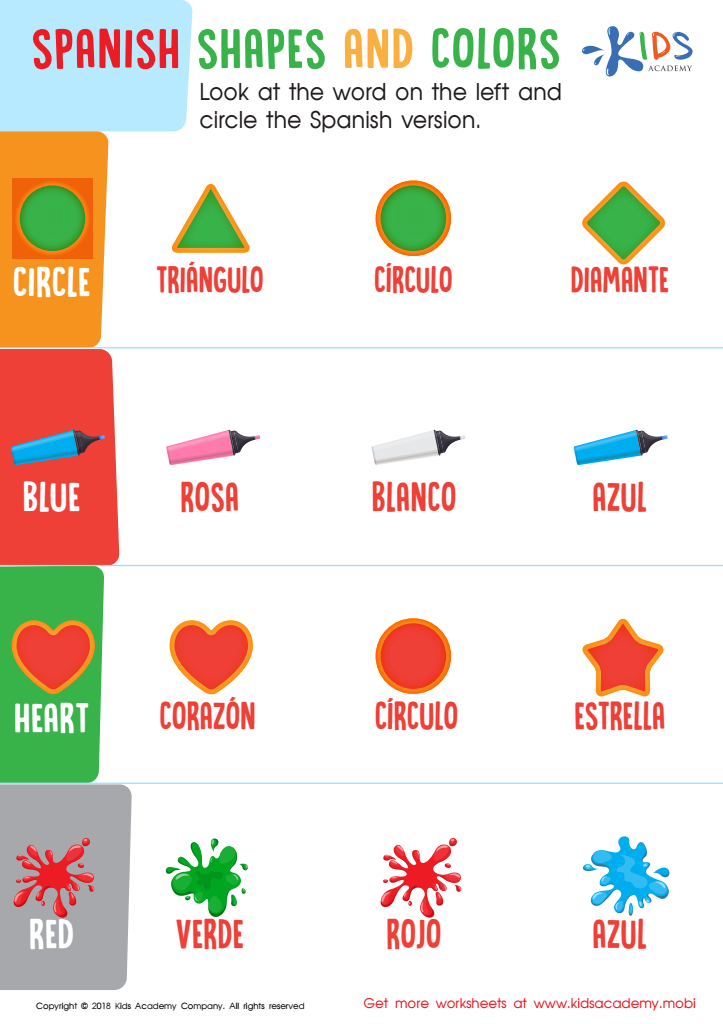
Spanish Shapes and Colors Worksheet

Playground Worksheet







.jpg)
Color identification plays a crucial role in the social and emotional development of children aged 5-7. At this stage, children are not only learning about their surroundings but also how to express themselves and relate to others. Understanding colors helps improve their language skills as they learn to describe and categorize objects, enhancing their vocabulary.
Moreover, color identification can be integrated into social studies curriculum, helping children grasp concepts like diversity and inclusion. For example, colors can symbolize different cultures, ethnicities, and experiences, promoting awareness and sensitivity. When teachers and parents encourage children to identify and discuss colors, they foster an environment of curiosity and inclusivity, supporting social interaction.
In addition, addressing color identification in social studies aids children in developing observation skills, critical thinking, and creativity. These are essential attributes not just for academic success but also for building relationships and navigating the world around them.
Ultimately, an emphasis on color identification within social studies equips children with foundational skills in communication and social awareness. By recognizing the importance of this seemingly simple concept, parents and teachers can help cultivate empathetic and competent individuals who can respect and appreciate the vibrant diversity of their communities.








