Understanding communities Normal Social Studies Worksheets for Ages 5-7
4 filtered results
-
From - To
Welcome to our "Understanding Communities" worksheets, designed specifically for young learners aged 5-7. These engaging resources help children explore the diverse aspects of their communities, fostering essential social studies skills. Through vibrant activities, students will learn about different community roles, navigate local resources, and appreciate cultural diversity. Our worksheets encourage critical thinking, creativity, and collaboration, making learning fun and interactive. Tailored for early grade teachers and parents, these printables are perfect for classroom use or at-home learning. Empower your child with vital knowledge about the world around them and help them develop a strong sense of community and belonging.
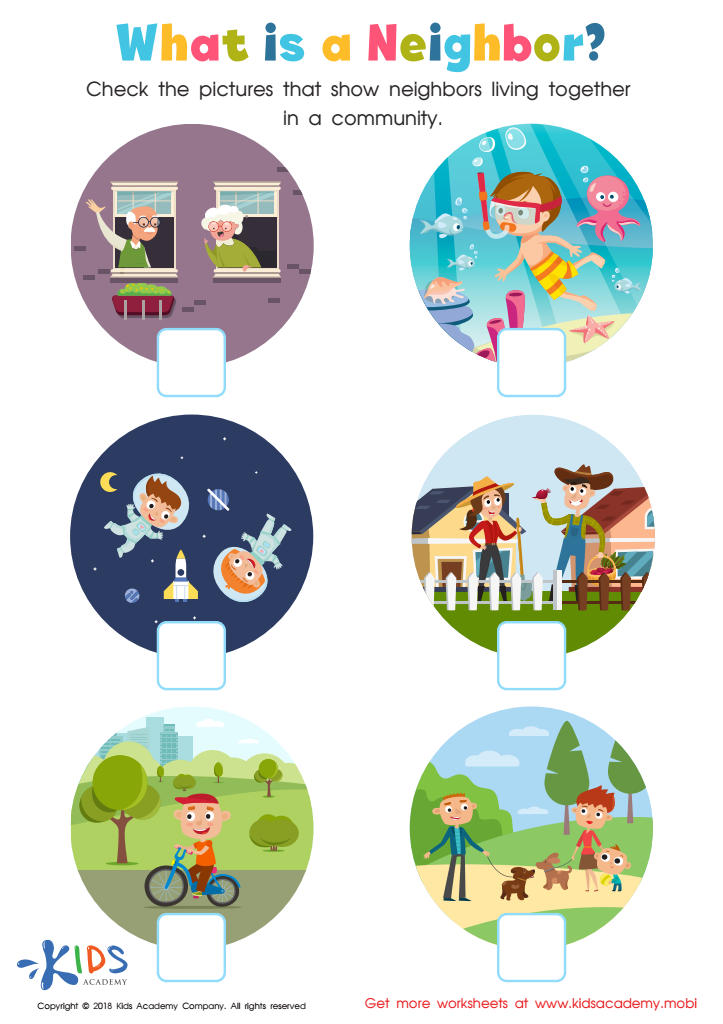
What is a neighbor Worksheet
 Assign to My Students
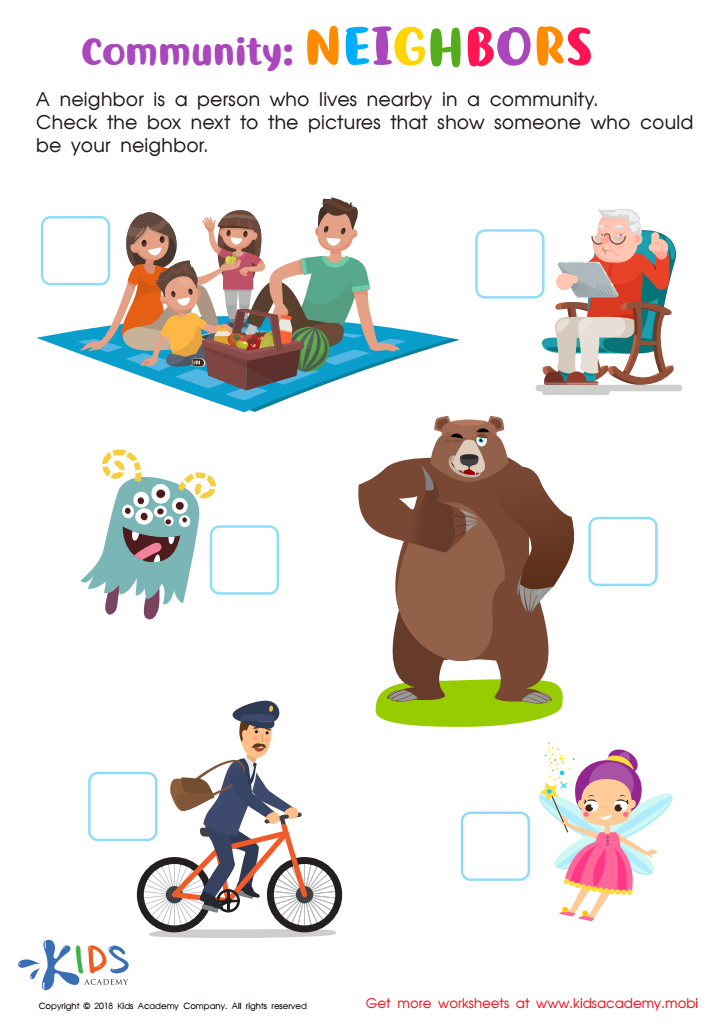
Community: Neighbors Worksheet
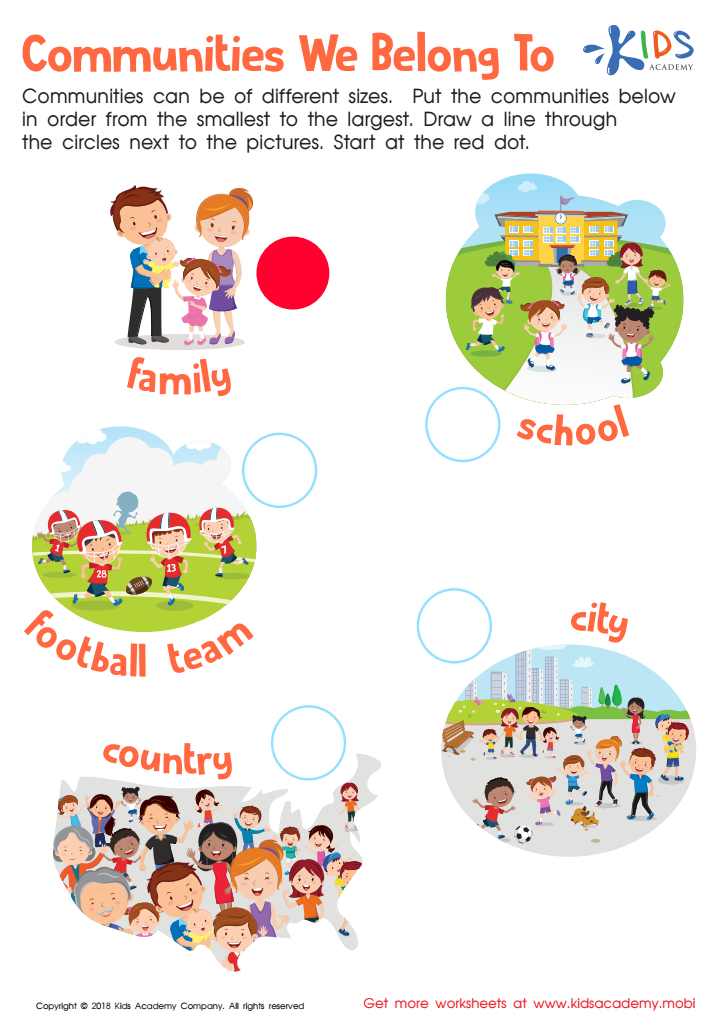
Communities We Belong to Worksheet
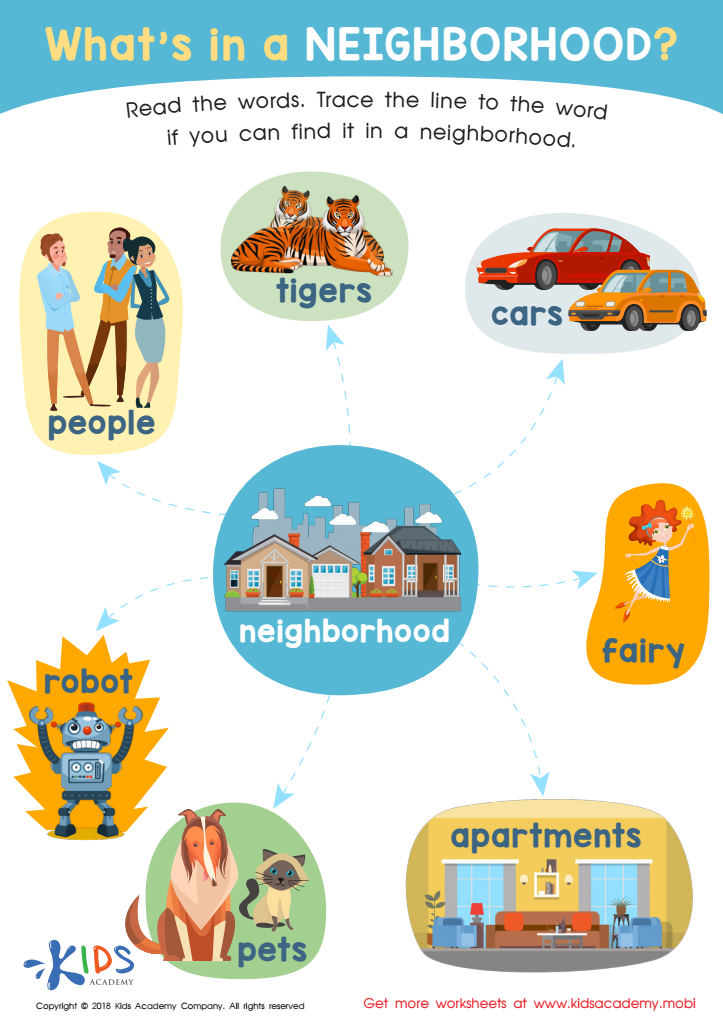
What's in a Neighborhood? Worksheet






Understanding communities through social studies is essential for young children aged 5-7, as it lays the foundation for their social and emotional development. At this age, children are beginning to form their identities and comprehend their roles within their families and surroundings. By learning about communities, they develop crucial skills like empathy, cooperation, and respect for diversity.
Parents and teachers play pivotal roles in this learning process. When children explore the concept of community, they discover the importance of relationships and teamwork, enhancing their ability to work with others. This understanding fosters a sense of belonging, helping them to feel secure and supported.
Additionally, community exploration encourages children to connect classroom learning to real-life situations. They learn about local resources, cultural practices, and civic responsibilities, inspiring active participation in their communities. Engaging with neighbors, visiting local libraries, and recognizing various occupations contributes to their awareness of the broader world.
In sum, teaching young children about communities cultivates informed and compassionate citizens. By actively participating in this process, parents and teachers reinforce positive values, paving the way for lifelong learning and engagement. Building these foundational skills early aligns with holistic educational goals and nurtures well-rounded individuals who appreciate their communities.








