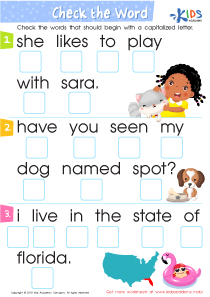
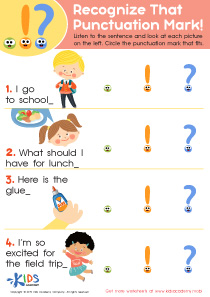
Word identification Normal Writing Worksheets for Ages 5-7
3 filtered results
-
From - To
Unlock your child’s potential with our Word Identification Normal Writing Worksheets for Ages 5-7! Designed to enhance early reading skills, these engaging worksheets help young learners recognize and identify words through fun and interactive activities. These educational tools are perfect for building a strong foundation in vocabulary, reading fluency, and comprehension. Suitable for kindergartners and first graders, our expertly crafted worksheets combine learning with entertainment, making the process enjoyable. Give your child the advantage they need for academic success and watch them soar with confidence. Explore our worksheets today and make reading an adventure!
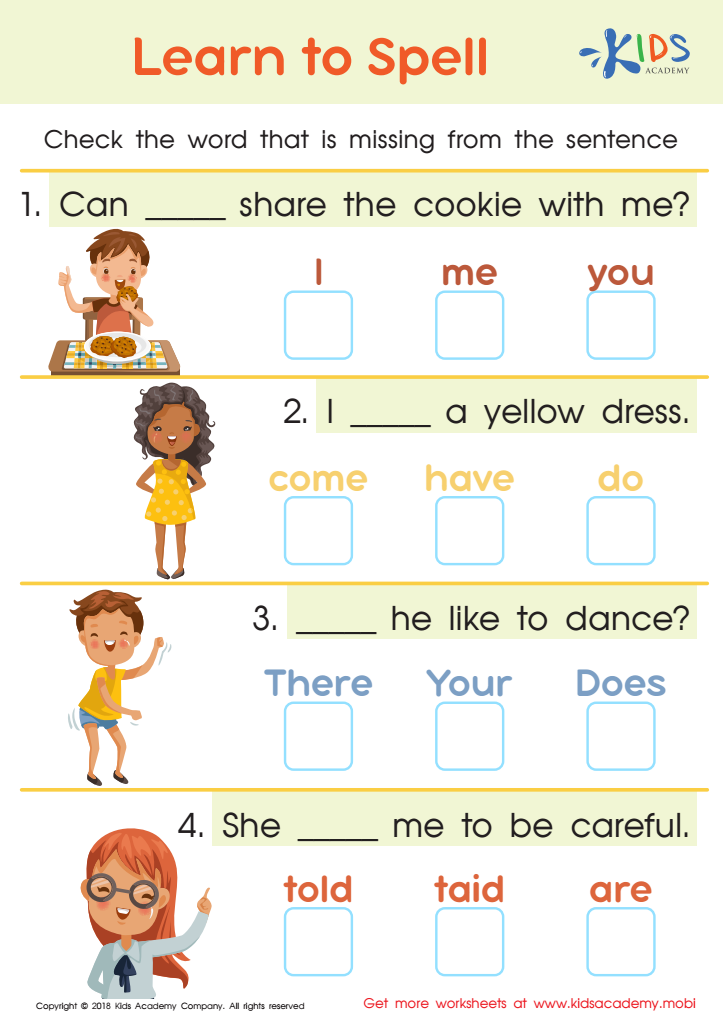
Learn to Spell Worksheet
 Assign to My Students
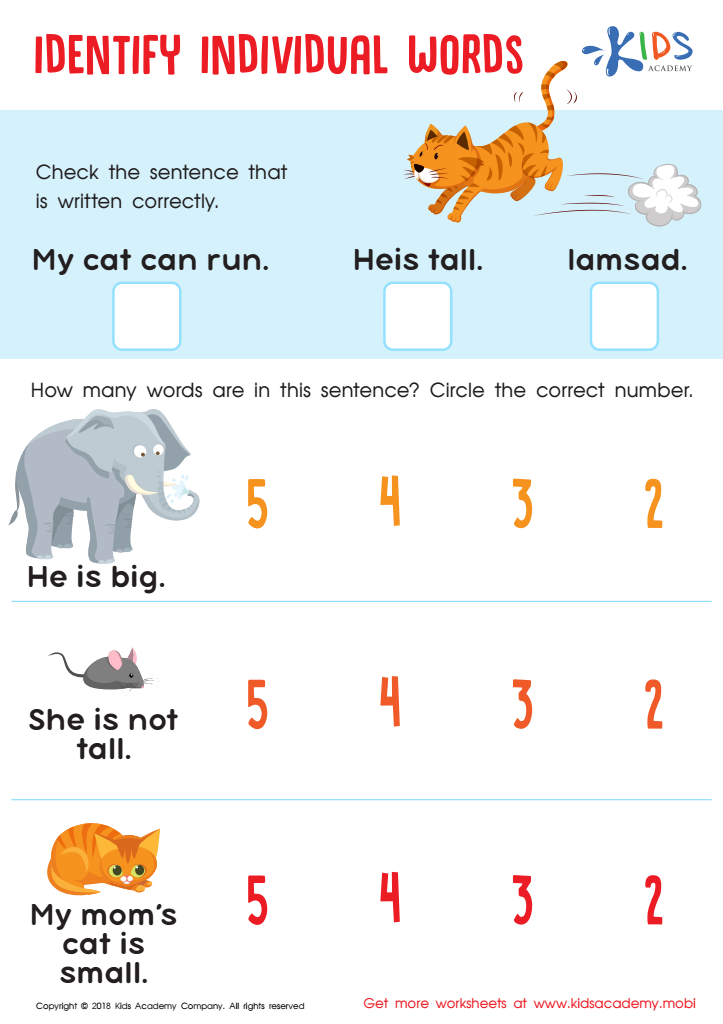
Identify Individual Words Worksheet
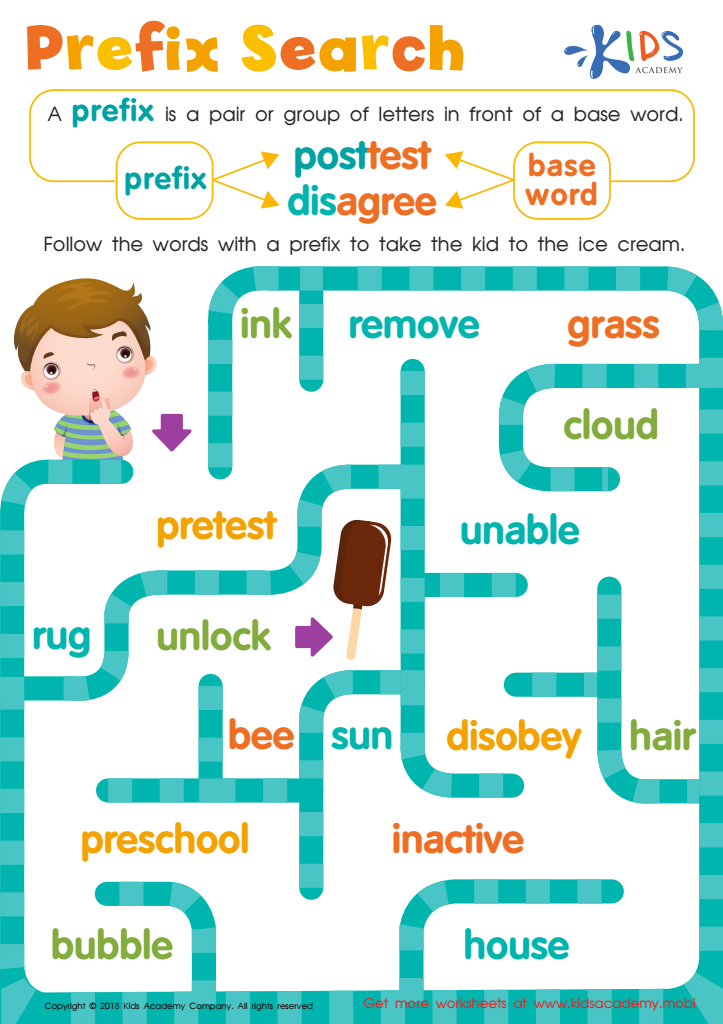
Reading: Prefix Search Worksheet






Parents and teachers should care about word identification and normal writing for children aged 5-7 because these skills are foundational for future academic success and effective communication. At this critical age, young children are rapidly developing their cognitive and linguistic abilities. Word identification, which involves recognizing and understanding words quickly and accurately, is essential for reading fluency. When children can identify words effortlessly, they can focus more on comprehension, making reading a more enjoyable and meaningful activity.
Normal writing skills, encompassing handwriting, spelling, and sentence construction, are equally important. Writing is a primary means of expressing thoughts, ideas, and knowledge. Proficiency in writing allows children to complete school assignments efficiently, engage in creative storytelling, and communicate complex concepts clearly.
Both word identification and writing are interrelated; strong reading skills enhance writing abilities, and vice versa. Early mastery of these skills sets the stage for a positive academic trajectory, reducing the frustration or disengagement that can arise from reading and writing difficulties. By prioritizing these skills, parents and teachers can support cognitive development, boost self-esteem, and foster a lifelong love of learning in young children. This comprehensive approach ensures that children are well-equipped to tackle more advanced literacy tasks as they progress through their education.