Fine Motor Skills Normal Letter E Worksheets for Ages 5-8
3 filtered results
-
From - To
Enhance your child's fine motor skills with our engaging Letter E worksheets, designed for ages 5-8! These printable activities focus on tracing, coloring, and crafting, providing a fun and educational way for young learners to master the letter 'E'. Each worksheet is carefully crafted to improve hand-eye coordination, strengthen finger control, and promote confidence in letter recognition. Perfect for home or classroom use, our resources encourage creativity while aiding in the development of essential writing skills. Help your child embark on a fun learning journey as they explore the exciting world of the alphabet with our Letter E fine motor skills worksheets!
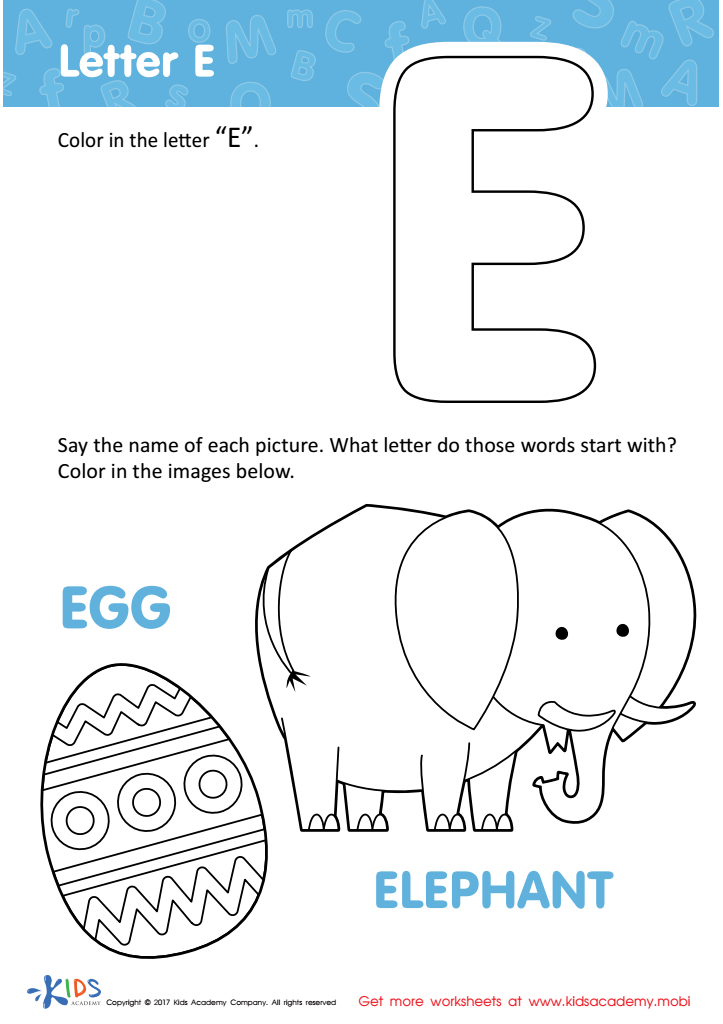
Letter E Coloring Sheet
 Assign to My Students
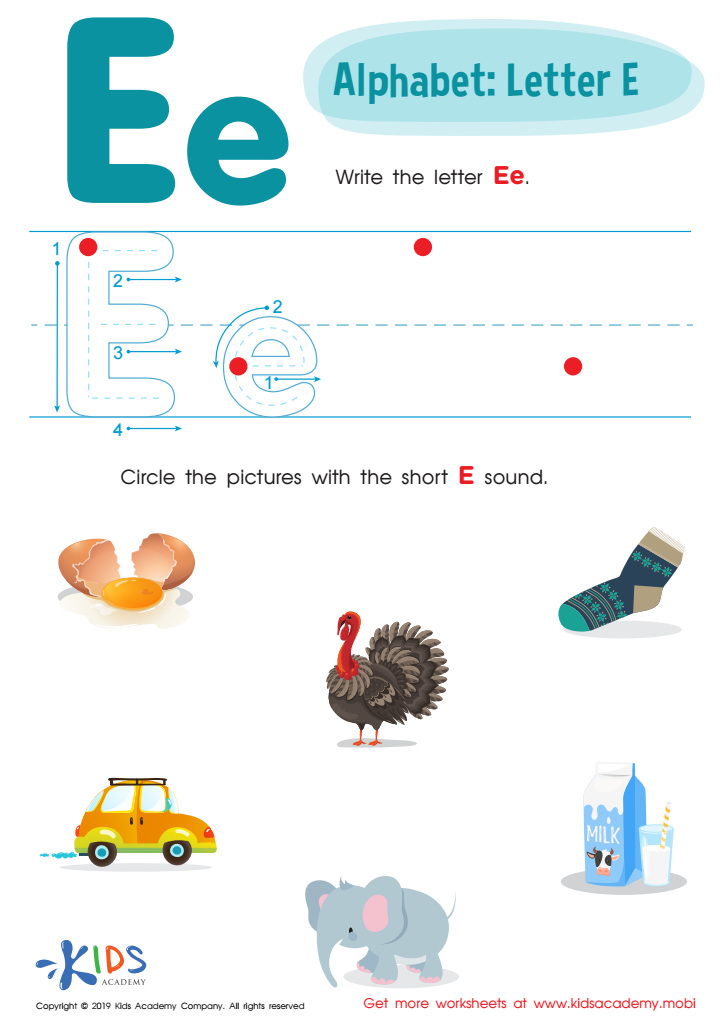
Letter E Tracing Worksheet
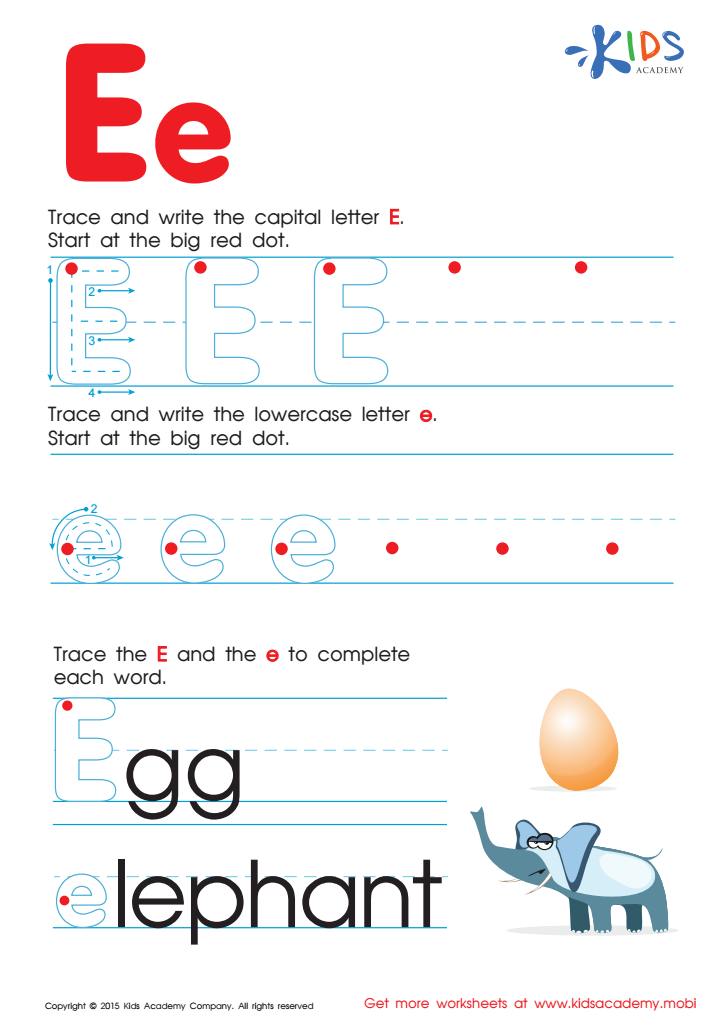
Letter E Tracing Page






Fine motor skills are crucial for children aged 5-8 as they form the foundation for many everyday tasks and academic success. Specifically, the ability to correctly write letters, like the lowercase "e," demonstrates a child's developing hand-eye coordination, dexterity, and control.
Parents and teachers should care about fine motor skills because they influence a child's overall learning capabilities and confidence. Mastering the formation of letters not only helps students with writing but also with activities like cutting, drawing, and even buttoning clothes—all essential for independence. Enhanced fine motor skills improve a child's ability to engage with classroom activities, impacting their academic performance.
Additionally, strong fine motor skills can foster positive self-esteem. When children can write clearly and legibly, they are more likely to express their ideas confidently, participate actively in class, and complete assignments without frustration. This can lead to a love for learning and the exploration of creative activities.
In nurturing fine motor development, both parents and teachers play a vital role. They can support this growth through engaging activities—including art projects, puzzles, and writing games—that make practicing these skills fun and motivating, ultimately laying the groundwork for future academic and personal success.