
Alphabetical order understanding Normal Letter Recognition Worksheets for Ages 5-8
3 filtered results
Difficulty Level
Grade
Age
-
From - To
Subject
Activity
Standards
Nurture your child's understanding of the alphabet with our engaging Alphabetical Order Normal Letter Recognition Worksheets, designed for ages 5-8! These worksheets guide young learners through the exciting journey of arranging letters in the correct order, enhancing their recognition skills along the way. Each activity is tailored to build confidence in alphabetical comprehension, ensuring a solid foundation in literacy. Crafted with educational best practices, these printables inspire fun and learning, making the alphabet a captivating adventure for kids. Download now and watch your child thrive with newfound alphabetical mastery!
Favorites
With answer key
Interactive
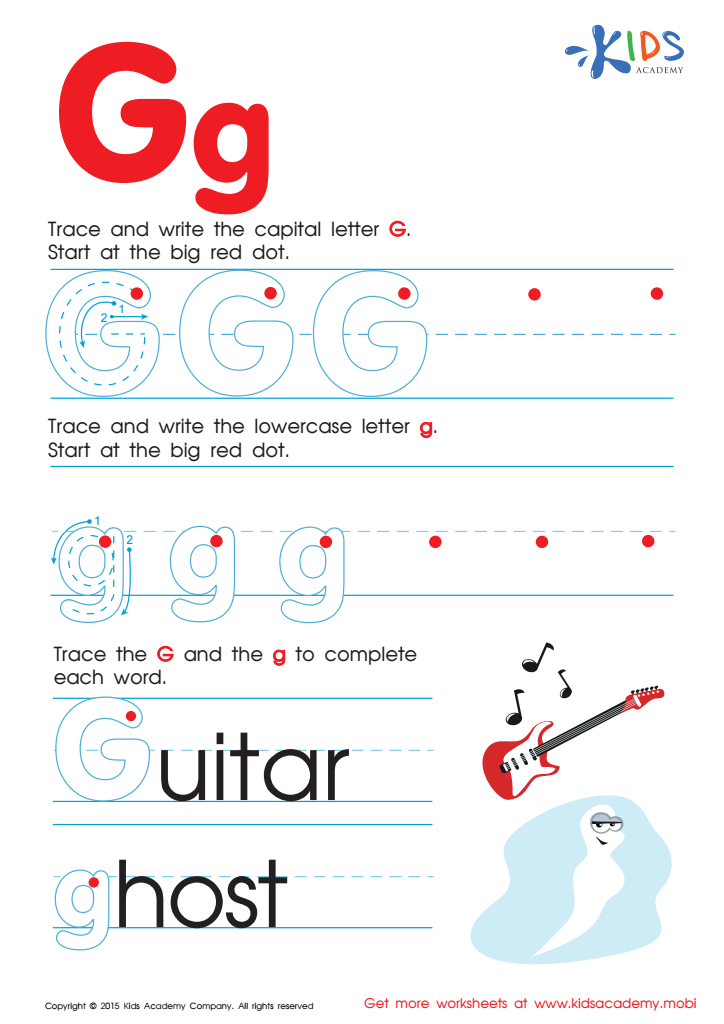
Letter G Tracing Page
Get ready to trace the letter "G" – with a big red spot as the starting point, trace the lines and watch the letter appear. Uppercase and lowercase letters are both easy and fun to write. Give it a go and finish the word "go". Play the guitar and say "hello" to a funny ghost!
Letter G Tracing Page
Worksheet
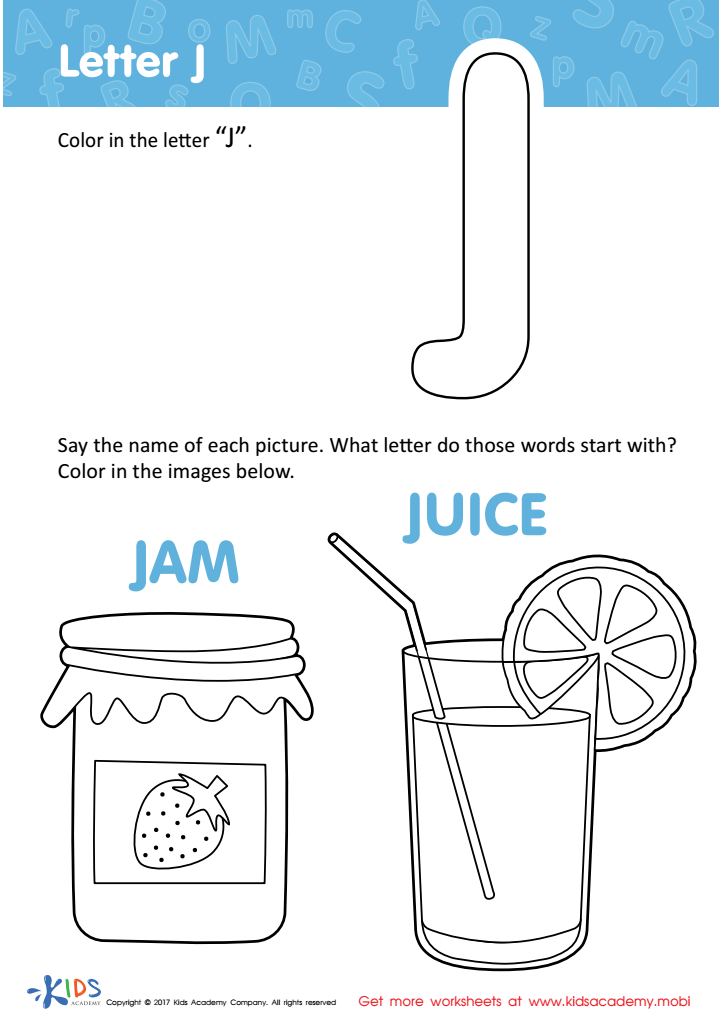
Letter J Coloring Sheet
Practice the letter 'J' with your little one with this fun coloring page! Pictures of jar, juice, jam and jelly make it an enjoyable experience for kids. Learning the letter and coloring is fun for even the youngest learners.
Download (PDF)
 Assign to My Students
Assign to My Students
Letter J Coloring Sheet
Worksheet
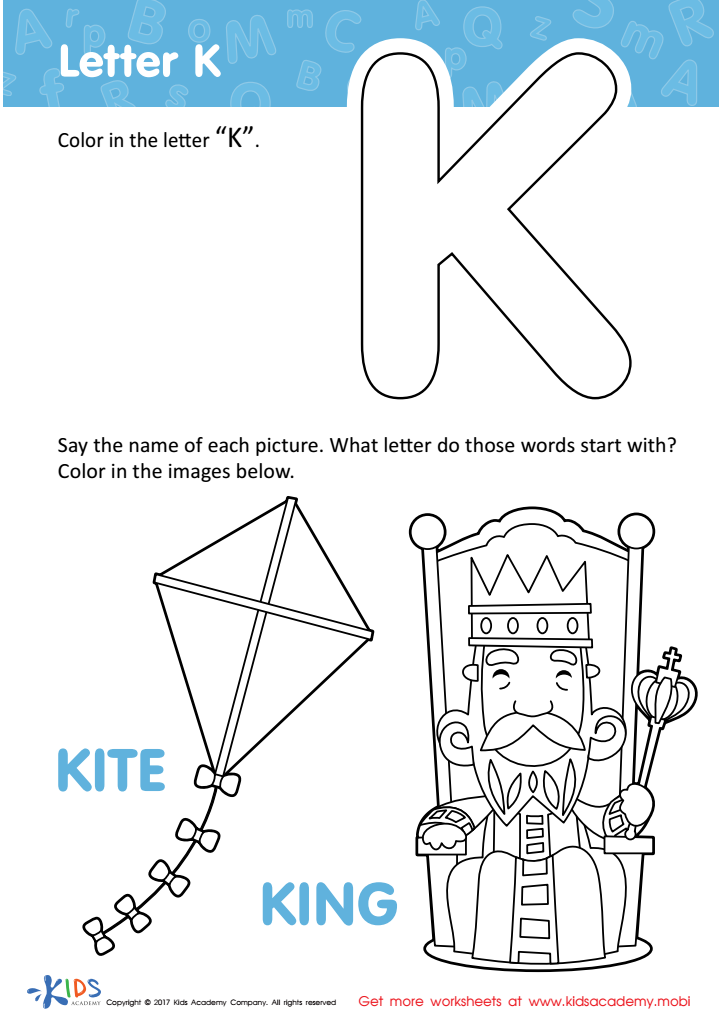
Letter K Coloring Sheet
This letter K coloring page captivates your child's creativity while learning the letter! Showcasing a king and kite, common words for their age group, it's sure to spark their imagination.
Download (PDF)
Assign to My Students
Assign to My Students
Letter K Coloring Sheet
Worksheet
Join Kids Academy for Free
Who is primarily going to use this learning content?








Understanding alphabetical order and normal letter recognition is crucial for children aged 5-8 as it lays the foundation for literacy and overall academic success. Learning to recognize letters is the first step in a child’s ability to read and write, which are essential skills for all future learning.
For young children, familiarizing themselves with alphabetical order aids mnemonic engagement; children can more easily remember the sequence of letters, which helps in spelling, dictionary use, and sequencing tasks. Researchers have found that alphabetical knowledge correlates with phonemic awareness, assisting children in understanding that words are composed of individual sounds. This understanding is critical for early reading skills.
Moreover, knowing the alphabet in order helps children efficiently organize information, making it easier to comprehend reading material and follow written instructions. In subjects beyond language arts, such as math and science, the organizational skills learned through alphabetical order are invaluable.
Parents and teachers play vital roles in this aspect of early childhood education. Engaging activities like singing the alphabet song, playing letter games, and using educational tools enrich and enhance letter recognition. Enabling children to confidently master these skills creates a solid educational foundation, ensuring they are prepared for future academic challenges and successes.








