
Phonics Skills Normal Letter Recognition Worksheets for Ages 5-8
6 filtered results
Difficulty Level
Grade
Age
-
From - To
Subject
Activity
Standards
Develop crucial early reading abilities with our Phonics Skills Normal Letter Recognition Worksheets designed for ages 5-8. Featuring engaging exercises, these worksheets enhance letter identification, phonics, and foundational language skills. Ideal for young learners, each activity combines fun with education, ensuring effective and enjoyable learning experiences. Perfect for classroom use or at-home practice, our expertly crafted worksheets not only foster alphabet familiarity but also boost confidence in budding readers. Introduce your child to the world of letters and phonics, and set the stage for a lifelong love of reading. Explore our collection today and watch your child's literacy skills flourish!
Favorites
With answer key
Interactive
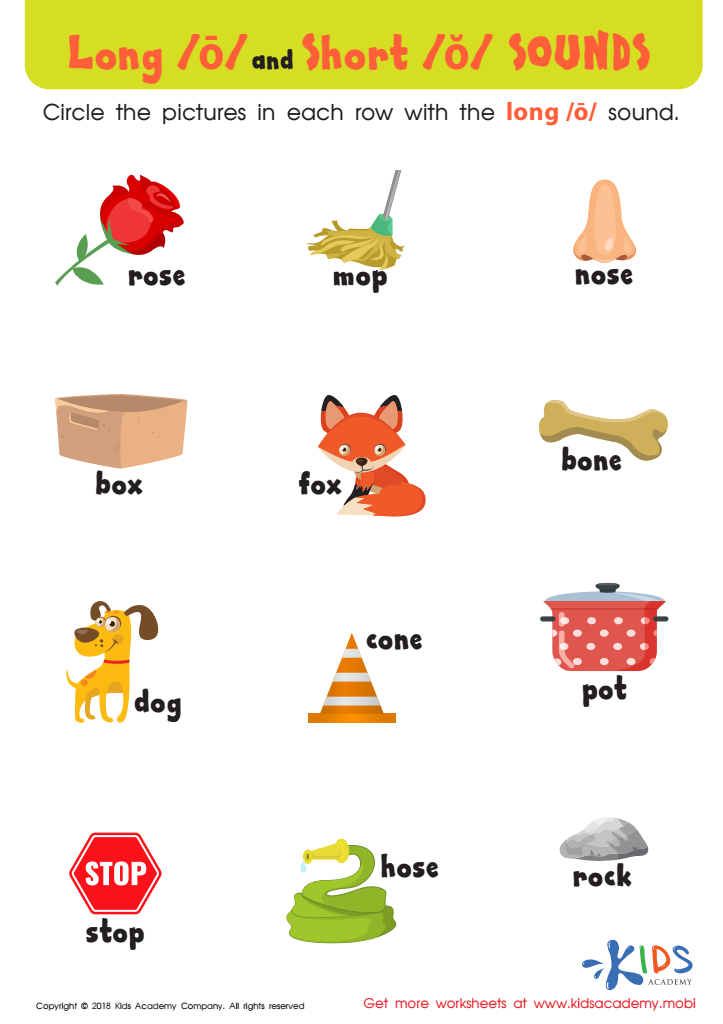
Reading: Long O and Short O Sounds Worksheet
Students practice distinguishing between short and long O sounds with this reading worksheet. They sound out each word, then circle the pictures with the long O sound. Perfect for individual practice or to work with peers! Improves understanding of this skill and helps avoid confusion.
 Assign to My Students
Reading: Long O and Short O Sounds Worksheet
Worksheet
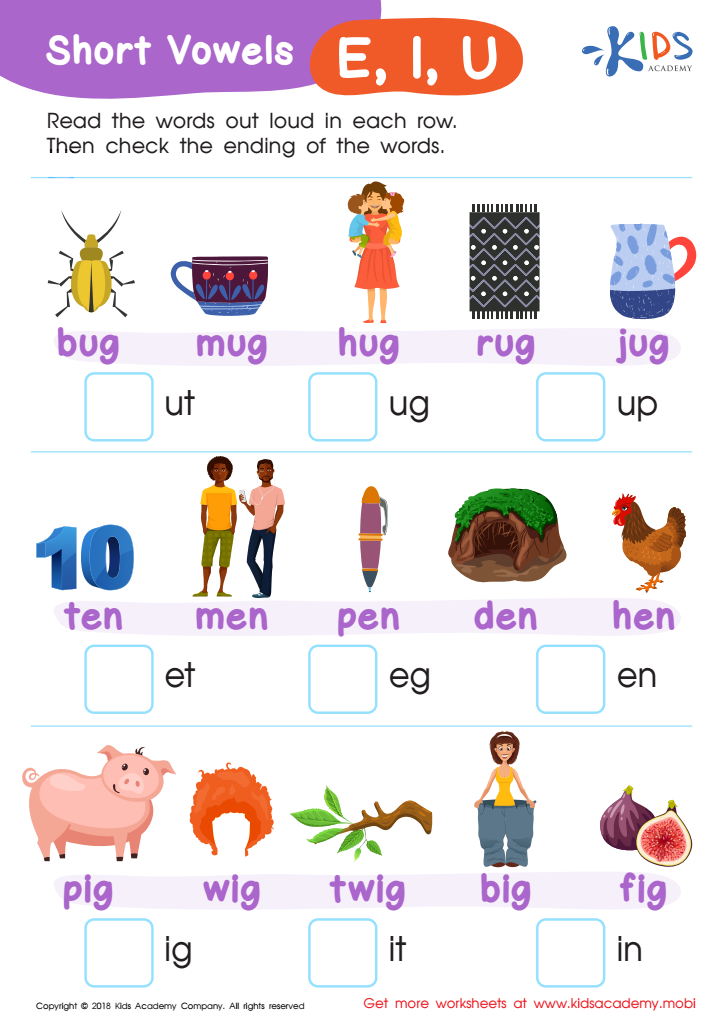
Short Vowels /e/, /i/, and /u/ Worksheet
Your emergent reader can have fun while practicing their short vowel sounds with this free, brightly colored worksheet. They'll identify one-syllable words by their pictures, then match the correct ending for each. They'll gain an understanding of how short vowel sounds vary in closed syllables with different endings, without even realizing it!
Short Vowels /e/, /i/, and /u/ Worksheet
Worksheet
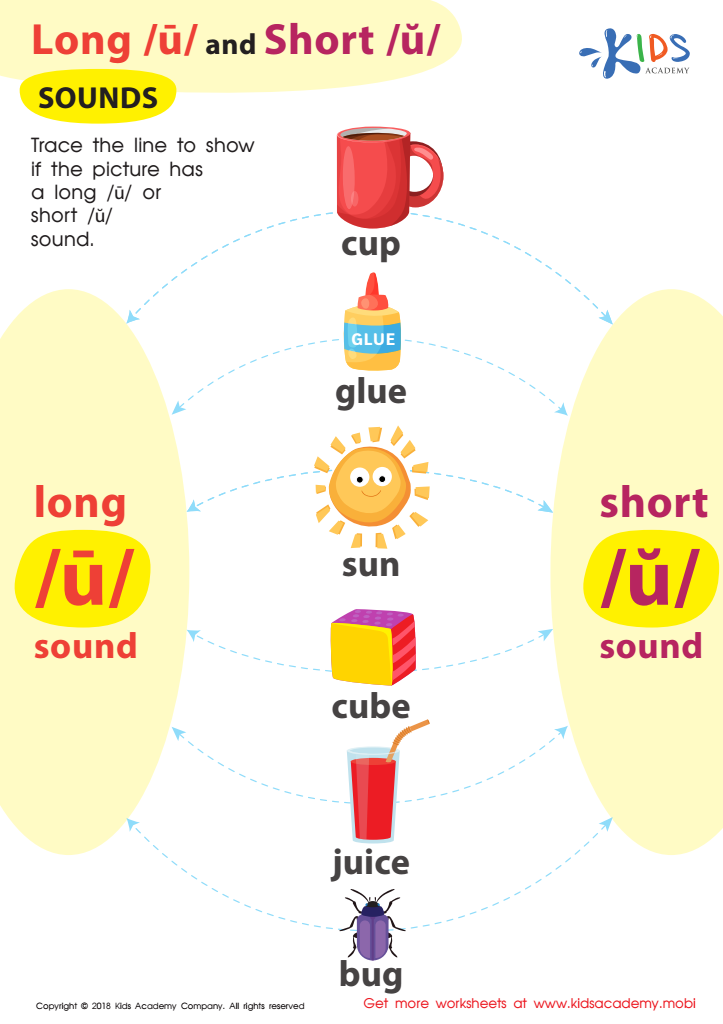
Reading: Long U and Short U Sounds Worksheet
Learning about long and short vowel sounds can be tricky, especially with the letter U. Extra practice with this worksheet is recommended for mastering this sound. Children read words with the different vowel sounds and categorize them. Great for instruction, practice and reteaching in reading classes.
Reading: Long U and Short U Sounds Worksheet
Worksheet
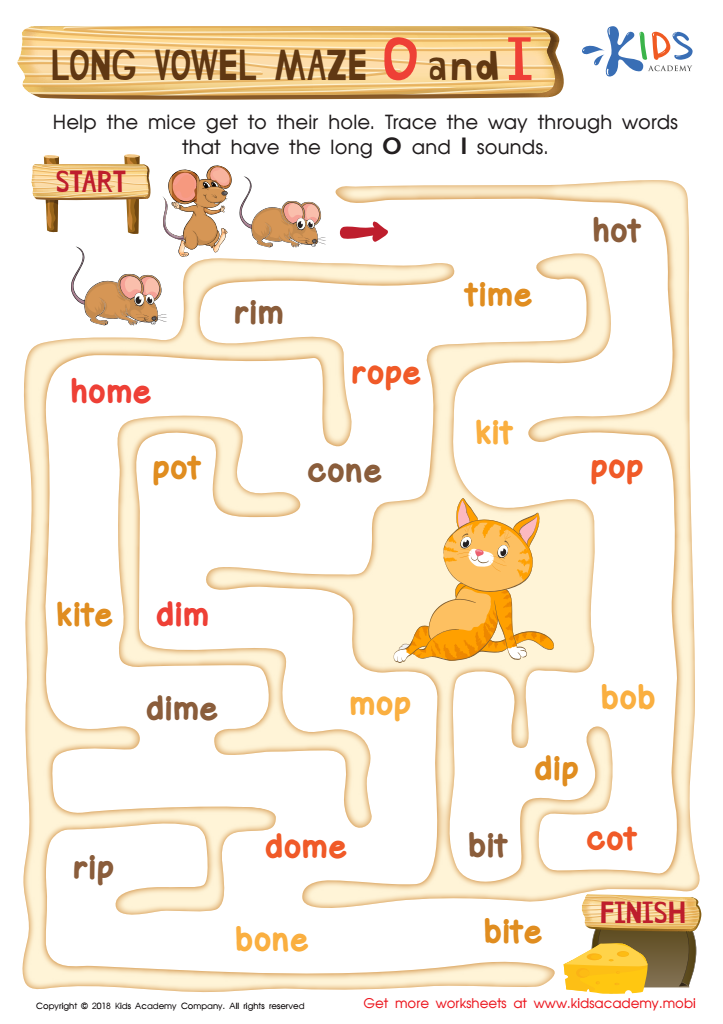
Long Vowel Maze /o/ and /i/ Worksheet
Help your new readers have fun and build their sight word vocabulary! Guide the mice to their prize cheese by having them trace the route on the worksheet, using words with the long o and long i sounds. But watch out for the kitty!
Long Vowel Maze /o/ and /i/ Worksheet
Worksheet
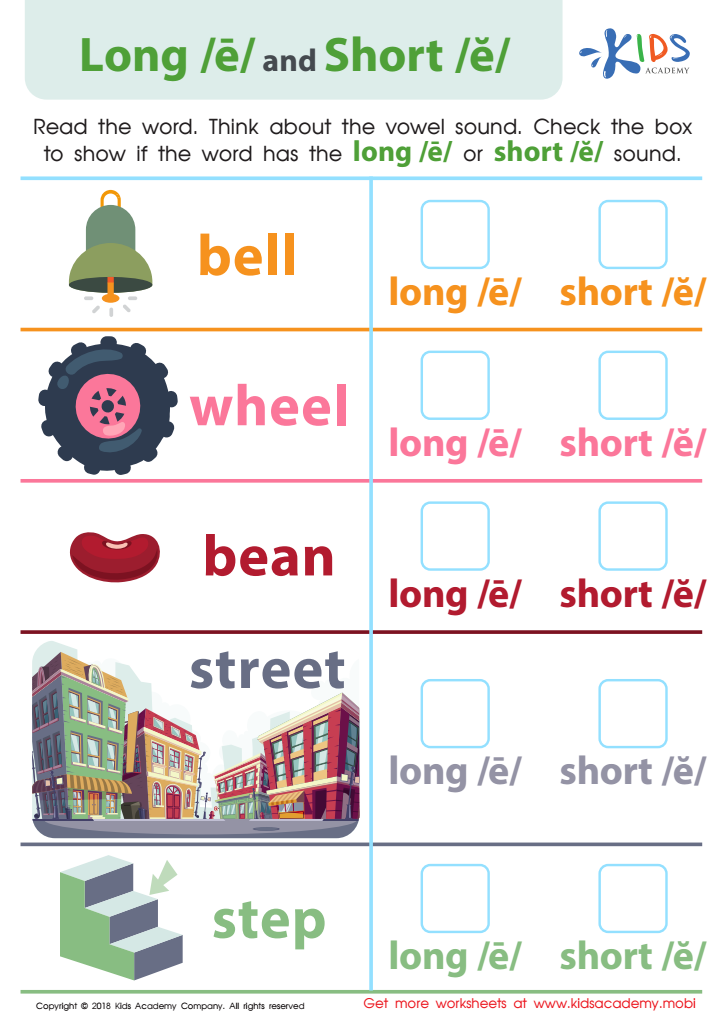
Reading: Long E and Short E Worksheet
Provide your students with valuable practice in distinguishing long and short E sounds with this worksheet. They'll look at pictures and read the words, then decide which sound is being used. It's an effective tool to help them master a difficult concept.
Reading: Long E and Short E Worksheet
Worksheet
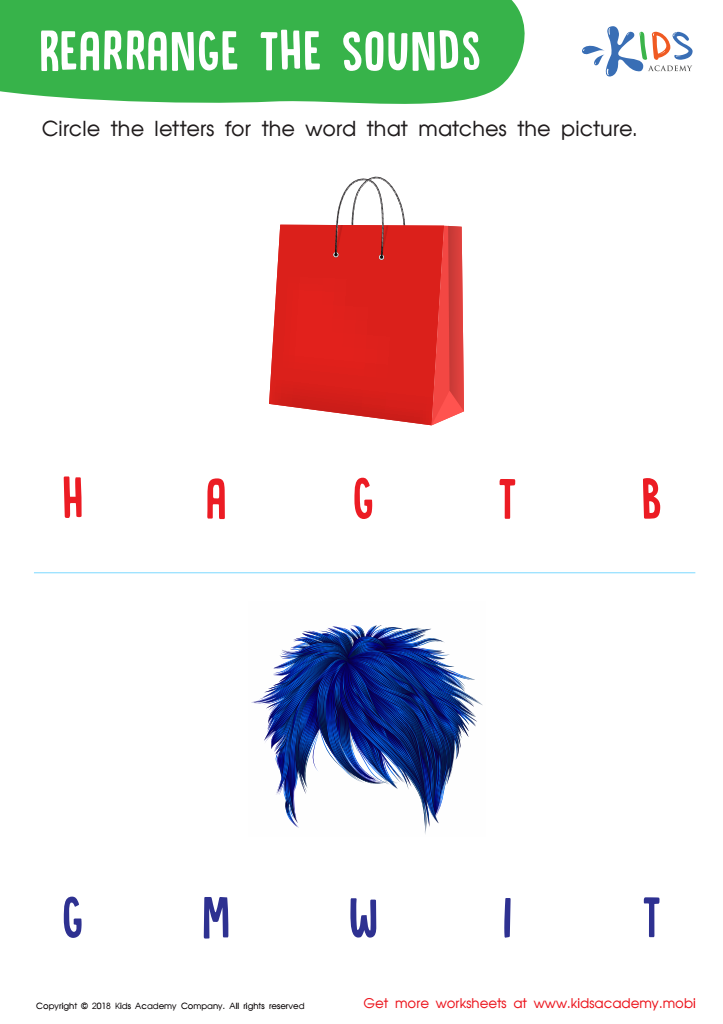
Rearrange the Sounds Worksheet
Ask students if they can identify the objects in the worksheet and spell the words. Guide them to find and circle the letters that match the picture. This exercise should be easy-peasy for advanced spellers.
Rearrange the Sounds Worksheet
Worksheet
Join Kids Academy for Free
Who is primarily going to use this learning content?








Phonics skills and normal letter recognition are foundational elements of early literacy for children aged 5-8, making them crucial for both parents and teachers to focus on. At this developmental stage, children are just beginning to decode the building blocks of language. Phonics, which is the relationship between sounds and their corresponding letters, enables children to read and spell words accurately. Mastery of these skills significantly impacts a child's reading fluency and comprehension, thereby fostering confidence and a positive attitude towards learning.
Early, effective phonics instruction helps children to understand that words are composed of individual sounds, which can be manipulated to form new words. This phonemic awareness is the bedrock of effective reading. When children can recognize letters and connect them to their appropriate sounds, they can start to sound out words, leading to more advanced reading capabilities. If parents and teachers invest time into this early stage, children are less likely to experience reading difficulties later on, making their educational journey smoother.
Moreover, strong phonics skills also set the stage for better spelling and writing. Early success in literacy often translates to a lifelong love of reading and learning, which are essential not only for academic achievement but also for lifelong personal development. Therefore, it’s paramount for both parents and teachers to prioritize phonics skills and normal letter recognition during these formative years.








