Vocabulary development Normal Letter Sounds Worksheets for Ages 5-8
6 filtered results
-
From - To
Enhance your child’s vocabulary with our engaging Normal Letter Sounds Worksheets, designed specifically for ages 5-8. These worksheets provide fun activities that focus on the sounds of letters, encouraging young learners to connect phonetics with vocabulary. Each worksheet is thoughtfully crafted to boost letter recognition and pronunciation skills while incorporating exciting illustrations that captivate young minds. As children practice identifying and sounding out letters, they will build a strong foundation in literacy essential for their educational journey. Ideal for homeschooling, classroom use, or extra practice at home, these worksheets make vocabulary development enjoyable and effective for early learners. Explore our collection today!
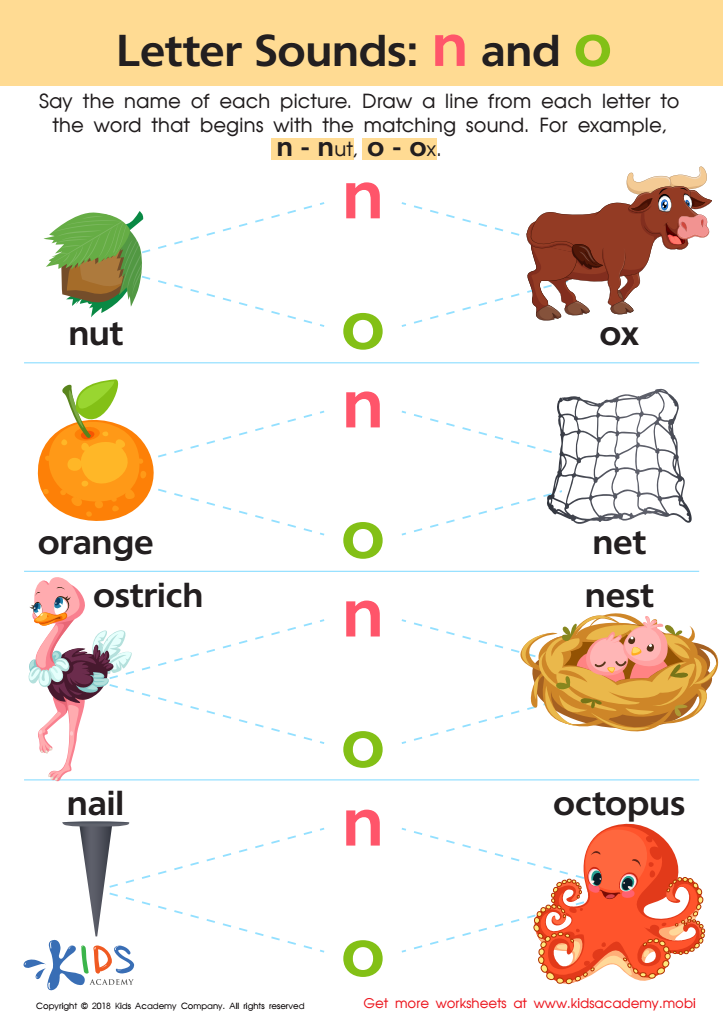
Letter N and O Sounds Worksheet
 Assign to My Students
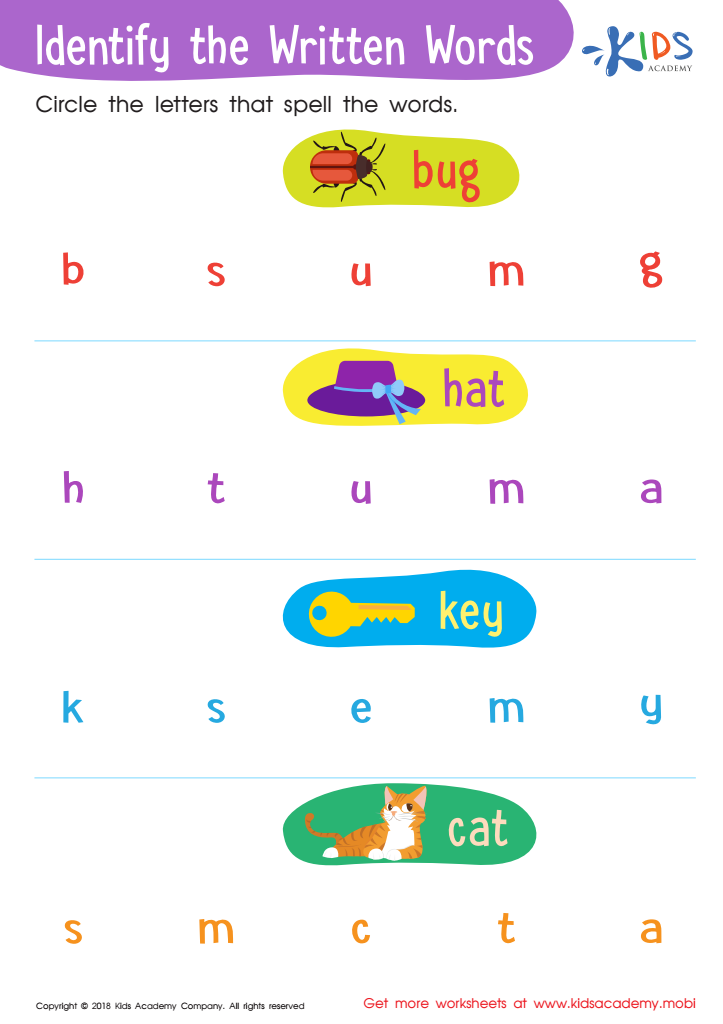
Identify the Written Words Worksheet
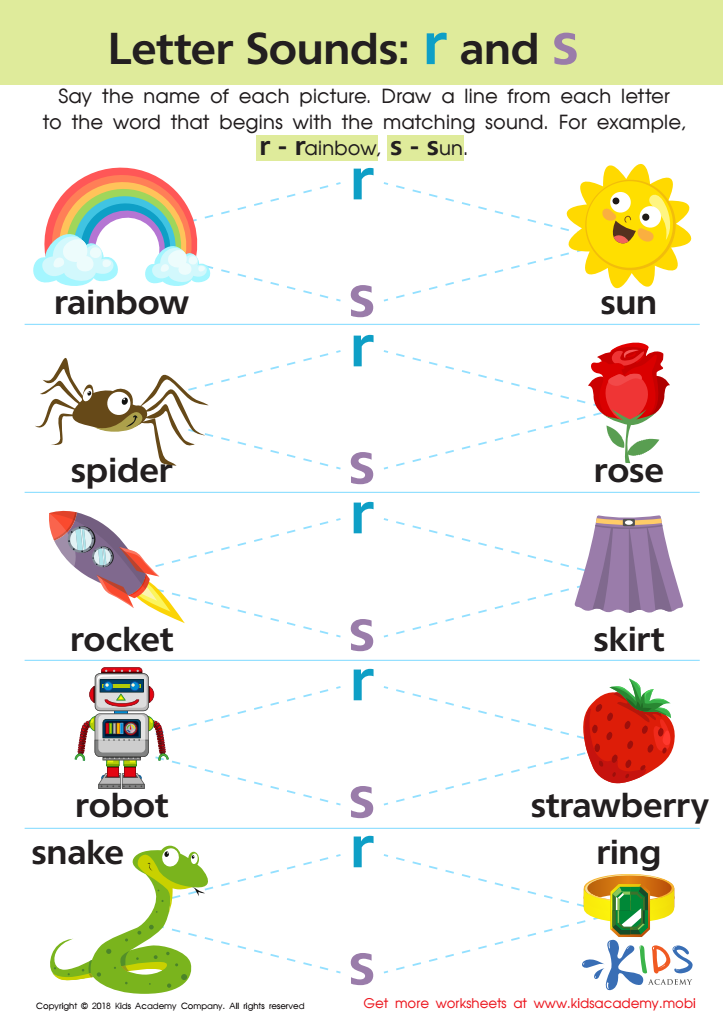
Letter R and S Sounds Worksheet
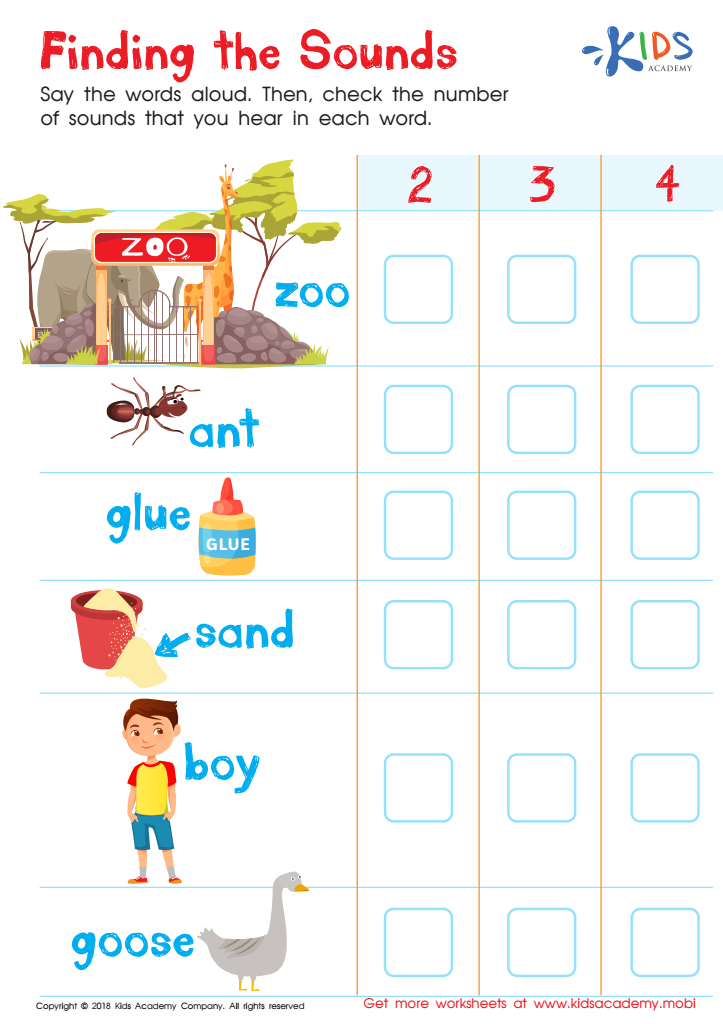
Finding the Sounds Worksheet
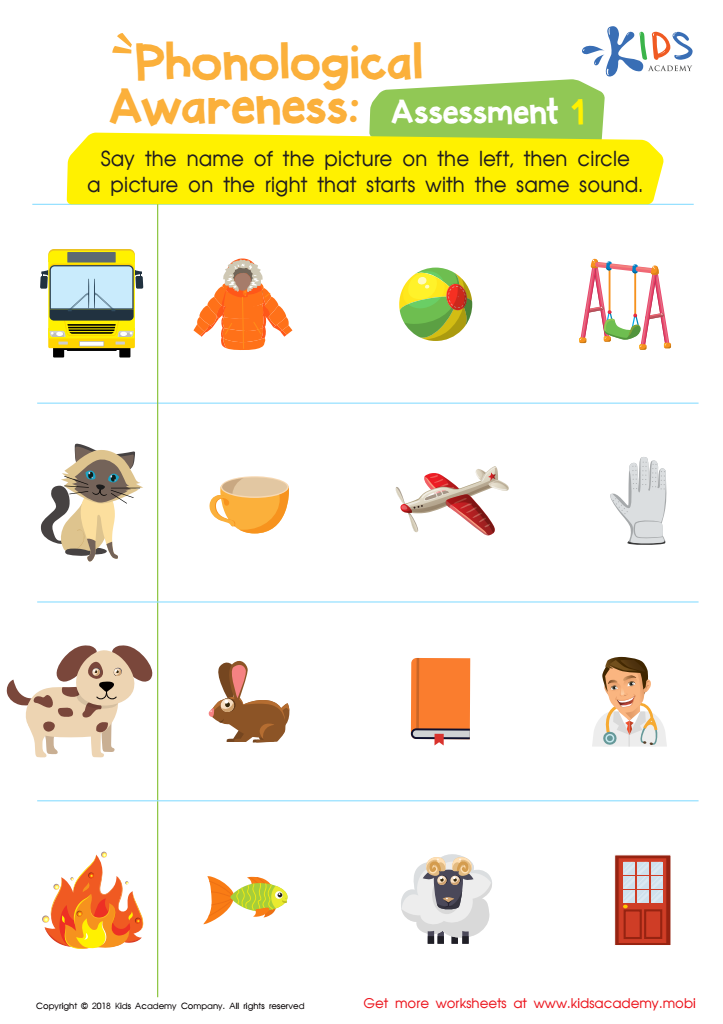
Phonological Awareness: Assessment 1 Worksheet
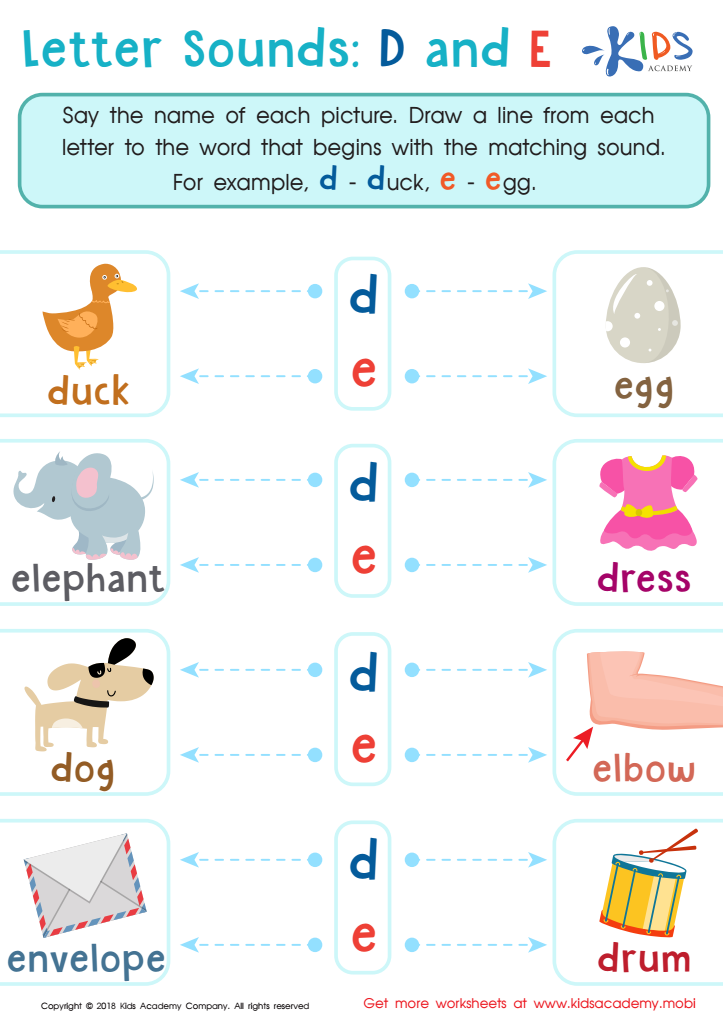
Letter D and E Sounds Worksheet








Vocabulary development, particularly in the context of normal letter sounds, is crucial for children aged 5 to 8, as it forms the foundation for successful reading and communication skills. At this stage, children are rapidly acquiring language, and having a robust vocabulary enhances their ability to express ideas, understand others, and navigate academic content.
Teachers and parents should prioritize this developmental aspect for several reasons. Firstly, a strong vocabulary is directly linked to better reading comprehension. When children can recognize and manipulate letter sounds, they can decode words more effectively, leading to increased fluency and confidence in reading.
Additionally, vocabulary development fosters cognitive skills. As children learn new words, they also learn to categorize and associate ideas, improving critical thinking abilities. A rich vocabulary encourages curious minds and enhances creativity, allowing children to articulate thoughts and emotions more accurately.
Furthermore, early vocabulary insights create a positive trajectory for lifelong learning. Developing good communication skills in these formative years helps to build self-esteem and social skills. By investing in vocabulary and letter sounds, parents and teachers can equip children with the essential tools they need to thrive both academically and socially.






