Vocabulary enhancement Normal Long Vowels Worksheets for Ages 5-8
8 filtered results
-
From - To
Boost your child's language skills with our "Vocabulary Enhancement Normal Long Vowels Worksheets for Ages 5-8"! Designed for young learners, these engaging worksheets focus on long vowel sounds, enriching their vocabulary while making learning enjoyable. With fun activities and colorful illustrations, children can practice identifying, pronouncing, and using words with long vowels in context. Perfect for early readers, these worksheets support classroom learning and homeschooling alike, ensuring that kids build strong literacy foundations. Ideal for ages 5 to 8, start enhancing their vocabulary today with our expertly crafted resources. Visit Kids Academy for more educational worksheets!
[Link included]
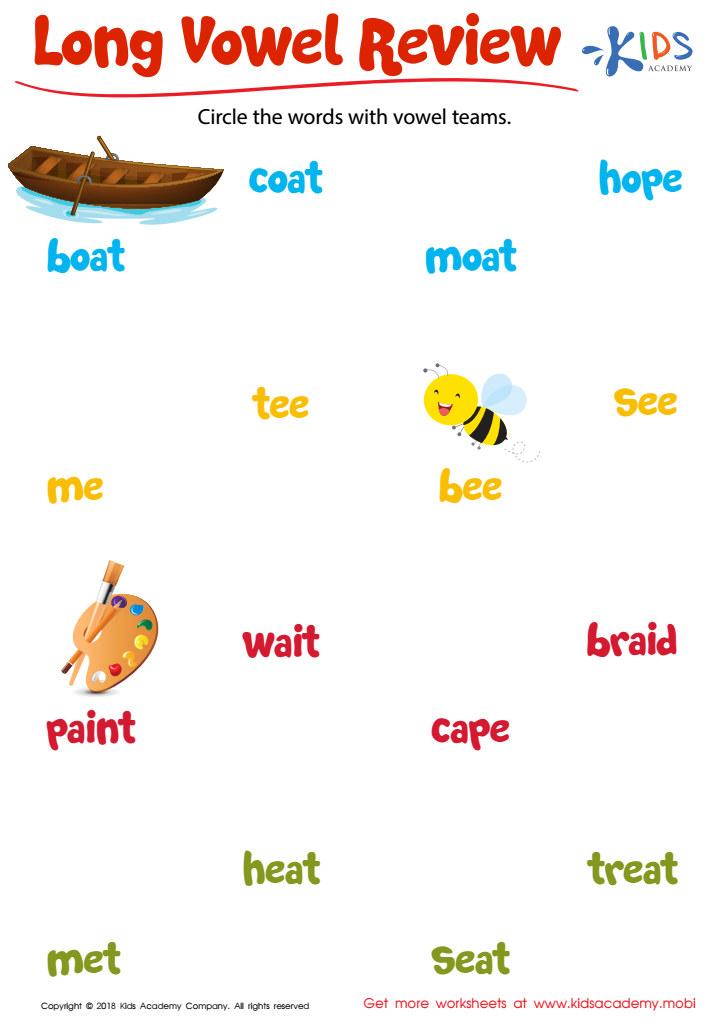
Long Vowel Review Worksheet
 Assign to My Students
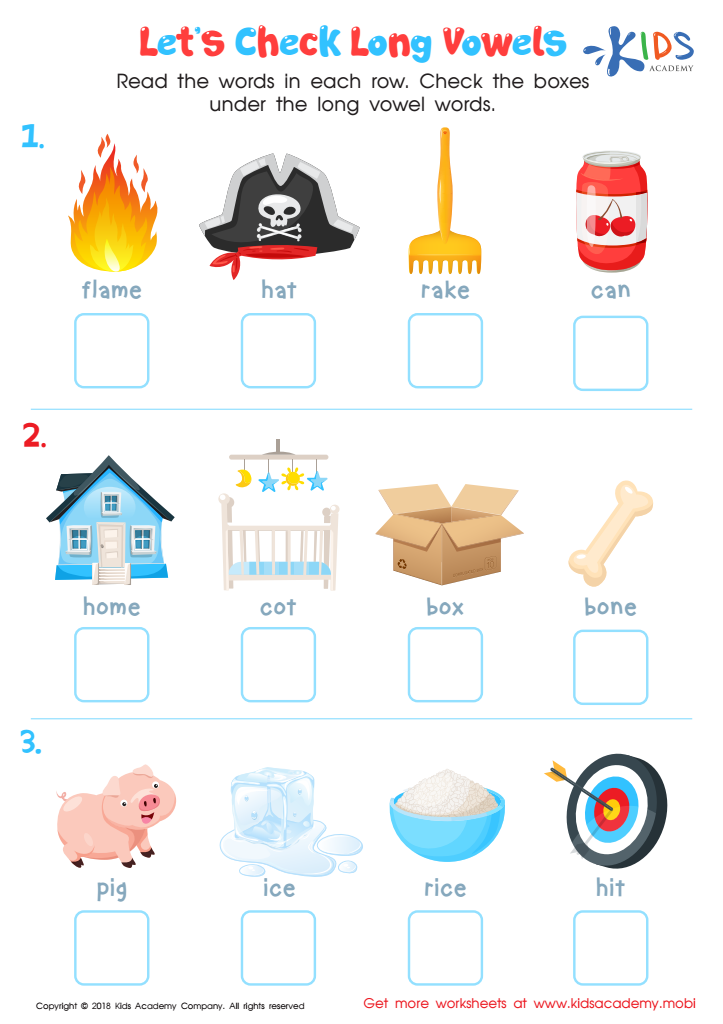
Let's Check Long Vowels: Assessment Worksheet
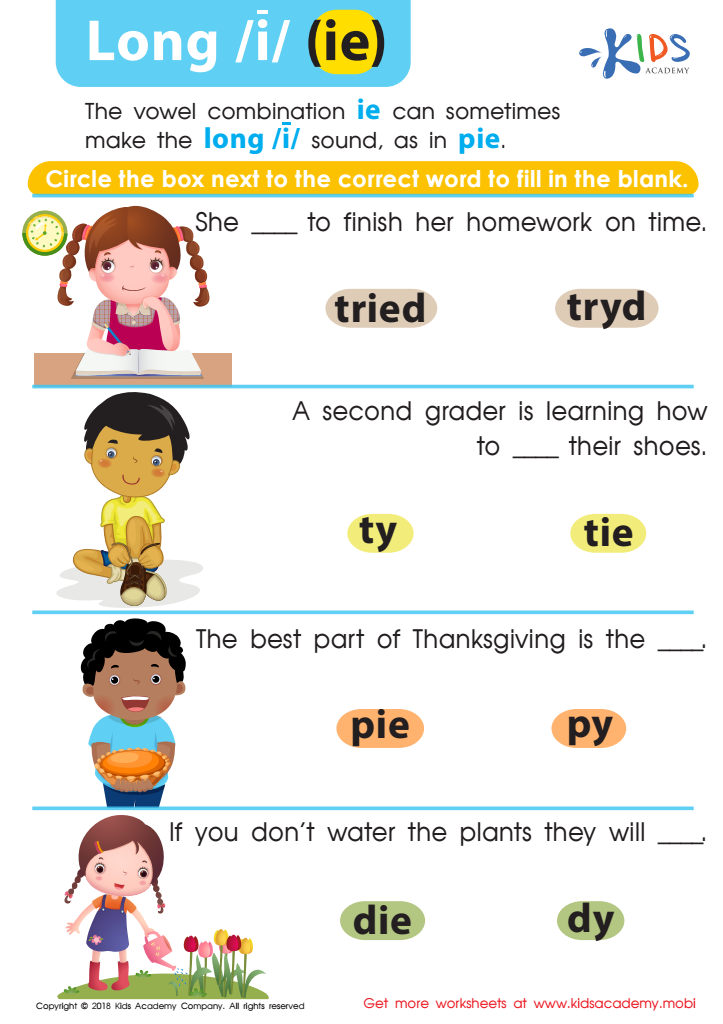
Reading: Long I and IE Worksheet
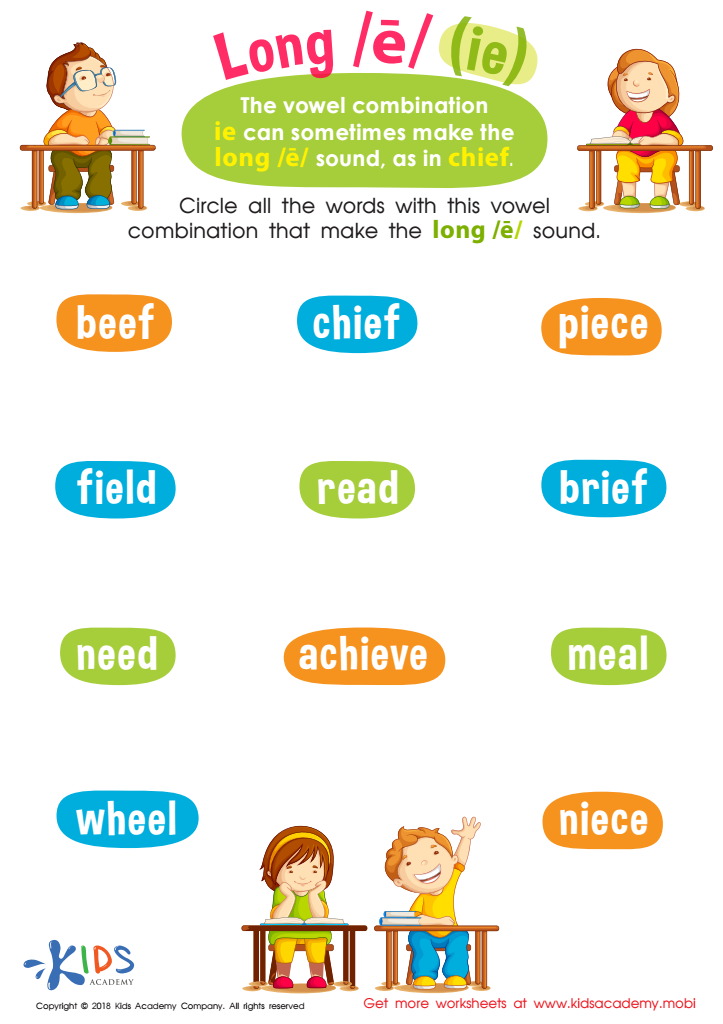
Reading: Long E and IE Worksheet
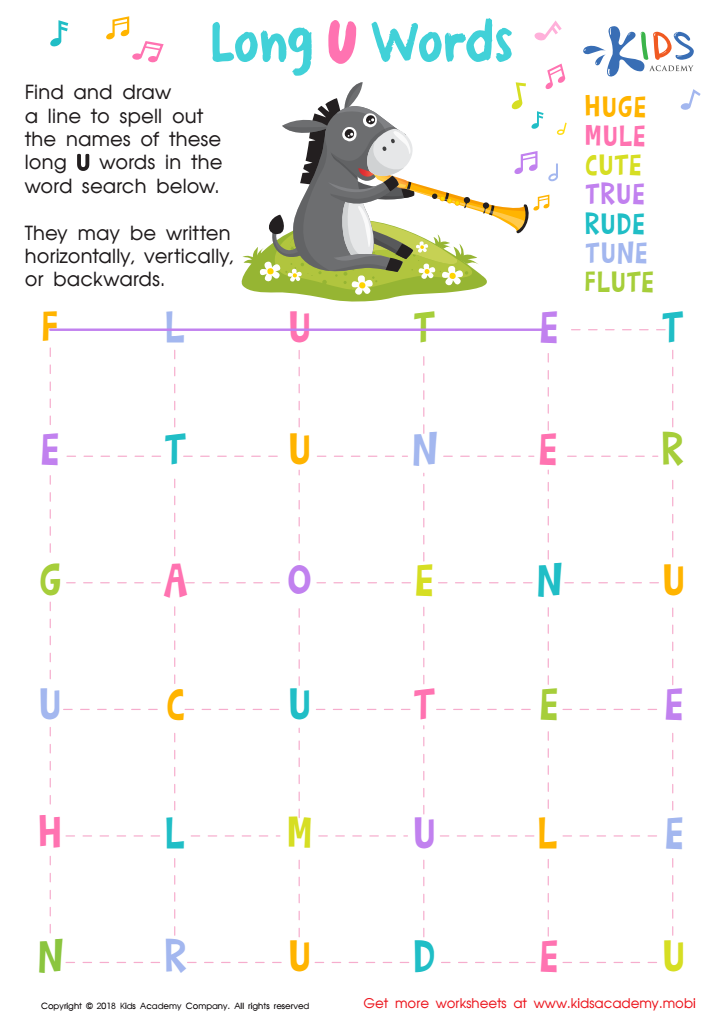
Long /u/ Words Worksheet
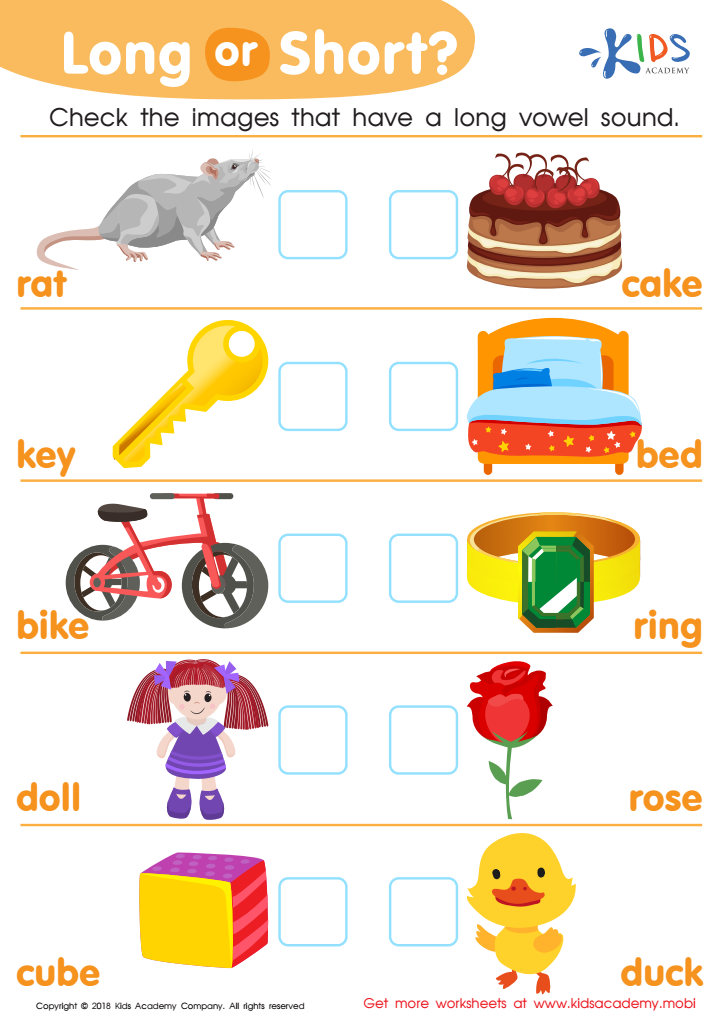
Long or Short Reading Worksheet
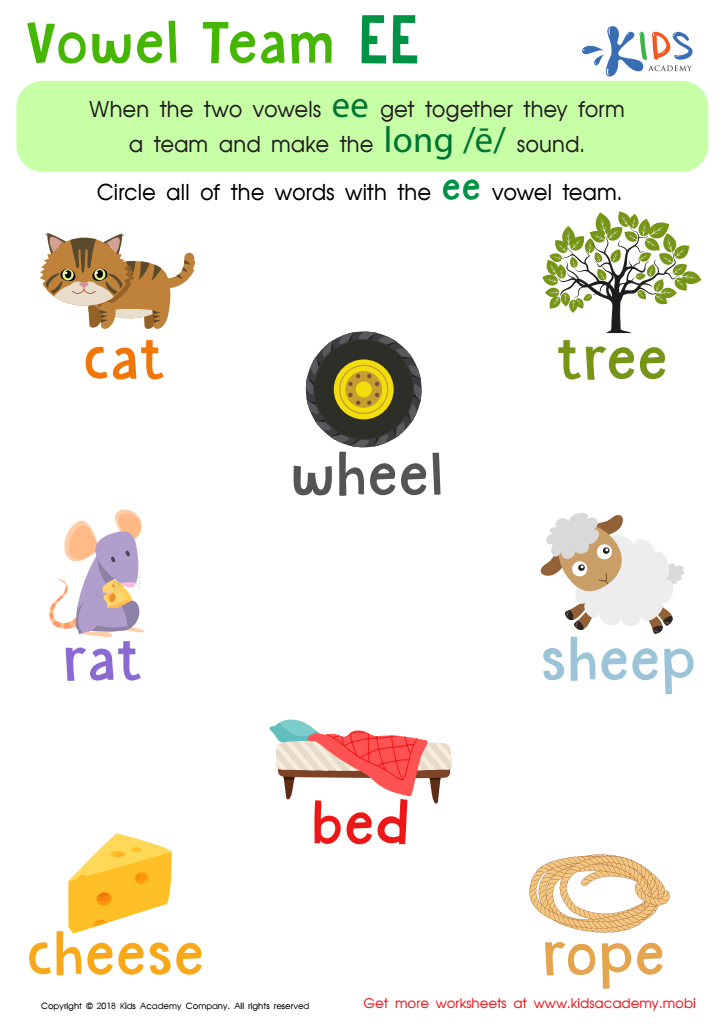
Reading: Vowel Team EE Worksheet
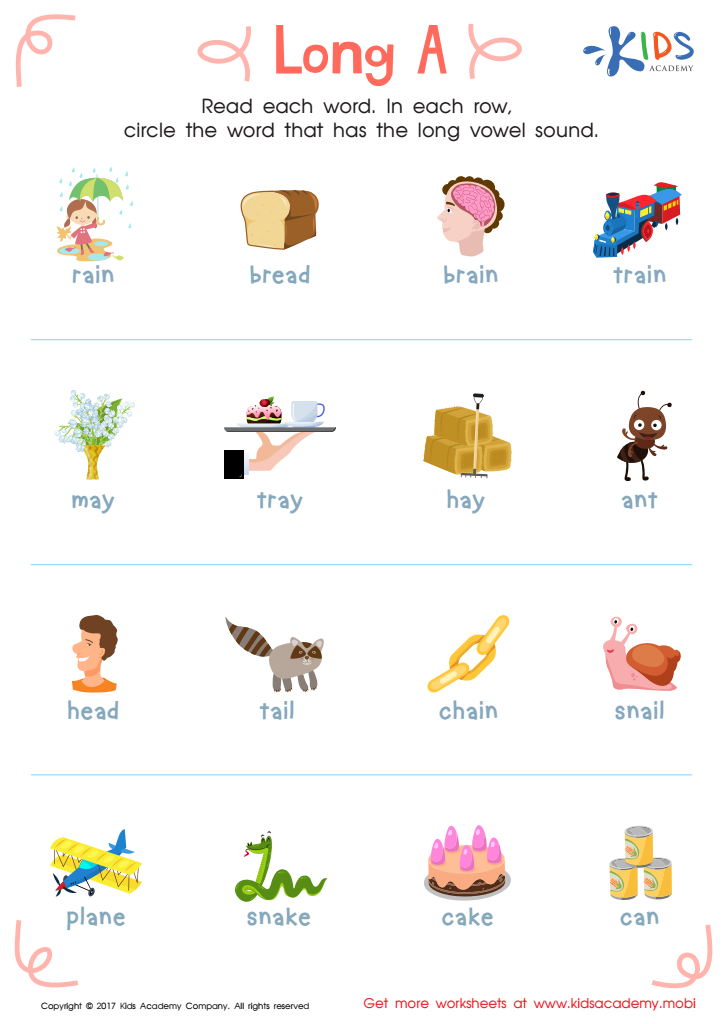



Vocabulary enhancement, particularly focusing on normal long vowels, is crucial for children ages 5-8 because it forms a core foundation for effective reading and writing skills. Long vowels are essential sounds in the English language and understanding them can help children decode words more accurately, improving their reading fluency. By distinguishing between short and long vowel sounds, kids can more easily tackle new words and grasp their meanings, enriching their vocabulary.
Introducing and reinforcing normal long vowel sounds early on ensures that children can navigate various reading materials confidently. This skill not only aids in comprehension but also bolsters their ability to express themselves clearly in writing. A robust vocabulary is closely tied to better academic performance and a lifelong love of reading.
Furthermore, enhancing vocabulary at a young age promotes cognitive development. It helps children organize their thoughts, communicate more effectively, and foster critical thinking skills. Teachers and parents should therefore integrate fun, engaging activities like songs, rhymes, and games that emphasize long vowel sounds to nurture these foundational skills. The more immersive and consistent the practice, the more proficient and enthusiastic young learners will become in their language skills, setting the stage for future educational success.