
Alphabet Recognition Normal Phonics Worksheets for Ages 5-8
3 filtered results
Difficulty Level
Grade
Age
-
From - To
Subject
Activity
Standards
Discover our engaging Alphabet Recognition Normal Phonics Worksheets designed specifically for children ages 5-8! These interactive resources help young learners master the alphabet through fun activities that enhance their phonics skills. Each worksheet is thoughtfully created to reinforce letter recognition, promoting confidence in reading and literacy. From tracing letters to identifying sounds, our versatile activities cater to different learning styles, making phonics practice enjoyable. Ideal for classrooms or at-home learning, these worksheets support educational development while keeping children motivated. Empower your child’s reading journey today with our comprehensive phonics worksheets and watch them thrive in their alphabet mastery!
Favorites
With answer key
Interactive
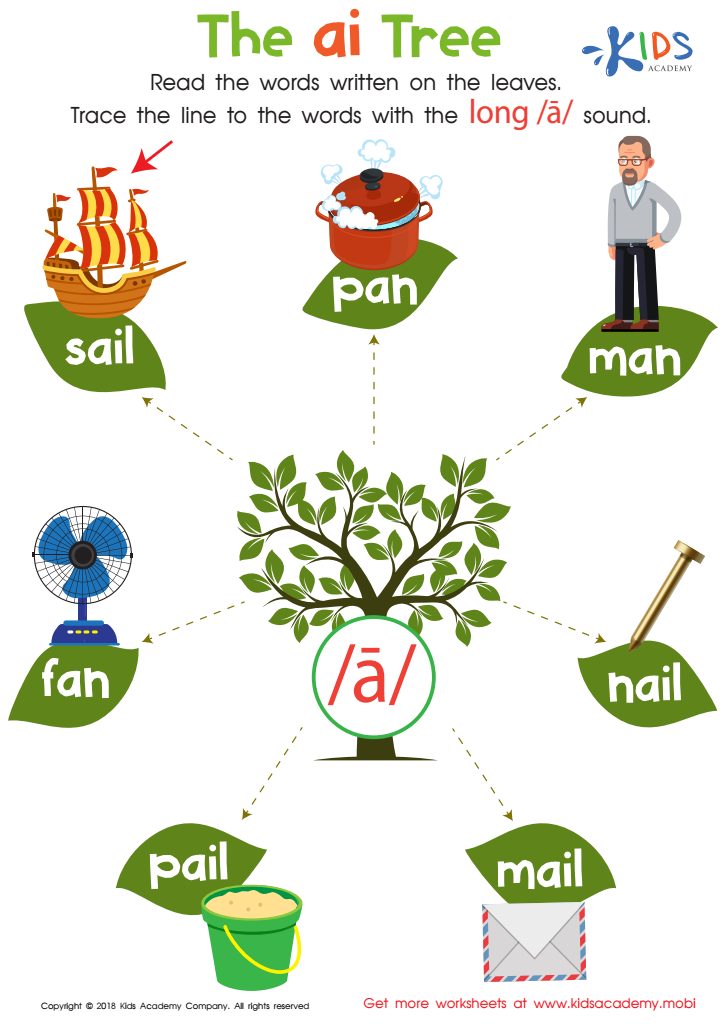
The AI Tree Worksheet
Help your kids learn to read better with this worksheet! Introduce the vowel pair 'ai' and give them familiar examples. Ask them to give you some in return. Then, have them read the words on the leaves and help them trace the ones with the long /a/ sound.
 Assign to My Students
The AI Tree Worksheet
Worksheet
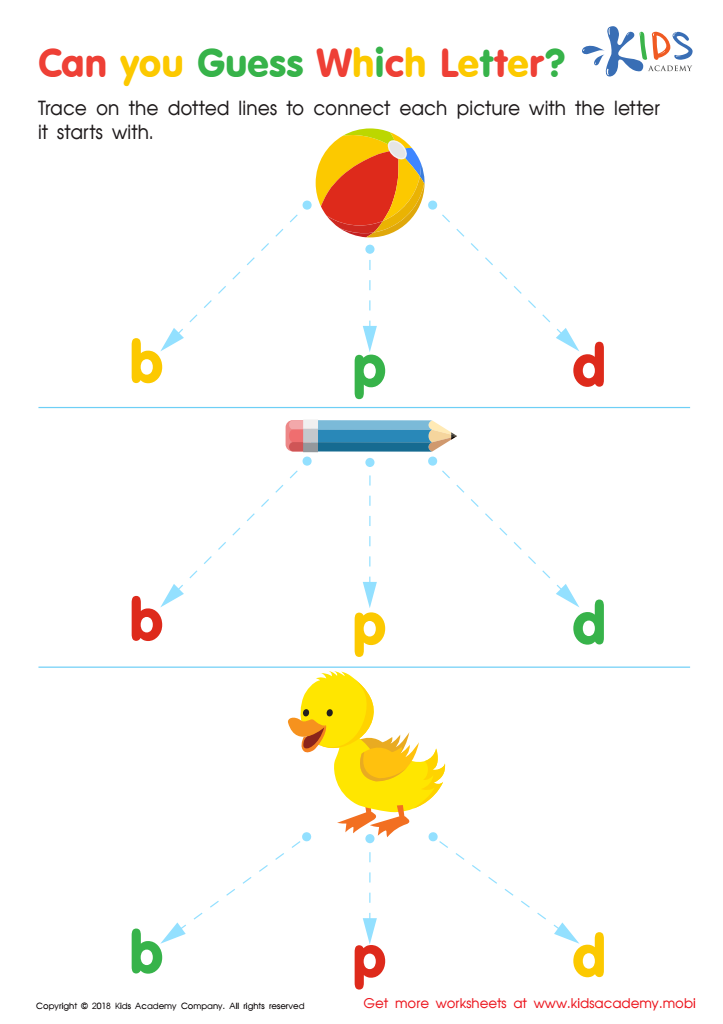
Can you Guess Which Letter? Worksheet
Connect the pictures with their corresponding letters with this fun worksheet! Ask your child what each picture is, then what letter it begins with. Download the PDF for colorful images and engaging texts to hold their attention, making learning an enjoyable activity.
Can you Guess Which Letter? Worksheet
Worksheet
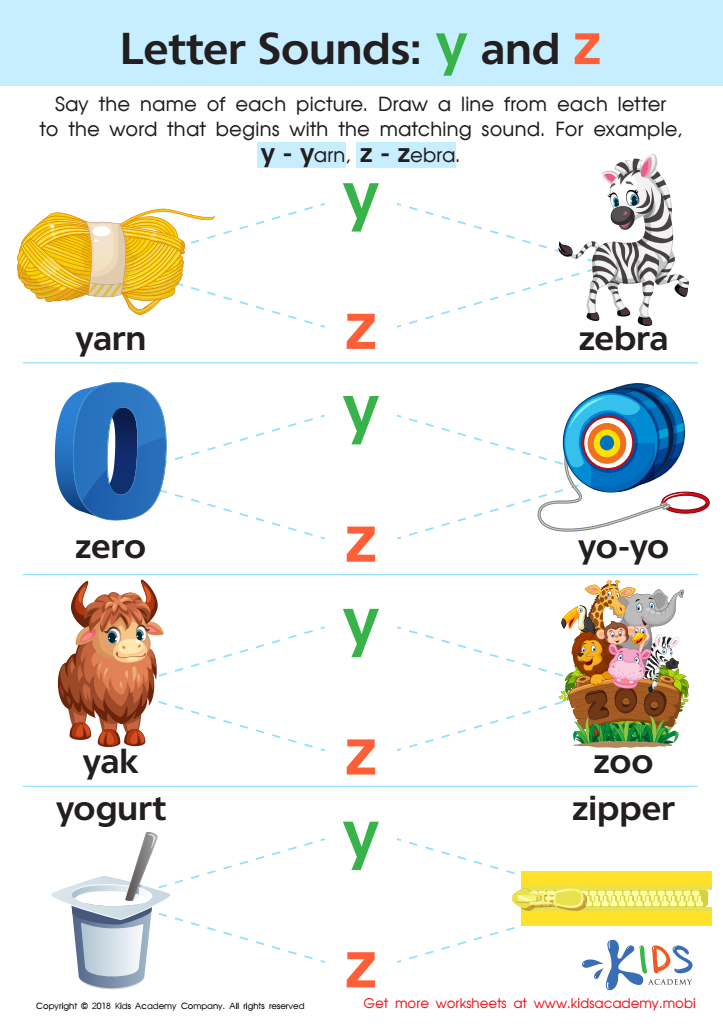
Letter Y and Z Sounds Worksheet
Y and Z can be tricky for kids to learn. Kids Academy has the answer with a great worksheet. "Yo-yo", "yak" and "zebra" help kids recognize, say and trace each letter. Plus, they can read the words and match them to images! Let your child try and help them master phonics at the end of the alphabet.
Letter Y and Z Sounds Worksheet
Worksheet
Join Kids Academy for Free
Who is primarily going to use this learning content?








Alphabet recognition and phonics are foundational elements of early literacy, essential for children aged 5-8. This period is critical as it sets the stage for future reading and writing skills.
First, alphabet recognition enables children to identify letters and understand their corresponding sounds, which is the basis for developing phonemic awareness. This skill aids in decoding new words, fostering confidence as they progress to more complex texts. When children can recognize letters quickly, they can focus on comprehension, which is crucial for academic success.
Moreover, normal phonics instruction systematically teaches children how to blend sounds to form words. This approach not only builds their reading fluency but also reinforces vocabulary building and spelling skills. As young learners engage with language through phonics, they can articulate their thoughts more effectively, which enhances communication.
Working in tandem, alphabet recognition and phonics create a strong literacy foundation. Parents and teachers should prioritize these skills to ensure children are equipped to navigate their academic journeys confidently. By supporting early literacy development, we help children cultivate a lifelong love of reading, essential not only for their education but also for personal growth and enrichment in an increasingly text-oriented world.







