Fine Motor Skills Normal Phonics Worksheets for Ages 5-8
5 filtered results
-
From - To
Explore our engaging Fine Motor Skills Normal Phonics Worksheets, specially designed for children aged 5-8. These worksheets combine phonics practice with fun hands-on activities that promote fine motor development. Each worksheet offers a mix of letter recognition, letter tracing, and phonetic exercises, making learning both effective and enjoyable. Enhance your child's vocabulary and reading readiness while they work on gripping pencils and scissors, drawing shapes, and completing letter-associated tasks. Our user-friendly format makes it easy for parents and teachers to guide young learners through these essential skills. Boost your child’s confidence and learning achievement today!
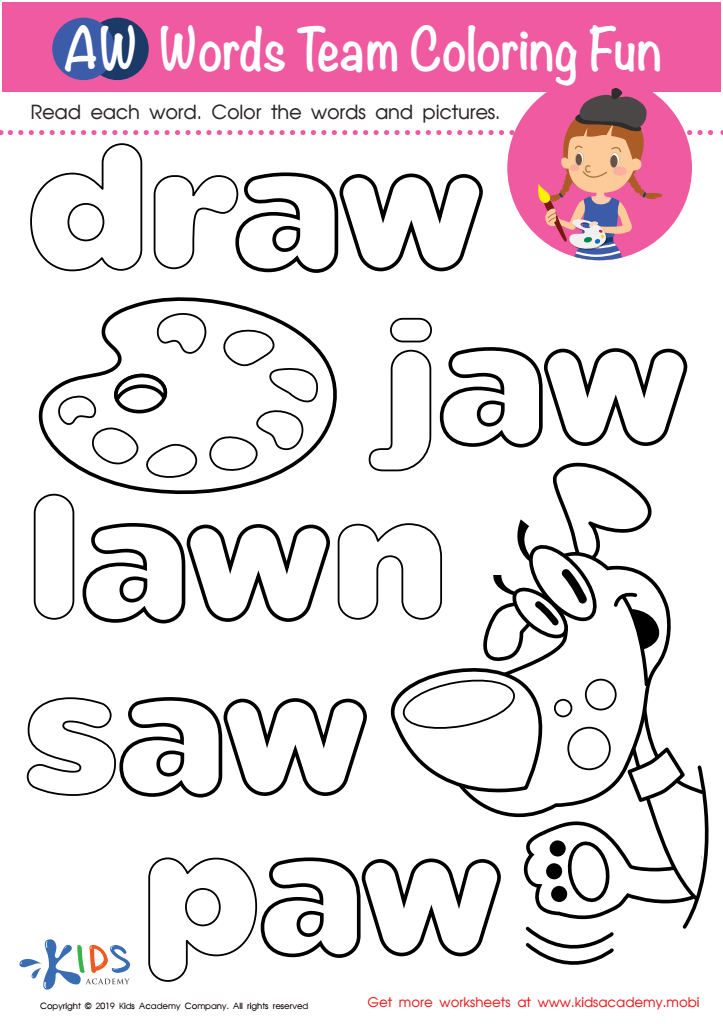
AW Words Team Coloring Fun Worksheet
 Assign to My Students
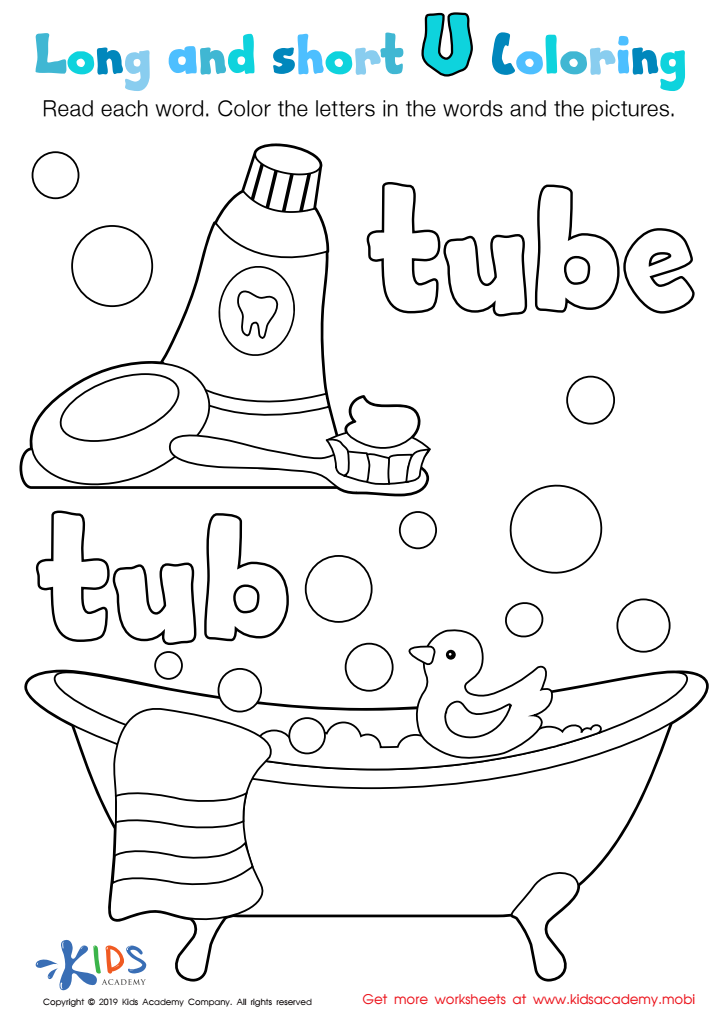
Long and Short U Worksheet
Assign to My Students
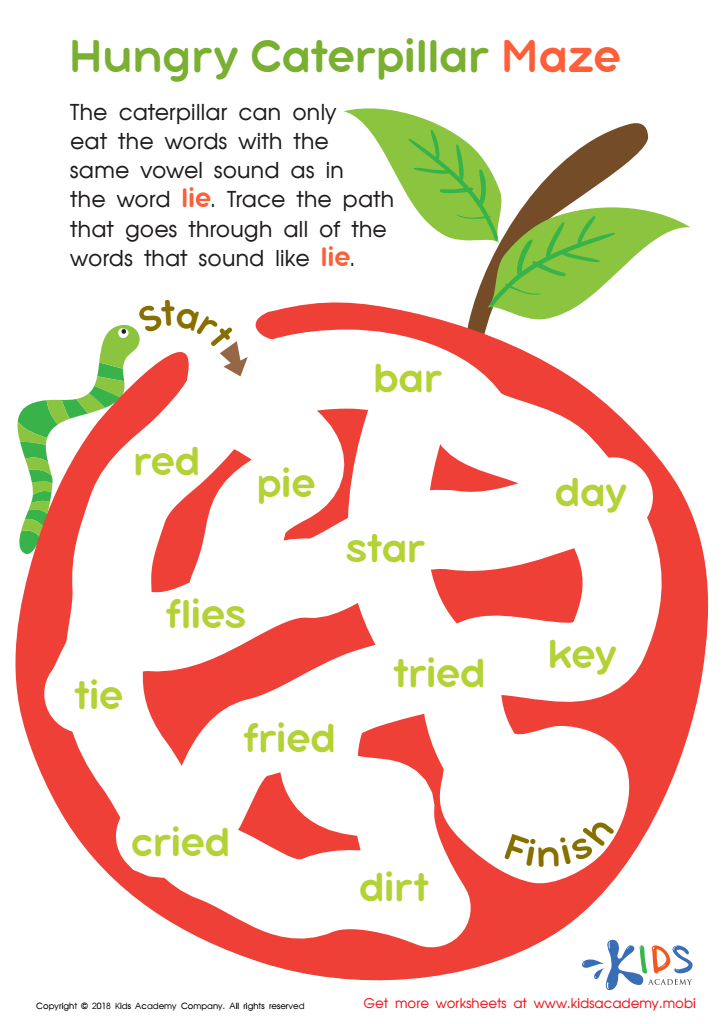
Hungry Caterpillar Maze Worksheet
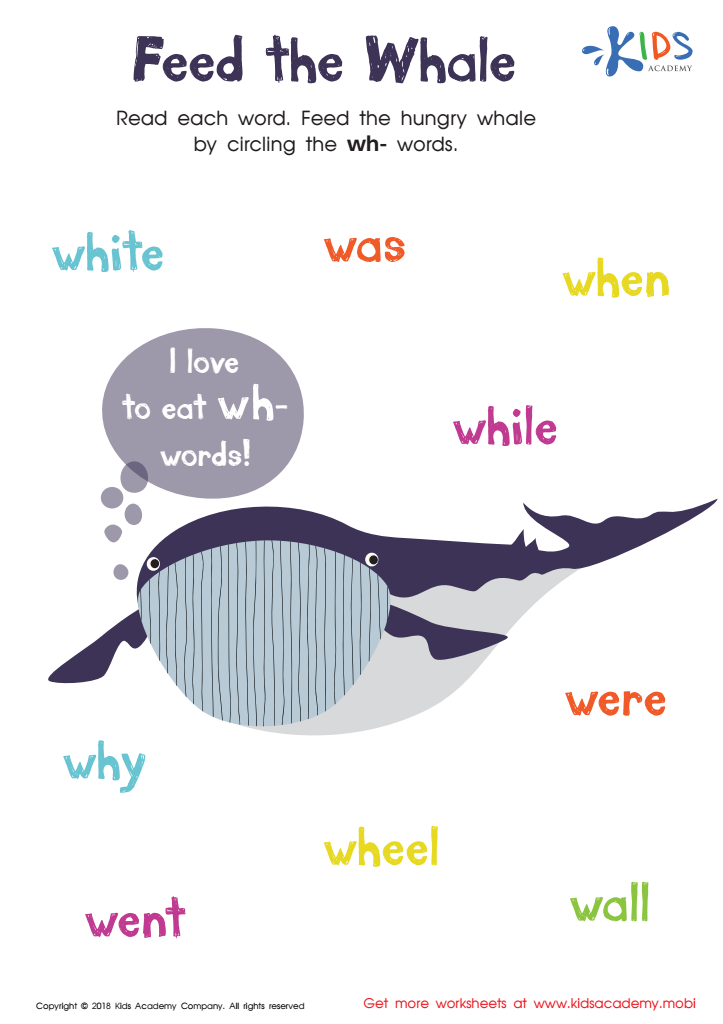
Feed the Whale Worksheet
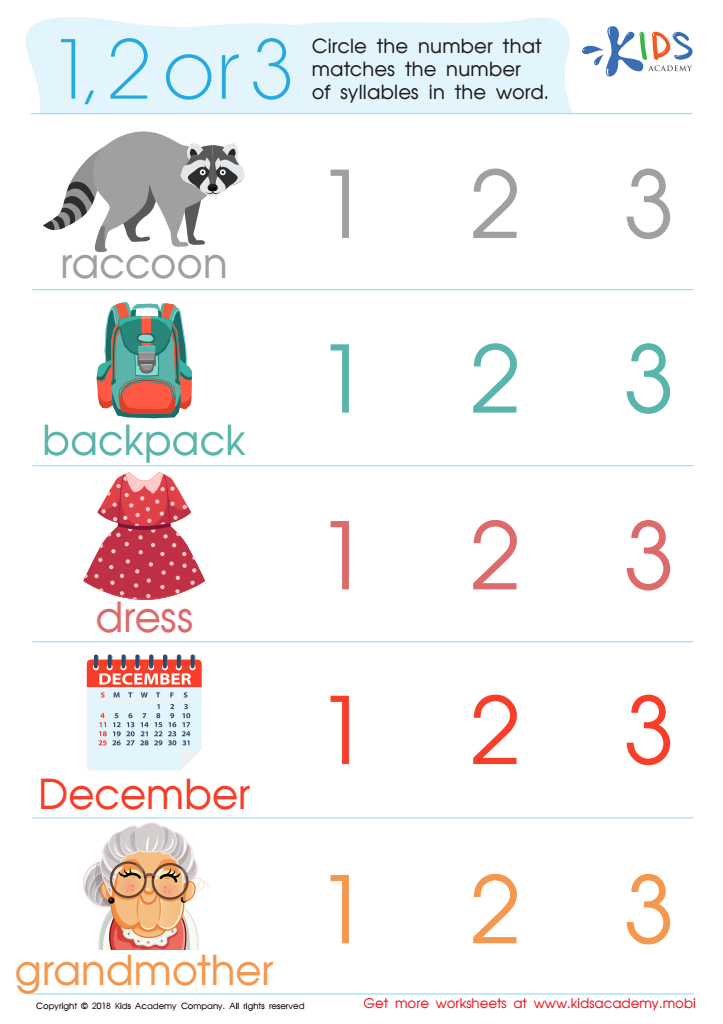
1, 2 or 3? Worksheet








Fine motor skills and phonics development are crucial components of early childhood education, especially for children ages 5-8. As children grow, their ability to manipulate small objects, such as pencils and buttons, enhances their coordination, confidence, and independence. Mastery of fine motor skills lays the groundwork for crucial tasks, like writing, drawing, and using scissors, ultimately contributing to better academic performance and self-expression.
Similarly, phonics is the foundation for literacy. Understanding the relationship between letters and sounds allows children to decode words, which is essential for reading fluency and comprehension. Early proficiency in phonics not only boosts confidence in reading but also fosters a lifelong love for literature and learning.
Parents and teachers should prioritize these skills because they are interconnected; fine motor skills support writing abilities, and phonics enhances reading capabilities. Both are foundational for future academic success. Additionally, targeted activities that promote fine motor development and phonics can be easily woven into everyday activities and lessons, making learning engaging and holistic. Investing time and resources in these areas not only enriches children’s learning experiences but also sets them up for future achievements in both academic and social contexts.







