
Reading skills development Normal Phonics Worksheets for Ages 5-8
5 filtered results
Difficulty Level
Grade
Age
-
From - To
Subject
Activity
Standards
Our Reading Skills Development Normal Phonics Worksheets for ages 5-8 are designed to nurture the early stages of reading in young learners. These engaging, interactive worksheets strengthen phonics fundamentals, including letter recognition, sound blending, and word formation. Each activity is thoughtfully crafted to support reading comprehension, boosting confidence and independence as children journey through the world of words. Ideal for both classroom and home use, our resources align with key educational standards, ensuring a solid foundation for lifelong literacy success. Explore our expertly curated collection and watch your child’s reading abilities flourish.
Favorites
With answer key
Interactive
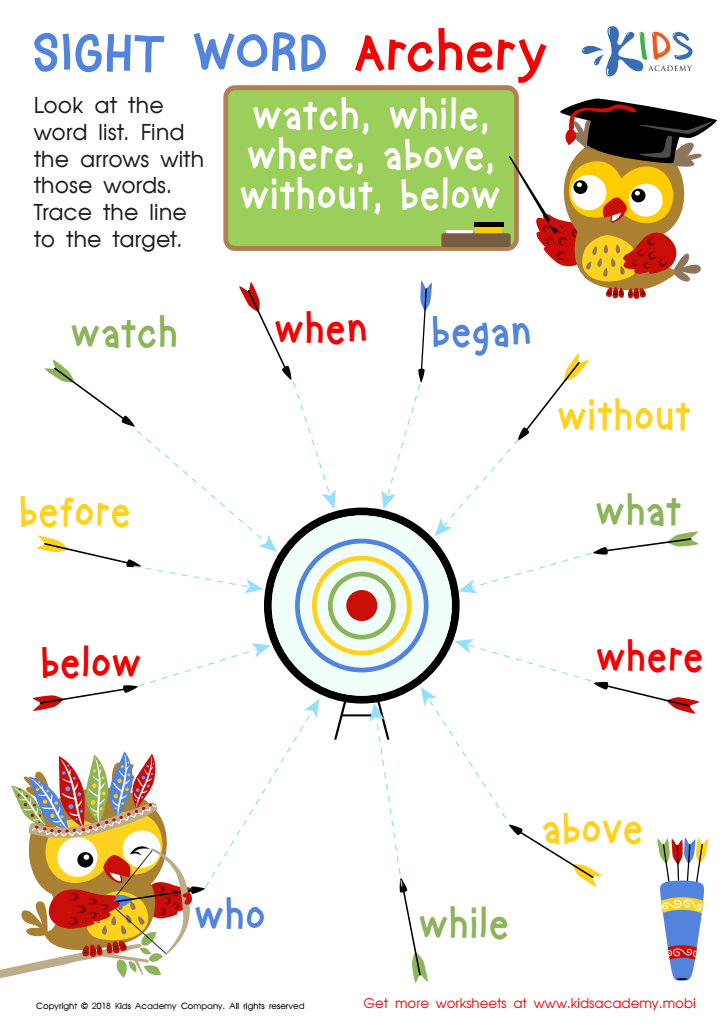
Sight Word Archery Worksheet
Read the words list with your kids, pointing at each one. Ask them to do the same. Help them find the arrows with those words and trace the line to the target in the centre.
 Assign to My Students
Sight Word Archery Worksheet
Worksheet
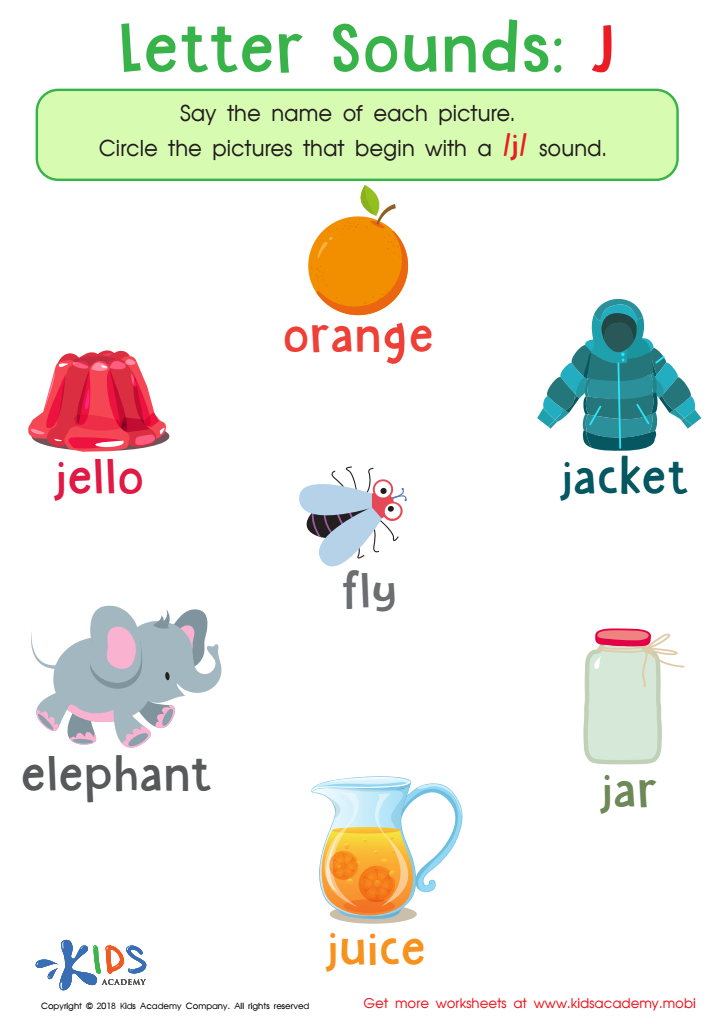
Letter Sounds: J Printable Worksheet
Preschoolers can learn to identify letter sounds by focusing on beginning sounds. This cute and colorful worksheet reviews the hard “j” sound. Kids can point it out by naming the words and circling only those starting with the “j” sound. Read the text out loud and listen closely!
Letter Sounds: J Printable Worksheet
Worksheet
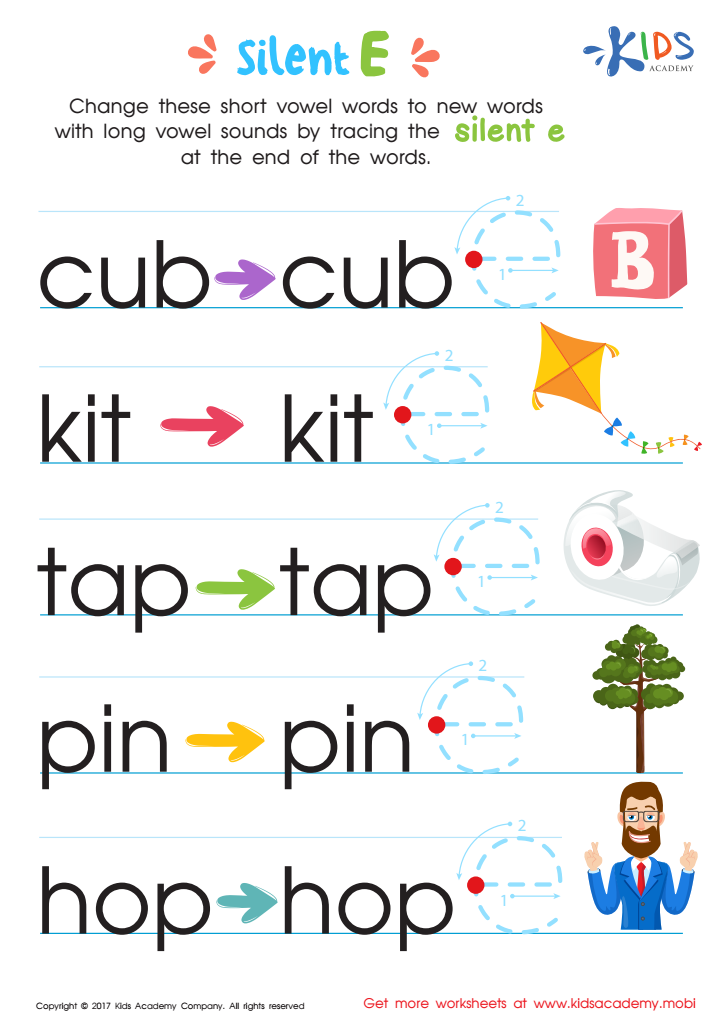
Silent E Words Worksheet
The letter e is amazing - it changes words without making a sound! Boost spelling and phonics with this Silent e worksheet from Kids Academy - fun and colorful!
Silent E Words Worksheet
Worksheet
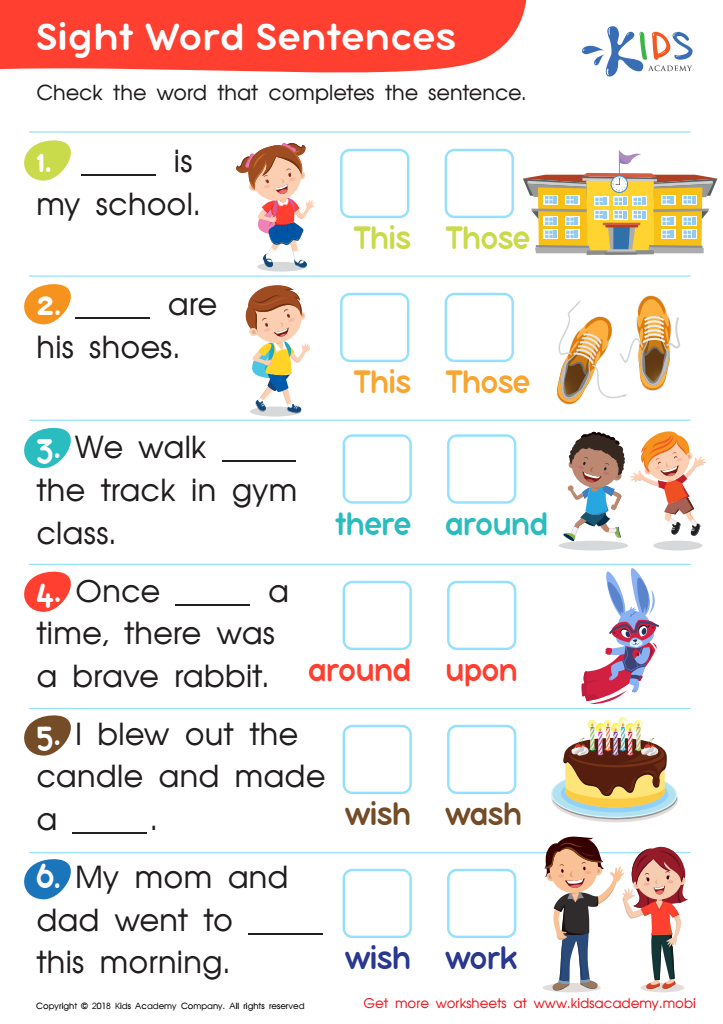
Sight Word Sentences Worksheet
Improve reading fluency! Have students fill in the blank with the correct sight word to complete sentences. Sight words are often tricky to decode - they don't follow phonics or spelling rules. To read smoothly, young learners must know them by memory. Use this printable and help kids master their sight words!
Sight Word Sentences Worksheet
Worksheet
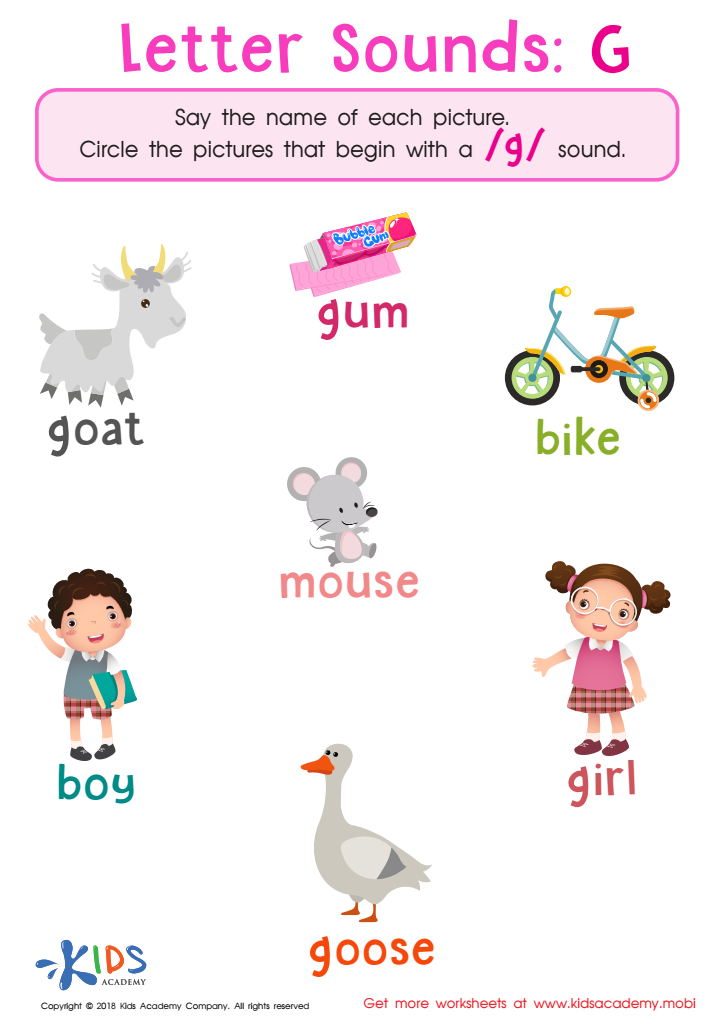
Letter G Sounds Worksheet
Help emerging readers build confidence by giving them practice identifying hard "G" with this free PDF worksheet. They'll use picture clues to name the words, and practice fine-motor skills tracing circles around the corresponding pics. It's a great way to introduce or reinforce hard "G" words.
Letter G Sounds Worksheet
Worksheet
Join Kids Academy for Free
Who is primarily going to use this learning content?








Reading skills development, particularly through phonics, for ages 5-8 is crucial for several reasons. At this formative stage, children’s brains are highly receptive to learning new skills, and reading is a fundamental one that underpins their overall academic growth. Phonics, which teaches the relationship between letters and sounds, provides a systematic and predictable method for children to decode words. By mastering phonics, children can improve their reading fluency, which is the ability to read text smoothly and with understanding.
Strong reading skills facilitate better comprehension, enabling children to grasp and retain information across subjects, from mathematics to social studies. This early literacy success translates into higher academic achievement and greater confidence in school. Socially, children who are proficient readers benefit from enhanced communication skills, allowing them to express themselves more effectively and navigate various situations with greater ease.
Moreover, early reading skills are associated with increased cognitive development, enhancing critical thinking and problem-solving abilities. Investing in reading skills through phonics also helps bridge educational inequities, providing all children, regardless of background, with the tools they need for success. Thus, parents and teachers should prioritize phonics-based reading instruction to lay a strong foundation for lifelong learning and intellectual development for children aged 5-8.







