
Sight word recognition Normal Phonics Worksheets for Ages 5-8
4 filtered results
Difficulty Level
Grade
Age
-
From - To
Subject
Activity
Standards
Discover a vibrant collection of Sight Word Recognition Normal Phonics Worksheets designed specifically for children ages 5-8. Our engaging, age-appropriate resources facilitate the mastery of essential sight words through interactive activities and exercises, fostering both reading fluency and comprehension. Each worksheet incorporates fun illustrations and compelling exercises to captivate young learners and reinforce their phonics skills. Perfect for home or classroom use, these worksheets provide a well-rounded approach to early literacy, ensuring children build a strong foundation in reading. Start your child’s reading journey today with our carefully curated sight word recognition worksheets, promoting confidence and a love for learning!
Favorites
With answer key
Interactive
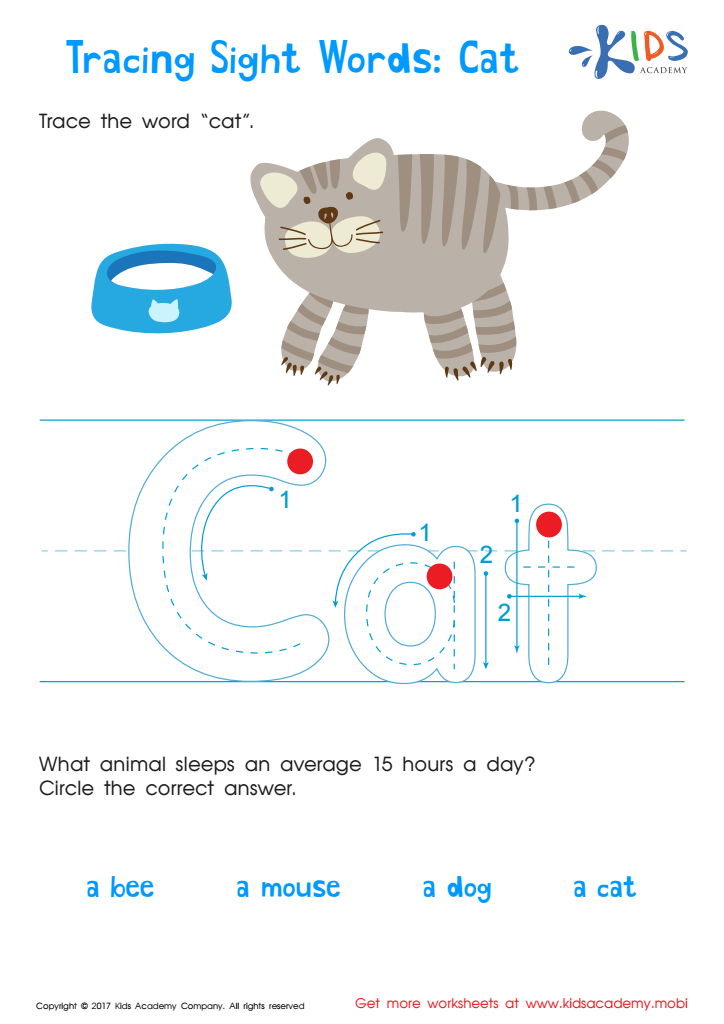
Cat Printable Sight Words Worksheet
Encourage your child's literacy with this fun sight words worksheet: cat PDF! It helps build a solid foundation for reading, featuring activities such as reading and tracing the word cat, and finding it amongst other sight words. With its cute cat, Kids Academy makes learning to read a delight!
 Assign to My Students
Cat Printable Sight Words Worksheet
Worksheet
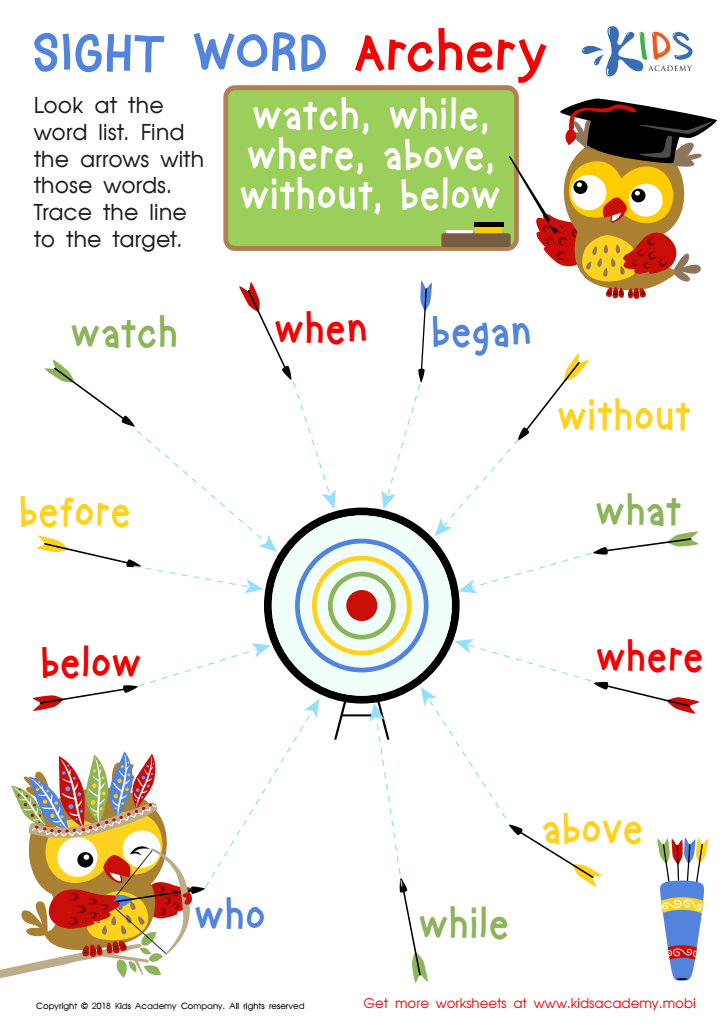
Sight Word Archery Worksheet
Read the words list with your kids, pointing at each one. Ask them to do the same. Help them find the arrows with those words and trace the line to the target in the centre.
Sight Word Archery Worksheet
Worksheet
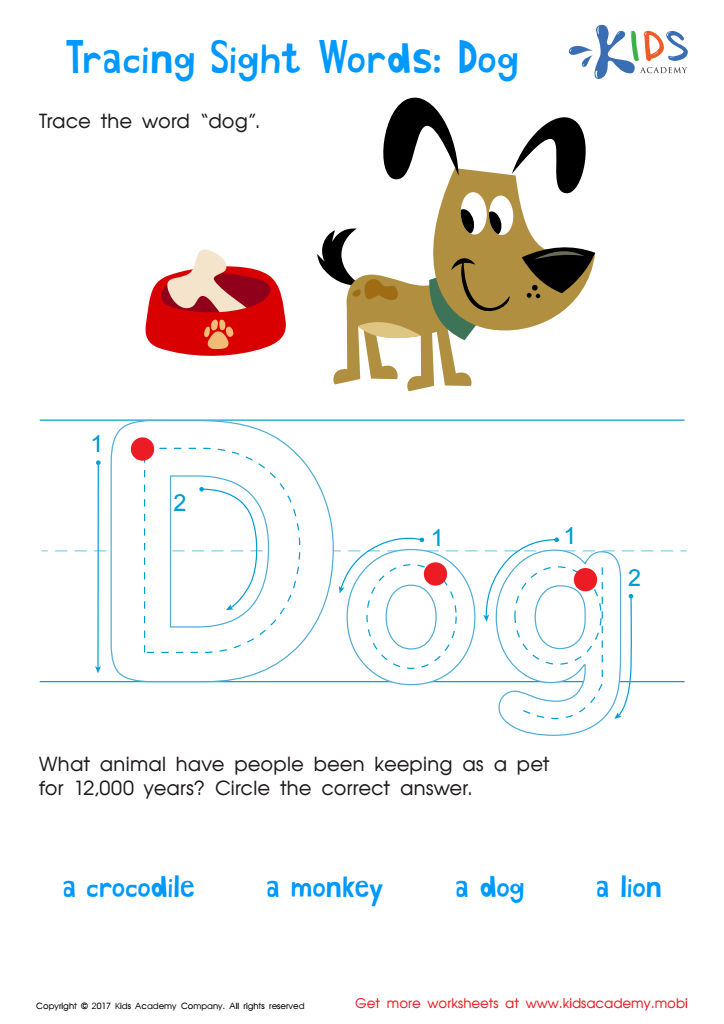
Dog Worksheet Sight Words Worksheet
Get your kids excited to read with our dog-themed sight words worksheet!
Excite your child to read with our sight words worksheet: dog edition! Featuring a lovable dog character to put a smile on any kid's face, this worksheet helps kids practice reading and writing the word "dog". Build a library of words they can read quickly and promote increasing literacy skills with early fluency! Get them ready for reading with our dog-themed sight words worksheet!
Dog Worksheet Sight Words Worksheet
Worksheet
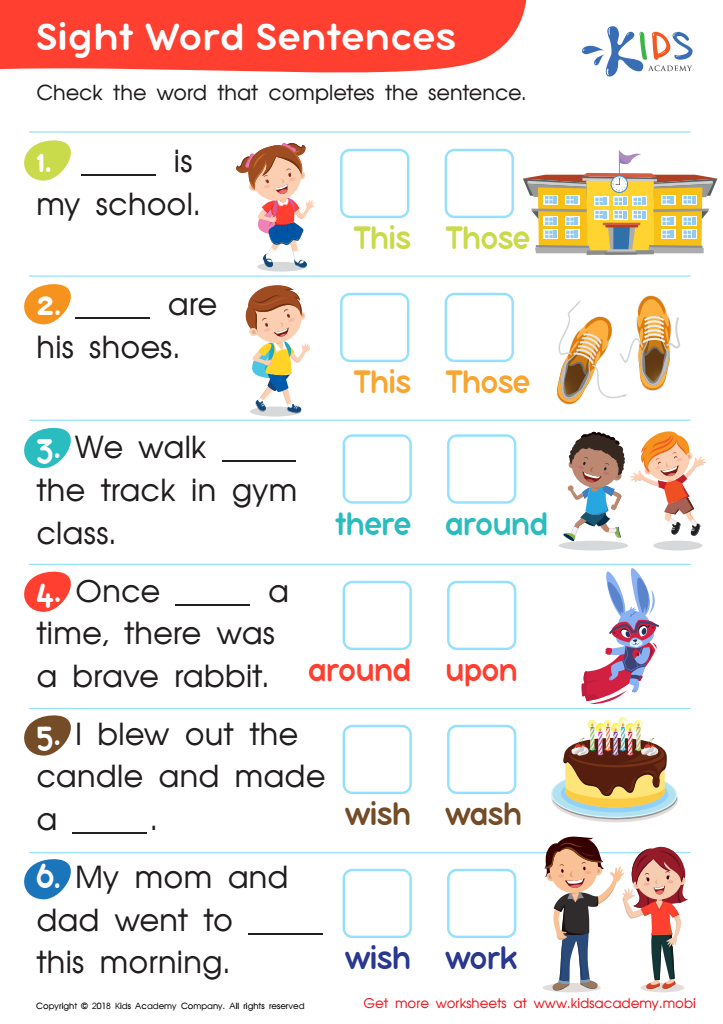
Sight Word Sentences Worksheet
Improve reading fluency! Have students fill in the blank with the correct sight word to complete sentences. Sight words are often tricky to decode - they don't follow phonics or spelling rules. To read smoothly, young learners must know them by memory. Use this printable and help kids master their sight words!
Sight Word Sentences Worksheet
Worksheet
Join Kids Academy for Free
Who is primarily going to use this learning content?








Sight word recognition and phonics are critical components of early literacy development for children ages 5-8. Parents and teachers should care about these skills because they lay the foundation for future reading proficiency. Sight words are common words that children are encouraged to recognize instantly, such as "the," "and," or "is." Mastering these words supports reading fluency, allowing children to focus on comprehension rather than decoding every single word.
On the other hand, phonics teaches children the relationship between letters and their corresponding sounds. This skill enables learners to sound out unfamiliar words, enhancing their independence in reading and boosting their confidence. When children understand phonics, they're better equipped to decode and spell new words, further expanding their vocabulary and comprehension.
Fostering these skills fuels a child's love for reading, which has long-term educational benefits. Children who are strong readers are often more successful in academic settings and develop better critical thinking skills. By supporting sight word recognition and phonics, parents and teachers can help create engaged and proficient readers who are prepared for future learning challenges. Ensuring these foundational skills are in place is essential for young learners' overall cognitive and emotional growth.







