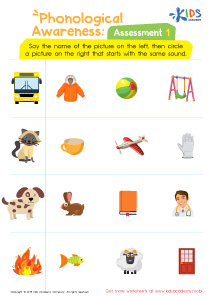
Rhyming skills development Normal Rhyming Worksheets for Ages 5-8
4 filtered results
-
From - To
Enhance your child’s literacy with our "Rhyming Skills Development: Normal Rhyming Worksheets for Ages 5-8." These engaging and age-appropriate worksheets are designed to foster early phonemic awareness and strengthen reading skills in young learners. Through fun and interactive activities, children will learn to identify and create rhyming pairs, boosting their phonics knowledge and vocabulary. Perfect for both classroom and at-home practice, these worksheets provide a solid foundation for reading success, encouraging creativity and a love for language. Visit our page to explore dynamic resources that make learning to rhyme enjoyable and educational.
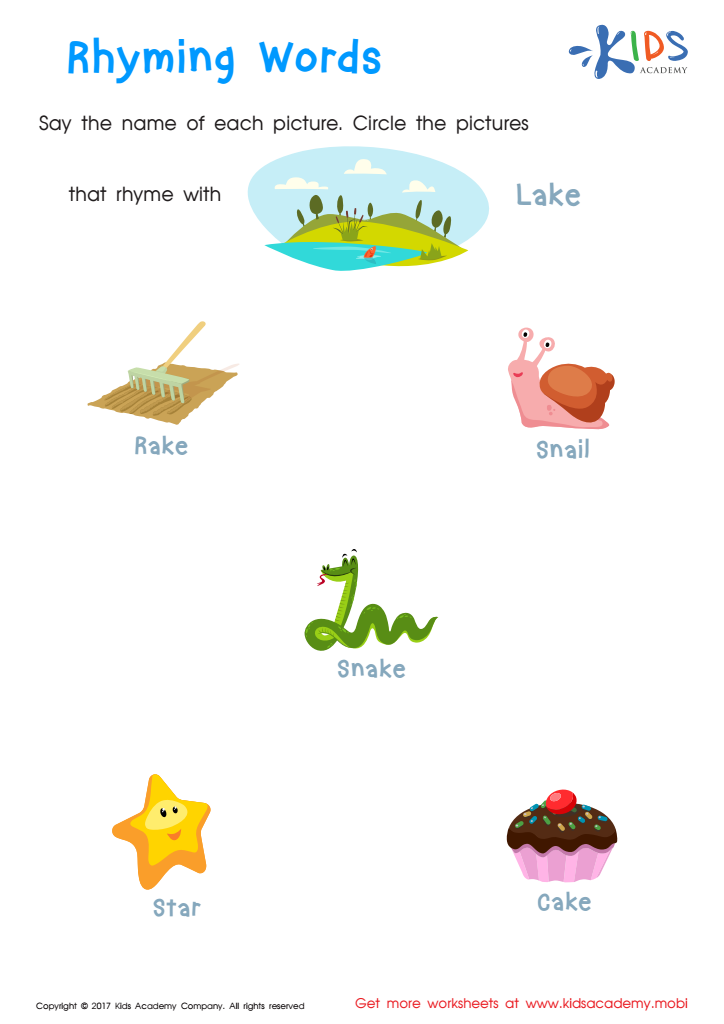
Rhyming Words Rhyming Worksheet
 Assign to My Students
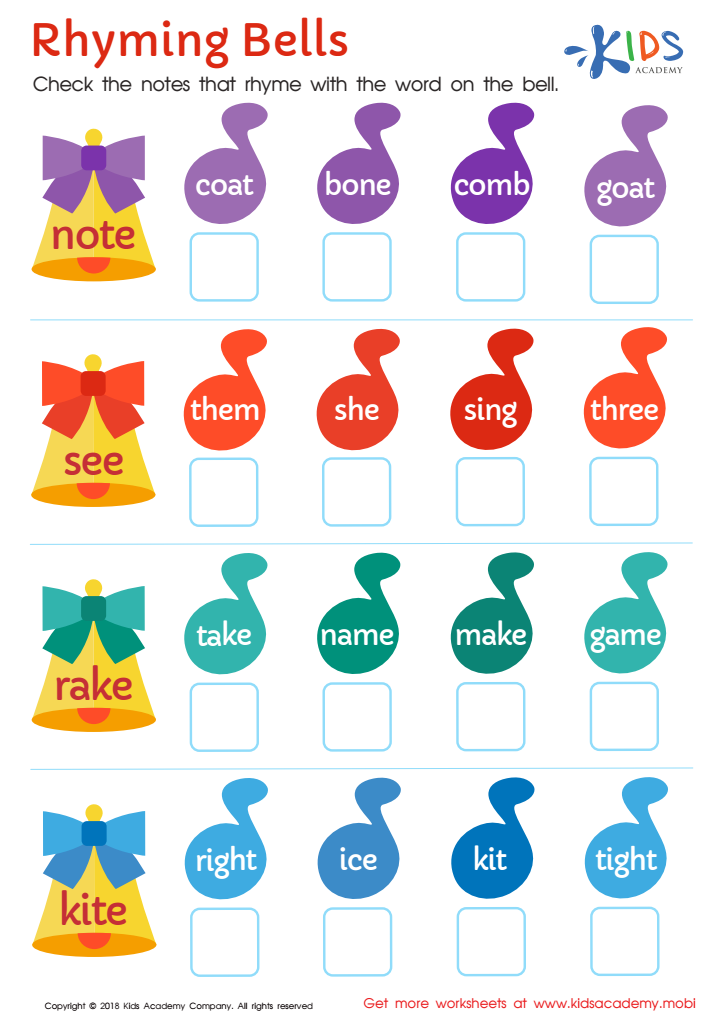
Rhyming Bells Worksheet
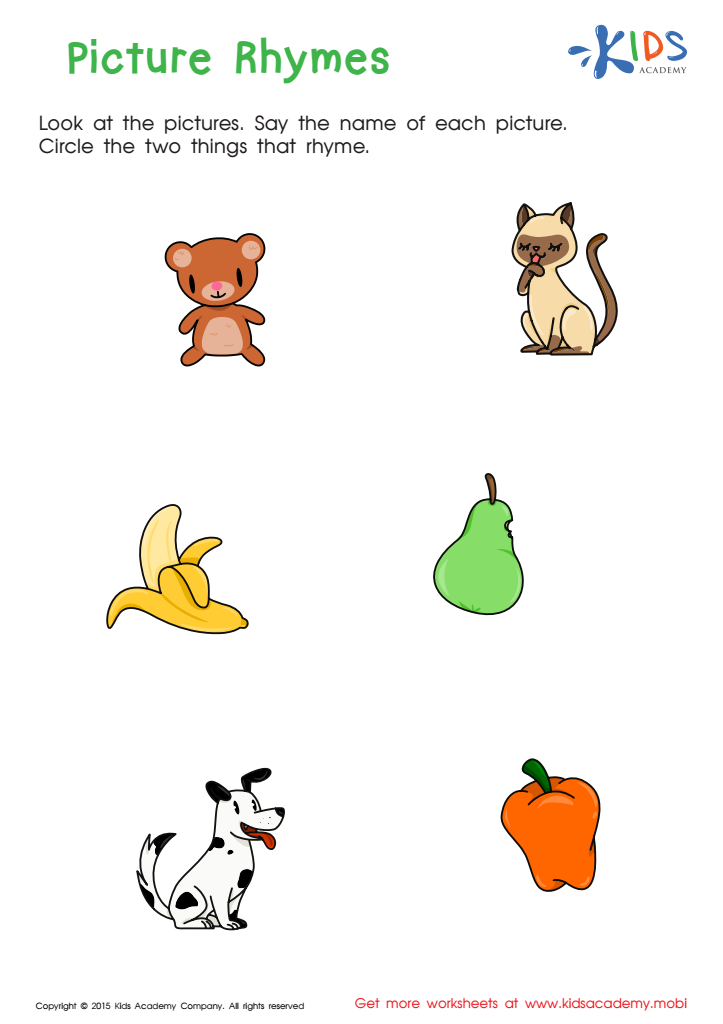
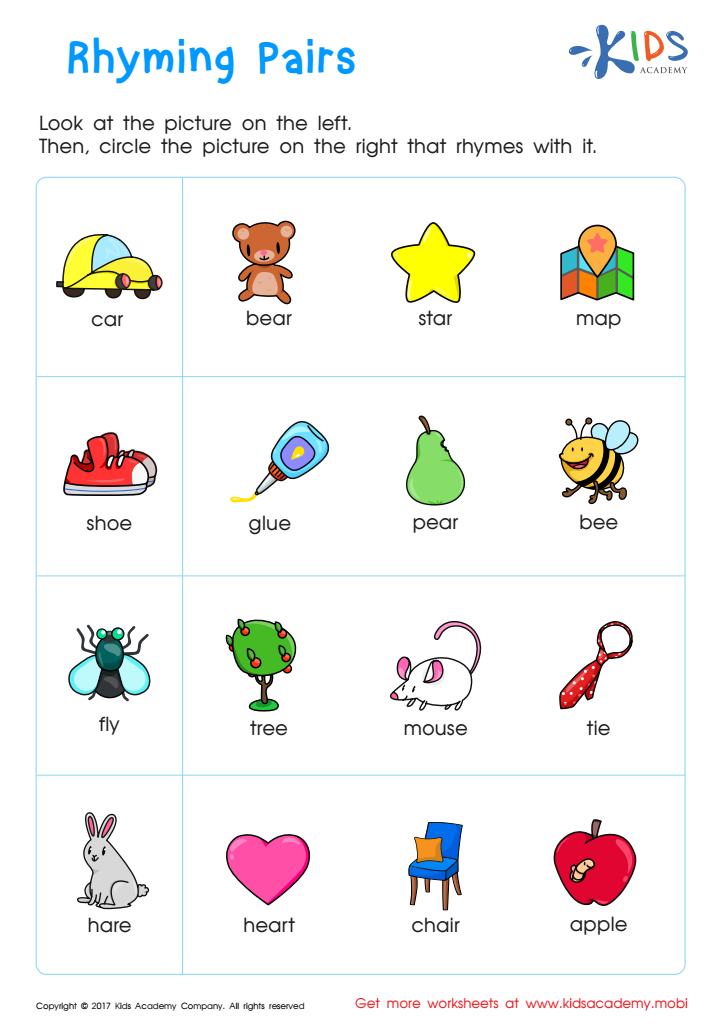
First Words: Picture Rhymes Worksheet







Rhyming skills are crucial for children ages 5-8, as they form a foundation for effective language and reading development. Parents and teachers should prioritize rhyming because it enhances phonemic awareness, which is the ability to hear, identify, and manipulate individual sounds in spoken words. This skill is a key predictor of later reading success. When children recognize and produce rhymes, they strengthen their understanding of how sounds work together, making it easier to decode words when they begin reading.
Rhyming also enriches vocabulary. As children engage with various rhyming words, they naturally expand their lexicon. Exposure to a broader range of words helps improve comprehension and expressive language skills, enabling children to articulate their thoughts more clearly.
Furthermore, rhyming boosts auditory discrimination—important for distinguishing similar-sounding words—and supports memory retention. These skills contribute to better spelling and more fluent reading. Engaging in rhyming activities also fosters a love for language through fun and interactive play, keeping young learners motivated and interested.
In summary, rhyming isn't just a playful activity—it’s a vital educational tool. By nurturing rhyming skills, parents and teachers can provide their children with a robust linguistic foundation that will bolster their academic journey and lifelong communication abilities.