Hand-eye Coordination Normal Tracing Letters Worksheets for Ages 5-8
4 filtered results
-
From - To
Enhance your child's hand-eye coordination with our engaging tracing letters worksheets, designed specifically for ages 5-8. These fun, interactive activities help young learners develop fine motor skills while practicing their alphabet. Each worksheet features bold, clear letters that encourage children to trace over them, supporting their writing abilities and confidence. As kids trace and review each letter, they improve their coordination and concentration, laying a strong foundation for future academic success. Perfect for home or classroom use, our resources provide a structured and enjoyable way for children to learn through play. Start their learning journey today with our expertly crafted worksheets!
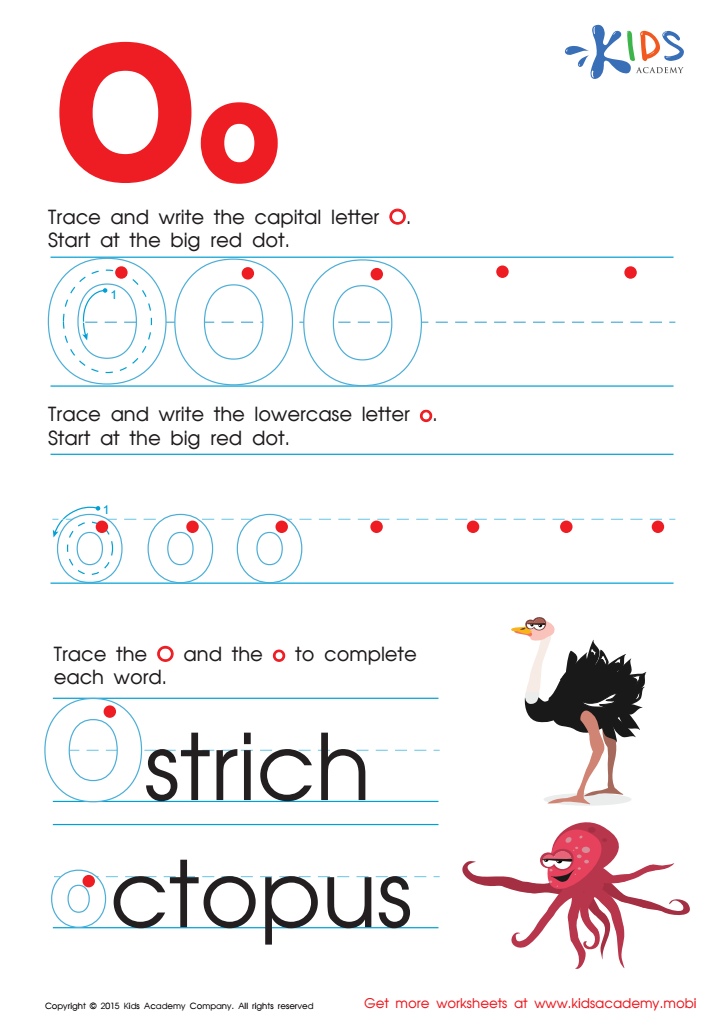
Letter O Tracing Page
 Assign to My Students

Letter P Tracing Page

Letter H Tracing Page

Letter D Tracing Page








Hand-eye coordination is a crucial skill for children aged 5-8, as it lays the foundation for many aspects of their development, including literacy and fine motor skills. Normal tracing of letters is particularly important in early education, as it helps young learners develop the ability to control their movements, thereby improving their handwriting and overall communication skills.
When children engage in tracing activities, they learn to recognize letter shapes and their corresponding sounds simultaneously. This multisensory approach enhances their understanding of phonics, aiding in reading development. Additionally, tracing hones fine motor skills, which are essential for various everyday tasks like tying shoes, buttoning shirts, and using scissors. Good hand-eye coordination fosters confidence in children, empowering them to express themselves more effectively through writing.
Moreover, tracing letters can serve as an engaging activity that nurtures concentration and focus, key components of cognitive development. Parents and teachers should encourage such activities, as they not only provide educational value but also create opportunities for bonding and support. By prioritizing the development of hand-eye coordination through normal tracing, adults play an essential role in preparing children for a successful learning journey. Ultimately, these skills are foundational to a child's ability to thrive in school and life.








