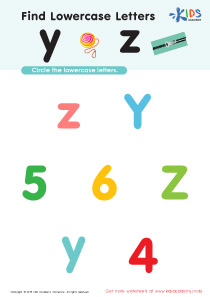
Uppercase identification Normal Uppercase Letters Worksheets for Ages 5-8
5 filtered results
-
From - To
Welcome to our Uppercase Identification Normal Uppercase Letters Worksheets, designed for children aged 5-8! These engaging worksheets help young learners recognize and differentiate uppercase letters, a vital skill for reading and writing. Each activity is tailored to enhance letter recognition through fun exercises that boost confidence and understanding. With colorful illustrations and varied formats, these resources keep students motivated while solidifying their alphabet knowledge. Perfect for classroom use or at-home practice, our worksheets make learning uppercase letters enjoyable and effective. Equip your child with essential skills for academic success with our carefully crafted worksheets! Explore and download your favorites today!
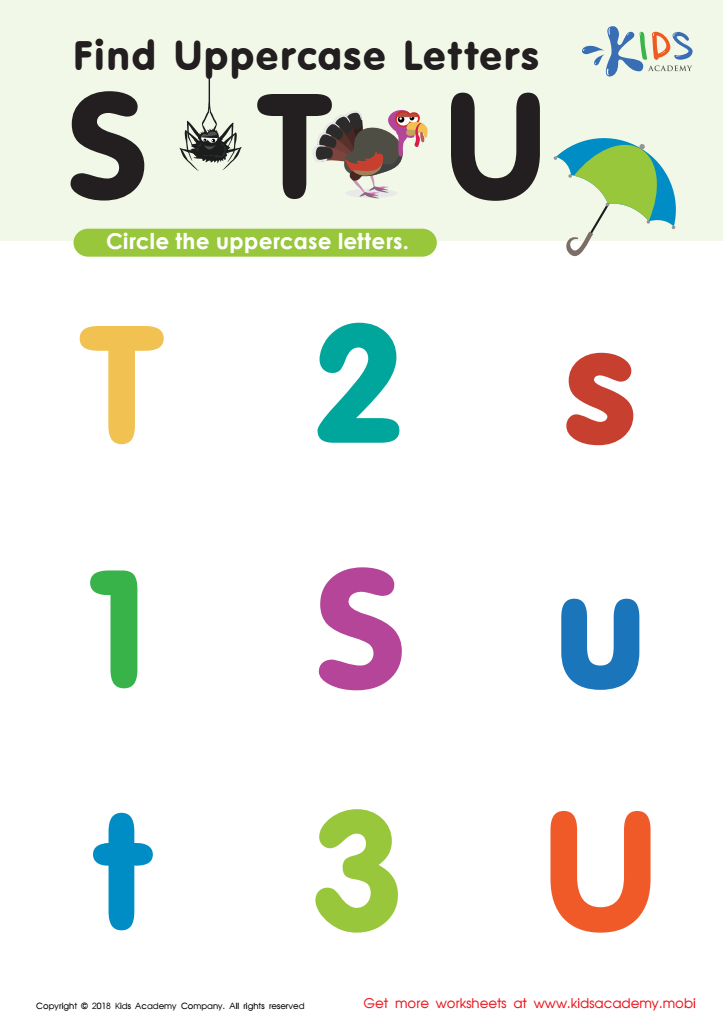
Find Uppercase Letters Worksheet
 Assign to My Students
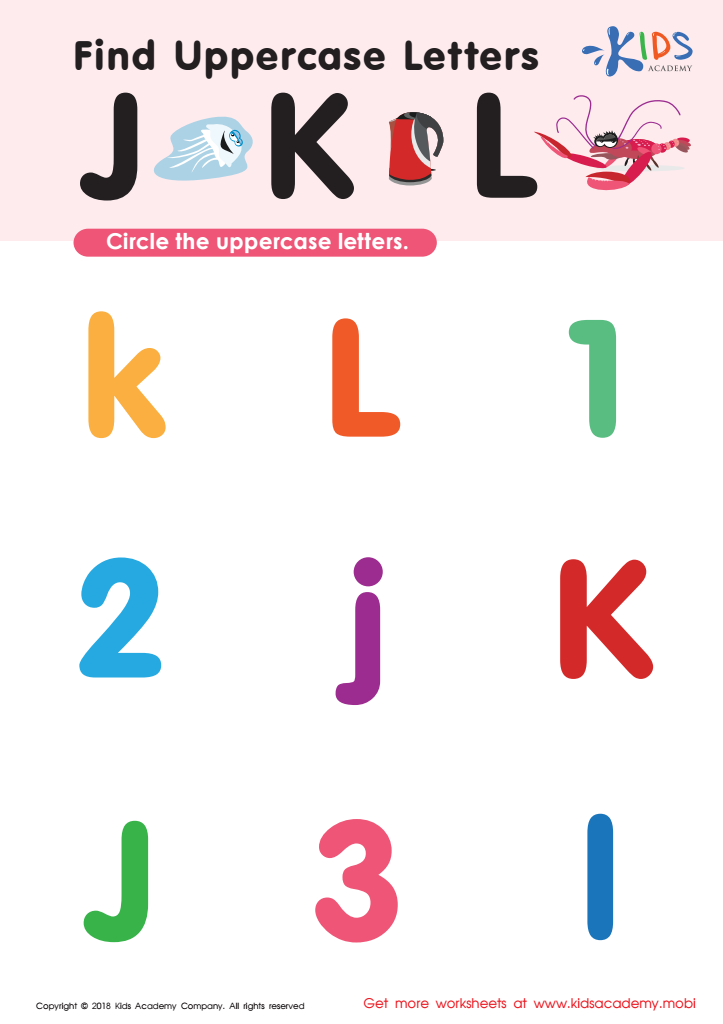
Find Uppercase Letters J, K, and L Worksheet
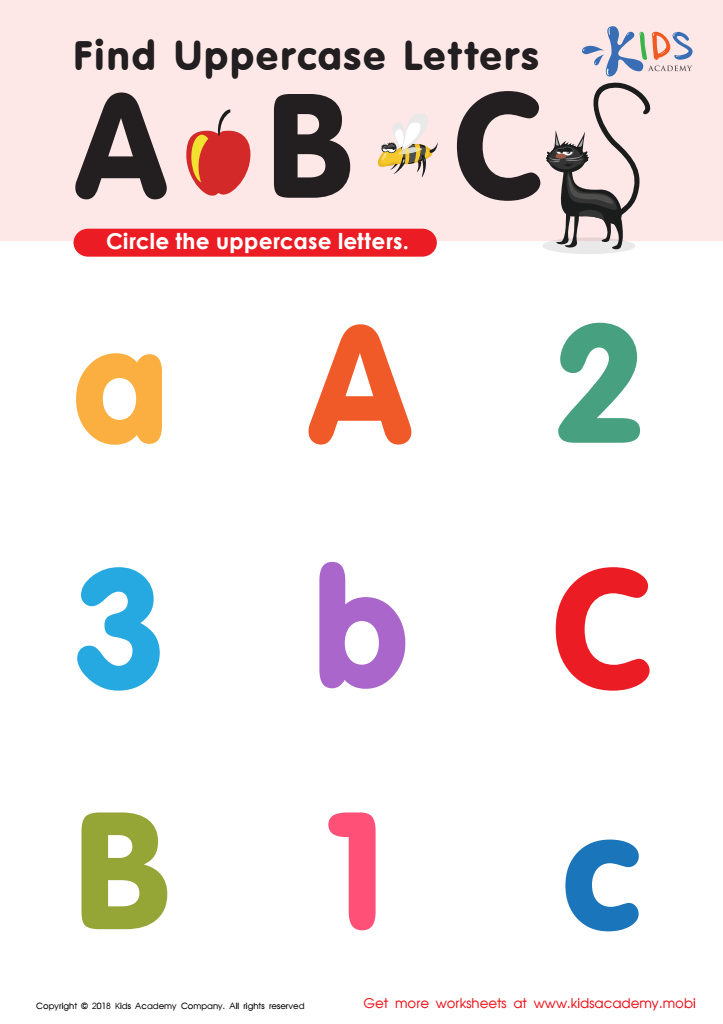
Find Uppercase Letters A, B, and C Worksheet
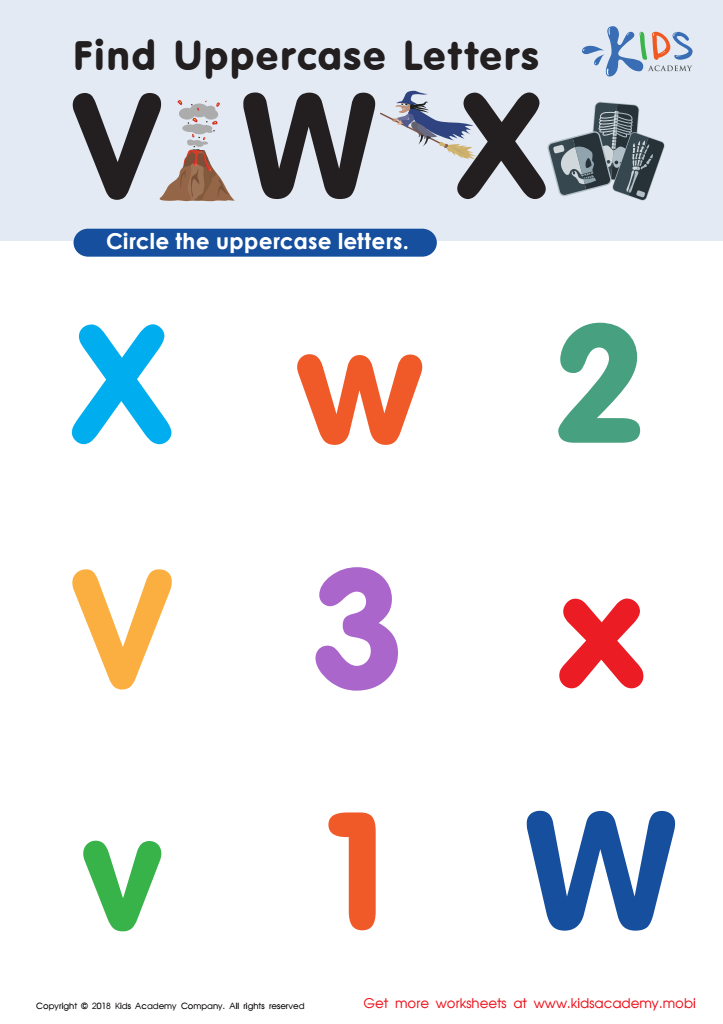
Find Uppercase Letters V, W, X Worksheet
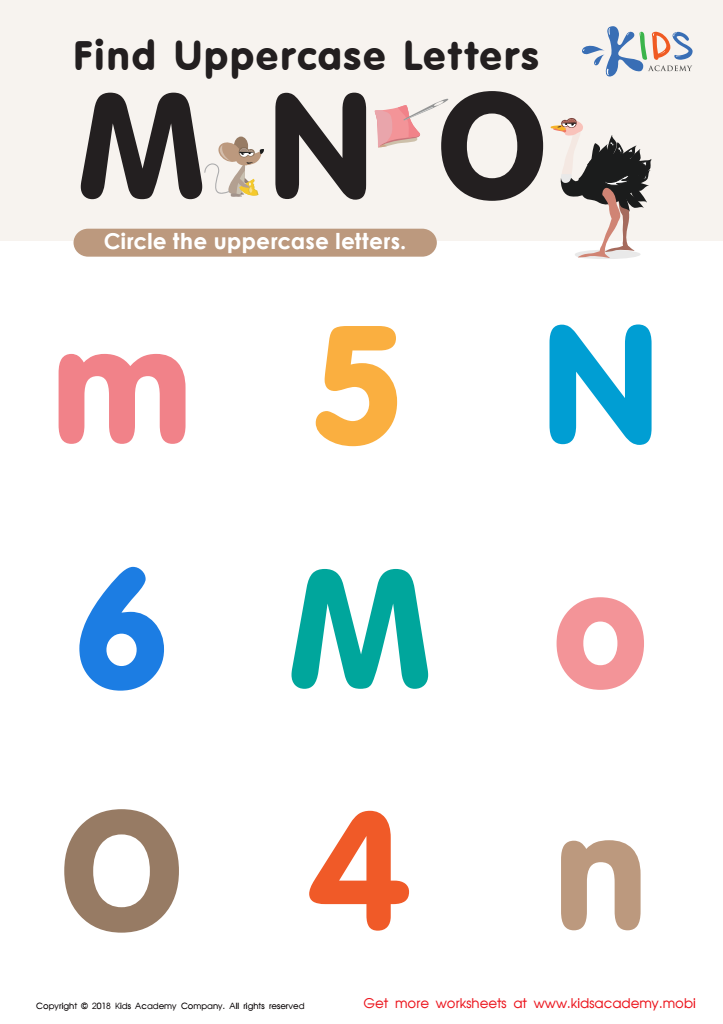
Find Uppercase Letters M, N, and O Worksheet








Uppercase letter identification is a fundamental skill for children aged 5-8, as it significantly impacts their literacy development and foundational reading abilities. Parents and teachers should prioritize this learning because recognizing uppercase letters helps children understand the alphabet system essential for reading and writing. Uppercase letters signal the start of sentences and proper nouns, making them crucial for effective communication.
Moreover, mastering uppercase letters leads to enhanced phonemic awareness and spelling skills. Children often encounter uppercase letters in books, signs, and other print materials, which are vital for navigating their environment and engaging with text. Early familiarity with these letters builds confidence as kids progress in their reading journey, separating them from the challenges of encountering print later.
Support from both parents and teachers is key in creating a conducive learning environment. Engaging activities, such as games, crafts, or storytelling, can make the recognition of uppercase letters enjoyable and effective. When children feel supported in their literacy pursuits, they are more likely to develop a love for reading and writing, positioning them for future academic success and instilling lifelong learning habits. Ultimately, nurturing this skill sets the stage for a robust foundation in language arts.