Normal Vowel Diphthongs Worksheets for Ages 5-8 - Page 2
25 filtered results
-
From - To
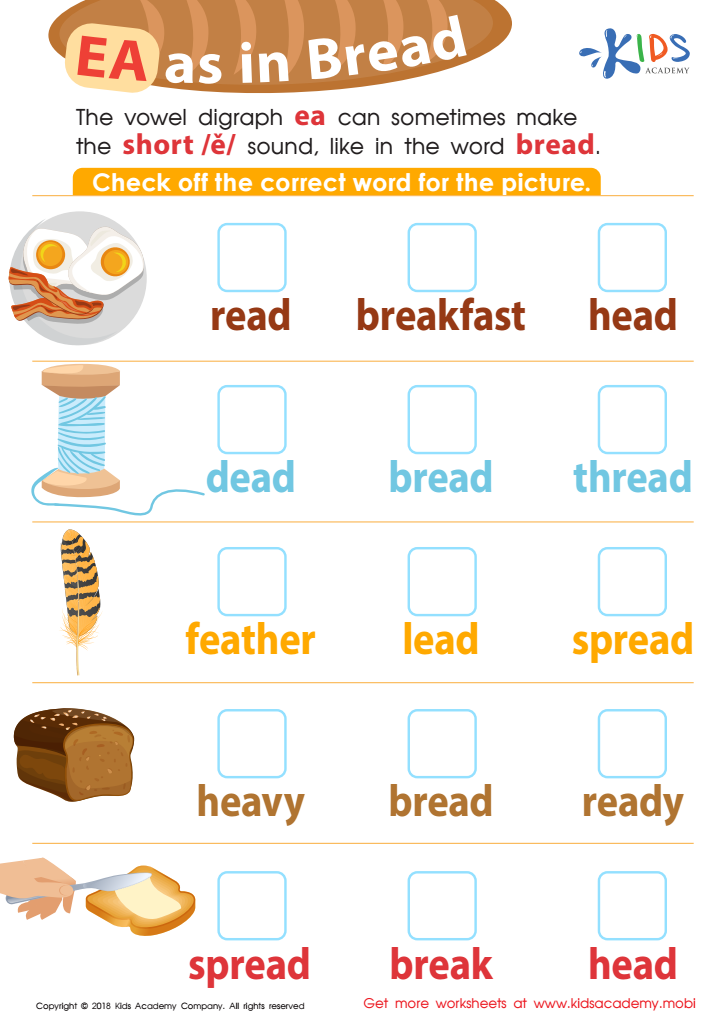
Reading: EA as in Bread Worksheet
 Assign to My Students


Normal vowel diphthongs are essential for early learners aged 5-8 because they significantly impact reading and speaking proficiency. A diphthong is a complex vowel sound made by gliding from one vowel to another within the same syllable, such as /oi/ in "boil" or /ou/ in "cloud." Mastering these sounds spells the difference between accurate pronunciation and misunderstanding. Awareness and accurate usage of vowel diphthongs enhance phonological skills, which are crucial building blocks of literacy.
Children who understand diphthongs can decode words more efficiently and are likely to become fluent readers faster. This fluency translates into better comprehension and a greater ability to enjoy and learn from texts. Furthermore, proper articulation of diphthongs aids in clearer, more effective communication.
For teachers, strategies like phonics instructions and interactive activities related to diphthongs can make learning engaging and cement these concepts effectively. For parents, reinforcing these phonics at home through reading aloud and games can provide additional support. The shared understanding between home and school supports a child's oral and written communication skills, builds confidence, and sets a strong foundation for ongoing language development. Therefore, caring about vowel diphthongs truly shapes a child's future communication abilities and learning success.