Categorizing animals Normal Worksheets for Ages 5-8
3 filtered results
-
From - To
Explore our captivating "Categorizing Animals Normal Worksheets" designed specifically for children aged 5-8! This collection of engaging worksheets helps young learners develop essential sorting skills by grouping animals based on various attributes such as habitat and physical characteristics. With vibrant illustrations and easy-to-follow guidelines, these worksheets make learning fun and interactive. Ideal for both classroom and home use, they promote critical thinking and enhance observational skills. Help your child discover the exciting world of animals while reinforcing their understanding of categorization. Download and print our worksheets today to inspire a love for learning in your young explorer!
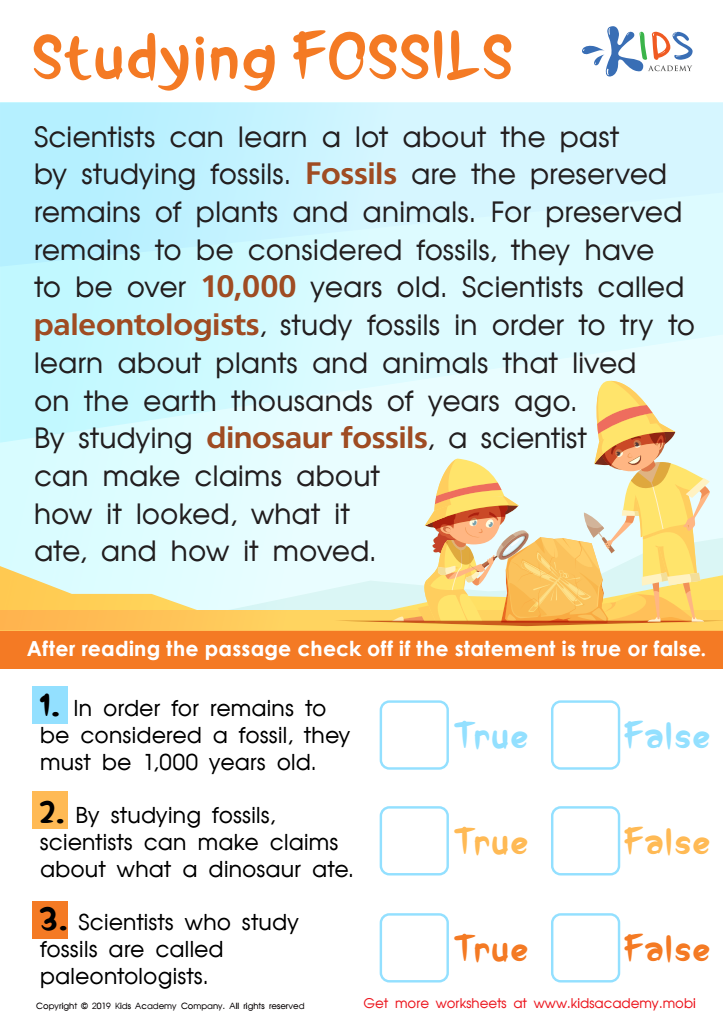
Studying Fossils Worksheet
 Assign to My Students
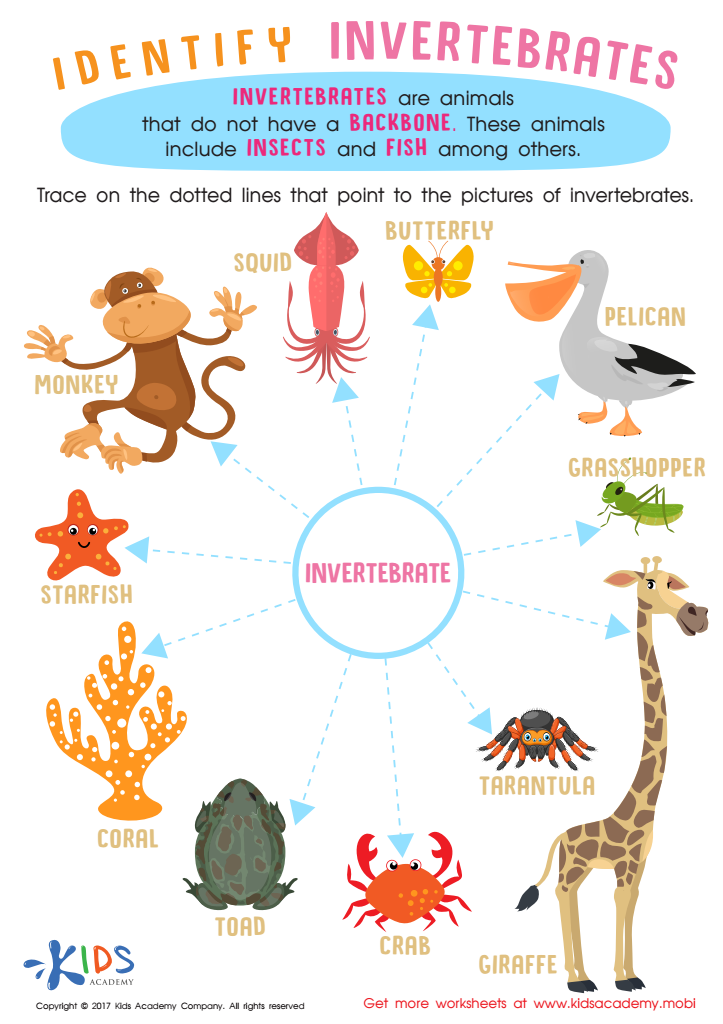
Invertebrates Worksheet for Grade 3
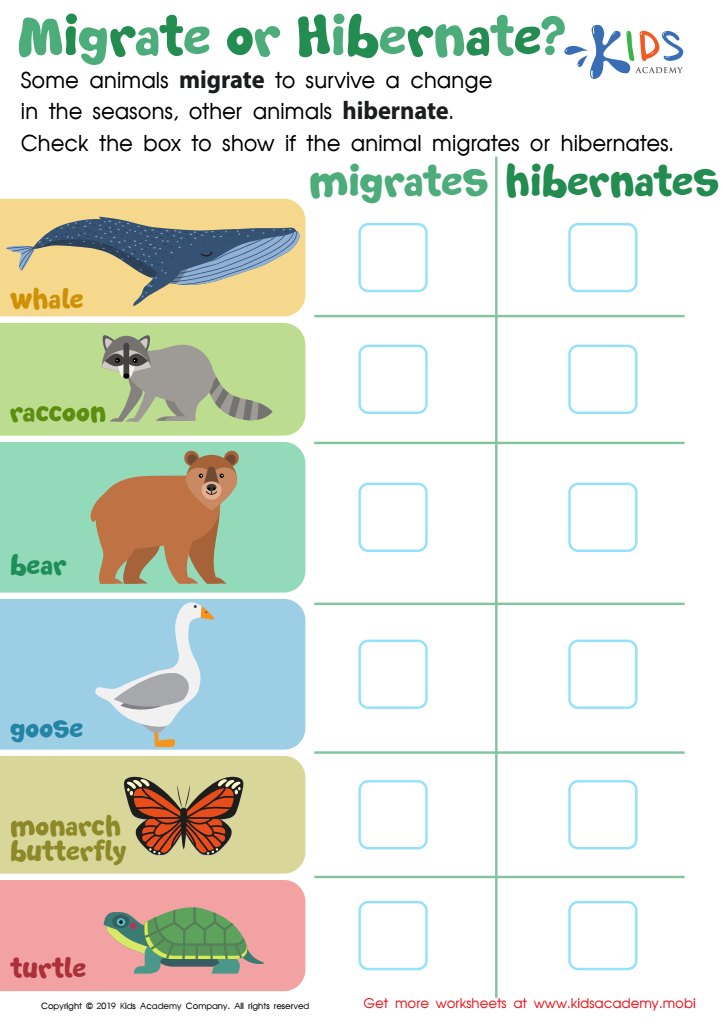
Migrate or Hibernate? Worksheet







Categorizing animals is an essential activity for children aged 5 to 8, offering numerous developmental benefits that parents and teachers should prioritize. Firstly, it fosters critical thinking and cognitive skills. By classifying animals into categories such as mammals, reptiles, birds, and amphibians, children learn to observe differences and similarities, enhancing their analytical abilities.
Additionally, this activity nurtures a sense of curiosity and engagement with the natural world. As children categorize animals, they become more interested in learning about their habits, habitats, and characteristics, which can spark a lifelong love for science and nature. This also encourages exploration and inquiry, important skills in today’s fast-evolving world.
Moreover, categorizing animals aids in developing language skills. Children expand their vocabulary by learning the names of different species and the terms used in classification. It also promotes social skills as they discuss their findings with peers and collaborate on learning activities.
Finally, understanding animal categorization instills respects for diversity in life forms, teaching children about ecosystems and the importance of each species, thereby nurturing future environmentally conscious individuals. Overall, encouraging categorization in early education breaks the foundation for a well-rounded understanding of biology and an appreciation for the world around them.








