Identifying Animals Normal Worksheets for Ages 5-8
3 filtered results
-
From - To
Discover our "Identifying Animals Normal Worksheets for Ages 5-8" designed to foster young learners' curiosity about the animal kingdom. These engaging and interactive worksheets help children recognize and name various animals, enhancing their learning skills and reinforcing essential concepts through enjoyable activities. Perfect for classroom use or at-home learning, our worksheets cover diverse species, supporting vocabulary development and critical thinking. Created by expert educators, these printables provide a solid foundation in biology, ensuring that children not only gain knowledge but also develop a passion for the natural world. Start your child’s exciting journey of animal discovery today!
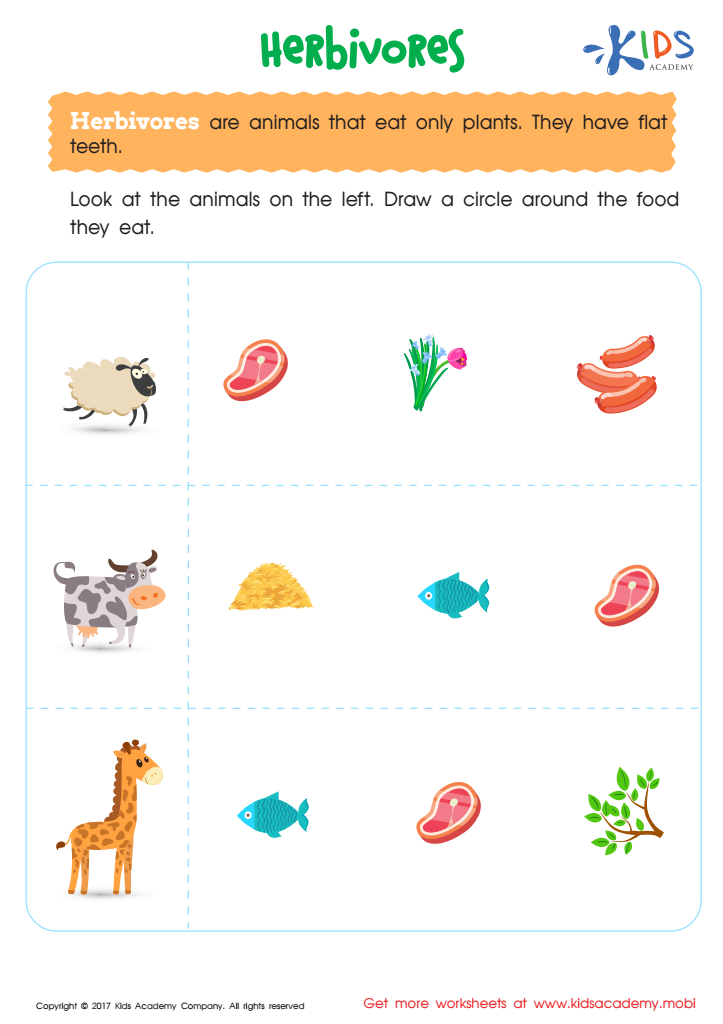
Herbivores Printable
 Assign to My Students
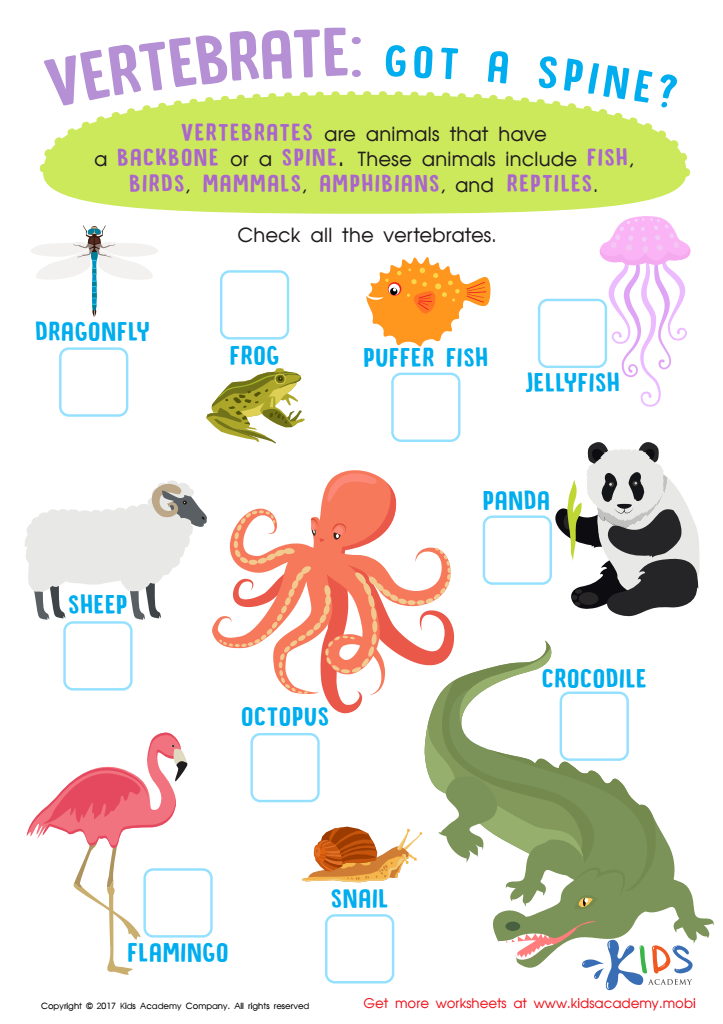
Vertebrates Animals Worksheet for 3rd Grade
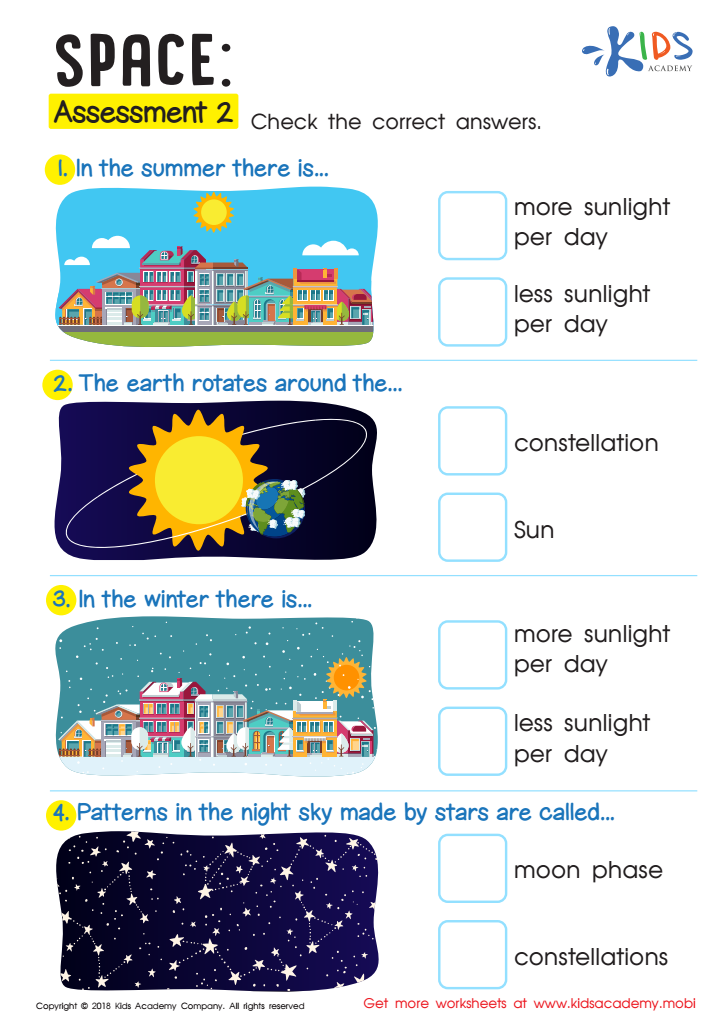
Space: Assessment 2 Worksheet








Identifying animals is an essential skill for children aged 5-8 for several reasons, making it a worthwhile endeavor for both parents and teachers. At this age, children are naturally curious, and engaging with the animal kingdom can significantly bolster their cognitive, social, and emotional development.
Firstly, learning about animals hones observational skills. Children differentiate between various traits such as size, color, and behavior, which sharpens their attention to detail. This practice contributes to overall intellectual development by enhancing critical thinking and categorization skills.
Further, it expands their vocabulary and language skills. Words associated with animal characteristics, habitats, and diets introduce new terms and concepts, fostering linguistic growth.
Socially, it fosters empathy and respect for living things. By understanding that animals have needs and feelings, children learn compassion and the importance of animal welfare and environmental stewardship.
Emotionally, it evokes wonder and fascination, which can boost a child’s engagement in learning. Positive experiences with animals can encourage a lifelong love for nature and sciences, paving the way for future academic interests.
In sum, teaching children to identify animals aids in comprehensive educational development, making it a beneficial focus for parental and educational efforts.








