Sentence structure understanding Normal Worksheets for Ages 5-8
3 filtered results
-
From - To
Enhance your child's reading and writing skills with our Sentence Structure Understanding Normal Worksheets for Ages 5-8. These worksheets are meticulously designed to simplify complex language concepts, ensuring young learners can grasp the basics of sentence construction. Through engaging activities and creatively crafted exercises, children will learn to identify and form complete sentences, comprehend subject-verb agreement, and use punctuation correctly. Perfect for both classroom and at-home learning, these worksheets support academic growth and boost confidence in young readers. Download today to help your child master essential language skills and lay a strong foundation for future literacy success!
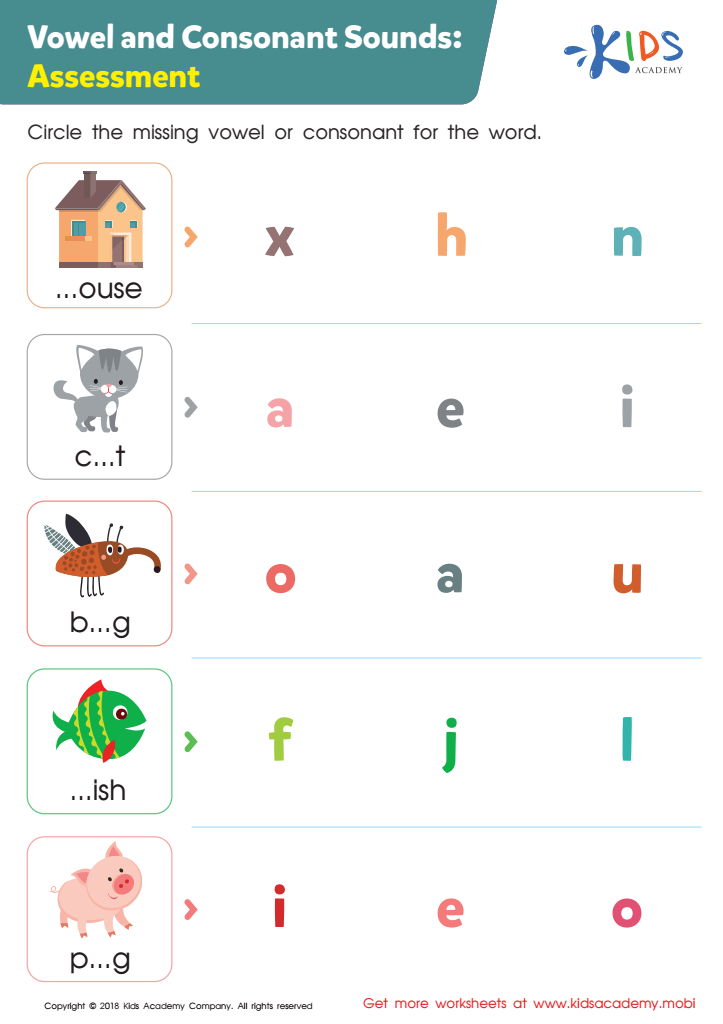
Vowel and Consonant Sounds: Assessment Worksheet
 Assign to My Students
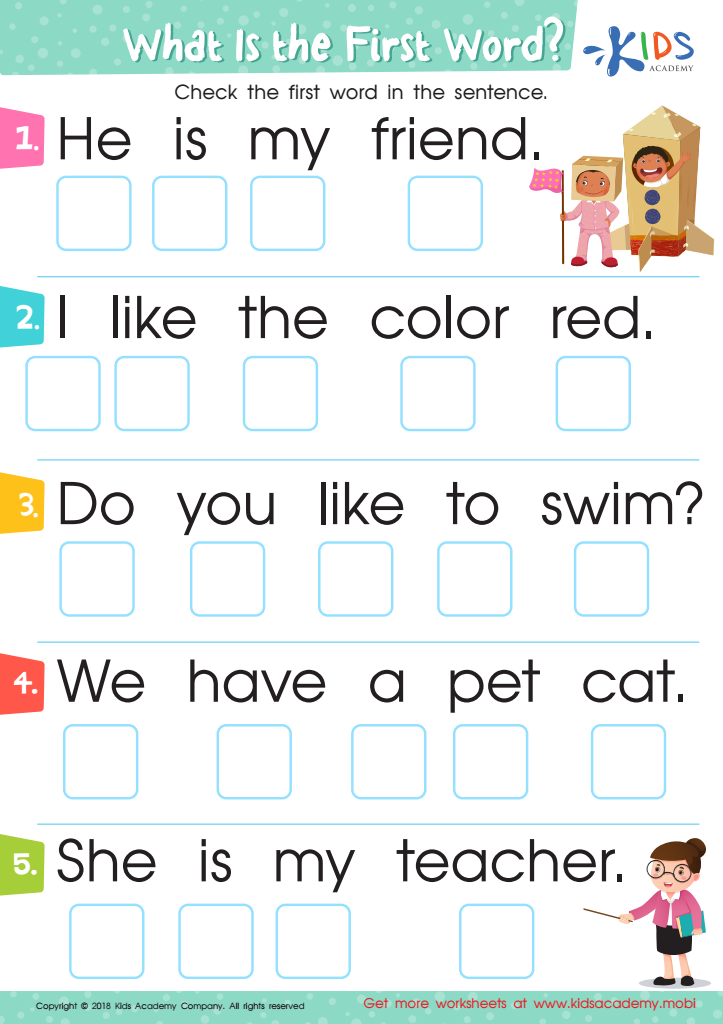
What is the First Word? Worksheet
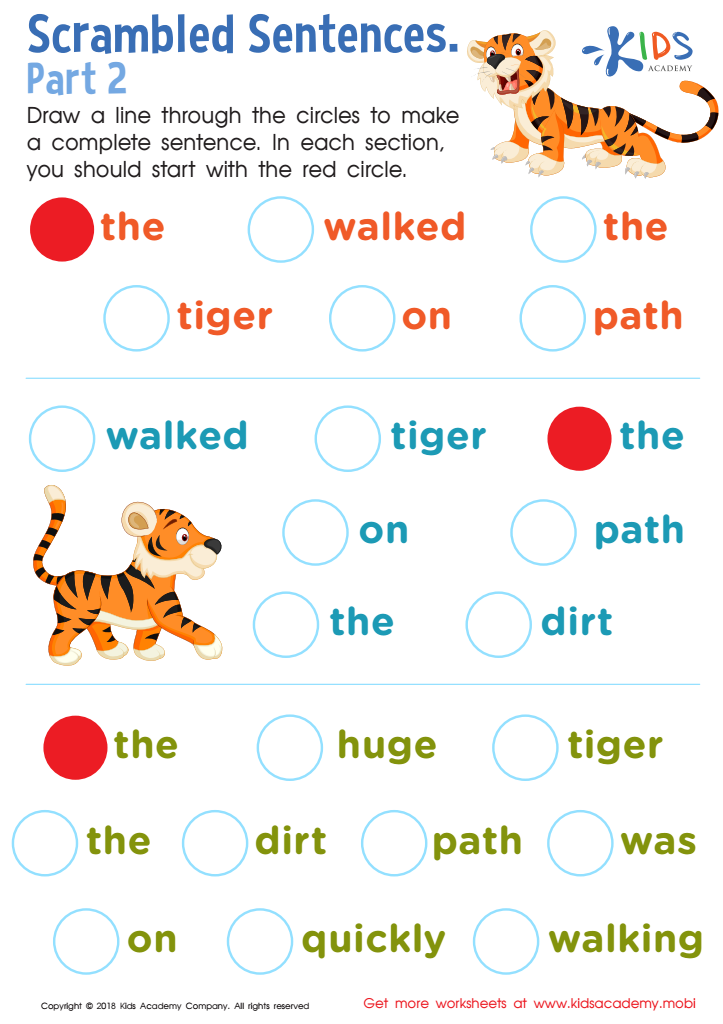
Scrambled Sentences Part 2 Worksheet






Understanding sentence structure is fundamental for children aged 5-8 as it forms the bedrock of effective communication, critical thinking, and literacy skills. At this developmental stage, children are transitioning from simple phrases to more complex sentences. Mastery of sentence structure helps them express their thoughts clearly and understand others, which is crucial for both social interactions and academic success.
Learning correct sentence structure enhances reading comprehension. When children recognize how words are organized into sentences, it enables them to grasp the meaning of stories and informational texts more effectively. This sets the stage for advanced literacy skills they will build upon throughout their education.
In the classroom, proper sentence structure aids in developing writing skills. Young students learn to convey ideas in an organized manner, making their writing clearer and more engaging. It also supports their ability to follow classroom instructions and engage in discussions, both of which are essential for a collaborative learning environment.
Moreover, understanding sentence structure fosters cognitive development. It encourages logical thinking and problem-solving as children learn to arrange words in coherent ways. Both parents and teachers should actively promote this understanding through reading activities, writing exercises, and conversations. Doing so equips children with essential tools for lifelong learning and effective communication.








