Understanding regrouping Normal Worksheets for Ages 5-8
4 filtered results
-
From - To
Unlock your child's potential with our "Understanding Regrouping" worksheets designed for ages 5-8! These engaging and educational worksheets make mastering basic math skills fun and easy. Through colorful and interactive activities, children learn the fundamental concept of regrouping, helping them to add and subtract numbers with confidence. Perfect for early learners, these carefully crafted materials support classroom learning and facilitate effective practice at home. Build a solid foundation in math and boost your little one's problem-solving abilities today with worksheets from Kids Academy tailored to young minds eager to explore and understand the magic of numbers!
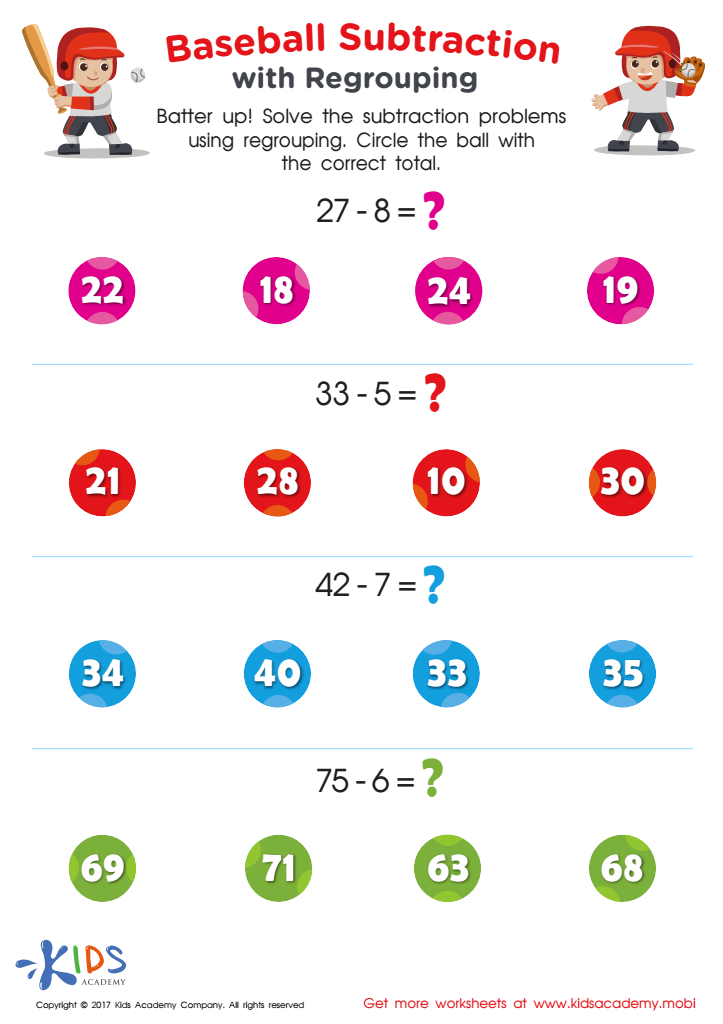
Subtraction With Regrouping for 2nd Grade Worksheet
 Assign to My Students
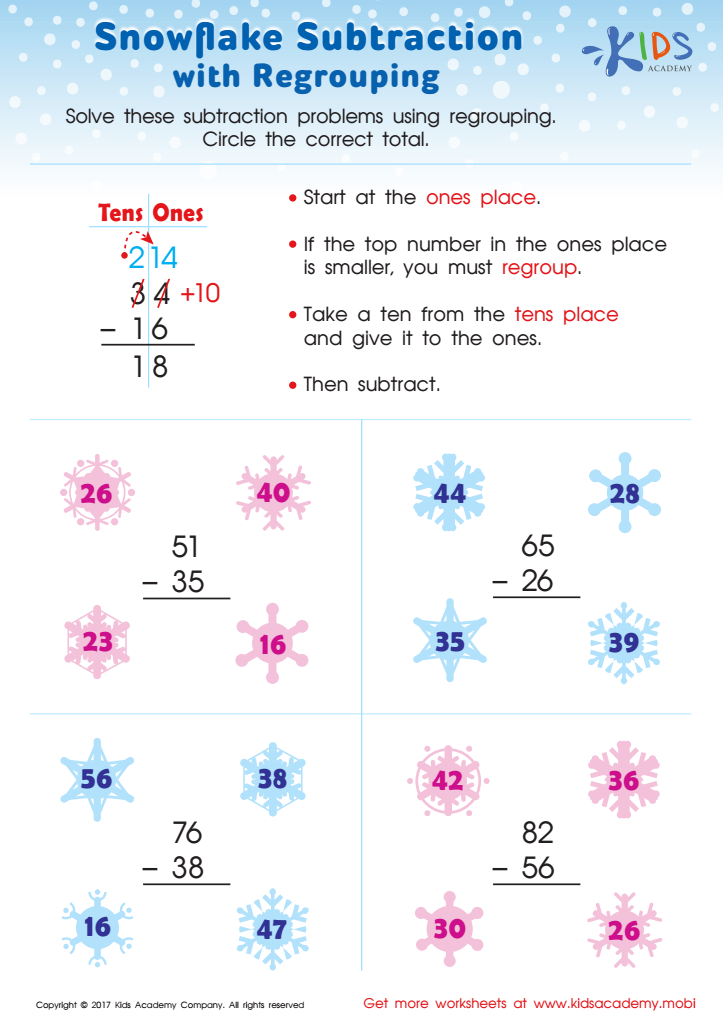
Subtraction With Regrouping Worksheet: Snowflake
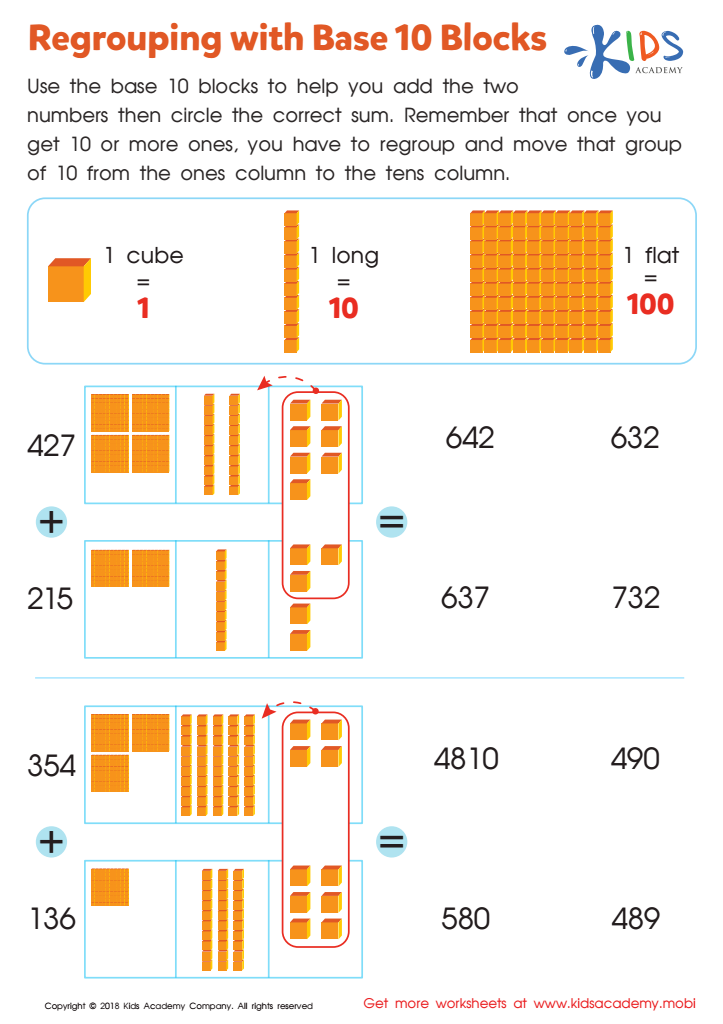
Regrouping with Base 10 Blocks Worksheet
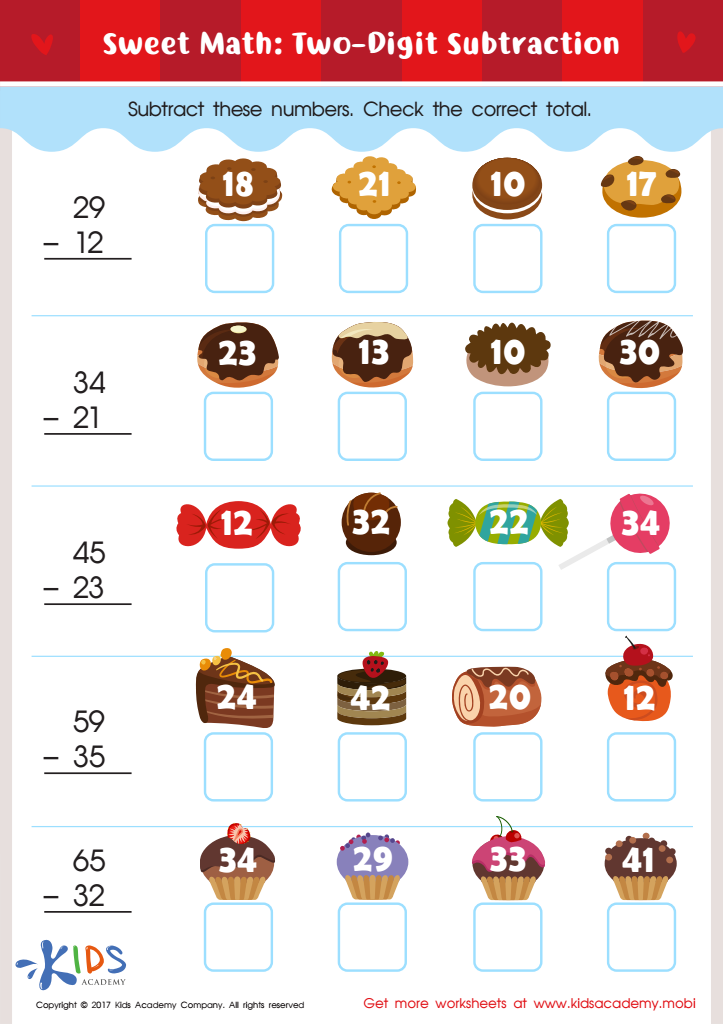
Two Digit Subtraction Worksheet



.jpg)



Understanding regrouping is essential for young children, and parents and teachers should place significant emphasis on this concept for several important reasons.
At its core, regrouping—commonly known as "carrying" or "borrowing" in arithmetic—helps children grasp the foundational principles of our base-ten number system. This understanding is crucial as it reinforces place value concepts integral to addition and subtraction, and subsequently, more advanced mathematical operations.
For children ages 5-8, mastering regrouping bolsters their confidence in handling larger numbers and complex calculations. This level of numerical fluency provides a solid groundwork for future math learning, fostering problem-solving skills and critical thinking. It shifts their perspective from being stuck in rote memorization to achieving a deeper comprehension of how numbers interact and function.
From an educator or parent's viewpoint, nurturing this understanding can avert math anxiety, which frequently stems from confusion and lack of foundational support. Instead, children who clearly understand regrouping are more likely to approach math tasks with enthusiasm and resilience.
Additionally, regrouping skills extend beyond the classroom. They enable young learners to start applying math in everyday life—whether through handling money, understanding time, or dividing items equally. Knowledge of regrouping enriches practical life skills because self-sufficient math users tend to perform better in both academic and daily scenarios.
Understanding and supporting regrouping empowers children, sets the tone for future learning success, and consequently should be a prioritized focus in early education.








