Logical thinking development Normal Addition & Subtraction Worksheets for Ages 5-8
4 filtered results
-
From - To
Enhance your child's logical thinking and problem-solving skills with our Normal Addition & Subtraction Worksheets designed for ages 5-8. These engaging practice sheets from Kids Academy offer a variety of fun and challenging exercises to strengthen their understanding of basic math principles. As children work through adding and subtracting numbers, they improve their ability to make connections, recognize patterns, and accomplish tasks with greater accuracy. Ideal for developing strong foundational math skills, these printable worksheets are perfectly suited for home practice or classroom use. Unlock your child's potential and make learning math an enjoyable experience!
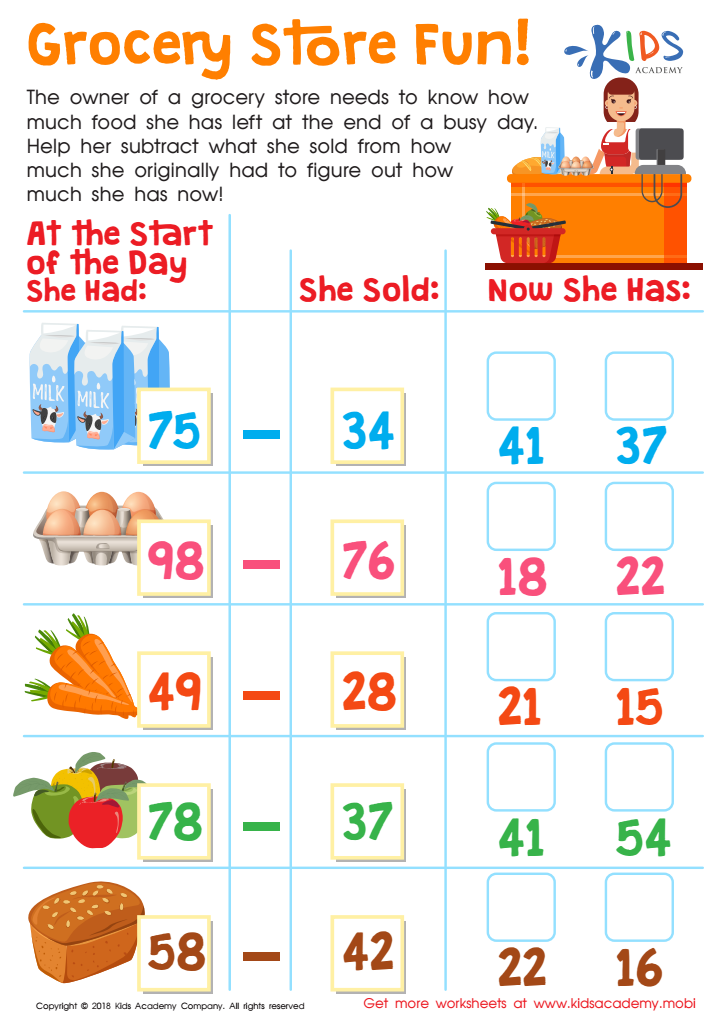
Grocery Store Fun! Worksheet
 Assign to My Students
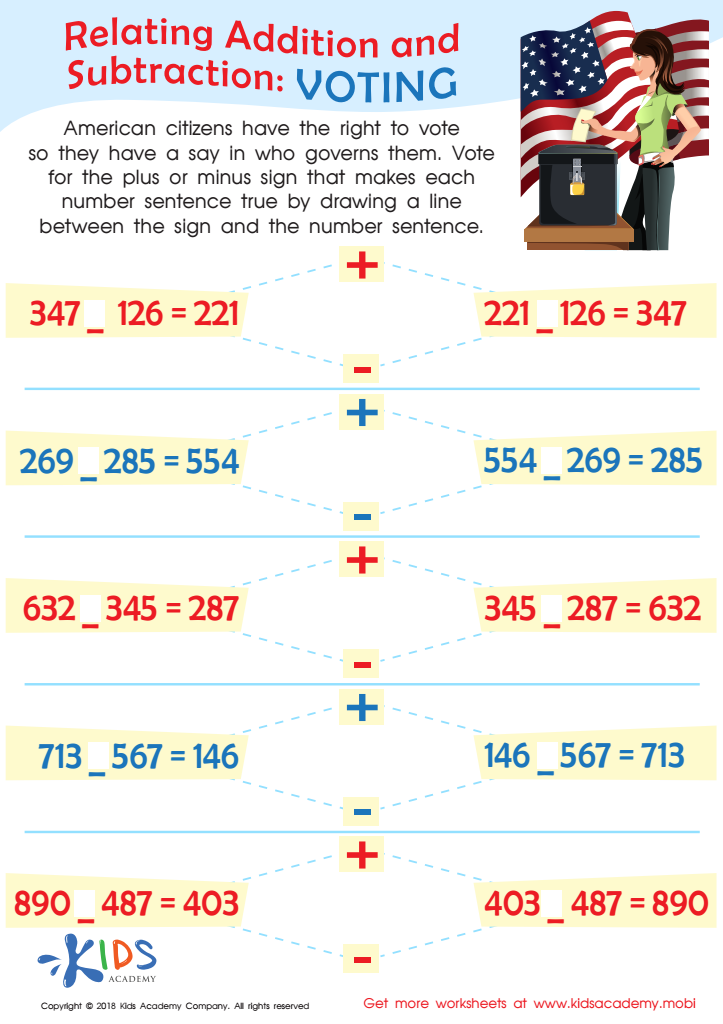
Voting Worksheet
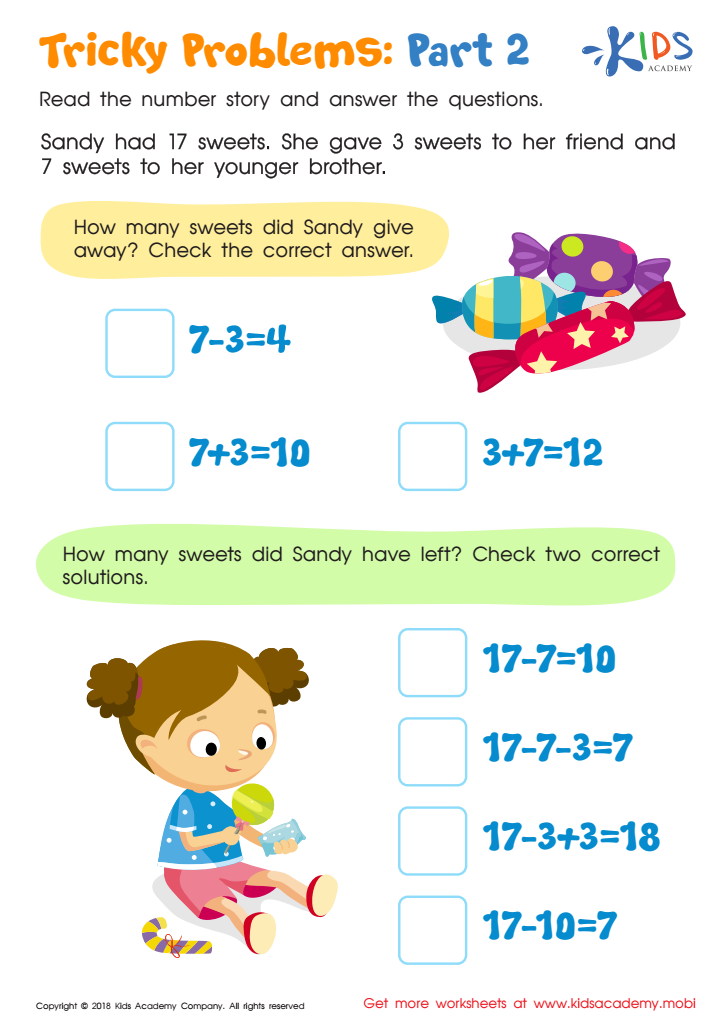
Tricky Problems Worksheet: Part 2
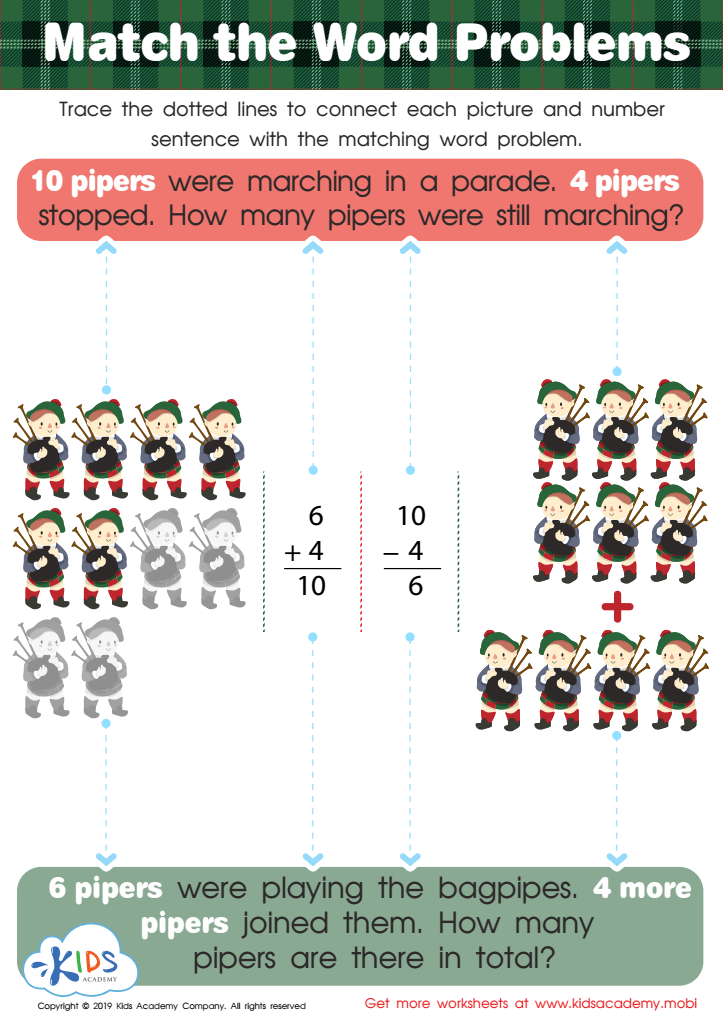
Match the Word Problems Worksheet








Logical thinking development and proficiency in normal addition and subtraction are essential for the cognitive and academic growth of children aged 5-8. At this developmental stage, young minds are highly receptive and are establishing foundational skills critical for future learning. Fostering logical thinking helps children process information, solve problems effectively, and build critical thinking skills. It empowers them to make connections between ideas, categorize information, and approach tasks systematically.
Moreover, understanding basic arithmetic, such as addition and subtraction, enhances a child's numerical literacy, which is a cornerstone for advanced mathematical concepts. Proficiency in these basic operations supports everyday activities, improves confidence, and encourages a positive attitude toward math. Engaging children in logical problem-solving and arithmetic exercises also nurtures their patience, perseverance, and attention to detail.
Parents and teachers play a pivotal role by providing enriching and supportive environments. Through interactive games, hands-on activities, and consistent practice, children become adept at reasoning, which benefits their overall academic performance. Investing time and energy in the early development of logical thinking and arithmetic skills sets the stage for a lifetime of learning, equipping children with the tools they need to navigate complex concepts as they advance in their education.








