Understanding number relationships Normal Math Worksheets for Ages 5-8
3 filtered results
-
From - To
Explore our comprehensive collection of Normal Math Worksheets for Ages 5-8. These engaging activities are designed to help young learners grasp essential number relationships and foundational math skills. Through fun exercises, children will develop a strong understanding of concepts such as counting, addition, subtraction, pattern recognition, and comparing numbers. These worksheets not only enhance mathematical abilities but also build confidence and problem-solving skills. Perfect for supporting classroom learning or enriching at-home practice, our worksheets equip kids with the tools they need to excel in early math and develop a lifelong love for numbers.
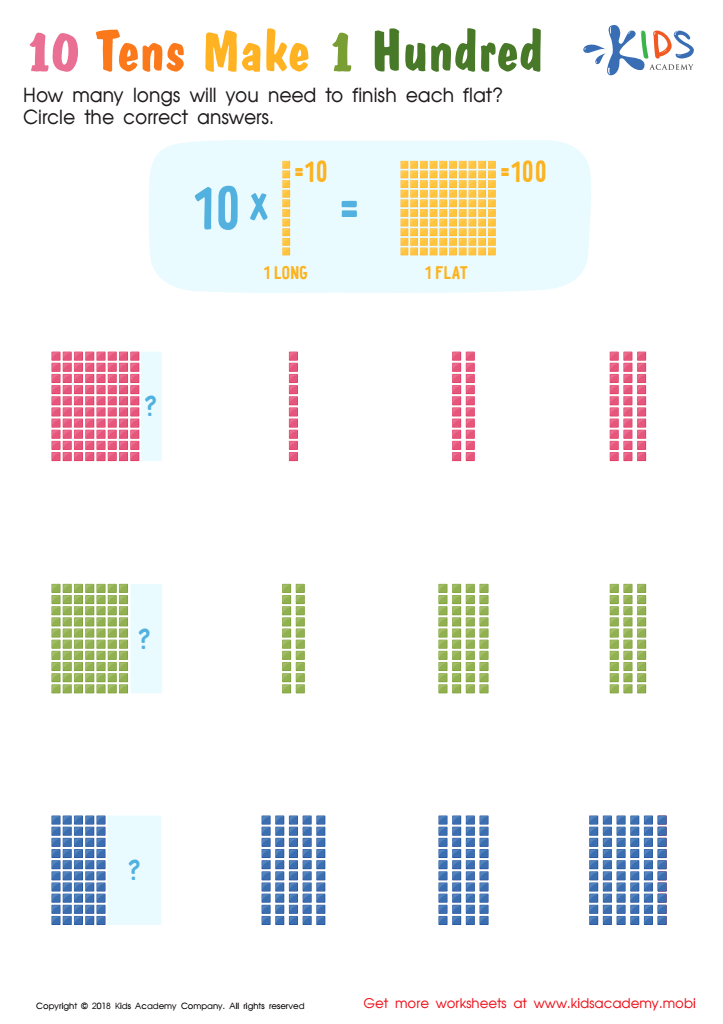
10 Tens Make 1 Hundred Worksheet
 Assign to My Students
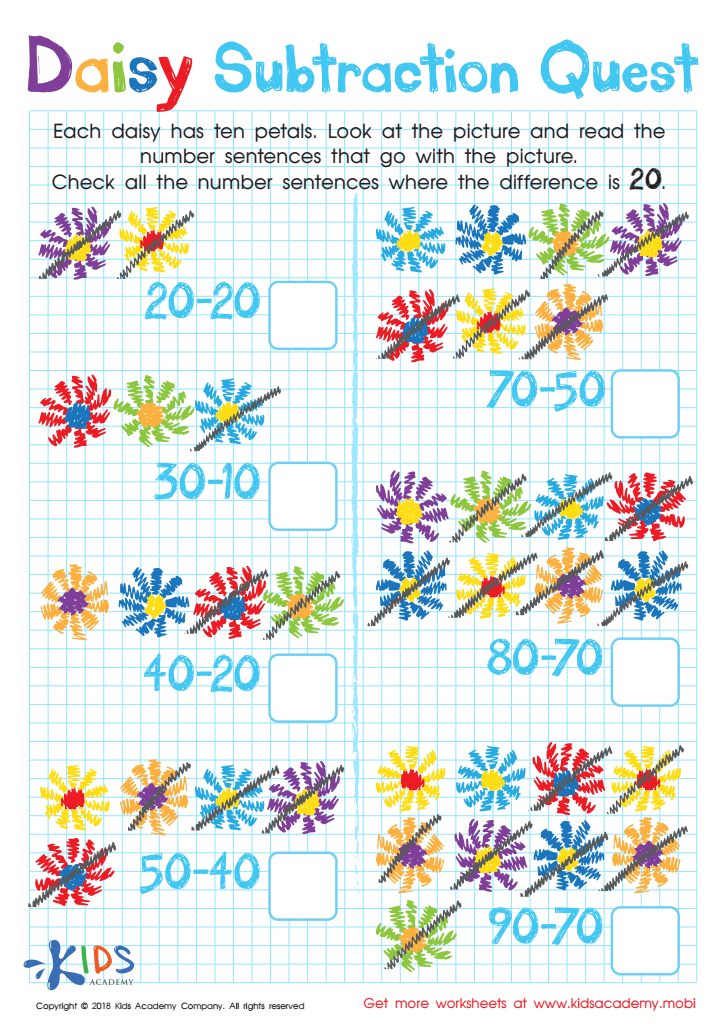
Daisy Subtraction Quest Worksheet
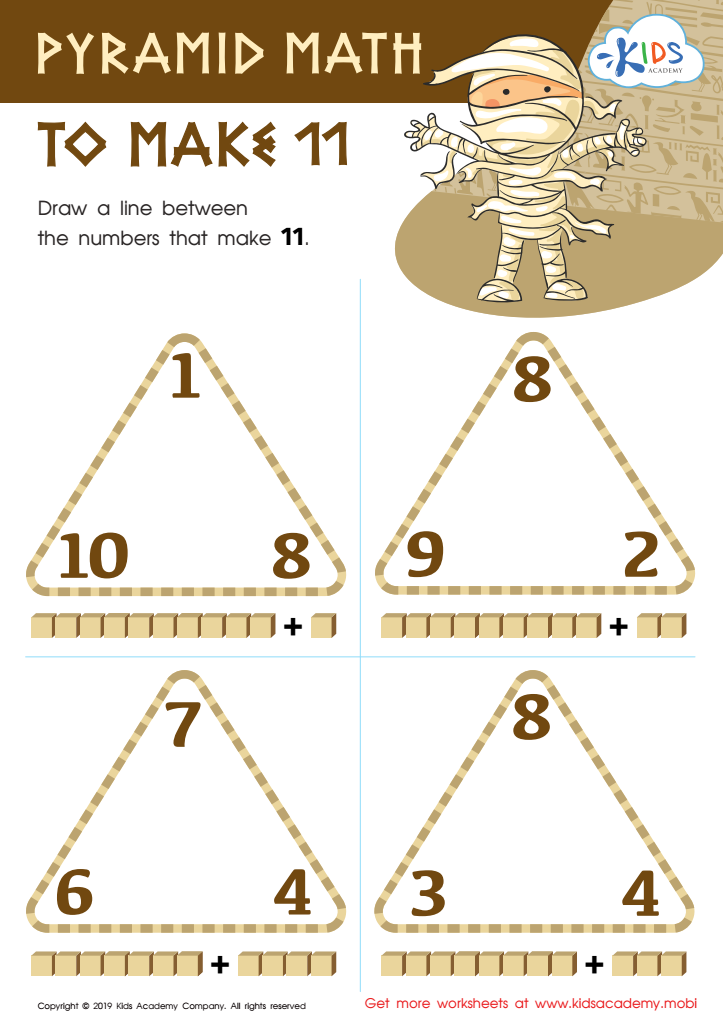
Pyramid Math to Make 11 Worksheet







.jpg)
Understanding number relationships is fundamental for children aged 5-8 as it's a cornerstone of their early mathematical development. For both parents and teachers, prioritizing this comprehension plays a crucial role in setting a child's academic path and critical thinking abilities for future math concepts and daily life applications.
First, mastering number relationships helps children understand key concepts such as addition, subtraction, and place value. It's also foundational for mastering higher-order math skills like multiplication, division, and fractions. Grasping how numbers interact and relate to each other allows children to solve problems more efficiently and develop confidence in their mathematical abilities.
Furthermore, early numeracy skills can translate beyond math, enhancing overall cognitive development. Children better comprehend patterns, logical sequences, and relationships, skills that extend to science, language arts, and problem-solving activities.
Parental involvement in reinforcing these concepts built at school can create a synergistic learning environment. Teachers can introduce and encourage real-world examples of number relationships, such as cooking or shopping, making math relevant and fun. As children understand these relationships more deeply, their analytical thinking and curiosity about numbers can be continually inspired, thereby fostering a lifelong interest and proficiency in mathematics.
Recognizing the importance of these foundational skills, parents and teachers can collaboratively support a child's journey toward mathematical literacy, ensuring a strong start in education and beyond.








