
Understanding times tables Normal Times Tables Worksheets for Ages 5-8
3 filtered results
Difficulty Level
Grade
Age
-
From - To
Subject
Activity
Standards
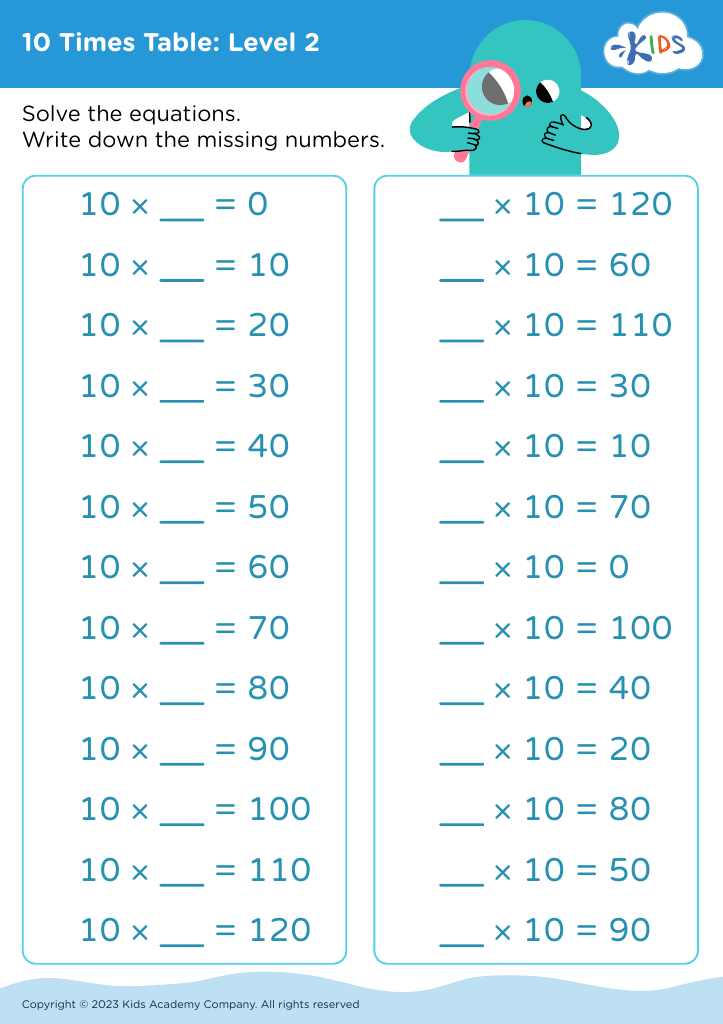
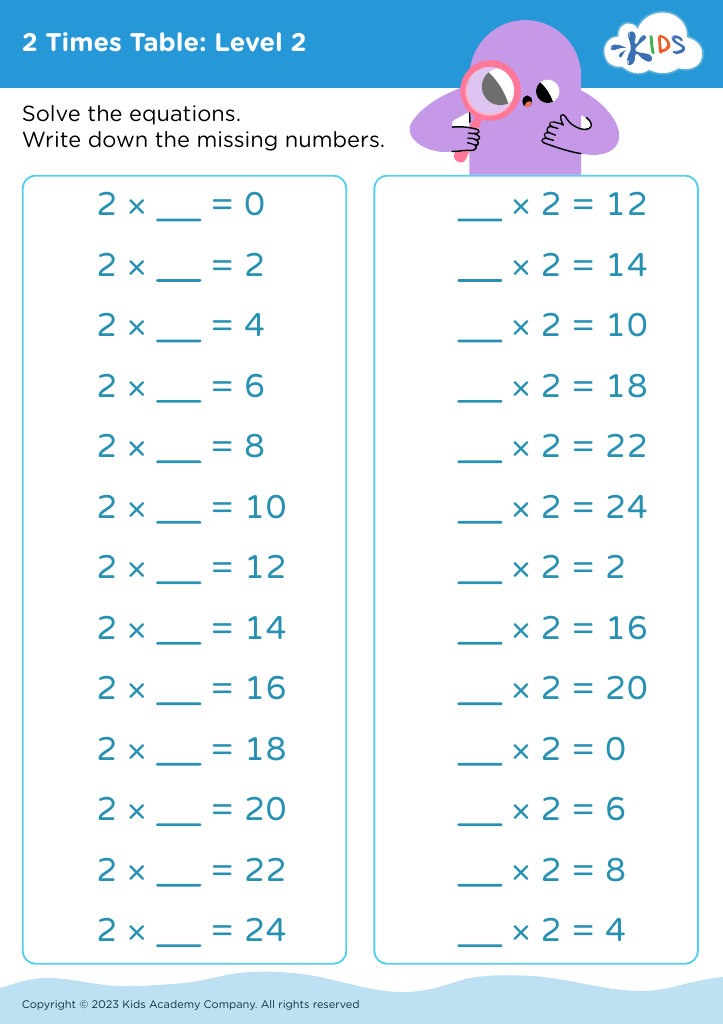
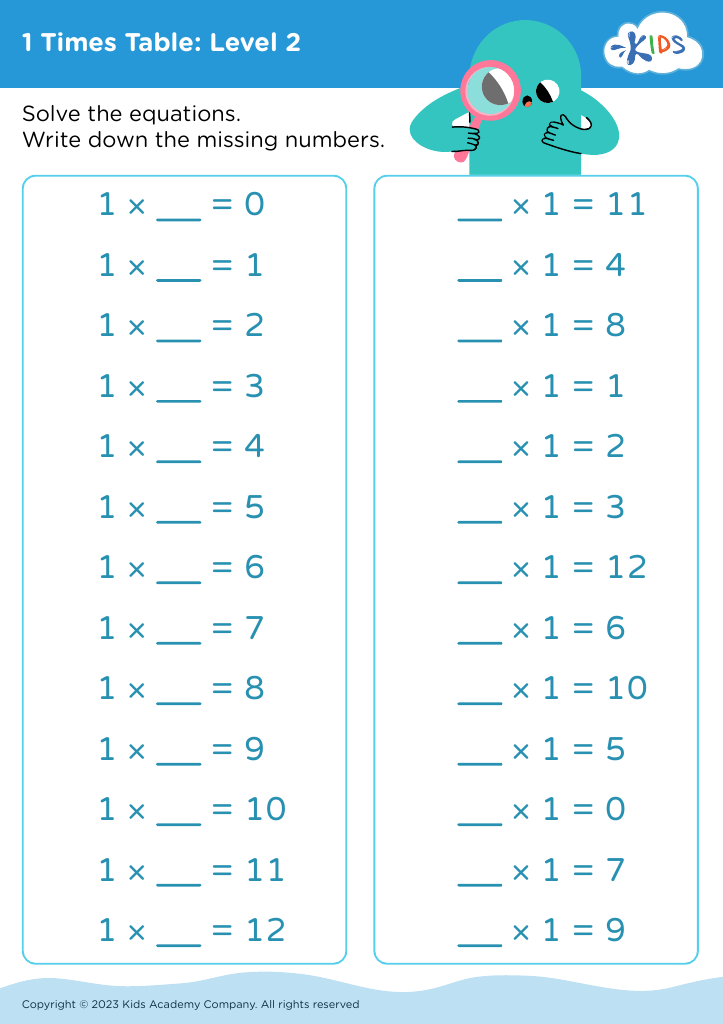
Our "Understanding Times Tables" worksheets are perfect for children aged 5-8, designed to make learning multiplication fun and easy! These printable activities help young learners grasp key concepts, develop quick recall of times tables, and build essential math skills. Each worksheet features interactive exercises and colorful visuals to engage children, making learning an enjoyable experience. Whether practicing simple multiplications or challenging themselves with more complex problems, kids will find these worksheets a valuable resource. Ideal for home or classroom use, our times tables worksheets are a fantastic tool to boost mathematical confidence and proficiency.
Favorites
With answer key
Interactive
Join Kids Academy for Free
Who is primarily going to use this learning content?





Understanding times tables is fundamental for children aged 5-8 as it lays the groundwork for all future mathematics learning. Mastery of times tables fosters numerical fluency, allowing kids to solve more complex problems with ease and confidence. For parents and teachers, nurturing this skill is crucial because it builds a child's self-esteem in math, which can significantly impact their overall attitude towards the subject.
Parents and teachers should care because times tables are not mere rote learning tasks; they cultivate critical thinking and pattern recognition, essential for problem-solving in various real-life scenarios. Early mastery of times tables also boosts mental arithmetic abilities, making everyday tasks such as shopping and cooking more manageable and engaging for young learners.
Moreover, understanding times tables at an early age sets a strong foundation for more advanced mathematical concepts, such as fractions, algebra, and geometry. For example, knowing that 4 x 6 = 24 helps a child later understand that a fraction like 1/4 of 24 equals 6.
Investing time and effort to ensure children grasp times tables offers long-term benefits, making math an enjoyable and less daunting subject. Ultimately, it opens doors to numerous academic and career opportunities, highlighting the importance of this fundamental math skill.








