Contextual understanding Normal Building Vocabulary Worksheets for Ages 5-8
5 filtered results
-
From - To
Enhance your child’s language development with our "Contextual Understanding Normal Building Vocabulary Worksheets" designed for ages 5-8. These engaging worksheets help young learners master new words through meaningful context. Each activity immerses children in scenarios that make vocabulary building fun and effective. Kids will boost their reading comprehension as they understand and use phrases in relevant contexts. Perfect for both classroom and home use, our printable worksheets are crafted by educational experts to align with early learning goals. Empower your child’s vocabulary skills with activities that promote critical thinking and language development. Join us to make learning an enjoyable journey!
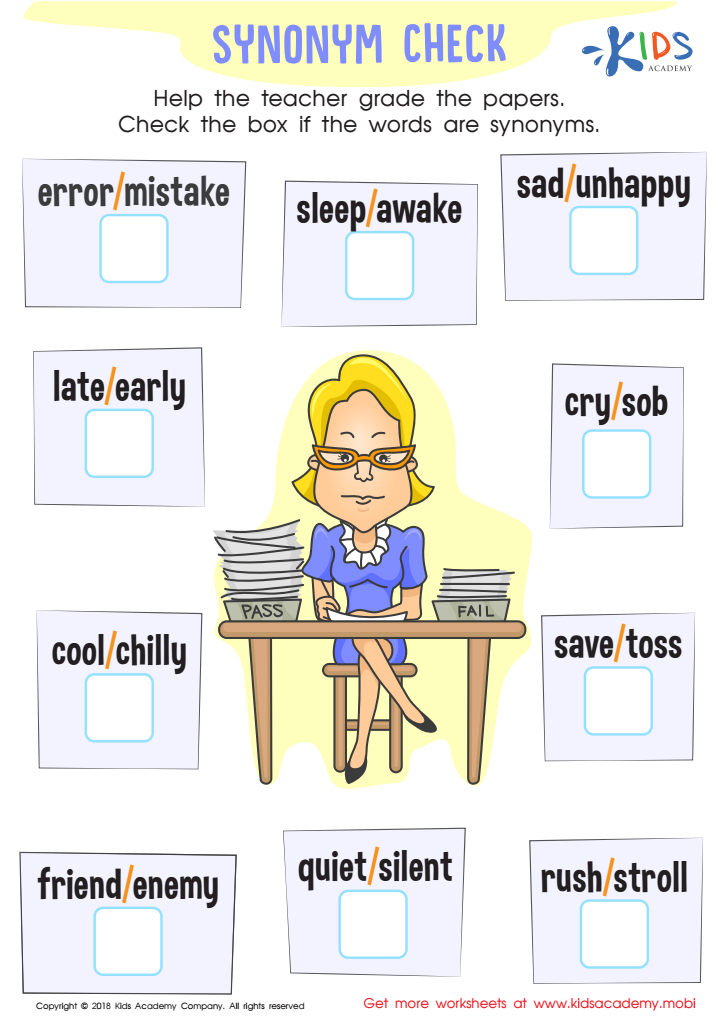
Synonym Check Worksheet
 Assign to My Students











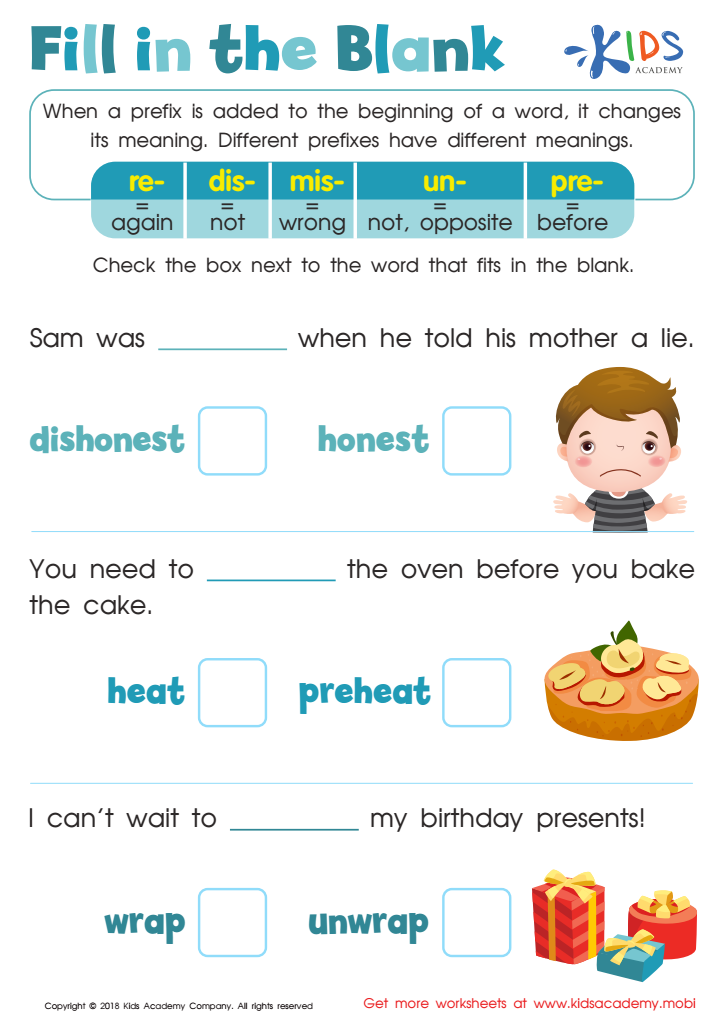
Reading: Fill in the Blank Worksheet
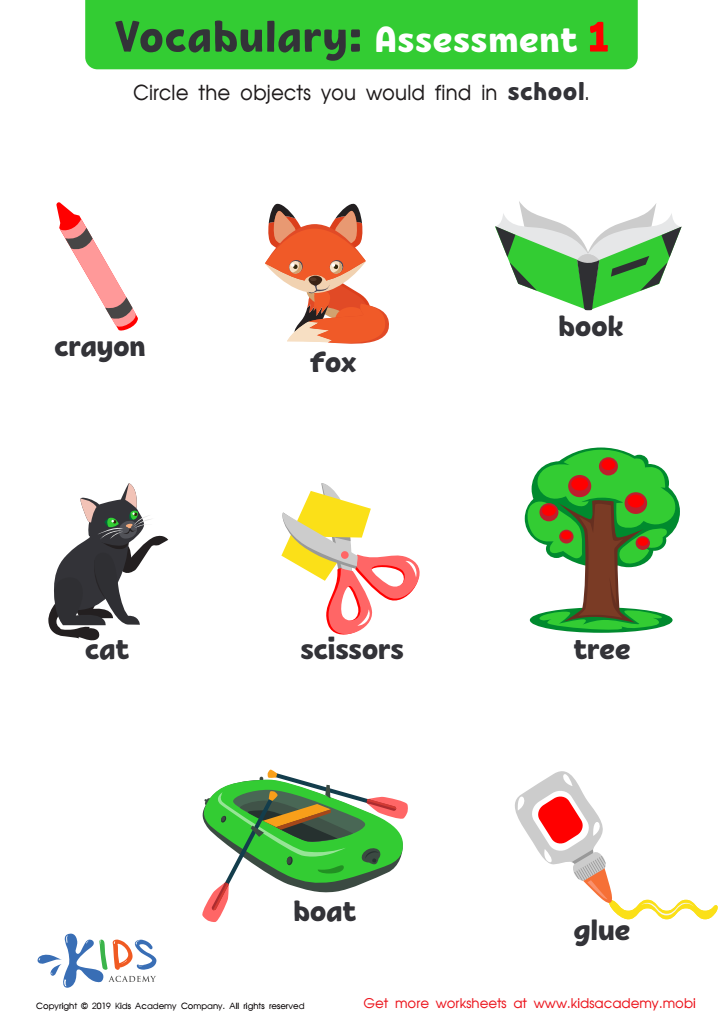
Vocabulary: Assessment 1 Worksheet
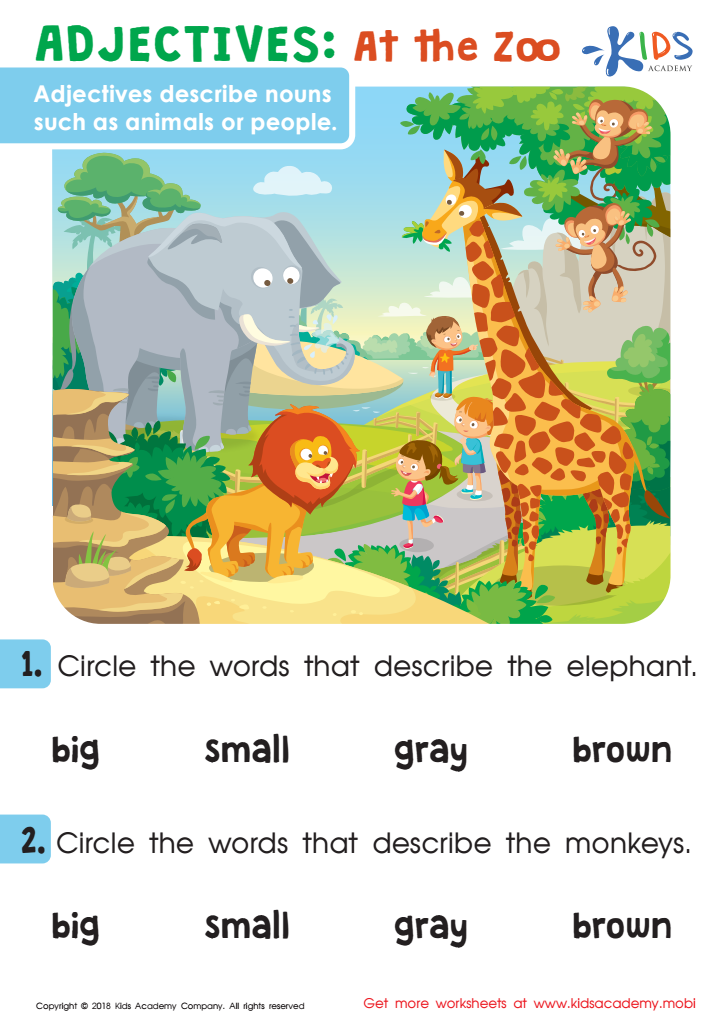
Adjectives: At The Zoo Worksheet
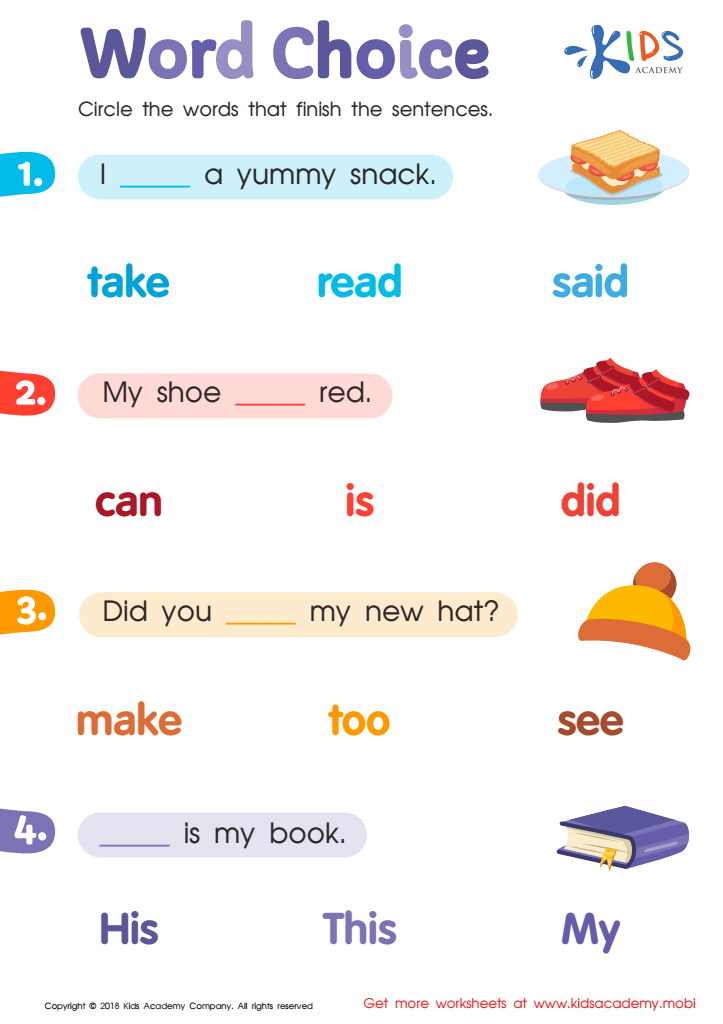
Word Choice Worksheet







.jpg)
Contextual understanding and building a robust vocabulary in children ages 5-8 are critical for their cognitive and academic development. At this stage, kids undergo rapid brain development, and their ability to grasp language has profound implications on their future learning. Contextual understanding enables children to make sense of words and phrases within the framework of sentences, stories, and everyday conversations, empowering them to infer meaning, develop critical thinking, and engage more deeply with their surroundings.
Building a rich vocabulary further enhances this contextual grasp. Words are tools for thought; a child with an extensive vocabulary can describe their world more accurately, express feelings, and comprehend texts better. Improved vocabulary directly correlates with reading comprehension skills, which are essential for academic success across subjects. Encouraging sophisticated language early on lays the groundwork for effective communication, boosts confidence, and fosters a love for reading and learning.
Moreover, strong verbal skills support social-emotional development. Children who can articulate their thoughts are better equipped to build relationships, resolve conflicts, and collaborate with peers. For these reasons, parents and teachers should prioritize activities that encourage contextual understanding and vocabulary expansion, such as reading aloud, engaging in conversations, and playing word games. This not only nurtures a child’s intellectual growth but also enhances their overall life skills.








