
Analytical thinking Normal Reading Worksheets for Ages 5-8
8 filtered results
Difficulty Level
Grade
Age
-
From - To
Subject
Activity
Standards
Enhance your child's critical thinking with our Analytical Thinking Normal Reading Worksheets designed for ages 5-8. These thoughtfully crafted exercises stimulate young minds through engaging activities that foster comprehension, logical reasoning, and drawing conclusions. Each worksheet presents age-appropriate reading passages followed by questions and tasks that challenge kids to analyze the content. Ideal for both classroom and home use, these resources support early learners in developing vital analytical skills that underpin academic success. Empower your child to become a thoughtful, independent reader with our collection of fun and educational worksheets specifically tailored for kids aged 5 to 8.
Favorites
With answer key
Interactive
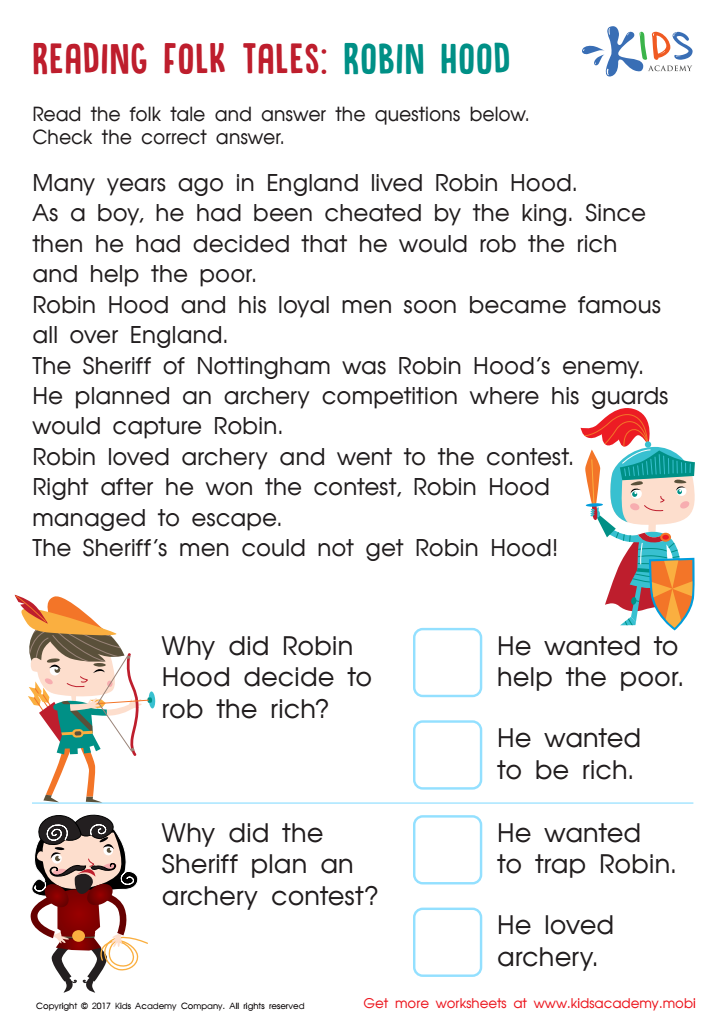
Robin Hood Folktale Worksheet
Have your child practice reading comprehension and inferencing with this Robin Hood folktale worksheet! Get them to read between the lines to find character motivation and answer important questions about the passage. It's a fun way to test their reading skills!
 Assign to My Students
Robin Hood Folktale Worksheet
Worksheet
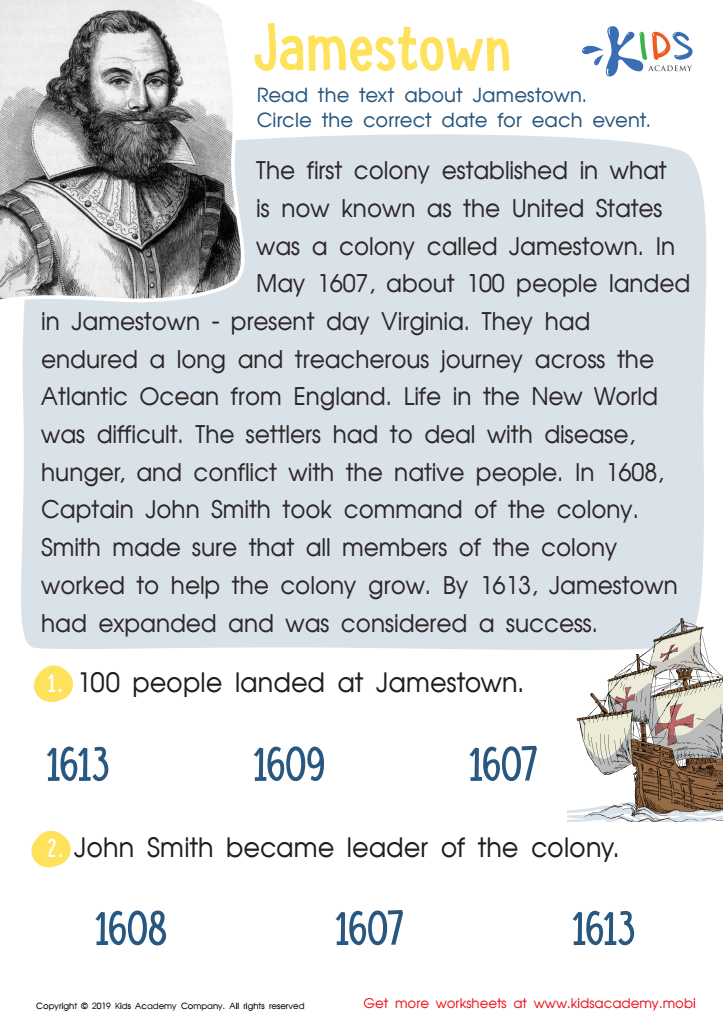
Jamestown Worksheet
Help your kids build vocabulary by reading simple texts and stories to them. This exercise helps them practice reading and grammar, and increases their knowledge of a topic. In this worksheet, kids learn about Jamestown: read text aloud and help them circle the correct date for each event.
Jamestown Worksheet
Worksheet
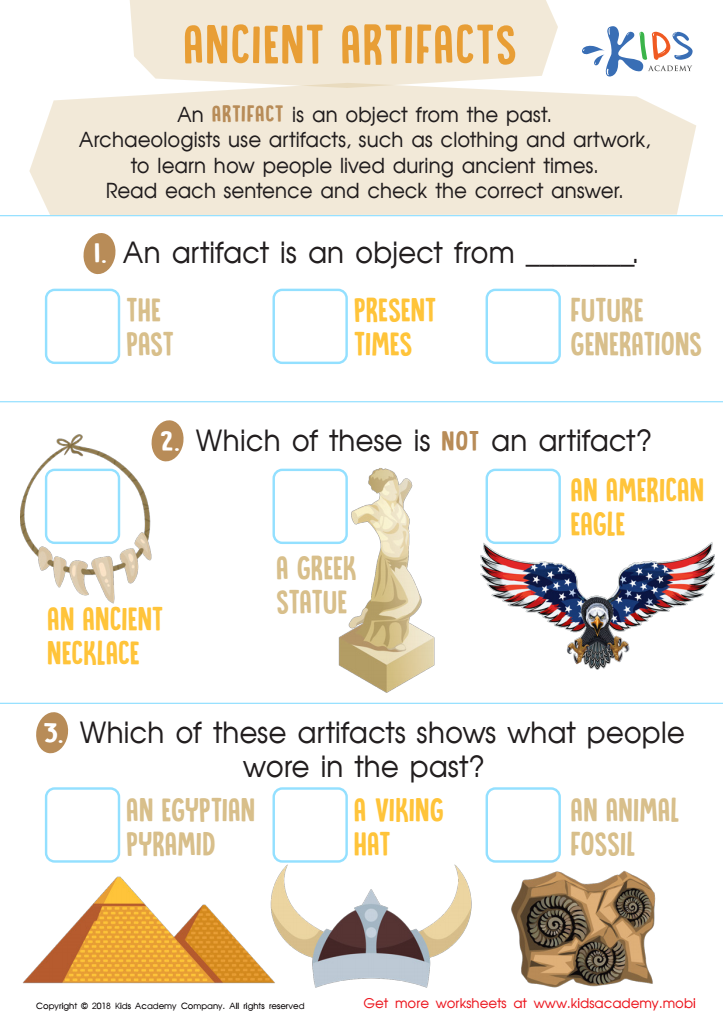
Ancient Artifacts Worksheet
This free worksheet helps kids understand ancient artifacts, from statues to necklaces to fossils. They'll read comprehension questions and select answers from multiple choice options, with pictures to help them grasp the concept. It's a great way for children to learn about artifacts and what they may look like.
Ancient Artifacts Worksheet
Worksheet
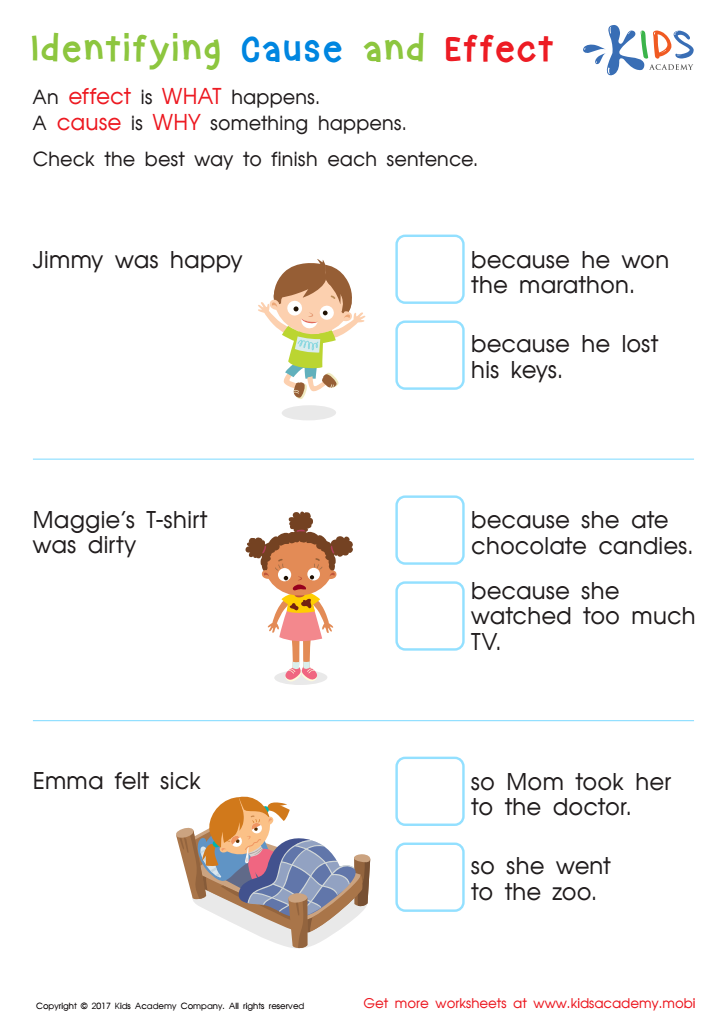
Indentifying Cause and Effect Worksheet
2nd grade cause & effect worksheets give your child practice making connections between events and their results. Fun activities help develop reading and critical thinking skills.
Indentifying Cause and Effect Worksheet
Worksheet
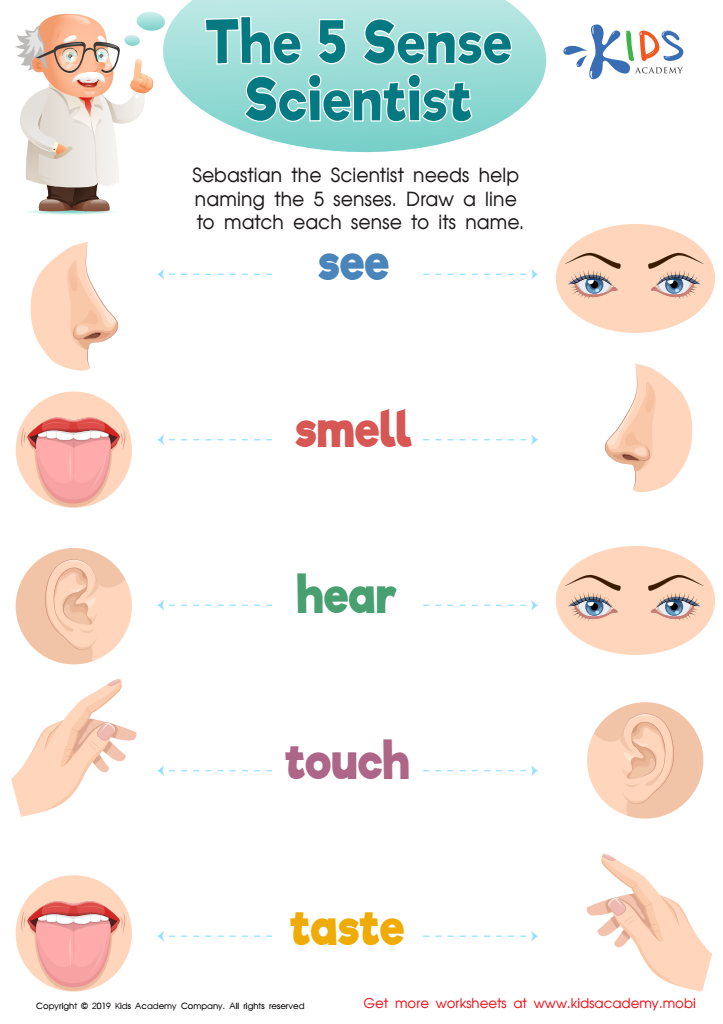
The 5 Sense Scientist Worksheet
Our young children will have fun learning about their five senses with this free Sense Scientist worksheet. Helping Sebastian the Scientist, they'll name the five senses and use traceable lines to connect each picture with its correct sense. Colorful words and pictures will create a memorable picture representation.
The 5 Sense Scientist Worksheet
Worksheet
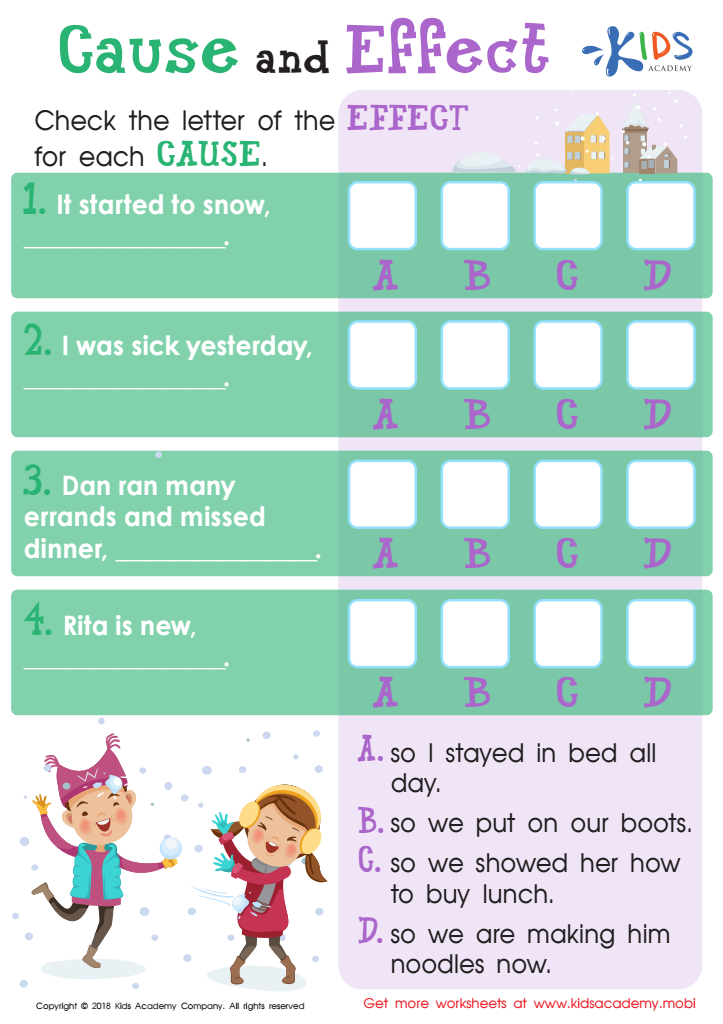
Cause and Effect Worksheet
Help your kids understand the cause-effect relationship of sentences by having them complete this worksheet. There are four incomplete sentences at the top and four options at the bottom. Have them select the appropriate letter for the effect of each cause. This will be the first step to their future of composing grammatically correct and meaningful sentences.
Cause and Effect Worksheet
Worksheet
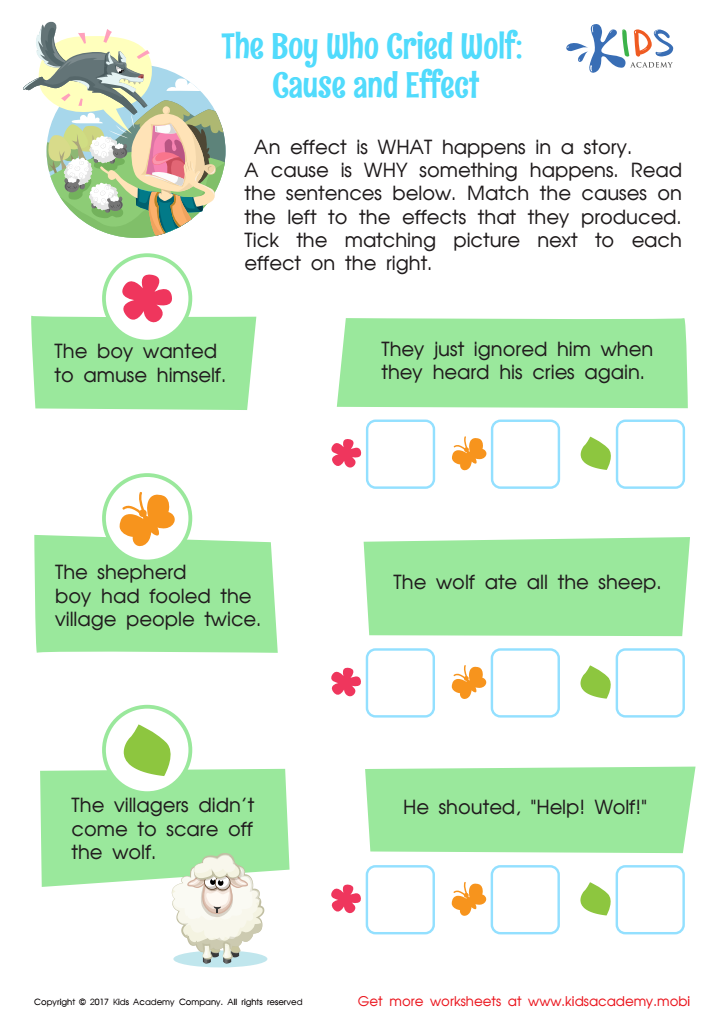
The Boy Who Cried Wolf: Cause and Effect Worksheet
With classic stories and fables, learning reading comprehension is easy - and fun!
The Boy Who Cried Wolf: Cause and Effect Worksheet
Worksheet
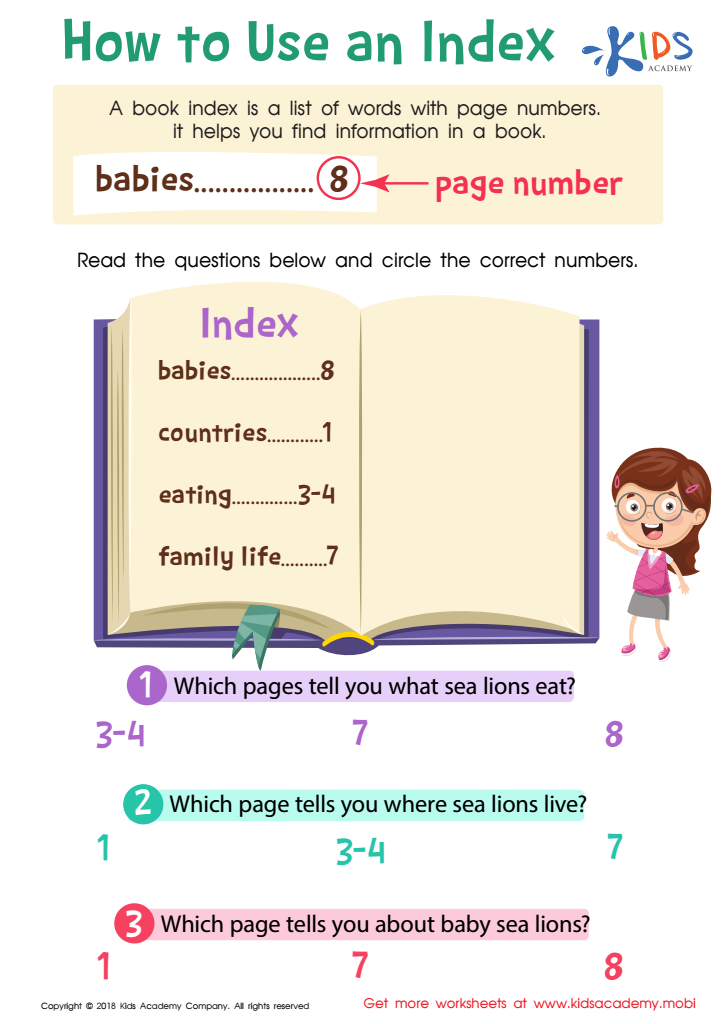
How Use Index Worksheet
Hand your kids a book, point out the index and explain that it's a list of words with page numbers. Ask them to look at the index in the worksheet and circle the correct number to the questions. Every book must have an index to help readers find chapters or information they need.
How Use Index Worksheet
Worksheet
Join Kids Academy for Free
Who is primarily going to use this learning content?








Analytical thinking and normal reading development are crucial building blocks for children aged 5-8, impacting their academic success and overall cognitive growth. During these formative years, mastering reading proficiently lays the foundation for all other learning. Reading allows children to acquire knowledge, understand complex concepts, and stimulates imagination. When children read regularly, they improve their vocabulary, comprehension, and critical thinking skills—tools essential for analyzing information and solving problems.
Analytical thinking boosts a child's ability to discern patterns, make connections, and evaluate information, helping them become independent learners and effective problem solvers. For instance, when children ask questions about stories they read, they practice critical thinking and comprehension. Failure to foster these skills early on can result in future academic struggles, poor confidence, and limited career opportunities.
Teachers and parents play a pivotal role by creating a rich language environment, choosing age-appropriate and diverse books, and encouraging curiosity. Engaging children in discussions about what they read and relating stories to their experiences enriches their analytical capacities. Early investments in analytical thinking and reading skills will yield lifelong benefits, supporting children in becoming thoughtful, informed, and capable individuals in a rapidly evolving world.








