
Spatial awareness Normal Reading Worksheets for Ages 5-8
3 filtered results
Difficulty Level
Grade
Age
-
From - To
Subject
Activity
Standards
Enhance your child's spatial awareness with our engaging reading worksheets designed for ages 5-8! These thoughtfully crafted resources help young learners develop crucial skills for understanding their surroundings and improving spatial relationships through fun activities. Our worksheets integrate spatial vocabulary and align with reading comprehension to ensure a holistic learning experience. Designed to captivate young minds, they foster both critical thinking and literacy while encouraging curiosity and exploration. Perfect for home or classroom use, these exercises provide an excellent way to make learning interactive and enjoyable. Start your child’s journey to better spatial skills and reading proficiency today!
Favorites
With answer key
Interactive
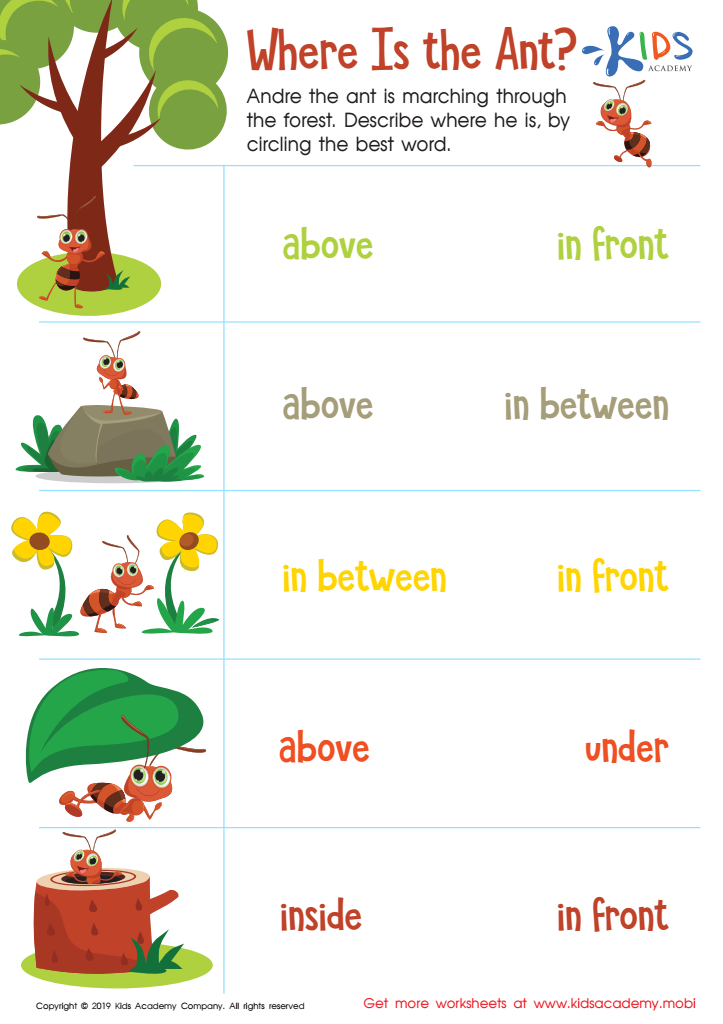
Where Is the Ant? Worksheet
Kids are captivated by ants. Andre is a busy ant, marching through the forest. Help your child circle the best word that best describes what he's doing in each picture. This colorful printout will show them the way.
 Assign to My Students
Where Is the Ant? Worksheet
Worksheet
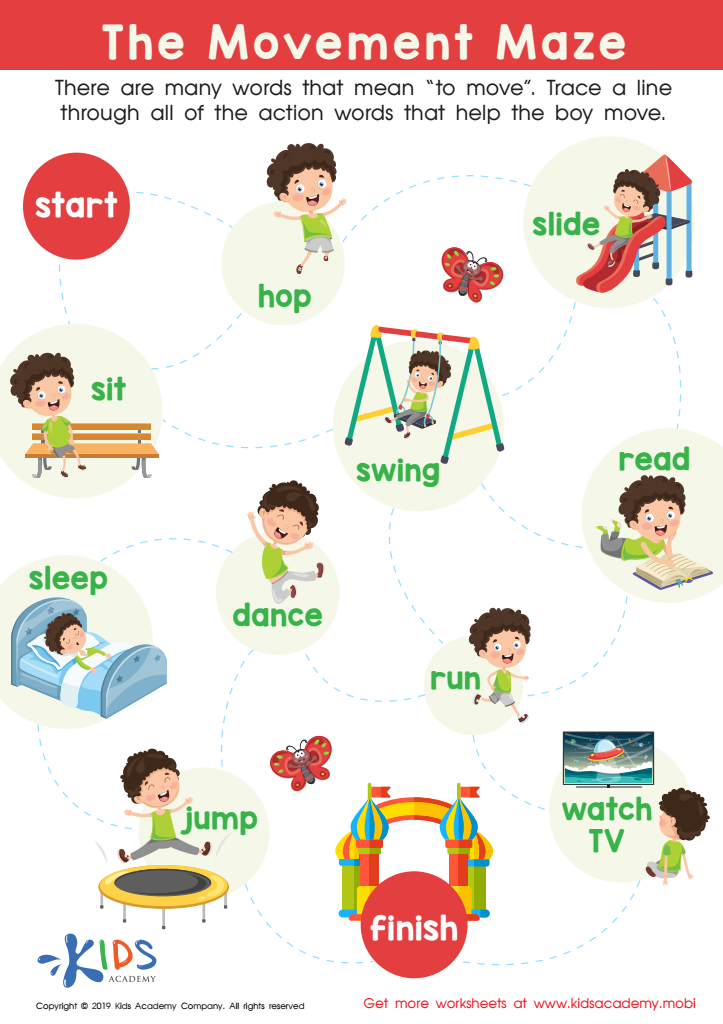
The Movement Maze Worksheet
Let your child have fun with this interactive PDF download. Kids will learn movement words with cute pictures, plus practice fine motor skills as they trace. A fun way to reinforce vocabulary. Jump, hop and sit – it's all here!
The Movement Maze Worksheet
Worksheet
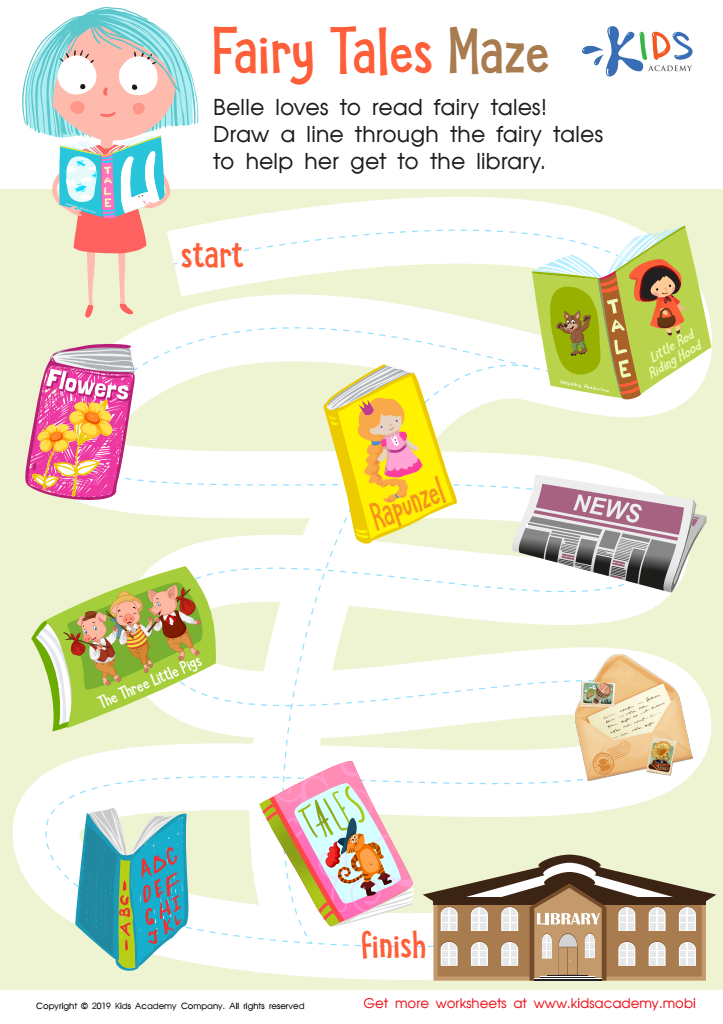
Fairy Tales Maze Worksheet
Kids love mazes and fairy tales, so this free worksheet is a great way to help teach young readers about familiar topics. They'll join Bella and use the traceable lines to travel through different reading genres, and find their way to the library for a nice reward!
Fairy Tales Maze Worksheet
Worksheet
Join Kids Academy for Free
Who is primarily going to use this learning content?







Spatial awareness is an essential skill for children aged 5 to 8, influencing their ability to navigate the world around them. Parents and teachers should prioritize this skill because it lays the groundwork for various academic and everyday tasks, such as reading, math, and even physical coordination.
For example, understanding shapes, sizes, and positions boosts children's competence in geometry and basic arithmetic. When children grasp spatial relationships, like the difference between above and below, they can follow instructions and solve problems more effectively. This skill also contributes to logical thinking and critical reasoning, helping them make connections in their learning.
Beyond academics, spatial awareness plays a pivotal role in young children's social interactions and self-expression. Enhanced awareness allows them to engage in play and cooperative activities, fostering teamwork and communication skills.
Moreover, strong spatial skills can build children's confidence, inspiring them to explore their environment independently. Investing time in activities that develop spatial awareness—like puzzles, building blocks, or even dance—encourages cognitive growth and prepares children for future learning challenges. In today’s world, where technology continually evolves, spatial awareness is a key competency for success in various fields, reinforcing the significance of nurturing this skill during early education.








