Understanding suffixes Normal Reading Worksheets for Ages 5-8
3 filtered results
-
From - To
Unlock the power of reading with our "Understanding Suffixes" normal reading worksheets, specially designed for children aged 5-8! These engaging worksheets introduce young learners to suffixes, enhancing their vocabulary and reading comprehension. By exploring common suffixes, students will identify how these word endings change meanings and create new words, fostering a greater love for language. Ideal for home or classroom use, these worksheets provide fun and interactive exercises that encourage skill mastery through practice. Empower your child's literacy journey today by integrating suffix education into their reading routine. Discover the joy of learning with our thoughtfully crafted resources!
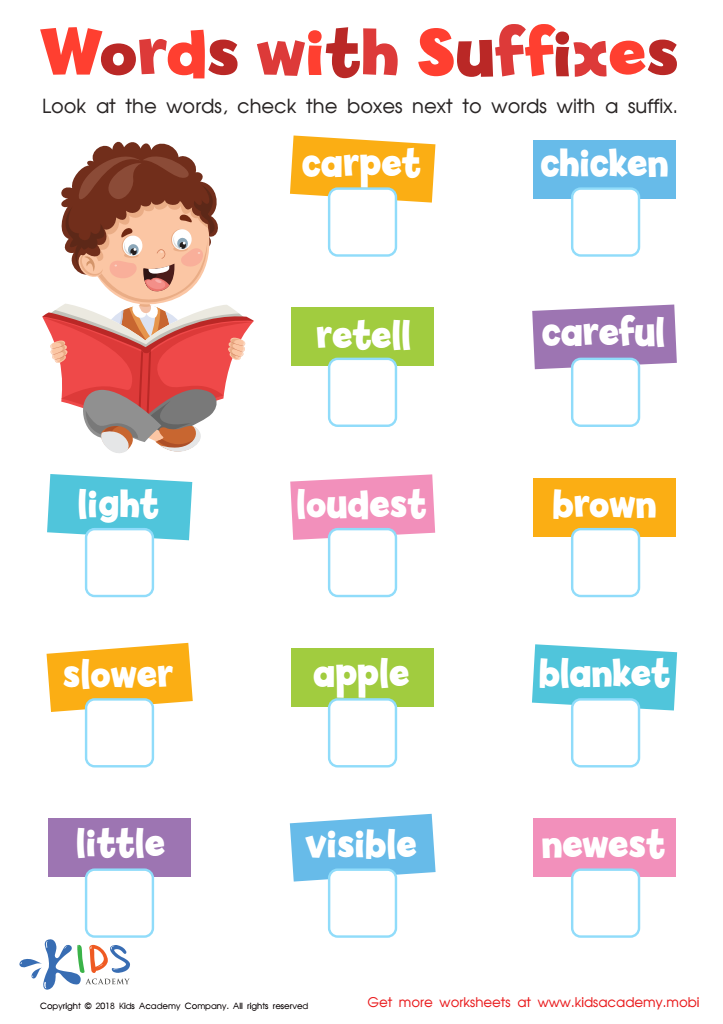
Reading: Words With Suffixes Worksheet
 Assign to My Students
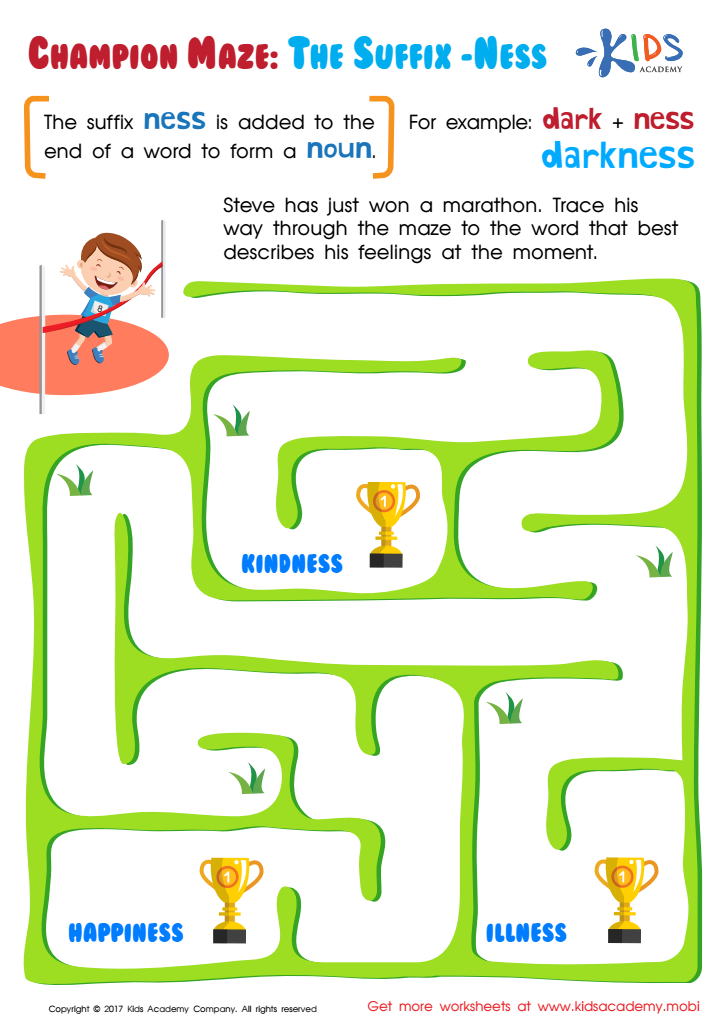
Suffix Ness Worksheet
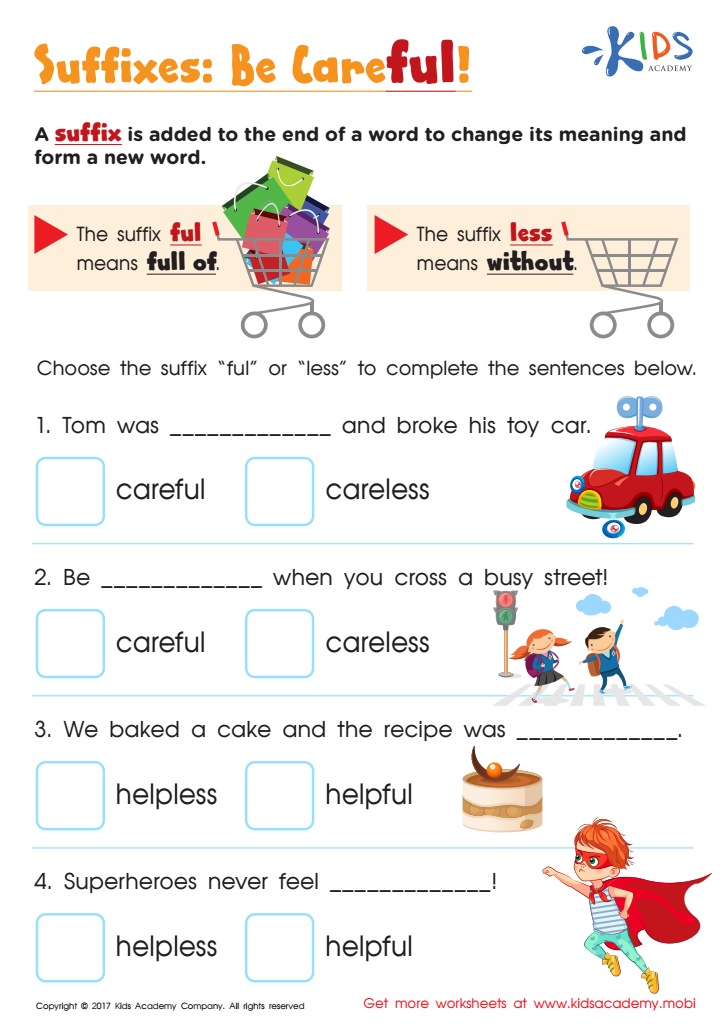
Suffixes Ful and Less Worksheet





.jpg)


Understanding suffixes is crucial for children aged 5-8, as it significantly enhances their reading and vocabulary development. Suffixes are word parts added to the end of a root word, altering its meaning and transforming it into a different part of speech. For example, adding '-ing' can change 'play' into 'playing,' indicating an ongoing action. Teaching children about suffixes empowers them to decode unfamiliar words more effectively, fostering confidence and independence in reading.
Additionally, recognizing suffixes helps improve comprehension. When children understand common suffixes, they can infer meanings of new words, making them more eager readers. This skill also supports writing development, enabling them to construct sentences and express ideas clearly by forming more complex words. For instance, with the suffix '-er', they can convert 'teach' into 'teacher,' enriching their expressive abilities.
Furthermore, engaging with suffixes builds phonemic awareness, a foundational skill for literacy. By incorporating suffixes into daily learning activities, parents and teachers can make reading enjoyable and interactive, enriching children's educational experience. Cultivating these skills early on creates a strong literacy foundation, preparing children for future academic success and a lifelong love of reading. Understanding suffixes is not just about language; it’s about opening doors to understanding and creativity.








