Word identification Normal Reading Worksheets for Ages 5-8
5 filtered results
-
From - To
Enhance your child's reading skills with our Word Identification Normal Reading Worksheets designed for ages 5-8. These engaging worksheets focus on helping children recognize and comprehend essential sight words, fostering strong foundational literacy skills. Each worksheet features fun and interactive activities that make learning enjoyable, ensuring young learners remain motivated and eager to practice. With various exercises tailored to different learning styles, kids can easily build their vocabulary. Perfect for classroom use or home learning, our Word Identification Worksheets support early readers on their journey to reading fluency while boosting confidence through practice. Visit us today and empower your child's reading journey!
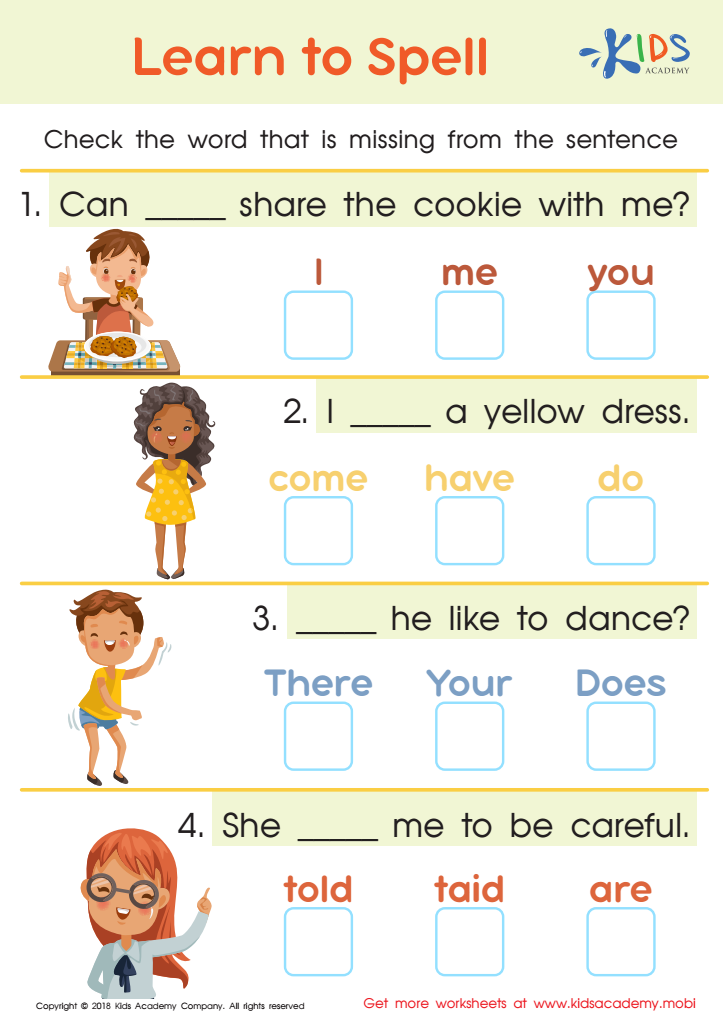
Learn to Spell Worksheet
 Assign to My Students
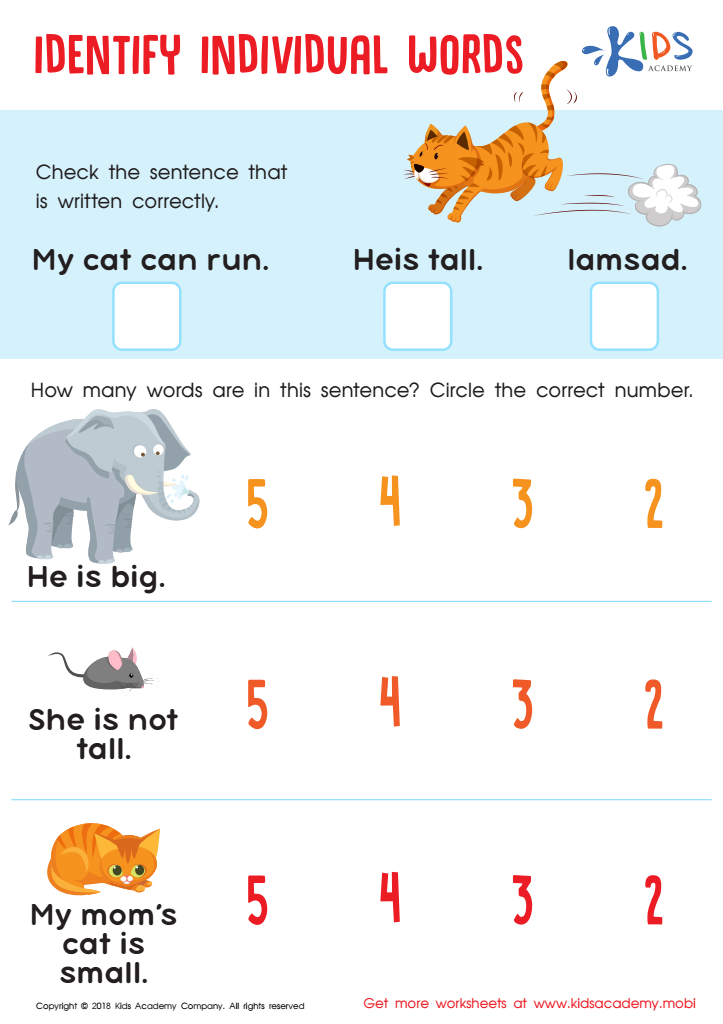
Identify Individual Words Worksheet
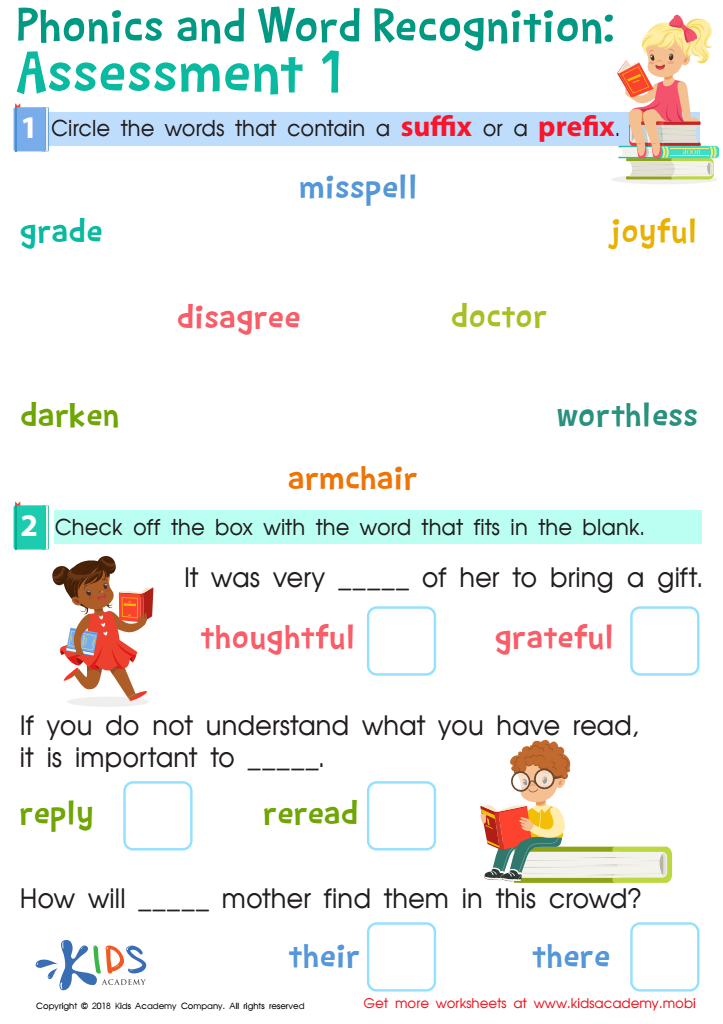
Phonics and Word Recognition: Assessment 1 Worksheet
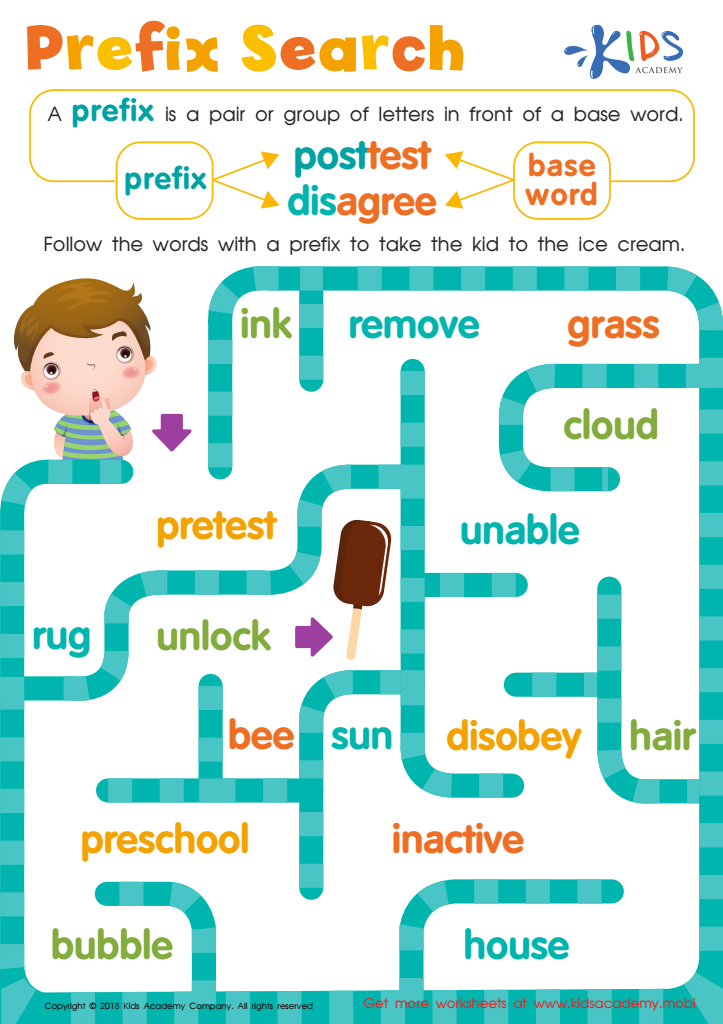
Reading: Prefix Search Worksheet
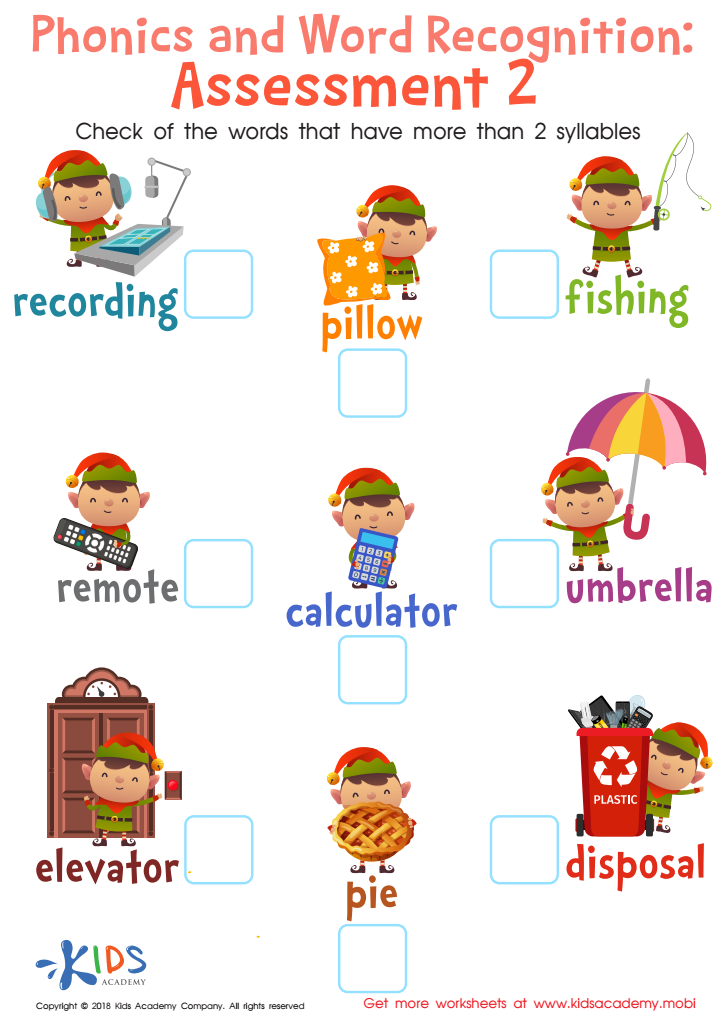
Phonics and Word Recognition: Assessment 2 Worksheet


.jpg)





Word identification normal reading for ages 5-8 is a crucial skill for young learners, as it lays the foundation for literacy and overall academic success. At this stage, children are beginning to develop their reading abilities, and proficient word identification can significantly impact their confidence and enjoyment of reading.
Firstly, word identification helps children decode words and understand text, enabling them to grasp meaning and context. This skill is essential not only for reading comprehension but also in their ability to engage with various subjects, as reading is a fundamental component of instruction across the curriculum.
Moreover, effective word identification supports language development. As children recognize words, they expand their vocabulary, enhancing their communication abilities. The ability to identify words accurately fosters a love for books, encouraging children to seek out reading as a leisure activity, which further enhances their literacy skills.
Parents and teachers play vital roles in supporting word identification through interactive reading activities, phonics practices, and encouragement. By prioritizing this aspect of reading development, they can help build a solid foundation that will benefit children throughout their educational journey and beyond. Ultimately, supporting word identification not only enhances literacy skills but also nurtures lifelong learners.








