Analytical thinking Normal Reading Fiction Worksheets for Ages 5-8
4 filtered results
-
From - To
Enhance your child's critical thinking and comprehension skills with our Analytical Thinking Normal Reading Fiction Worksheets for ages 5-8. These engaging and educational printables are designed to foster a love for reading while developing essential analytical skills. Our worksheets provide young learners with opportunities to explore story elements, identify key details, and make inferences. Accessible, fun, and interactive, these fiction-focused activities are perfect for building a strong foundation in reading and critical thinking, ensuring your child becomes a confident and thoughtful reader. Visit Kids Academy once more to discover these worksheets and give your young reader a head start!
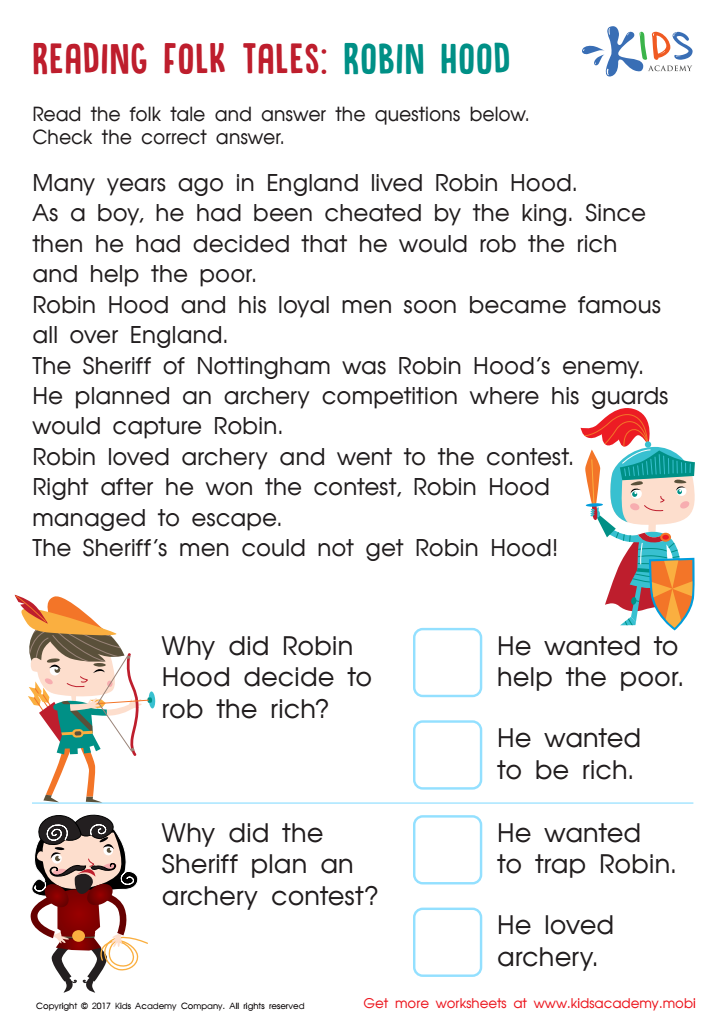
Robin Hood Folktale Worksheet
 Assign to My Students
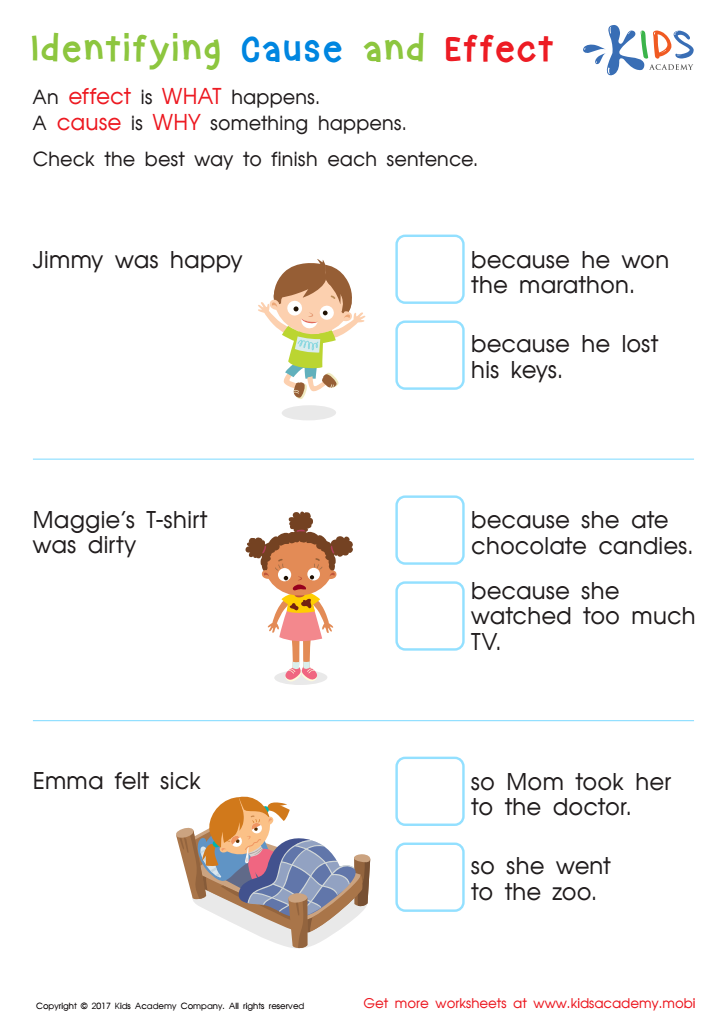
Indentifying Cause and Effect Worksheet
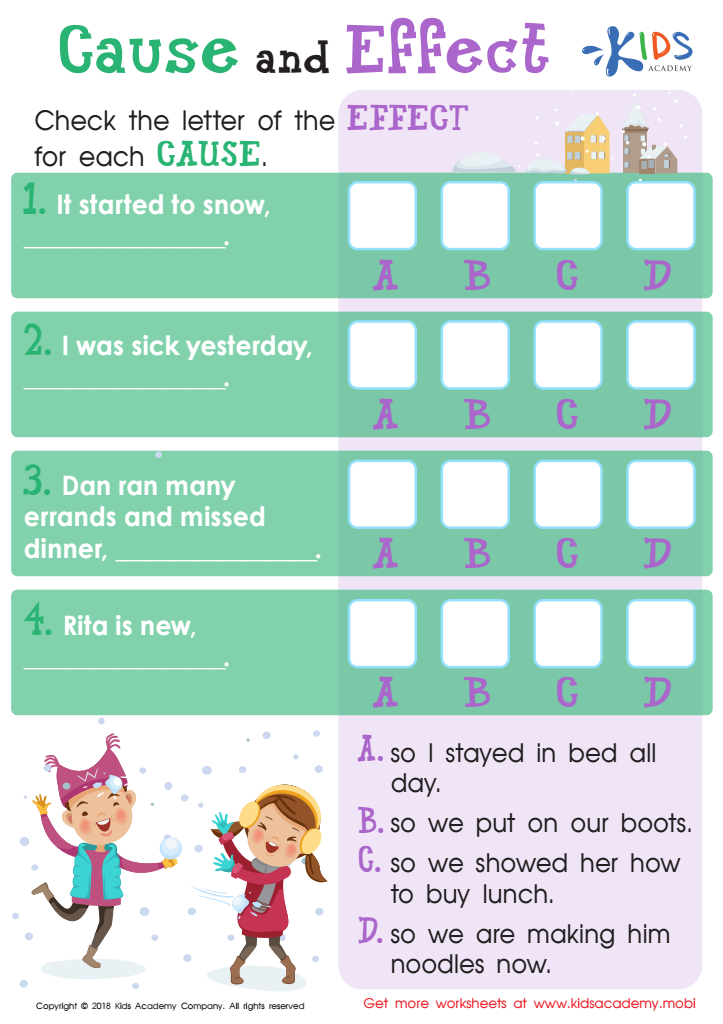
Cause and Effect Worksheet
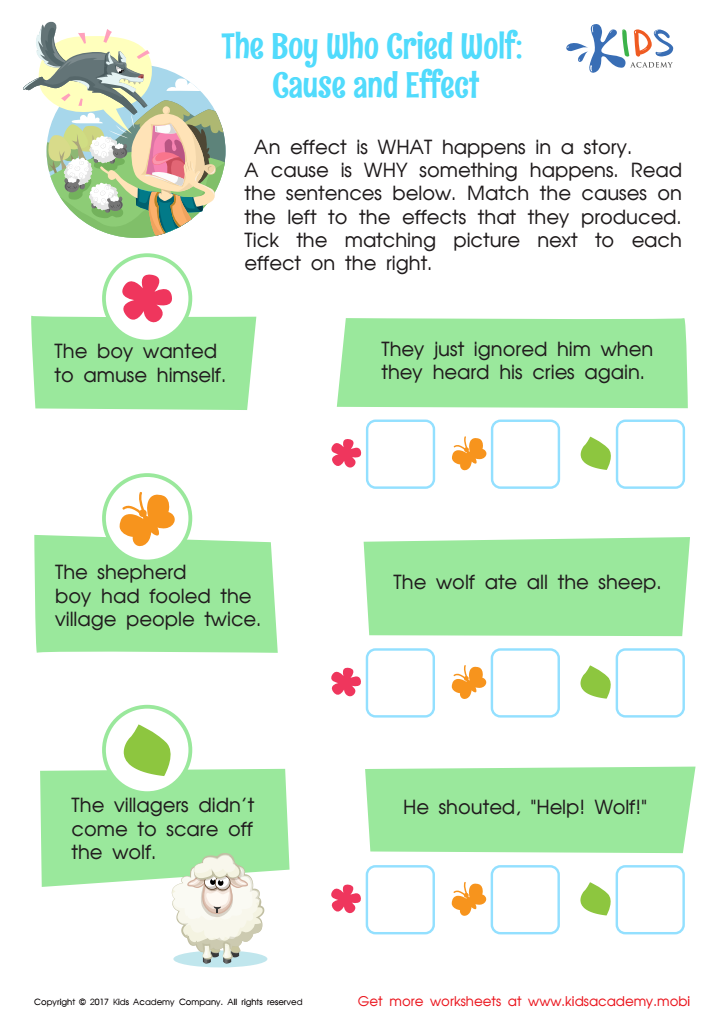
The Boy Who Cried Wolf: Cause and Effect Worksheet








Analytical thinking and normal reading fiction are crucial cornerstones for children aged 5-8, shaping both their cognitive and social growth. Parents and teachers should place significant emphasis on these aspects because they contribute to well-rounded development in several key ways. First, engaging with fiction fosters creativity and imagination. When children dive into stories, they visualize new worlds, characters, and scenarios, sparking their creative faculties.
Analytical thinking is equally essential. When children are encouraged to think deeply about the plot, characters, and settings, they develop critical thinking skills. Analyzing fiction helps them understand cause and effect, make predictions, and draw conclusions. These analytical skills soon translate into other fundamental areas, such as problem-solving in both academic subjects and everyday situations.
Moreover, reading fiction enhances language development. Exposure to a rich array of vocabulary and varied sentence structures fortifies their linguistic abilities. Fluent reading also builds concentration and listening skills, vital for their academic journey ahead.
Beyond intellect, fiction nurtures empathy. By stepping into the shoes of different characters and experiencing diverse emotions and situations, children learn empathy—a trait that shapes their interactions and relationships throughout life.
By fostering an environment where reading fiction and analytical reflection are prioritized, parents and teachers unlock doors to lifelong curiosity, empathy, and resilience.







