Story analysis Normal Reading Fiction Worksheets for Ages 5-8
4 filtered results
-
From - To
Encourage young readers to develop key analytical skills with our engaging Story Analysis Normal Reading Fiction Worksheets, tailored for ages 5-8. These worksheets focus on enhancing children's understanding of story elements like characters, setting, and plot. Through a variety of fun, imaginative exercises, kids learn to identify important details and strengthen comprehension. Perfect for both classroom and at-home learning, these resources guide children to think critically, connect to the narrative, and express their thoughts creatively. Prepare your child for a lifetime love of reading and storytelling with our thoughtfully designed, age-appropriate worksheets.
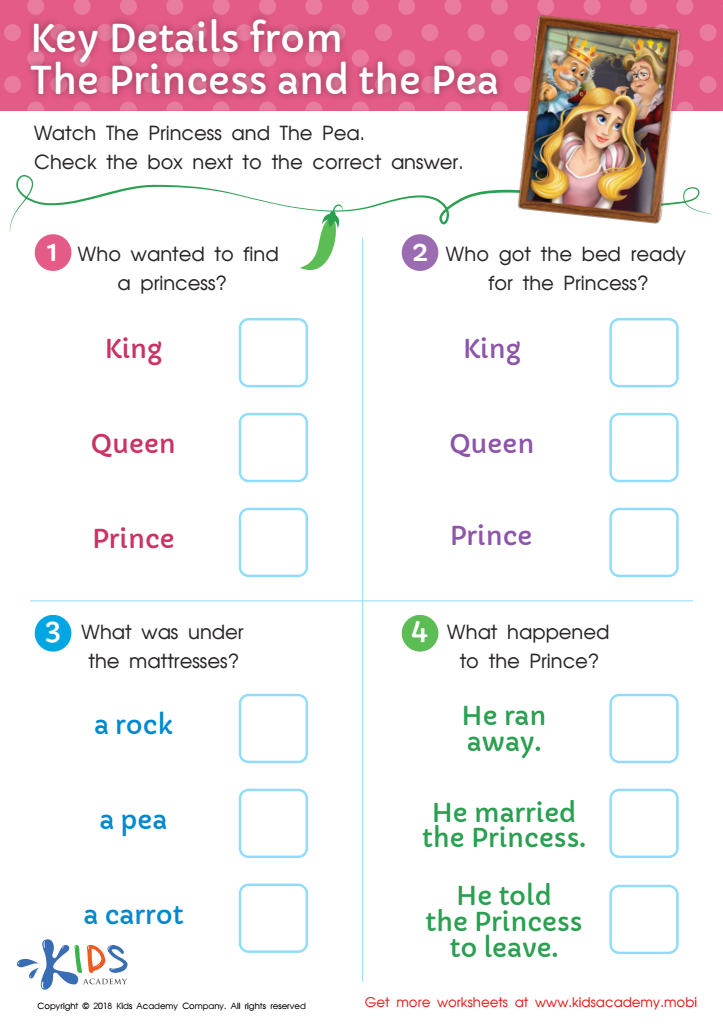
Key Details from the Princess and the Pea Worksheet
 Assign to My Students
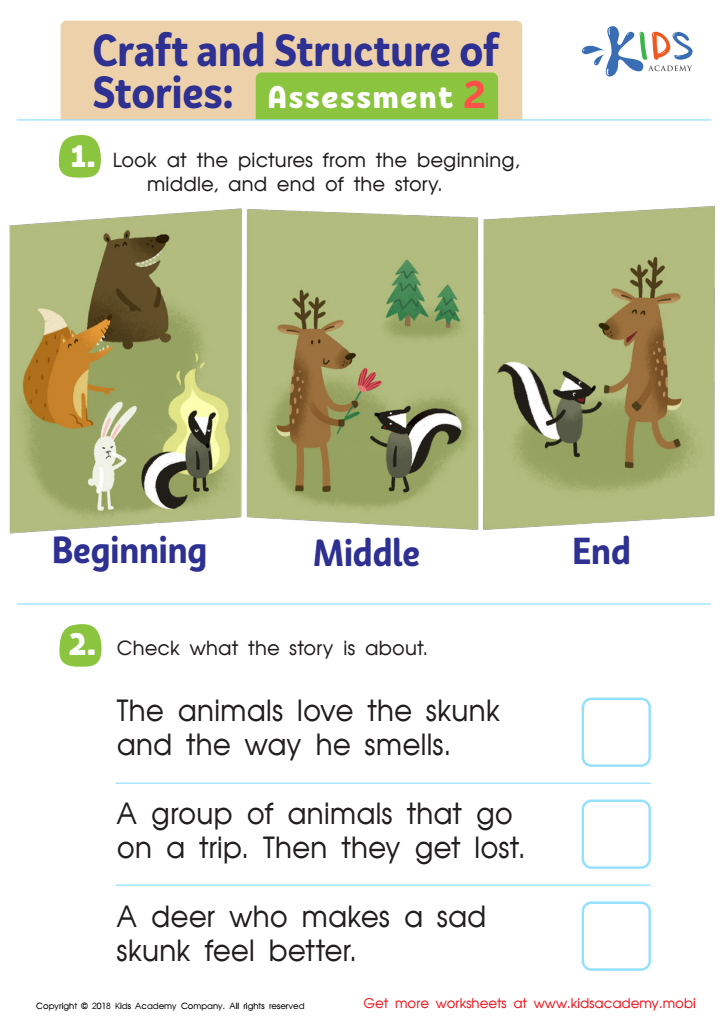
Craft and Structure of Stories: Assessment 2 Worksheet
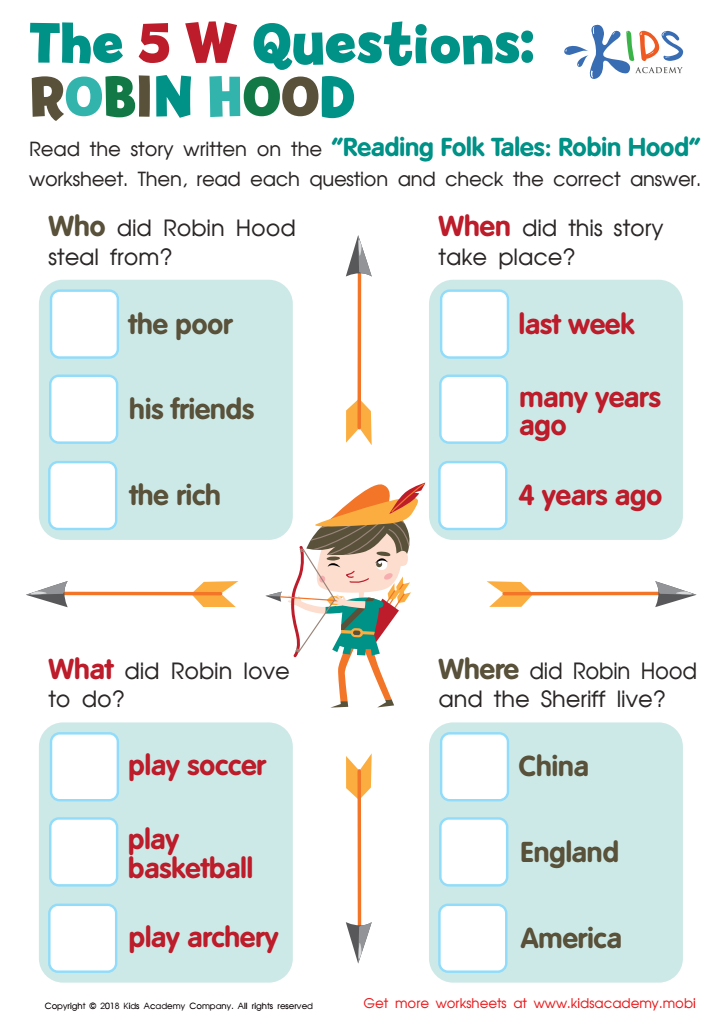
The 5 W Questions: Robin Hood Worksheet
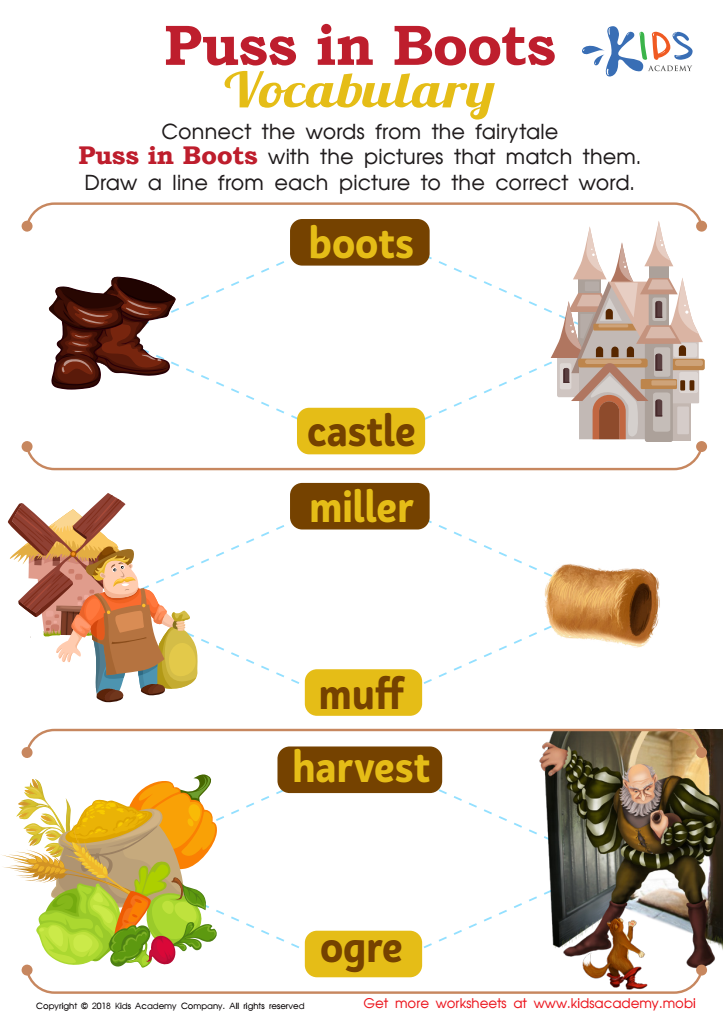
Puss in Boots Vocabulary Worksheet


.jpg)





Parents and teachers should care about story analysis and reading fiction for children ages 5-8 because it lays a critical foundation for their cognitive and emotional development. Engaging with fiction enhances young learners' imaginations, introducing them to diverse worlds, characters, and scenarios that they might not encounter in daily life. Through story analysis, children develop essential comprehension skills such as identifying main ideas, understanding sequences, and recognizing cause and effect relationships.
Moreover, reading fiction cultivates empathy as children learn to see situations from differing perspectives, fostering emotional intelligence. Stories often deal with fundamental themes like friendship, kindness, and courage, which are important for their social development. Discussing these themes helps children process their own feelings and experiences.
Reading fiction also builds vocabulary and language skills in an enjoyable context, making complex language concepts more accessible. It introduces children to rich, varied vocabulary and different sentence structures, which enhances their communication skills.
Furthermore, analyzing stories encourages critical thinking. When children evaluate actions of characters or predict plot outcomes, they are honing problem-solving and reasoning abilities. Engaged and thoughtful reading from a young age sets the stage for lifelong learning and a love for literature, both incredibly beneficial for personal and academic growth.







