Understanding perspectives Normal Reading Fiction Worksheets for Ages 5-8
3 filtered results
-
From - To
Enhance your child's reading journey with our "Understanding Perspectives" Normal Reading Fiction Worksheets, meticulously designed for ages 5-8. These engaging worksheets foster critical reading skills by helping young learners comprehend different characters' viewpoints and emotions within stories. Through various stimulating activities, children will practice identifying perspectives, which enhances empathy and deepens their overall understanding of fiction. Ideal for both home practice and classroom use, these curated resources make reading enjoyable and educational, laying a solid foundation for future literary analysis. Join us at Kids Academy today to boost your child's reading confidence and perspective-taking abilities!
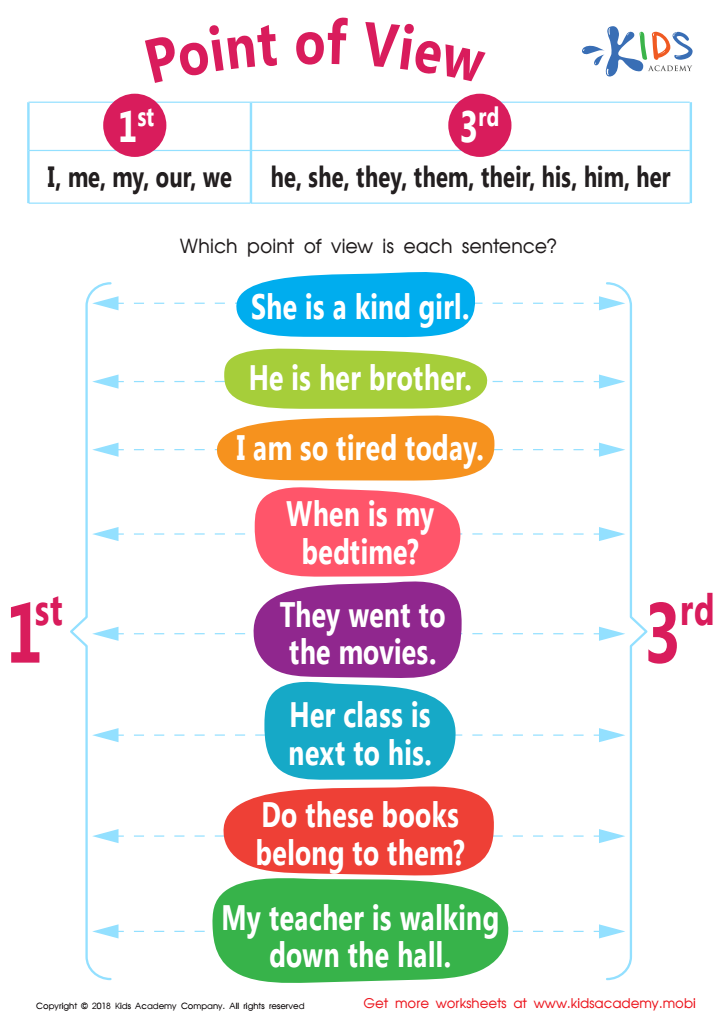
Point of View Worksheet
 Assign to My Students
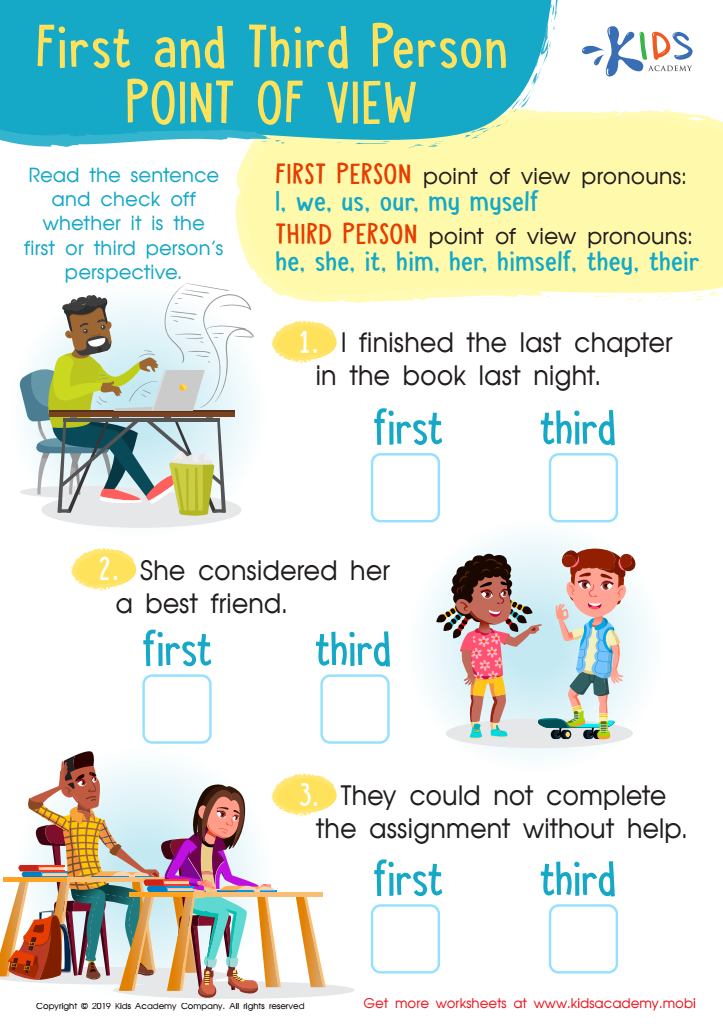
First and Third Person Point of View Worksheet
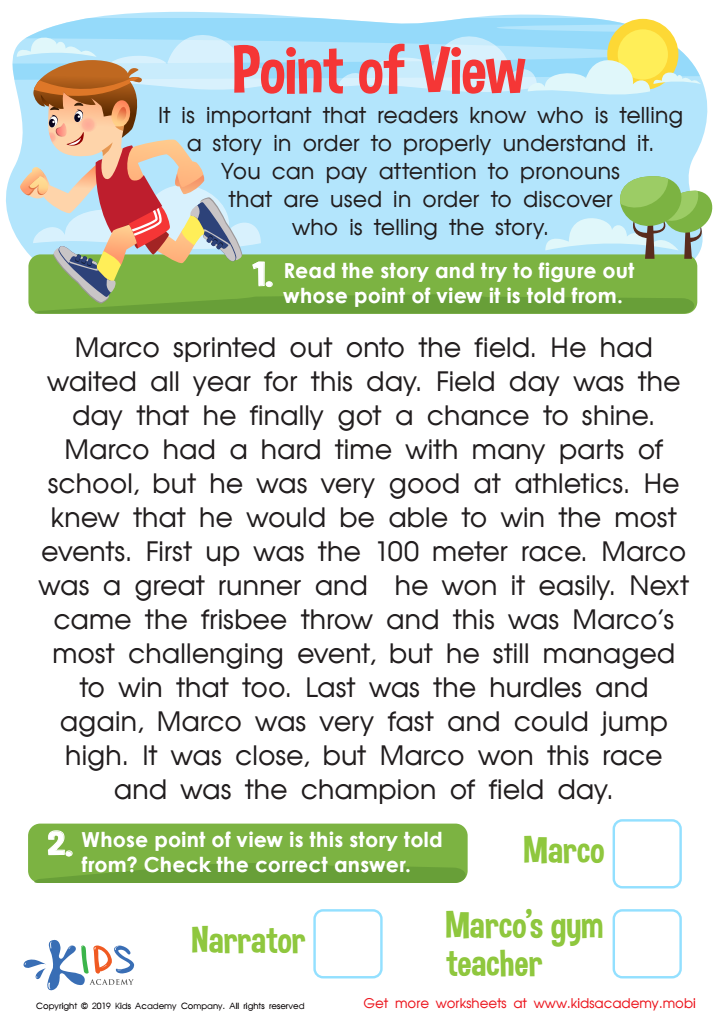
Point of View Worksheet








Understanding perspectives in normal reading fiction is crucial for children ages 5-8 as it builds empathy, critical thinking, and improved social skills. When parents and teachers engage with children in discussing different characters' viewpoints, they help young readers see the world through diverse lenses. This foundational skill promotes empathy by allowing children to relate to experiences unlike their own, fostering kindness and reducing prejudice.
Moreover, understanding various perspectives enhances critical thinking. Children learn to ask questions, identify biases, and recognize different motives, which enriches their problem-solving abilities. Engaging with diverse characters in fiction encourages children to think about situations in multifaceted ways, broadening their cognitive flexibility.
Furthermore, these social nuances help in day-to-day interactions. Kids become better at navigating social dynamics when they can understand multiple perspectives, leading to improved relationships with peers and adults. For parents and teachers, this presents natural opportunities to discuss feelings, motivations, and resolutions of conflicts, making these abstract concepts tangible for young minds.
Therefore, investing time in helping children understand perspectives in fiction equips them with essential life skills — empathy, critical thinking, and social acumen — invaluable throughout their lives.







