Visual interpretation Normal Reading Fiction Worksheets for Ages 5-8
5 filtered results
-
From - To
Discover our Visual Interpretation Normal Reading Fiction Worksheets designed exclusively for children aged 5-8. Our engaging worksheets inspire young readers to delve deep into their favorite stories, enhancing their ability to interpret and understand visual narratives. These thoughtfully crafted exercises not only boost comprehension skills but also foster critical thinking and creativity. By associating vibrant illustrations with text, kids develop a robust foundation for effective reading and analytical abilities. Perfect for parents and educators, our resources guarantee an enjoyable, educational experience that motivates children to read with curiosity and confidence. Visit us at Kids Academy to unlock a world of reading excitement!
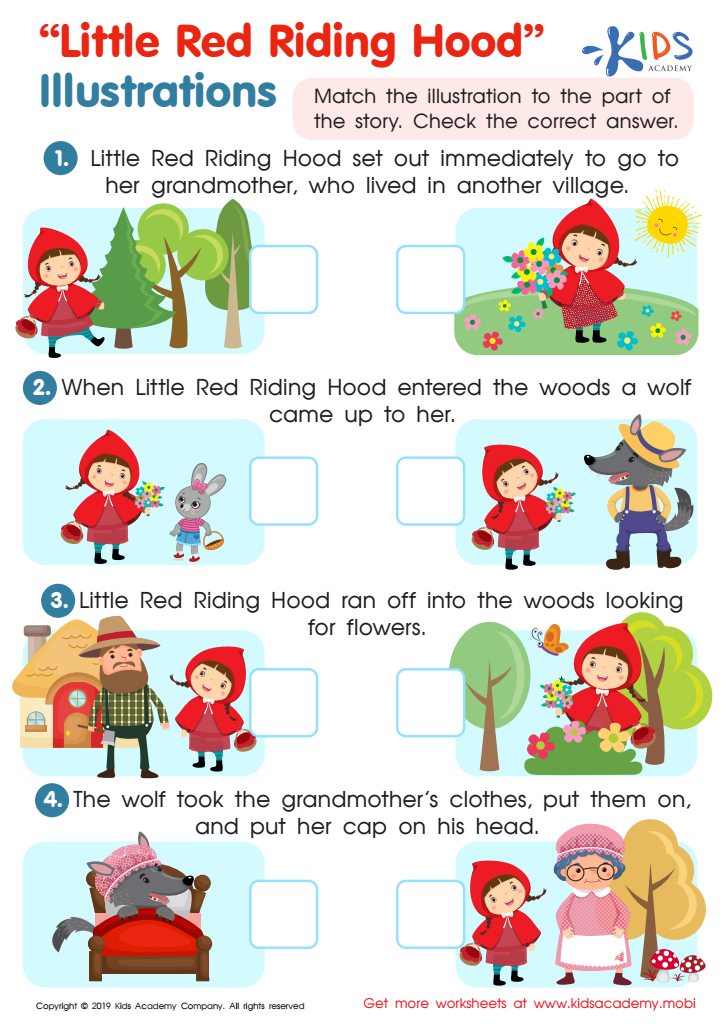
Little Red Riding Hood: Illustrations Worksheet
 Assign to My Students
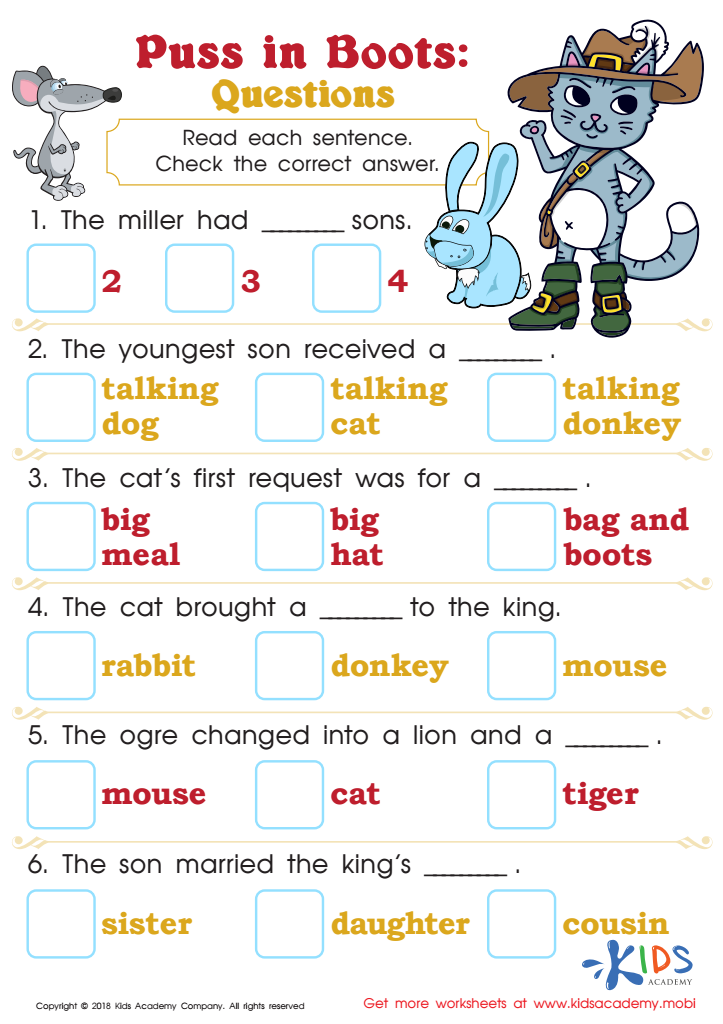
Puss in Boots: Questions Worksheet
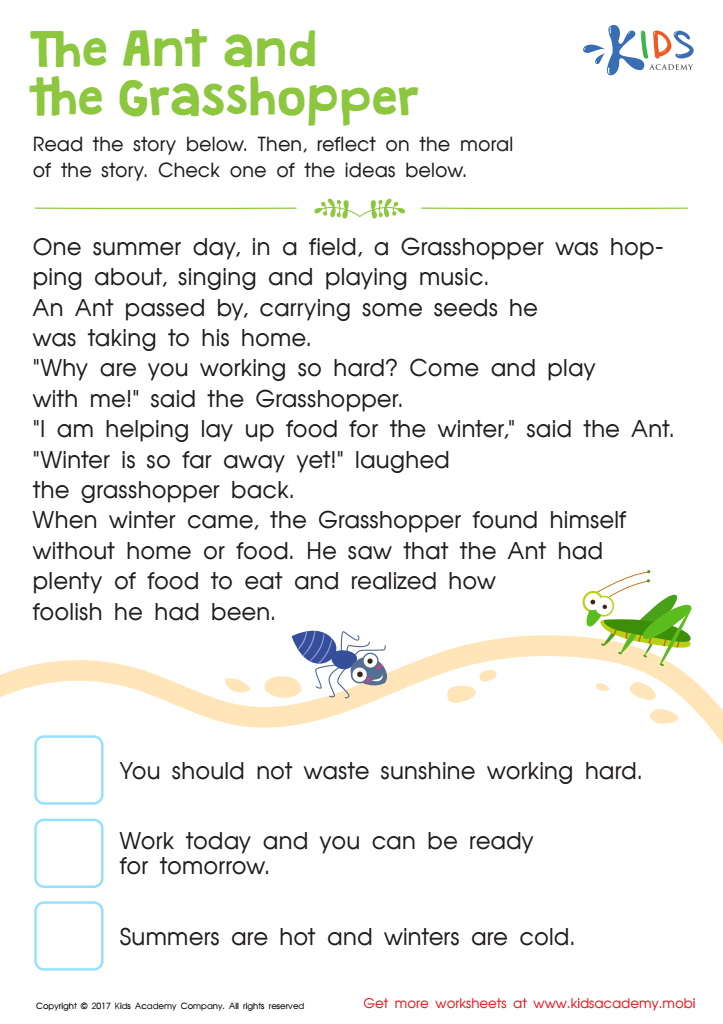
The Ant and The Grasshopper Printable
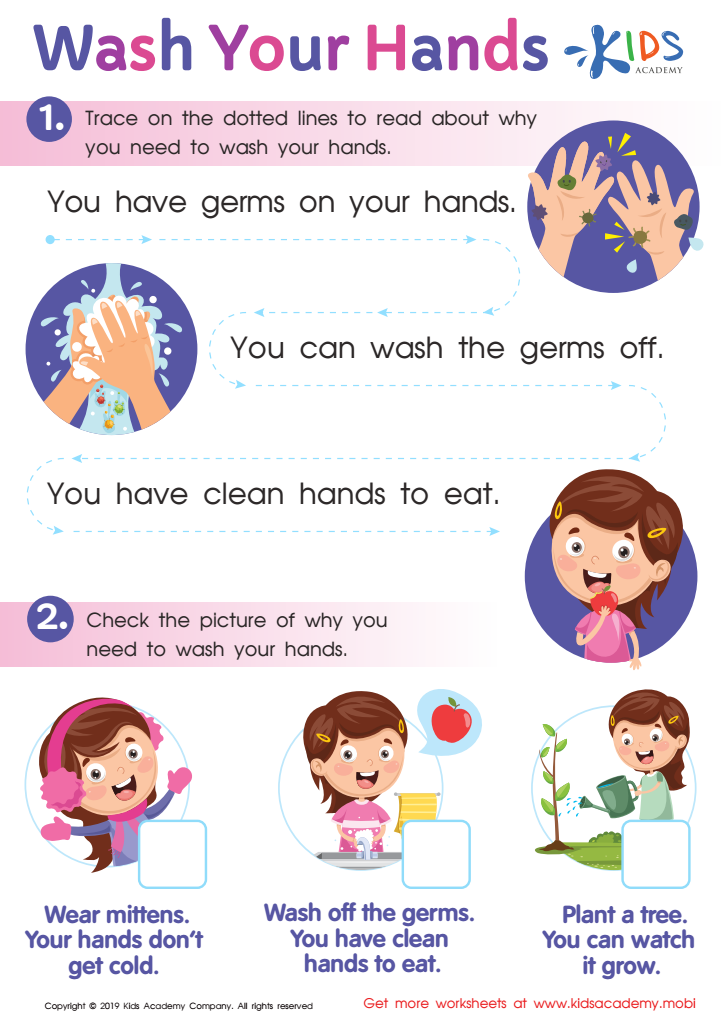
Wash Your Hands Worksheet
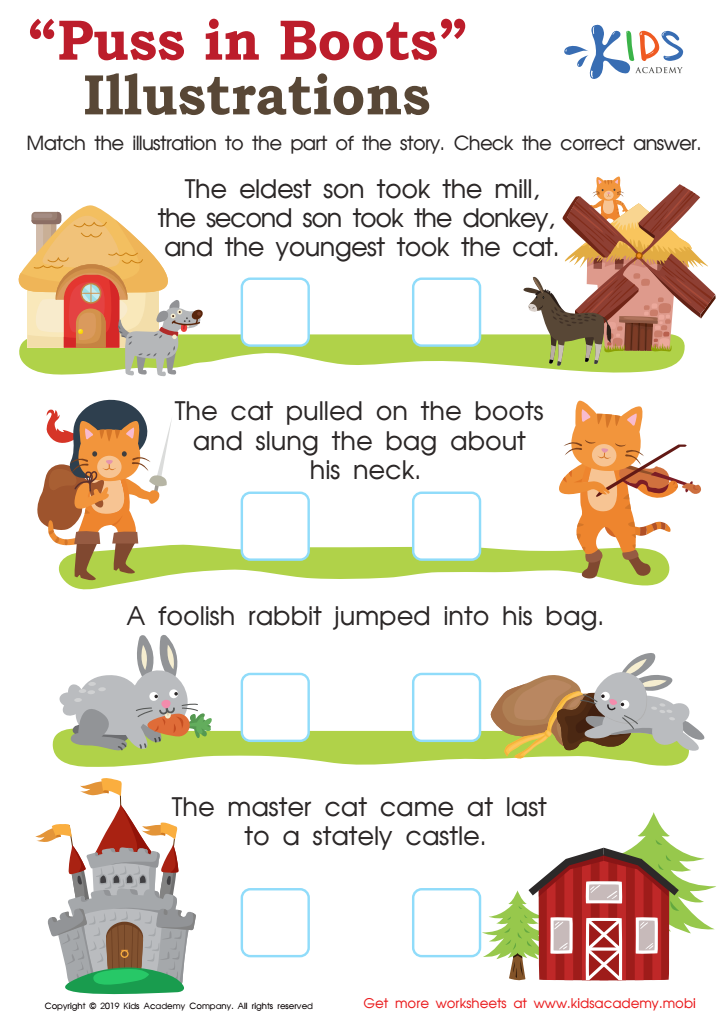
Puss in Boots Illustrations Worksheet





.jpg)

Parents and teachers should care about visual interpretation and normal reading for fiction in the 5-8 age group because these skills are foundational to cognitive and emotional development. At this critical stage in their learning journey, young children are developing the basics of language, comprehension, and critical thinking.
Fiction for ages 5-8 often contains vivid illustrations that help children interpret and understand the story’s content and context. Visual interpretation enables kids to connect text with images, boosting comprehension and memory retention. These visual cues support the construction of narrative structures, character understanding, and plot recognition.
Moreover, engaging with fictional stories allows children to explore different perspectives, cultures, and experiences, which can enhance empathy and emotional intelligence. Characters and storylines in fiction introduce young readers to problem-solving strategies and ethical dilemmas, fostering moral development.
Regular reading practice improves vocabulary, sentence structure, and reading fluency. For children within this age group, who are transitioning from 'learning to read' to 'reading to learn,' consistent exposure to fiction promotes language proficiency crucial for academic success.
Ultimately, prioritizing visual and normal reading interpretation in early fiction cultivates a love for reading, beneficial for lifelong learning and personal growth. By investing in these areas, parents and teachers support a child's holistic educational development.







