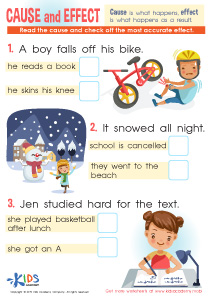
Vocabulary development Normal Reading Non-Fiction Worksheets for Ages 5-8
6 filtered results
-
From - To
Boost your child's vocabulary with our Normal Reading Non-Fiction Worksheets for Ages 5-8 from Kids Academy. These captivating worksheets are designed to enhance your child's vocabulary and reading skills through engaging non-fiction content. Suitable for young learners, ages 5 to 8, our printables focus on everyday language and factual texts to inspire curiosity and encourage a love for learning. By completing these exercises, children build a stronger understanding of various subjects, improve sentence structures, and learn essential vocabulary in context. Spark your child's interest in the world around them and give their vocabulary a vital boost today!
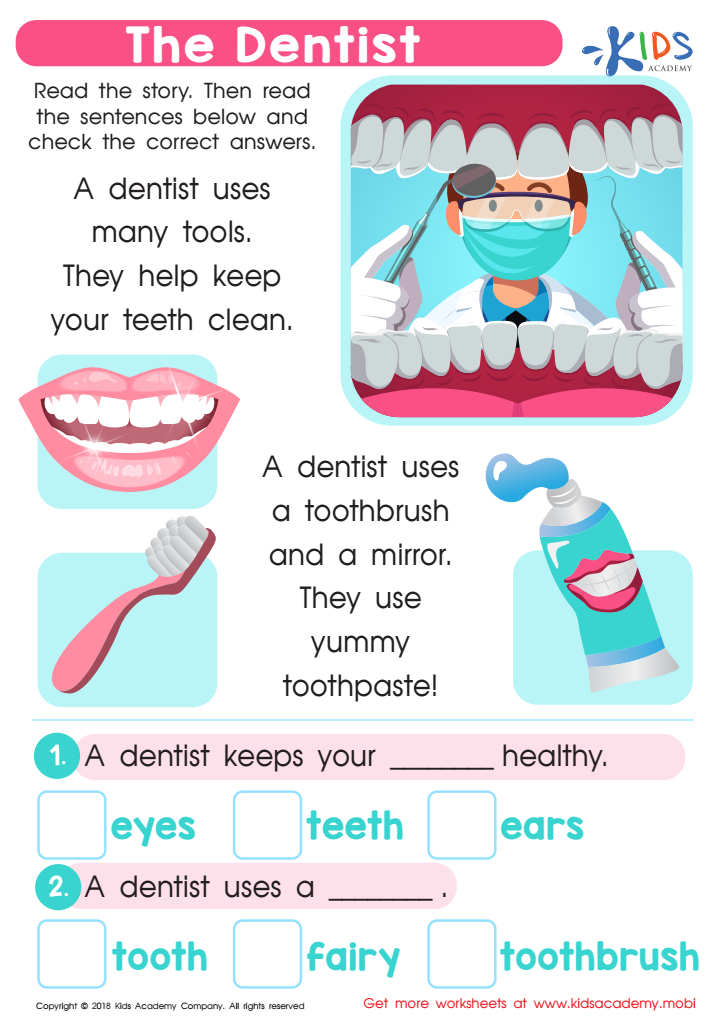
The Dentist Worksheet
 Assign to My Students
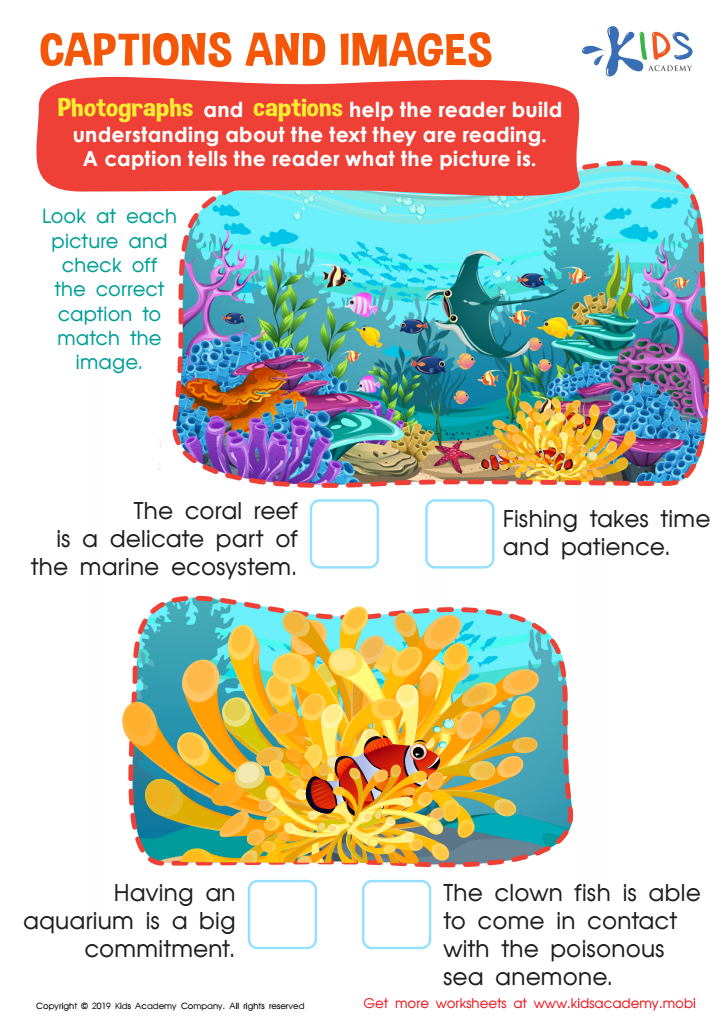
Captions and Images Worksheet
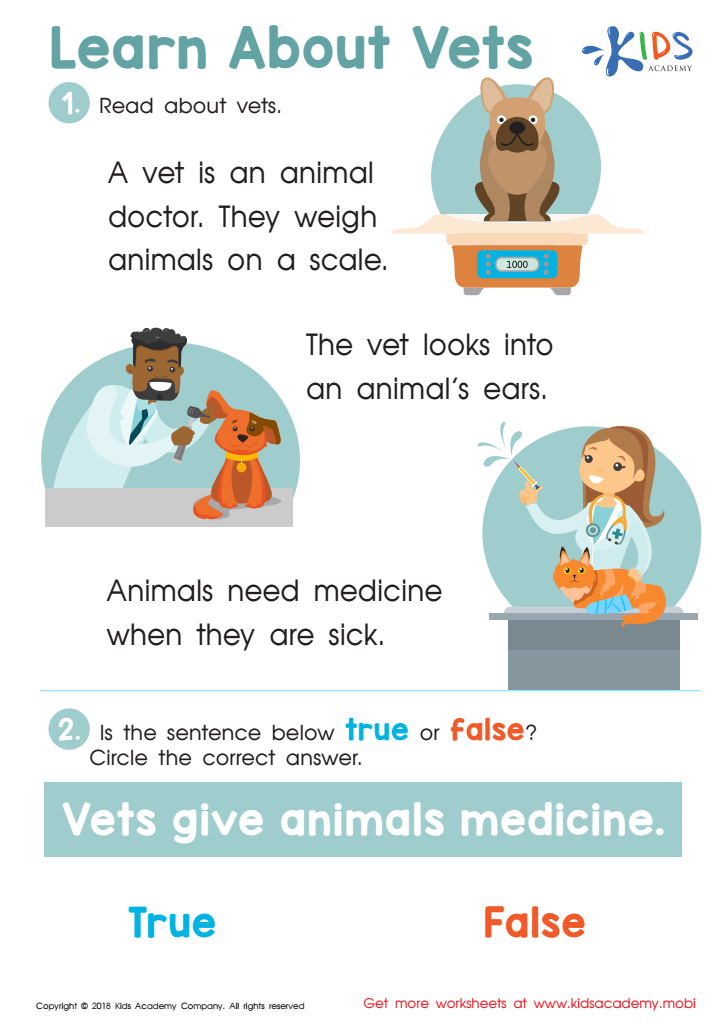
Learn About Vets Worksheet
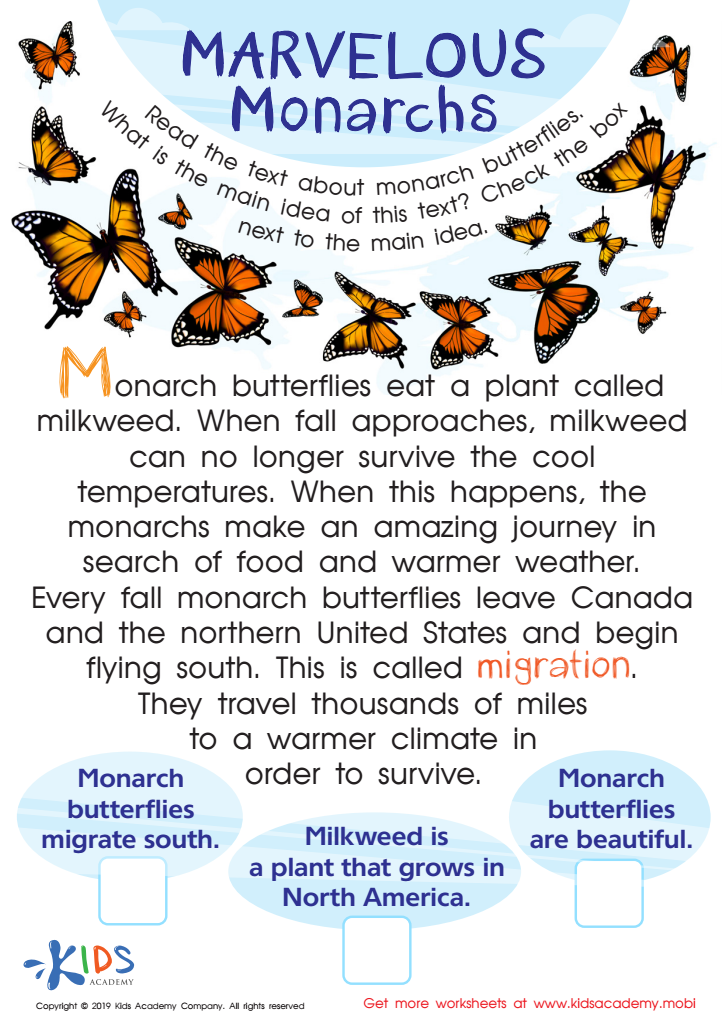
Marvelous Monarchs Worksheet
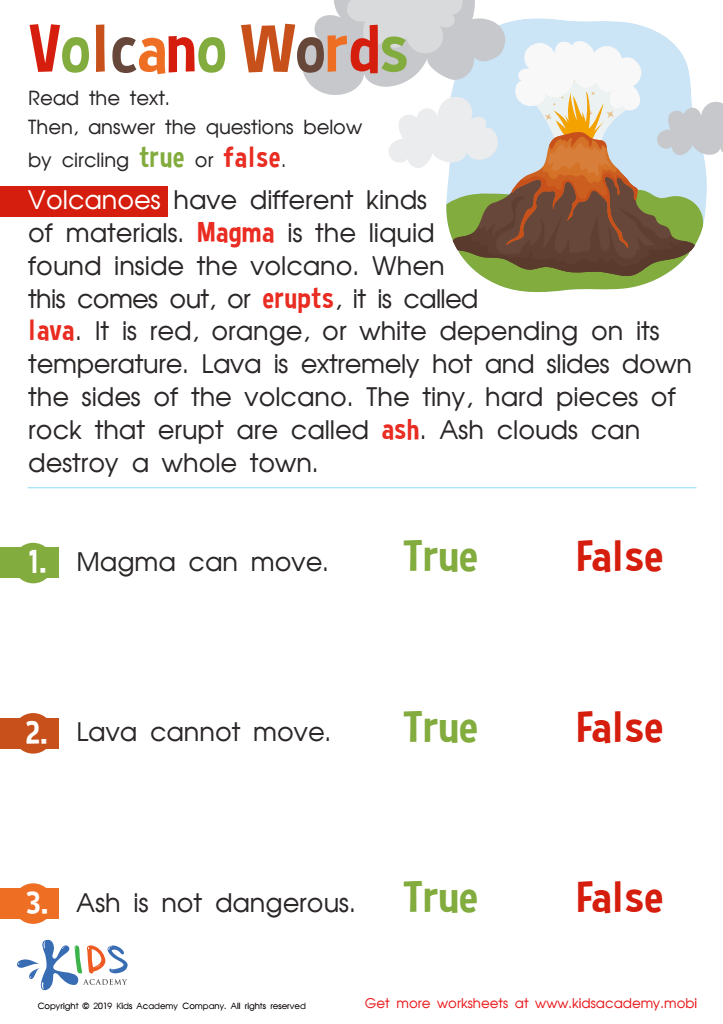
Volcano Words Worksheet
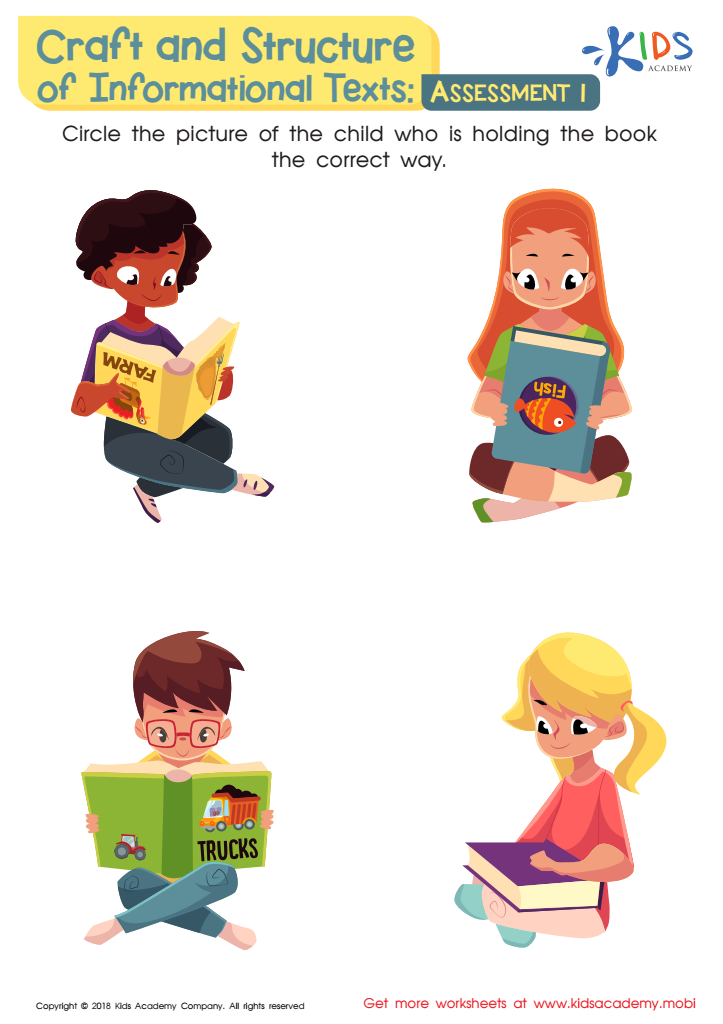
Craft and Structure of Informational Texts: Assessment 1 Worksheet








Vocabulary development is critical for children aged 5-8 as it lays the foundation for effective communication, reading comprehension, and academic success. During these early years, children are at a crucial stage in their language acquisition journey. A robust vocabulary enables them to express their thoughts clearly, ask questions, and build social relationships.
When parents and teachers emphasize vocabulary development through reading non-fiction, they help children expand their knowledge about the world. Non-fiction texts often introduce new and varied terminologies that may not come up in everyday conversation, enriching the child’s language experience. Exposure to non-fiction enhances children's cognitive abilities, fostering curiosity and critical thinking. They begin to understand concepts ranging from natural science to history, encouraging a love for learning and discovery.
Furthermore, a strong vocabulary improves reading comprehension. Children who understand the words they read can gather information more effectively, grasp complex ideas, and engage with the text at a deeper level. This foundational skill supports future academic challenges as they encounter more sophisticated subjects.
In sum, prioritizing vocabulary development through non-fiction reading not only boosts language skills but also cultivates an inquisitive mindset and a lifelong passion for learning, providing essential tools for both academic and personal growth.