Filters

7 filtered results

Clear all filters
Favorites
With answer key
Interactive

7 filtered results

Difficulty Level

Grade


Unlock the power of words with our "Vocabulary Expansion Normal Reading Non-Fiction Worksheets" designed specifically for ages 5-8! These engaging resources provide young learners with the opportunity to enhance their vocabulary through fun and informative non-fiction texts. Each worksheet is crafted to encourage kids to explore new words, understand their meanings, and apply them in context, fostering a love for reading and learning. Perfect for classroom or at-home learning, these worksheets help develop essential language skills while sparking curiosity about the world. Join us today in making vocabulary expansion an exciting adventure filled with discovery and growth!

Check out this FREE Trial Lesson on Reading Non-Fiction for age 5-8!

Text Features in Informational Texts

Favorites
With answer key
Interactive
  • 5-8
  • Vocabulary expansion
  • Reading Non-Fiction
  • Normal
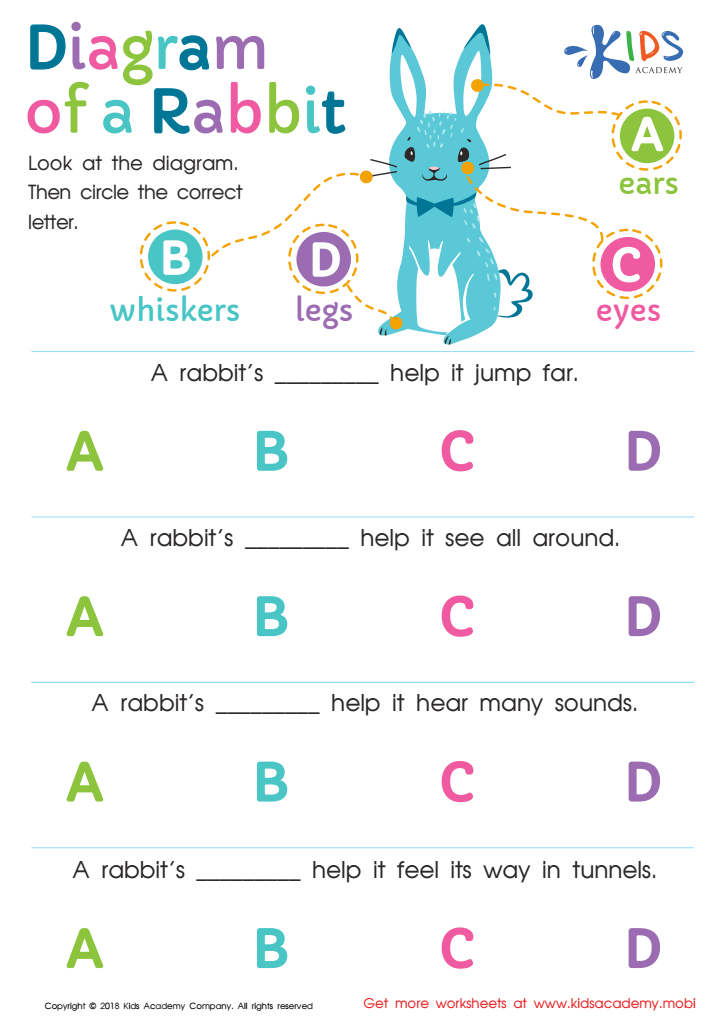
Diagram of a Rabbit Worksheet

Diagram of a Rabbit Worksheet

Reading skills are essential for success in all subjects, from science and math to fiction. This worksheet helps kids learn to interpret diagrams by studying the rabbit illustration and then selecting the correct answer for each sentence. It's a fun way to build reading and comprehension skills!
Diagram of a Rabbit Worksheet
Worksheet
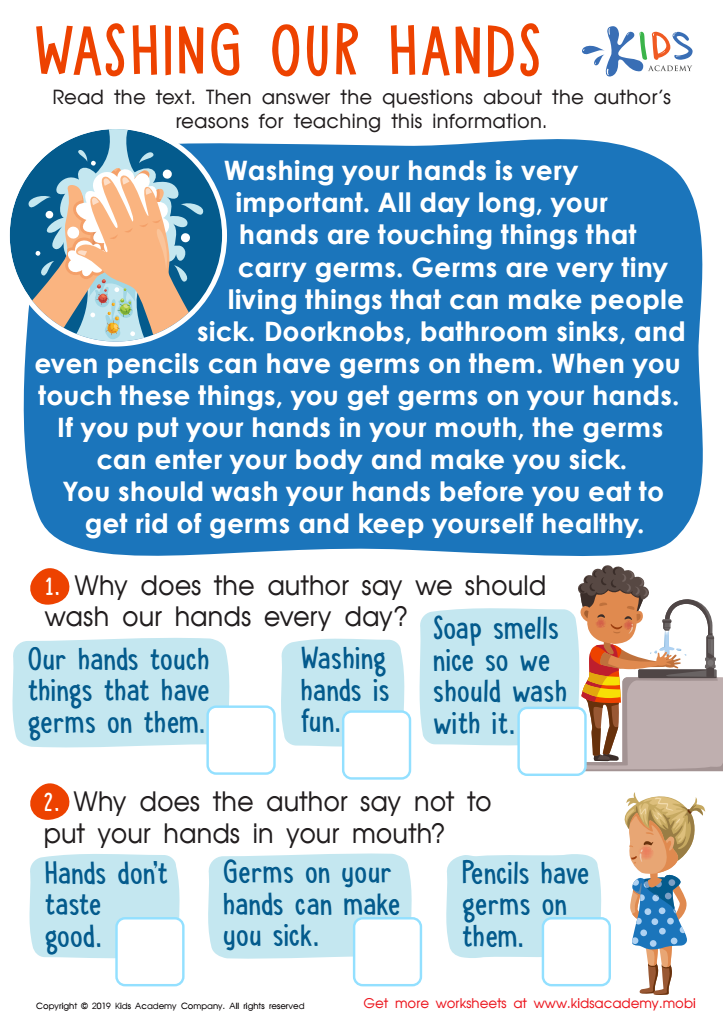
Washing Our Hands Worksheet

Washing Our Hands Worksheet

Reading allows us to gain knowledge. Informational texts provide essential facts which we need to be able to interpret and use. This PDF worksheet helps kids understand the importance of handwashing. It informs them of the germs they may come into contact with, before asking them to answer related comprehension questions.
Washing Our Hands Worksheet
Worksheet
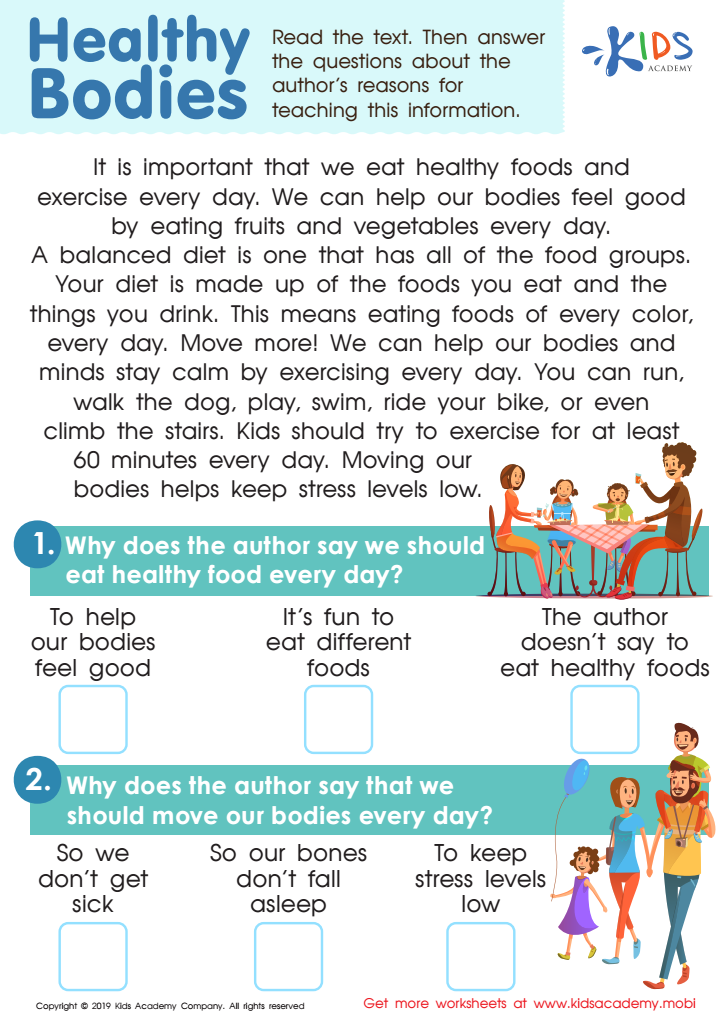
Healthy Bodies Worksheet

Healthy Bodies Worksheet

Taking care of our bodies is essential. To gain critical thinking skills, readers must understand an author's purpose. Our free worksheet is filled with facts about healthy bodies. After reading, your child can answer questions about the author's purpose.
Healthy Bodies Worksheet
Worksheet
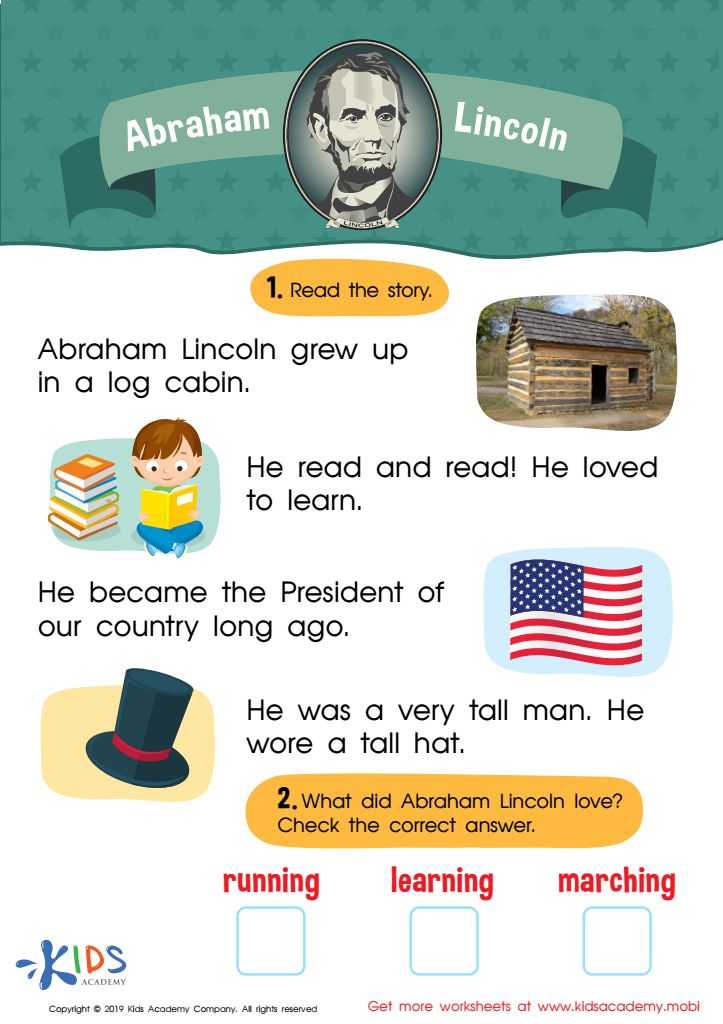
Abraham Lincoln Worksheet

Abraham Lincoln Worksheet

Let your kids listen to interesting stories while having fun! Read the short story in this worksheet, point to the picture representing each sentence, then ask the questions and check the answers. Doing this will help your children learn new things and build their vocabulary.
Abraham Lincoln Worksheet
Worksheet
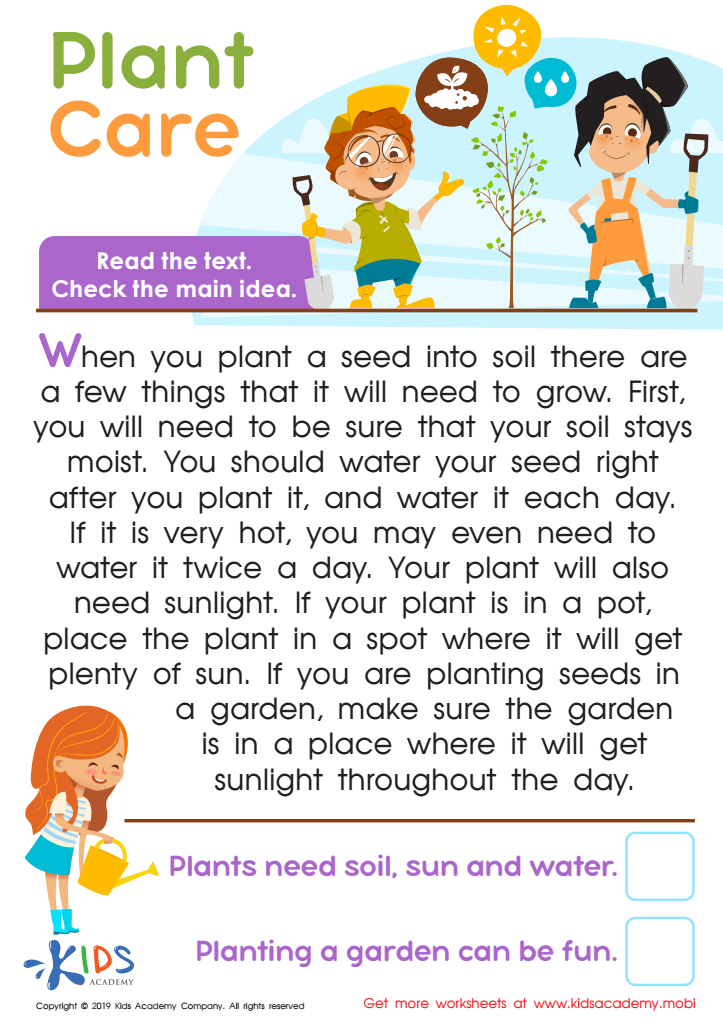
Plant Care Worksheet

Plant Care Worksheet

Encourage your children to read by helping them practice. Print out the worksheet and read the text with them. Help them understand the words and find the main idea. This will improve their reading skills and prepare them for school.
Plant Care Worksheet
Worksheet
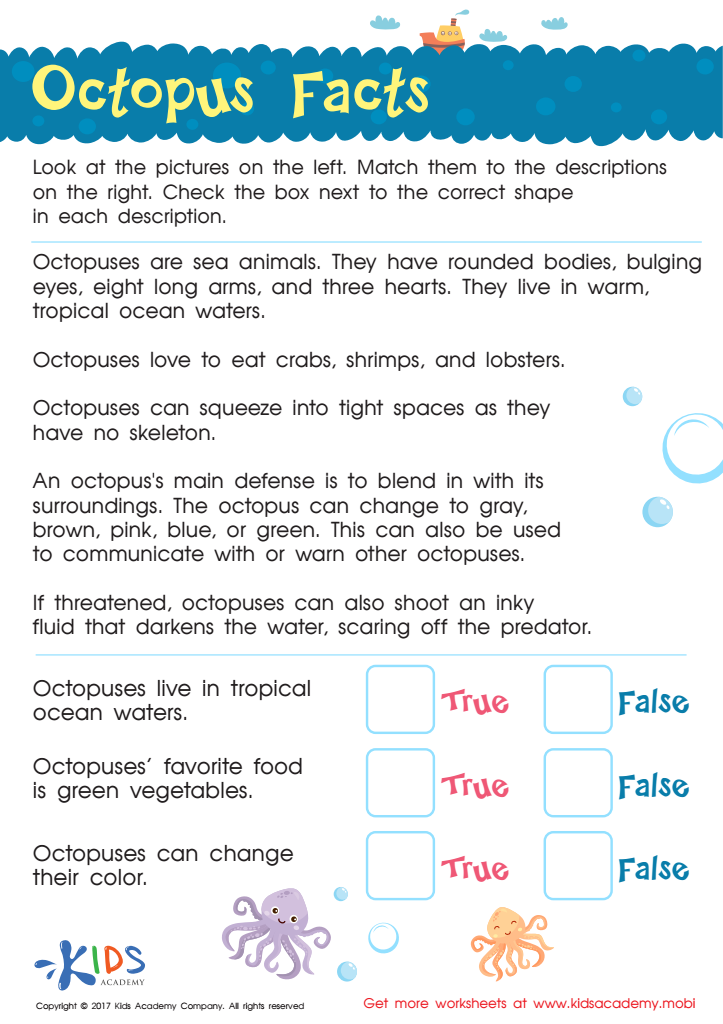
Octopus facts worksheet for kids

Octopus Facts Worksheet For Kids

Let your child dive into the world of octopuses with this fun worksheet. It offers invaluable practice in reading non-fiction texts, while they learn interesting facts about these strange sea creatures. It's a great way to help them hone their skills in reading comprehension.
Octopus Facts Worksheet For Kids
Worksheet
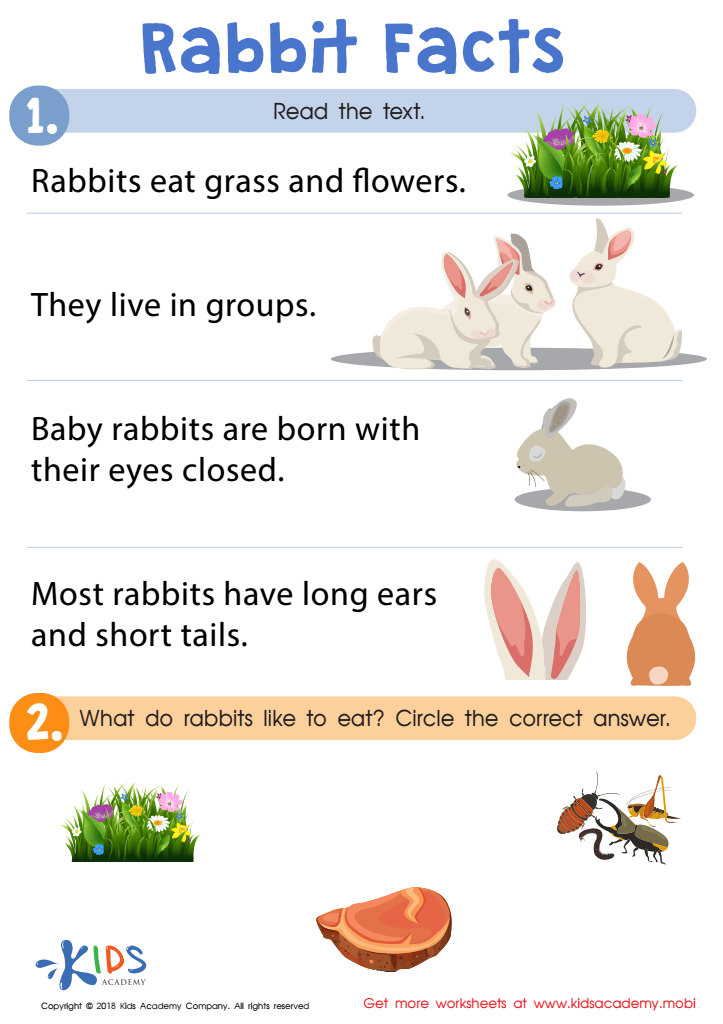
Rabbit Facts Worksheet

Rabbit Facts Worksheet

Informational texts offer great learning opportunities. Kids Academy's reading worksheet helps children read and recall important details from a text about bunnies. Kids will love it! Simply read the rabbit facts and circle the correct pictures to answer the questions.
Rabbit Facts Worksheet
Worksheet


Vocabulary expansion through normal reading of non-fiction is vital for children aged 5-8 as it lays a strong foundation for their language development and critical thinking skills. At this age, children are naturally curious about the world, and non-fiction books satisfy that curiosity by providing factual information about various subjects, from animals and nature to history and science. Engaging with diverse vocabulary helps build their lexicon, enabling them to more effectively communicate their thoughts and ideas.

Furthermore, when parents or teachers encourage the reading of non-fiction, they foster analytical thinking and comprehension skills. Non-fiction texts often present information in structured formats, such as headings and glossaries, teaching children how to locate key details and understand concepts more deeply. This type of reading also helps children make connections between their knowledge and real-world experiences, enhancing learning retention.

Moreover, exposure to a rich vocabulary aids in academic achievement across subjects. As children become proficient readers and communicators, they are better prepared for the demands of school and beyond. Thus, prioritizing non-fiction reading not only enriches their language skills but also cultivates informed, engaged individuals ready to explore and contribute to their surroundings.