Vocabulary enhancement Normal Rhyming Words Worksheets for Ages 5-8
7 filtered results
-
From - To
Enhance your child's vocabulary with our engaging Normal Rhyming Words Worksheets, specifically designed for ages 5-8. These worksheets foster phonemic awareness and improve language skills by introducing children to the fascinating world of rhymes. Each worksheet features vibrant illustrations and interactive activities that make learning fun and effective. As kids work through these exercises, they'll connect sounds and meanings, enriching their speech and writing abilities. Perfect for home or classroom use, our worksheets empower young learners to explore vocabulary in an enjoyable and age-appropriate way. Discover the joy of learning through rhymes and watch your child's confidence soar!
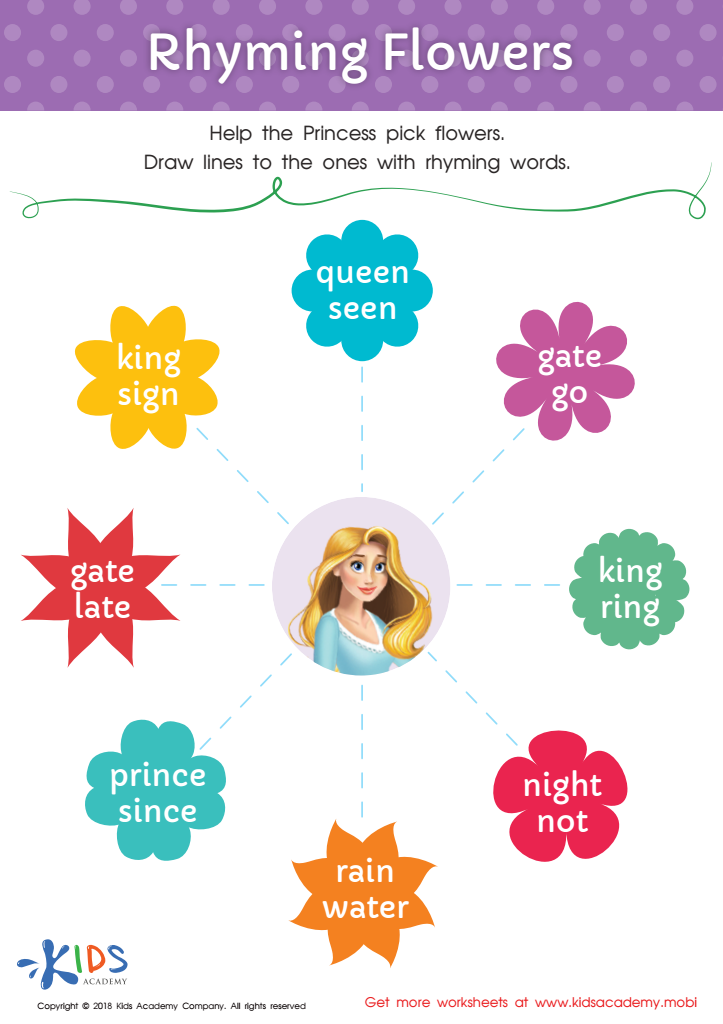
Rhyming Flowers Worksheet
 Assign to My Students
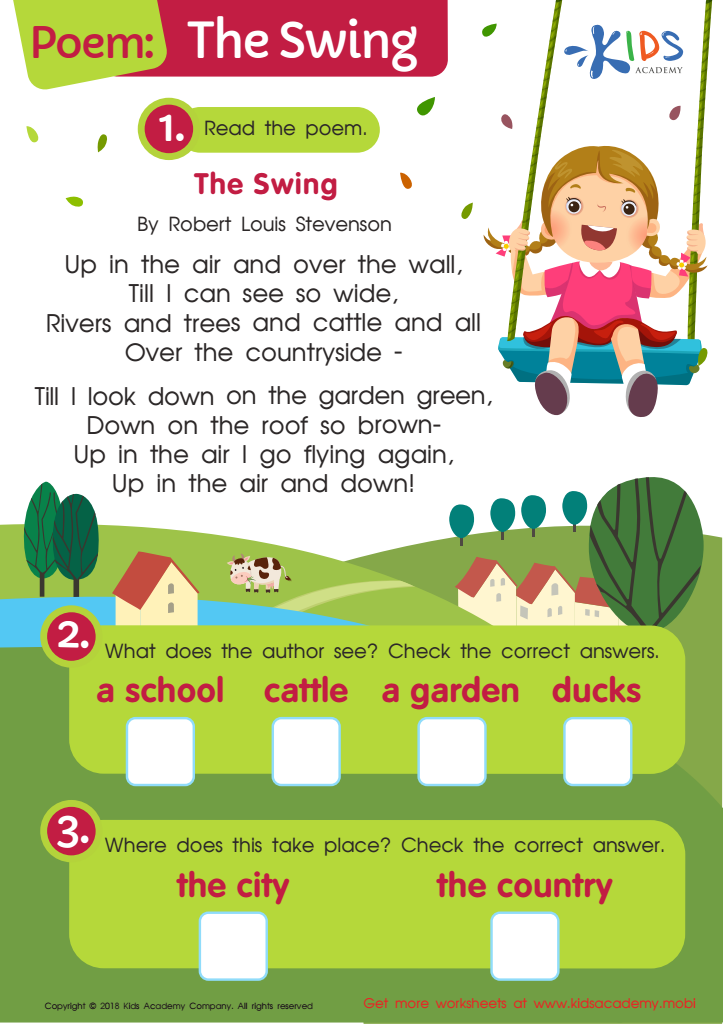
Poem: The Swing Worksheet
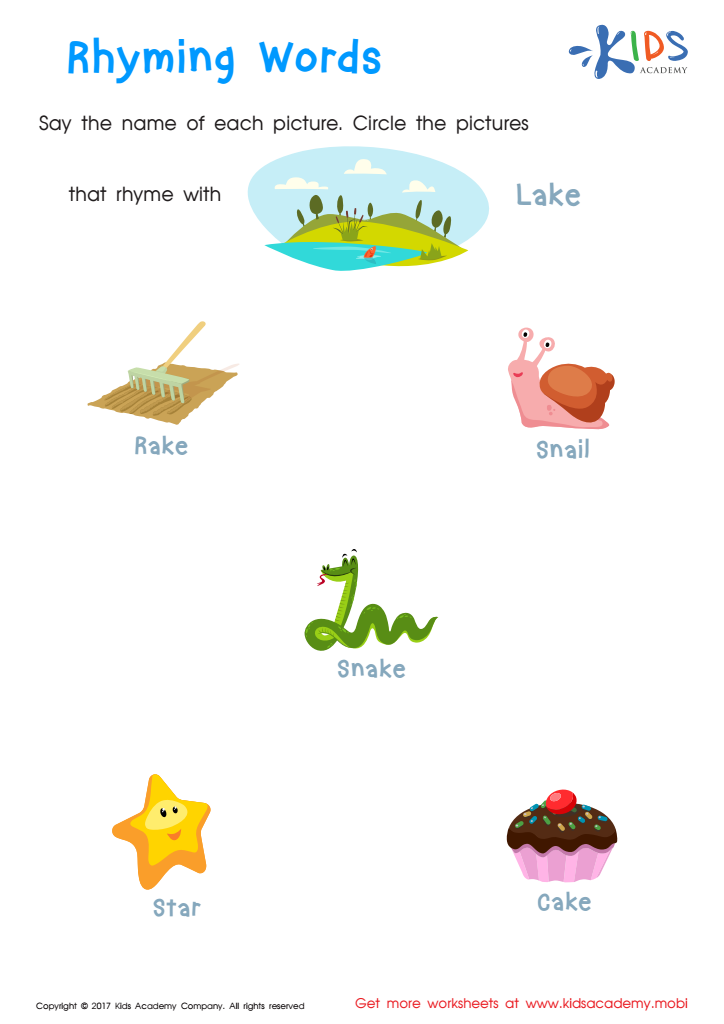
Rhyming Words Rhyming Worksheet
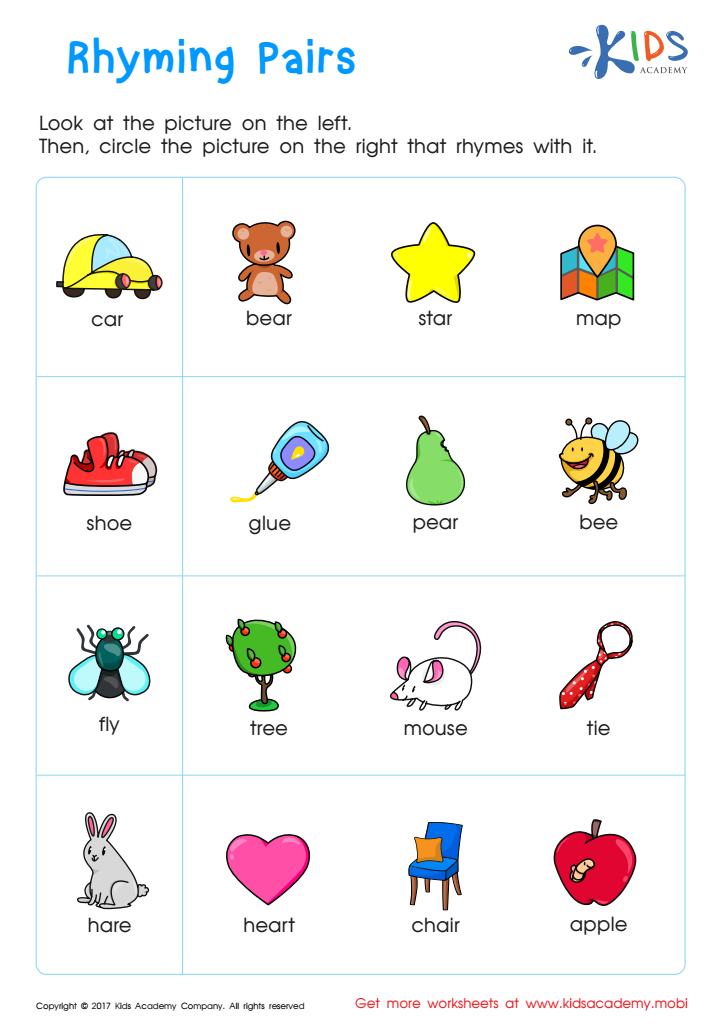
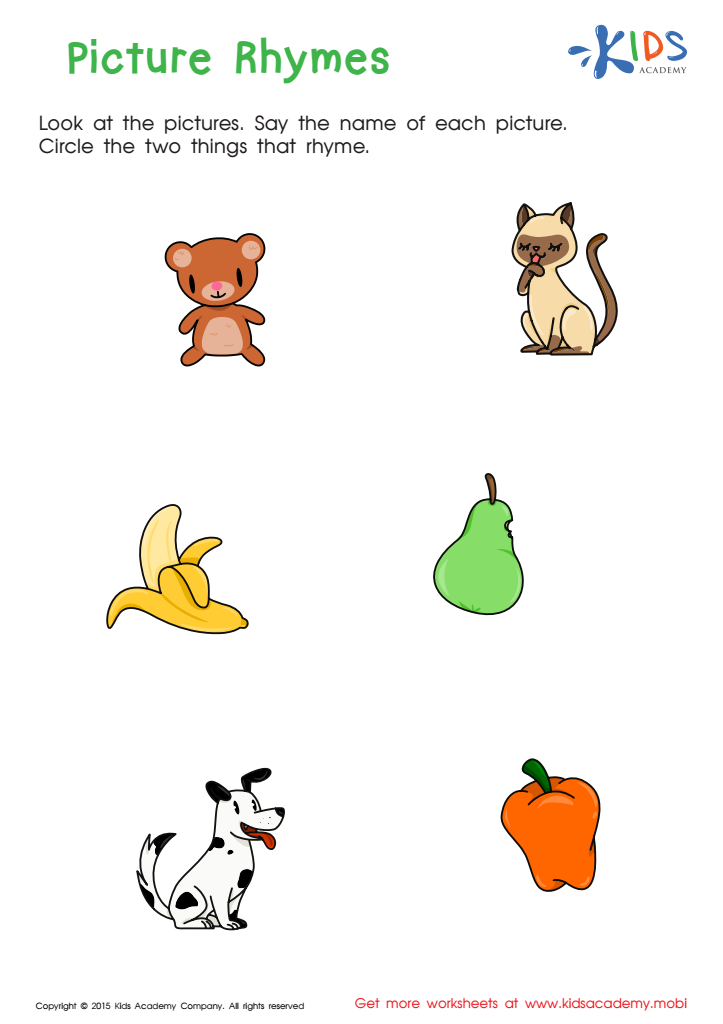
First Words: Picture Rhymes Worksheet
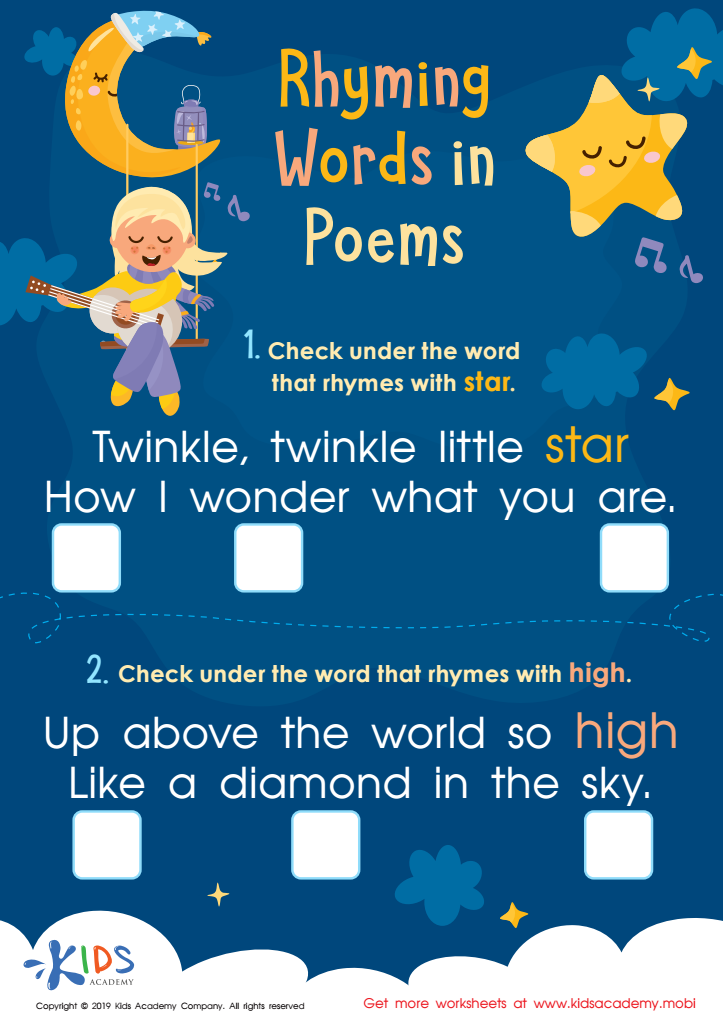
Rhyming Words in Poems Worksheet
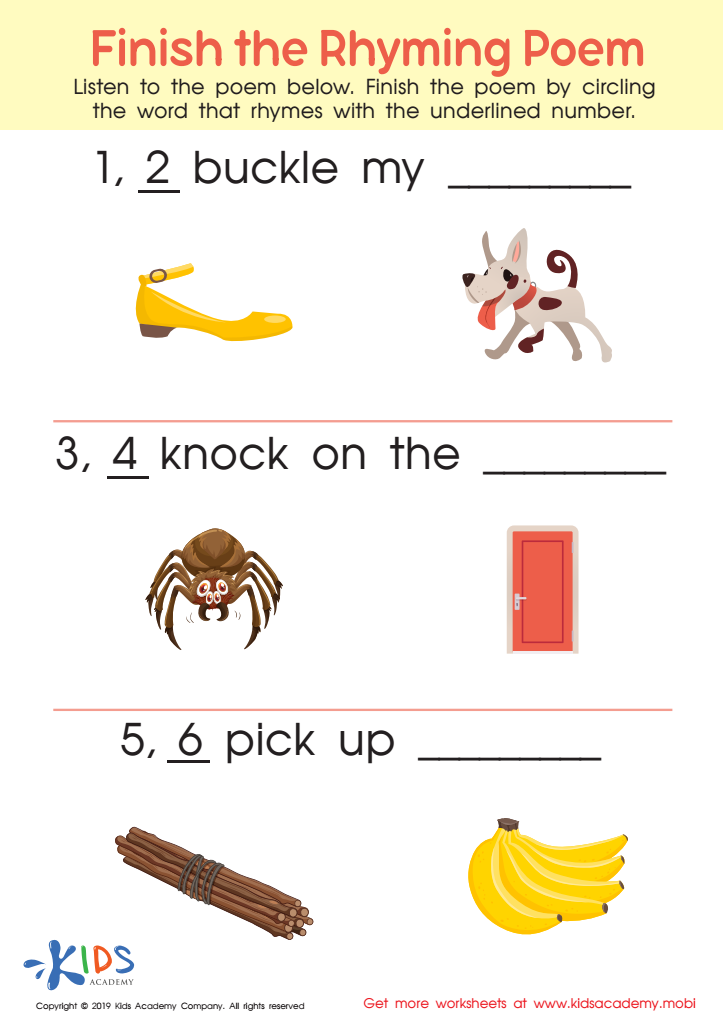
Finish Rhyming Poem Worksheet








Vocabulary enhancement is crucial for children aged 5 to 8, as they are at a pivotal stage of language development. Normal rhyming words, in particular, play a significant role in this process. When parents and teachers focus on rhyming words, they help children recognize phonetic patterns, aiding in decoding and reading skills. Rhyme promotes auditory discrimination and listening skills, which are foundational for effective communication.
Additionally, engaging with rhyming words fosters creativity and imagination. It encourages children to experiment with sounds and language, paving the way for a deeper appreciation of literature. Activities centered around rhyming, such as songs, games, and poems, make learning enjoyable, allowing children to develop a love for words and reading.
Moreover, vocabulary enhancement through rhymes can support academic success. Extensive vocabulary skills contribute not only to reading fluency but also improve writing and comprehension abilities. As children begin to grasp more complex words and concepts, they become more confident communicators.
In summary, focusing on vocabulary enhancement through normal rhyming words equips children with critical skills, enhances their creativity, and lays a solid foundation for lifelong literacy and learning. Parents and teachers should prioritize this aspect of language development to nurture confident, capable individuals.








