
Developing critical thinking Normal Science Worksheets for Ages 5-8
3 filtered results
Difficulty Level
Grade
Age
-
From - To
Subject
Activity
Standards
Unlock your child's potential with our "Developing Critical Thinking Normal Science Worksheets for Ages 5-8." Designed to challenge young minds, these engaging worksheets foster essential scientific skills including observation, analysis, and problem-solving. Perfect for curious learners, each activity encourages kids to ask questions, think logically, and draw conclusions. Tailored to stimulate critical thinking, our worksheets make learning science exciting and accessible. Ideal for both classroom and home use, they provide a solid foundation for future academic success. Spark a love for science today and build critical thinking skills that will last a lifetime!
Favorites
With answer key
Interactive
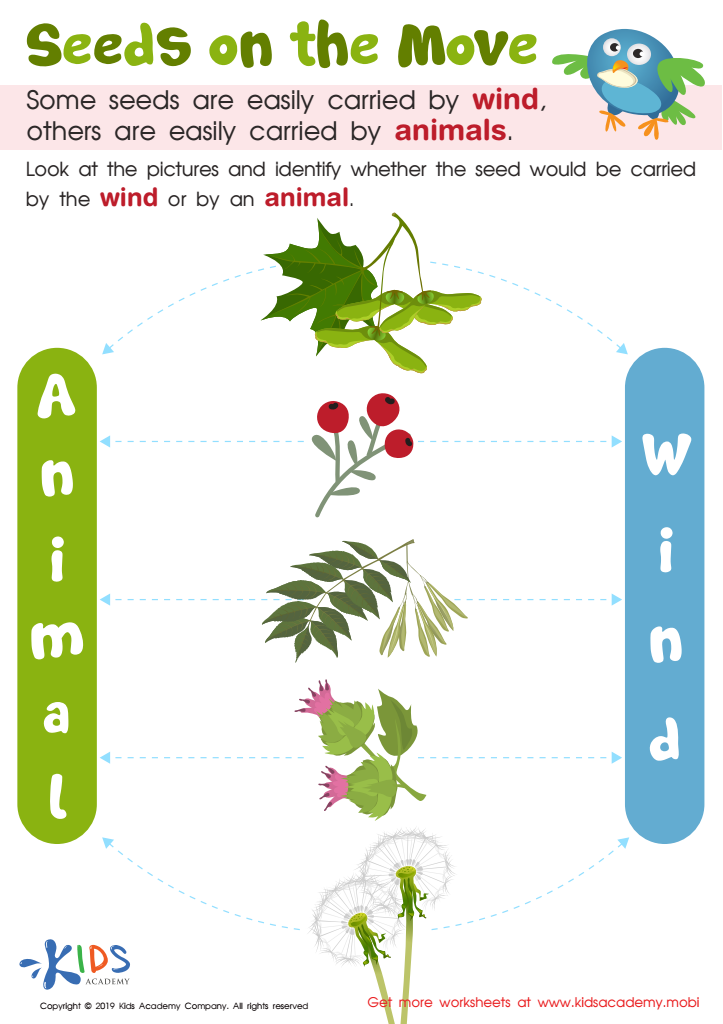
Seeds on the Move Worksheet
Help students understand the concept of spreading seeds with this fun traceable worksheet. Discuss the pictures, and see if they can identify whether the seed is carried by the wind or an animal. Explain how seeds can travel from place to place without human help, and how this helps them grow in new locations.
 Assign to My Students
Seeds on the Move Worksheet
Worksheet
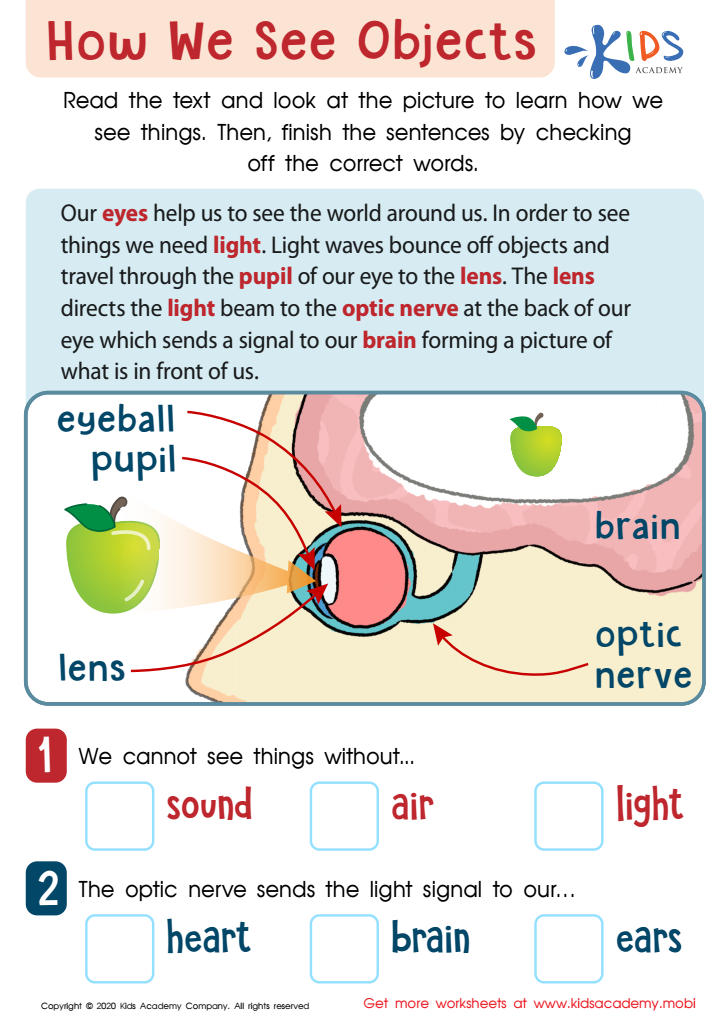
How We See Objects Worksheet
Remind your students of our five senses! This worksheet will teach them more about sight: read/listen to the text, look at pictures, then help them complete sentences. Check off the right words!
How We See Objects Worksheet
Worksheet
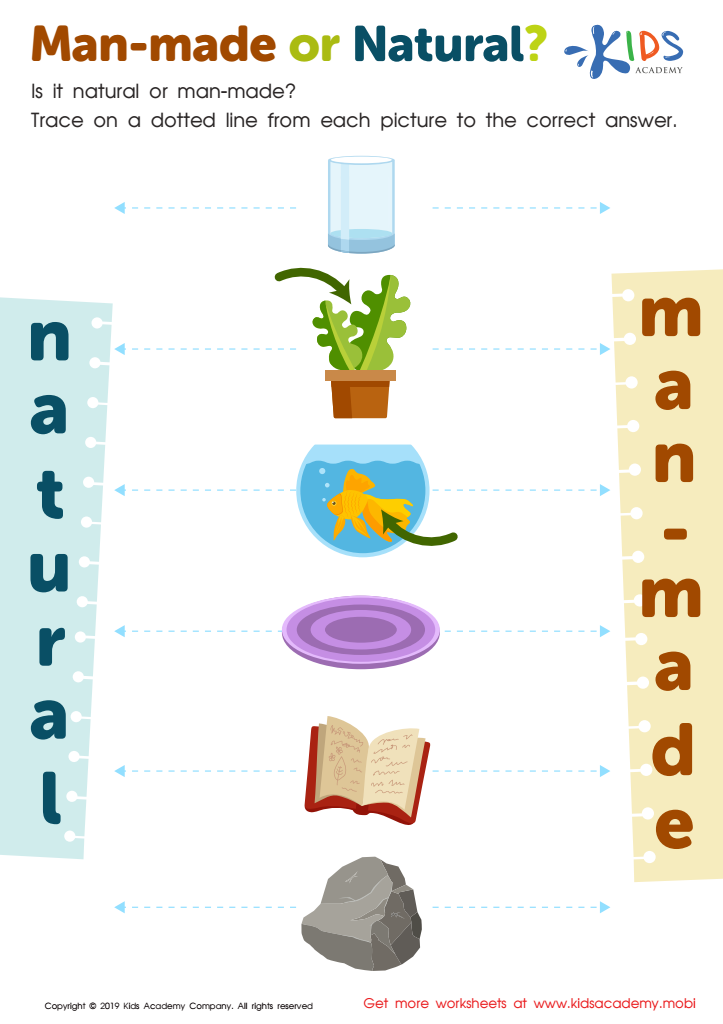
Man-Made or Natural? Worksheet
Ask your students to name natural and man-made objects. Check the worksheet to help them identify the objects, then trace the dotted line to determine if it's natural or man-made.
Man-Made or Natural? Worksheet
Worksheet
Learning Skills
Join Kids Academy for Free
Who is primarily going to use this learning content?








Developing critical thinking in young children aged 5-8 is crucial as it sets the foundation for lifelong learning and problem-solving abilities. At this early stage, children are naturally curious and their brains are highly adaptable, making it an ideal time to introduce concepts that promote careful analysis, reasoning, and evidence-based decision-making.
Critical thinking equips children with the skills to question assumptions, consider different perspectives, and evaluate information critically. This becomes particularly important in the realm of science, where normal scientific thinking involves making observations, predicting outcomes, conducting simple experiments, and deriving conclusions. By instilling these practices early, we foster a scientific mindset that appreciates evidence and logic over mere memorization of facts.
Moreover, critical thinking helps in personal development beyond academics. It enhances decision-making skills, improves social interactions by promoting empathy and understanding, and encourages independence and confidence.
Teachers and parents who actively engage in activities that promote inquiry, open-ended questions, and problem-solving tasks provide children with a toolkit they will use throughout their educational journey and life. By nurturing critical thinkers from a young age, we prepare our children not only to excel in science but to be thoughtful, informed, and innovative citizens capable of tackling complex challenges.







