
Enhancing critical thinking Normal Science Worksheets for Ages 5-8
3 filtered results
Difficulty Level
Grade
Age
-
From - To
Subject
Activity
Standards
Unlock your child's potential with our "Enhancing Critical Thinking" Normal Science Worksheets, designed for ages 5-8. These engaging activities inspire young minds to explore, question, and understand the world around them. Each worksheet promotes cognitive development, encouraging children to analyze, hypothesize, and solve problems. Through fun and educational experiments, kids develop essential critical thinking skills that lay the foundation for future academic success. Our worksheets make science accessible and enjoyable, sparking curiosity and fostering a love for learning. Boost your child's confidence and creativity with our expertly crafted resources today!
Favorites
With answer key
Interactive
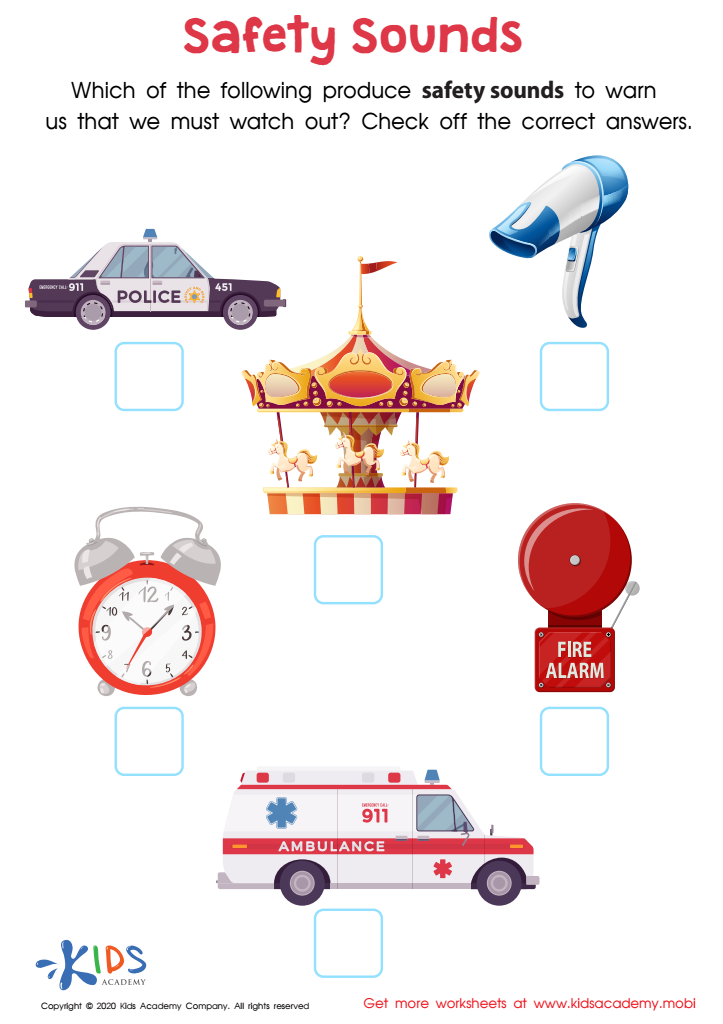
Safety Sounds Worksheet
Teach your kids about safety. Explain the rules and let them know what sounds to be aware of. Review the worksheet with pictures of objects and ask them to recognize which ones produce safety sounds. Have them check their answers. Doing this will help ensure their safety and that of others.
 Assign to My Students
Safety Sounds Worksheet
Worksheet
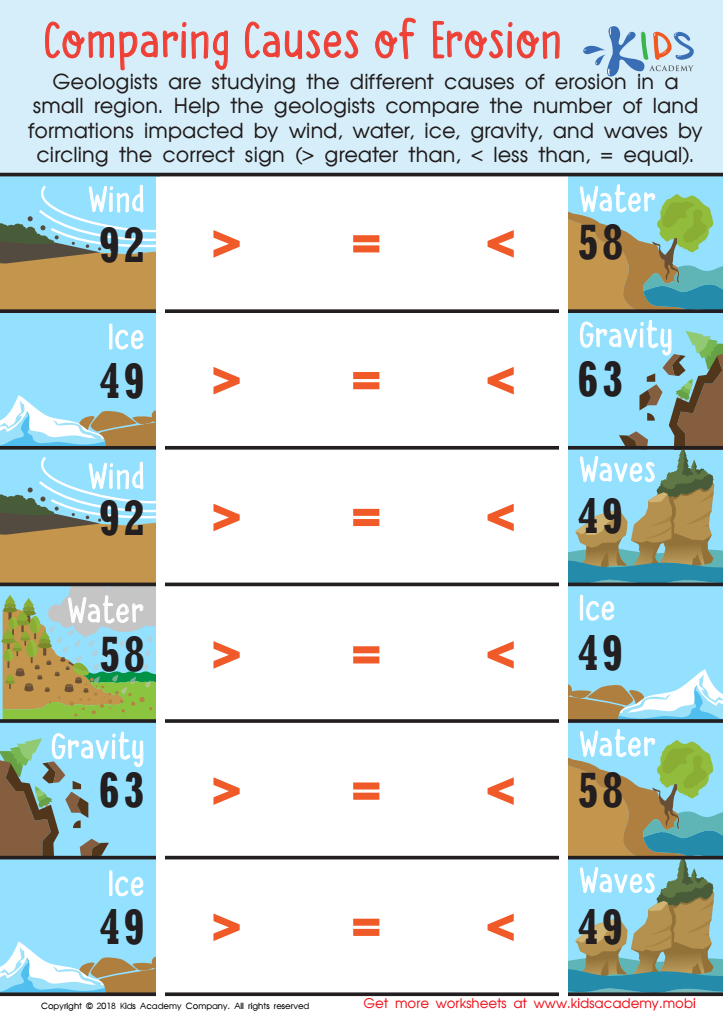
Comparing Causes of Erosion Worksheet
This free PDF worksheet combines science, number sense and comparing numbers to teach kids about the causes of erosion. They'll compare numbers related to ice, wind, water, gravity and waves and decide if each cause is greater, less than or equal to another. It's an interdisciplinary and meaningful way to learn that kids will enjoy.
Comparing Causes of Erosion Worksheet
Worksheet
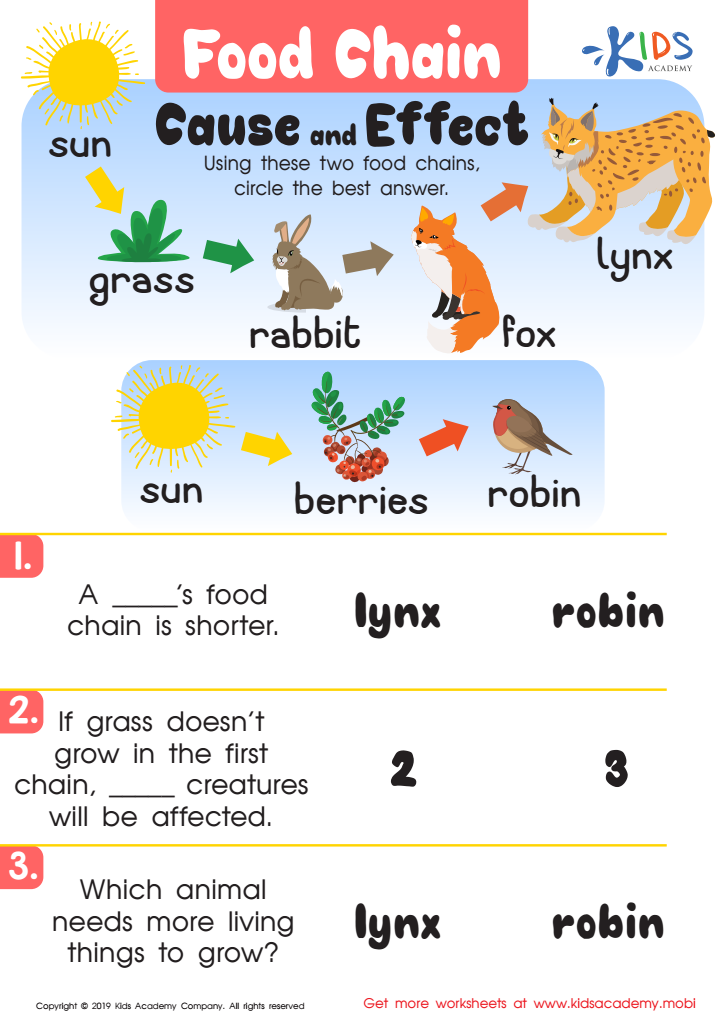
Food Chain Cause Worksheet
Help your little learner analyze ecosystems and compare food chains with this Kids Academy worksheet! Kids will compare a carnivore's and herbivore's food chain; which is longer and why? Questions at the bottom of the page will help them compare and circle the best answers. A great way to understand animal food chains!
Food Chain Cause Worksheet
Worksheet
Learning Skills
Join Kids Academy for Free
Who is primarily going to use this learning content?








Parents and teachers play a vital role in fostering critical thinking skills in children aged 5-8, particularly in the context of normal science. At this developmental stage, children's brains are rapidly growing, making it prime time for establishing foundational cognitive skills. Critical thinking nurtures curiosity, improves problem-solving abilities, and promotes independent thinking, which are all crucial for lifelong learning and success.
Encouraging critical thinking within normal science courses helps children ask questions about the world around them. This not only aligns with their natural inquisitiveness but also equips them with the tools to systematically explore and understand complex concepts. For example, through activities like simple experiments or nature observations, children learn to make predictions, observe outcomes, and draw conclusions.
Moreover, when children develop critical thinking skills early on, they become better at distinguishing fact from fiction—an essential skill in today's information-rich society. It enhances their decision-making skills and prepares them for more advanced scientific study and everyday problem-solving.
Parents and teachers who actively promote an environment that challenges children to think critically instill a love for learning and inquisitiveness that leads to academic success and personal growth. In essence, fostering critical thinking in science for young children lays a strong foundation for both their educational journey and their broader cognitive and social development.







